Floor plan

Time and placeThe 19th century

The 19th century

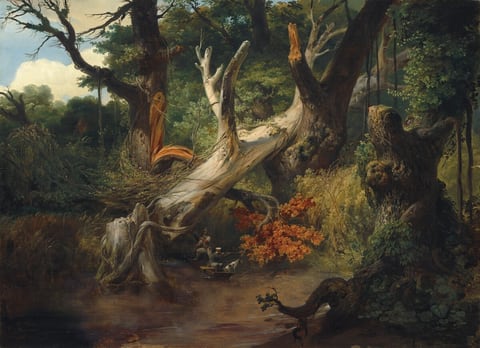
A leafless, ash-white tree trunk has fallen from a broken stump into the wide V of a neighboring tree at the edge of a body of water near a verdant forest in this horizontal landscape painting. The fallen trunk creates a diagonal from near the lower left corner to the upper right. As it fell, it sheared off a substantial branch from a neighboring tree with a dark trunk. The bark where the damaged branch has pulled away is honey-orange, the same color as the leaves at the canopy, which has been pinned under the fallen trunk. Trees, vines, and other vegetation fill the space around and beyond this pair. In the lower right corner of the painting, vines grow over a broken stump, which deep in shadow. Between the stump and fallen tree, the peanut-brown surface of the water is smooth. Tiny in scale beneath the fallen tree and easily overlooked, there are two men and a dog in a boat. One man stands at the back of the boat and pushes it along with a long pole. He wears a tall, brown, cloth hat, a white shirt rolled up to the elbows under a blue vest, and loose-fitting pants. A second man wears a flat-topped, white hat with a black brim, a long, forest-green jacket, and tight-fitting slate-blue pants. He braces a rifle against one shoulder and shoots into the forest. The dog is white with brown spots, and it stands with its front paws on the edge of the boat, presumably ready to spring after the target. A patch of blue sky with puffy white clouds is seen above the trees in the upper left corner. The artist signed and dated the work in the lower right corner: “H. Vernet Rome 1833.”
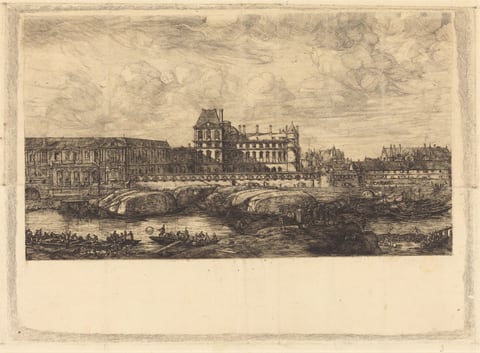
The image features a riverside scene with a large building in the center and smaller structures in the background. The sky is filled with clouds, and there are boats on the water. The artwork is done in an etching style, with detailed lines showing architectural elements, boats, and water ripples. The color scheme is monochromatic in shades of brown and black.
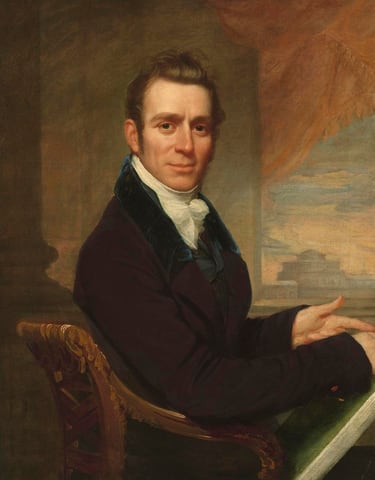
Artist: John Wesley Jarvis, Sitter: Joseph Delaplaine, Current owner: National Portrait Gallery, Smithsonian Institution
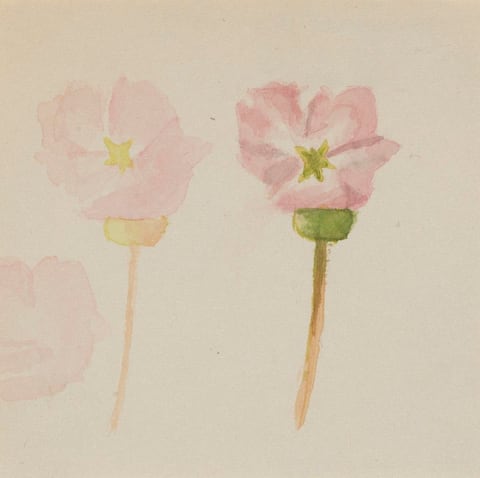
"My First Painting", by Mary Vaux Walcott, ca. 1868
A work made of brown and black chalks on cream wove paper.
This painting shows a landscape with a horizon in the lower third of the composition. On the left side of the painting, there are tall trees along a canal. In the center is a dirt path on the other edge of the canal, with a person riding a donkey who looks over their shoulder towards us. On the right side, there are white buildings in the distance, with a grassy field leading towards them. The light blue sky is filled with fluffy clouds, and the water of the canal reflects the sky and trees. The brushstrokes of the painting are thick and visible, especially in the sky.
Still Life with Apples and a Pot of Primroses, by Paul Cézanne, ca. 1890
The Pilgrim of the Cross at the End of His Journey (study for series, The Cross and the World), by Thomas Cole, ca. 1846-1848

The works in this room are listed below.

Works in this room

Works made in the 19th century, anywhere in the world.

Section 1, north wall

  1. A leafless, ash-white tree trunk has fallen from a broken stump into the wide V of a neighboring tree at the edge of a body of water near a verdant forest in this horizontal landscape painting. The fallen trunk creates a diagonal from near the lower left corner to the upper right. As it fell, it sheared off a substantial branch from a neighboring tree with a dark trunk. The bark where the damaged branch has pulled away is honey-orange, the same color as the leaves at the canopy, which has been pinned under the fallen trunk. Trees, vines, and other vegetation fill the space around and beyond this pair. In the lower right corner of the painting, vines grow over a broken stump, which deep in shadow. Between the stump and fallen tree, the peanut-brown surface of the water is smooth. Tiny in scale beneath the fallen tree and easily overlooked, there are two men and a dog in a boat. One man stands at the back of the boat and pushes it along with a long pole. He wears a tall, brown, cloth hat, a white shirt rolled up to the elbows under a blue vest, and loose-fitting pants. A second man wears a flat-topped, white hat with a black brim, a long, forest-green jacket, and tight-fitting slate-blue pants. He braces a rifle against one shoulder and shoots into the forest. The dog is white with brown spots, and it stands with its front paws on the edge of the boat, presumably ready to spring after the target. A patch of blue sky with puffy white clouds is seen above the trees in the upper left corner. The artist signed and dated the work in the lower right corner: “H. Vernet Rome 1833.”
    Hunting in the Pontine MarshesHorace Vernet, 1833Courtesy National Gallery of Art, Washington
  2. The image features a riverside scene with a large building in the center and smaller structures in the background. The sky is filled with clouds, and there are boats on the water. The artwork is done in an etching style, with detailed lines showing architectural elements, boats, and water ripples. The color scheme is monochromatic in shades of brown and black.
    L'ancien Louvre d'après une peinture de Zeeman, 1651 (The Old Louvre, from a Painting by Zeeman, l651)Charles Meryon, 1866Courtesy National Gallery of Art, Washington
  3. Artist: John Wesley Jarvis, Sitter: Joseph Delaplaine, Current owner: National Portrait Gallery, Smithsonian Institution
    Joseph DelaplaineJohn Wesley Jarvis, January 1819Courtesy of the National Portrait Gallery, Smithsonian Institution
  4. "My First Painting", by Mary Vaux Walcott, ca. 1868
    "My First Painting"Mary Vaux Walcott, ca. 1868Courtesy of the Smithsonian American Art Museum

Section 1, south wall

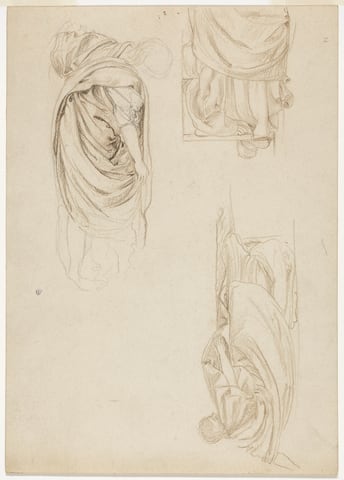
  1. A work made of brown and black chalks on cream wove paper.
    Study for FestivalSir John Edward Poynter, c. 1875Courtesy of the Art Institute of Chicago
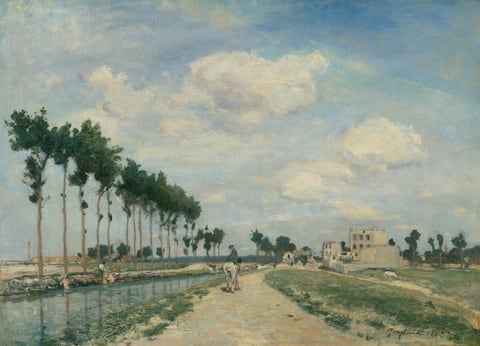
  2. This painting shows a landscape with a horizon in the lower third of the composition. On the left side of the painting, there are tall trees along a canal. In the center is a dirt path on the other edge of the canal, with a person riding a donkey who looks over their shoulder towards us. On the right side, there are white buildings in the distance, with a grassy field leading towards them. The light blue sky is filled with fluffy clouds, and the water of the canal reflects the sky and trees. The brushstrokes of the painting are thick and visible, especially in the sky.
    The TowpathJohan Barthold Jongkind, 1864Courtesy National Gallery of Art, Washington
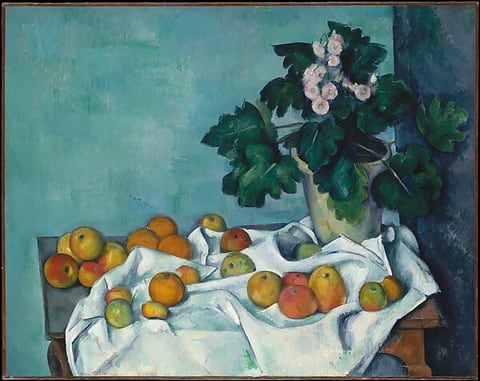
  3. Still Life with Apples and a Pot of Primroses, by Paul Cézanne, ca. 1890
    Still Life with Apples and a Pot of PrimrosesPaul Cézanne, ca. 1890Courtesy of The Metropolitan Museum of Art
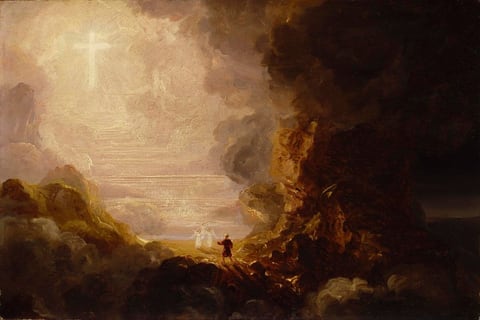
  4. The Pilgrim of the Cross at the End of His Journey (study for series, The Cross and the World), by Thomas Cole, ca. 1846-1848
    The Pilgrim of the Cross at the End of His Journey (study for series, The Cross and the World)Thomas Cole, ca. 1846-1848Courtesy of the Smithsonian American Art Museum

Section 2, south wall
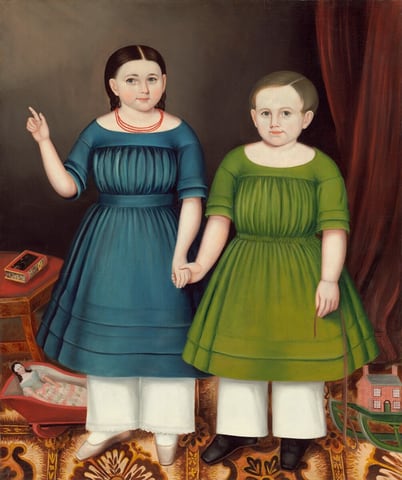
  1. The image features two young children standing side by side. The child on the left extends one arm sideways and has the other arm lowered, while the child on the right has both arms relaxed by their sides, one holding a string. Both children have round faces with light complexions; the child on the left has dark brown hair styled in waves down to the shoulders, while the child on the right has light brown hair. The child on the left is dressed in a blue dress with a loosely gathered waist and short sleeves, white stockings, white shoes, and a red beaded necklace. The child on the right wears a green dress with similar design features, white stockings, and black shoes. Near their feet are a toy doll in a red cradle and a small toy house. In the background, there is a plain dark wall, a deep red drapery, a carpet with elaborate patterns, and a small wooden table with a box on top.
    Mary and Francis WilcoxJoseph Whiting Stock, 1845Courtesy National Gallery of Art, Washington
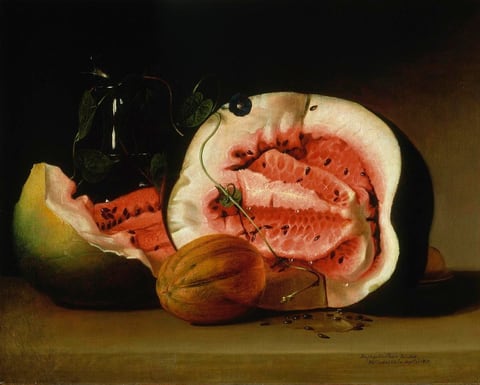
  2. Melons and Morning Glories, by Raphaelle Peale, 1813
    Melons and Morning GloriesRaphaelle Peale, 1813Courtesy of the Smithsonian American Art Museum
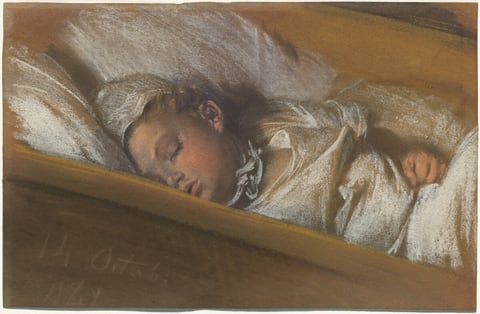
  3. The image shows a person lying down, positioned on their side, resting on a pillow. The individual appears to be asleep, with closed eyes, slightly parted lips, and a relaxed facial expression. The person has light-colored hair, partially covered by a white nightcap, and is dressed in white nightwear with a ruffled collar. They are covered by a white blanket and their hand is partially visible near the face, with fingers interlaced. The background features a wooden headboard or furniture piece.
    An Infant Asleep in His CribAdolph Menzel, 1848Courtesy National Gallery of Art, Washington
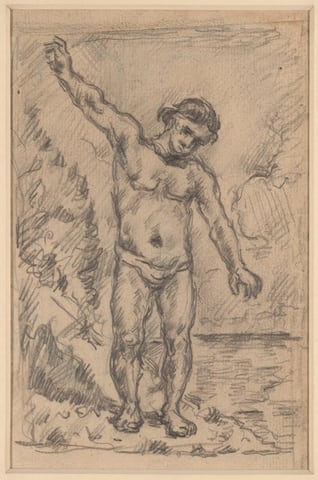
  4. A work made of graphite on cream laid paper (pieced).
    Bather With Outstretched Arms (recto); Study of a Tree (verso)Paul Cézanne, 1874/77Courtesy of the Art Institute of Chicago

Section 2, north wall
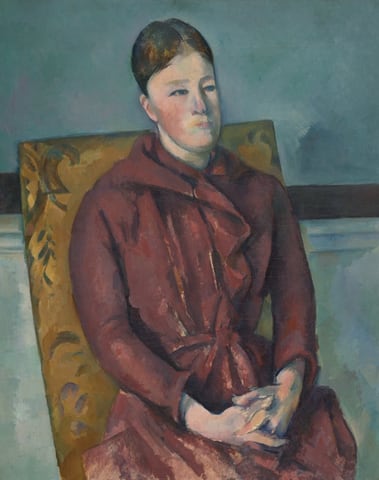
  1. Painting of a placid-looking, light-skinned woman in a maroon dress, seated in a chair with yellow upholstery, hands folded.
    Madame Cezanne in a Yellow ChairPaul Cézanne, 1888–90Courtesy of the Art Institute of Chicago
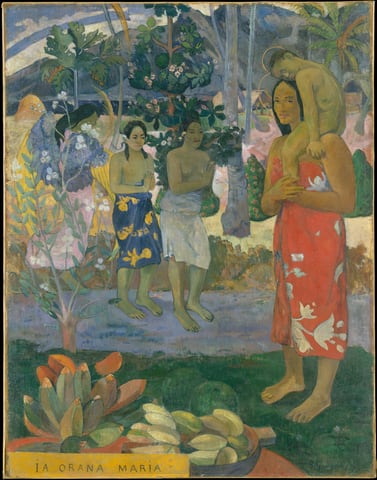
  2. Ia Orana Maria (Hail Mary), by Paul Gauguin, 1891
    Ia Orana Maria (Hail Mary)Paul Gauguin, 1891Courtesy of The Metropolitan Museum of Art

Section 3, north wall
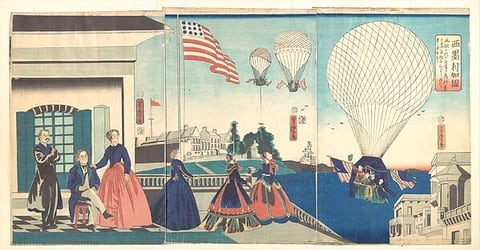
  1. “America”: Enjoying Hot Air Balloons, by Utagawa Yoshitora, 1867
    “America”: Enjoying Hot Air BalloonsUtagawa Yoshitora, 1867Courtesy of The Metropolitan Museum of Art
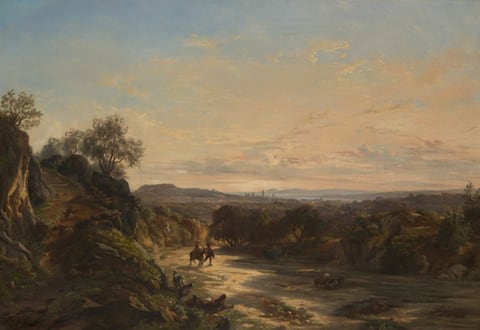
  2. A work made of oil on canvas.
    Sur la route de NicePaul Huet, c. 1844Courtesy of the Art Institute of Chicago