Floor plan

Time and placeThe 19th century

The 19th century

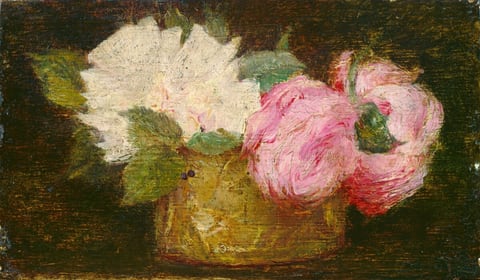
Roses in a Vase, 1880/1900
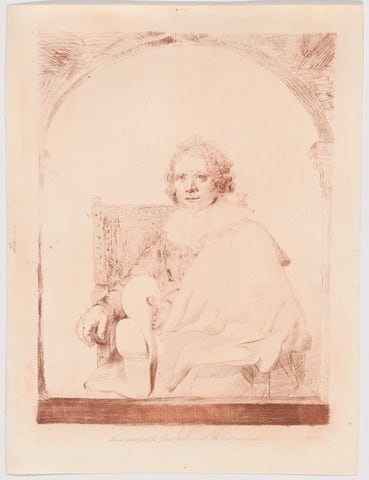
A work made of soft ground etching, with roulette, printed in red on white wove paper.
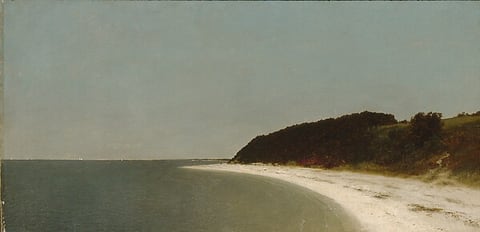
Eaton's Neck, Long Island, by John Frederick Kensett, 1872
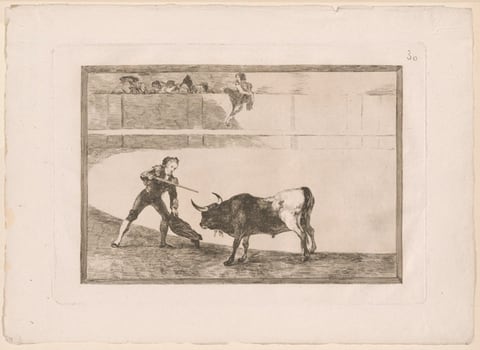
A work made of etching, aquatint, drypoint and burin on ivory laid paper.
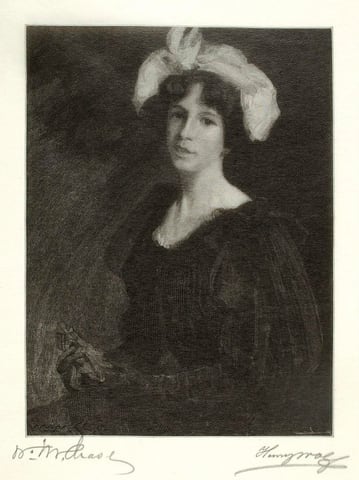
Portrait of Mrs. C--, by Henry Wolf, 1894
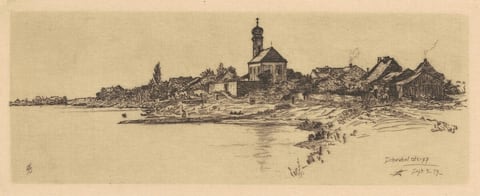
The image shows a village scene viewed from a low vantage point near a water's edge. A row of small, closely packed buildings and a church with an onion-shaped dome are prominently featured. There are gentle slopes leading towards the structures. The image uses fine, detailed line work to depict texture and depth in the buildings and natural landscape. The lines are delicate and varied, creating a sense of detail and softness. The color palette is monochromatic, with dark ink on a pale background, resulting in a classic and timeless feel.
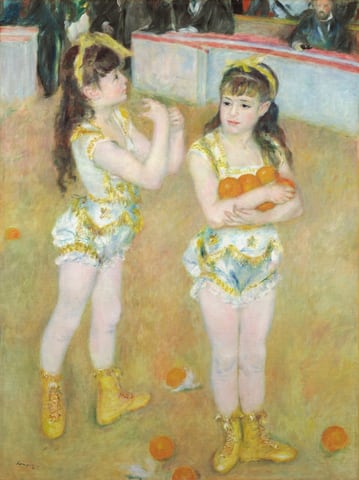
Two girls in acrobatic uniforms stand in an arena, one holds oranges.
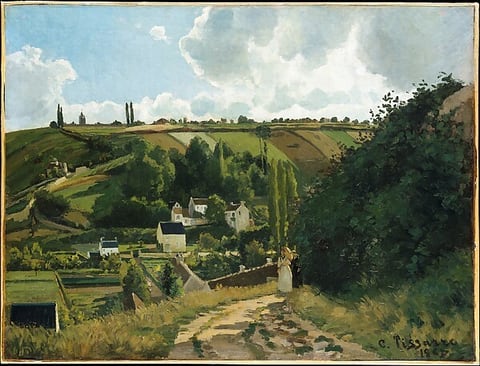
Jalais Hill, Pontoise, by Camille Pissarro, 1867

The works in this room are listed below.

Works in this room

Works made in the 19th century, anywhere in the world.

Section 1, north wall

  1. Roses in a Vase, 1880/1900
    Roses in a VaseUnrecorded French maker, 1880/1900Courtesy National Gallery of Art, Washington
  2. A work made of soft ground etching, with roulette, printed in red on white wove paper.
    Portrait of a Man in an Armchair, from Collection d'imitations de Dessins d'après les Principaux Maîtres Hollandais et FlamandsChristian Josi, 1826Courtesy of the Art Institute of Chicago
  3. Eaton's Neck, Long Island, by John Frederick Kensett, 1872
    Eaton's Neck, Long IslandJohn Frederick Kensett, 1872Courtesy of The Metropolitan Museum of Art
  4. A work made of etching, aquatint, drypoint and burin on ivory laid paper.
    Pedro Romero killing the halted bull, plate 30 from The Art of BullfightingFrancisco Goya, 1814/16, published 1816Courtesy of the Art Institute of Chicago

Section 1, south wall

  1. Portrait of Mrs. C--, by Henry Wolf, 1894
    Portrait of Mrs. C--Henry Wolf, 1894Courtesy of the Smithsonian American Art Museum
  2. The image shows a village scene viewed from a low vantage point near a water's edge. A row of small, closely packed buildings and a church with an onion-shaped dome are prominently featured. There are gentle slopes leading towards the structures. The image uses fine, detailed line work to depict texture and depth in the buildings and natural landscape. The lines are delicate and varied, creating a sense of detail and softness. The color palette is monochromatic, with dark ink on a pale background, resulting in a classic and timeless feel.
    SchwabelweissOtto Henry Bacher, 1879Courtesy National Gallery of Art, Washington
  3. Two girls in acrobatic uniforms stand in an arena, one holds oranges.
    Acrobats at the Cirque Fernando (Francisca and Angelina Wartenberg)Pierre-Auguste Renoir, 1879Courtesy of the Art Institute of Chicago
  4. Jalais Hill, Pontoise, by Camille Pissarro, 1867
    Jalais Hill, PontoiseCamille Pissarro, 1867Courtesy of The Metropolitan Museum of Art

Section 2, south wall
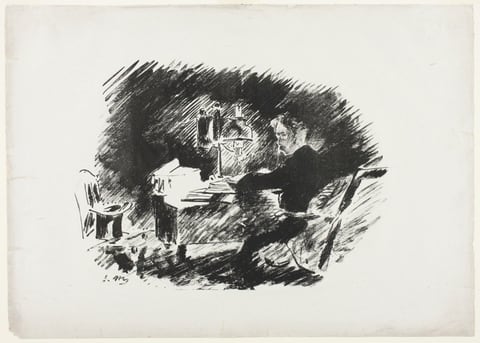
  1. A work made of transfer lithograph in black on gray china paper.
    Under the Lamp ("Once upon a midnight dreary..."), from The Raven (Le Corbeau)Édouard Manet, 1875Courtesy of the Art Institute of Chicago
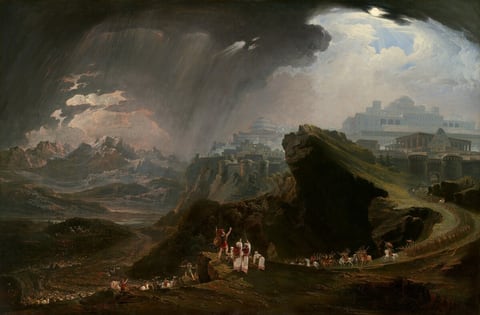
  2. Armies of men march and battle along a rocky outcropping set among huge rock formations and massive buildings under a stormy sky in this horizontal landscape painting. The people we can see all have pale skin. Sheets of rain fall from flint-gray clouds on our left into a valley, though hints of peach brighten the clouds along the mountainous horizon there. In the right half of the sky, light pours down from a brilliant white sun that breaks through white clouds to reveal topaz-blue patches of sky. The horizon comes about halfway up the composition and is lined with rugged white, pale pink, and olive-green mountains on our left and silvery-white buildings along the right half. These structures include two domed buildings and a colosseum among many others. The buildings are all enclosed within city walls buttressed with towers. The land dips precipitously from the rocky cliffs supporting the buildings, to sweep down toward us. A huge outcropping angles up like a ramp between us and the buildings in the distance. A road runs from the walled town toward us, down along the ridge and in front of the outcropping. Countless warriors march in rows of four or five across on the road past a man wearing a feathered helmet and armored breastplate. This man, Joshua, stands on a rocky precipice facing away from us with his right hand raised. He wears a scarlet-red toga under his breastplate, and a royal-blue cape flutters at his left side. He holds a round, copper-colored shield and a spear in his other hand. Two men with gray beards stand near Joshua with their backs to us. Both gesture up to the sky. One holds a slender staff and the other a curling horn. They and another pair of men, who stoop to hold poles used to carry a chest, all wear long, ivory-white robes, cherry-red drapery, and white turbans. The column of soldiers on foot and horseback pass in front of Joshua to a massive battlefield to our left. The fight takes place in a valley that leads back to a river. A bolt of lightning zigzags from the storm clouds and strikes a city in the deep distance. The artist signed the painting in the lower right, “J. Martin.”
    Joshua Commanding the Sun to Stand Still upon GibeonJohn Martin, 1816Courtesy National Gallery of Art, Washington
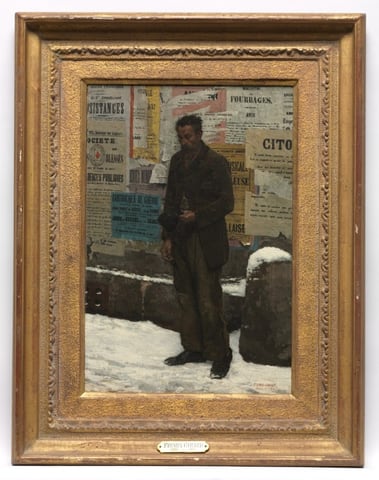
  3. The Veteran, by Marie-François Firmin-Girard, 1870
    The VeteranMarie-François Firmin-Girard, 1870Courtesy of the Cleveland Museum of Art

Section 2, north wall
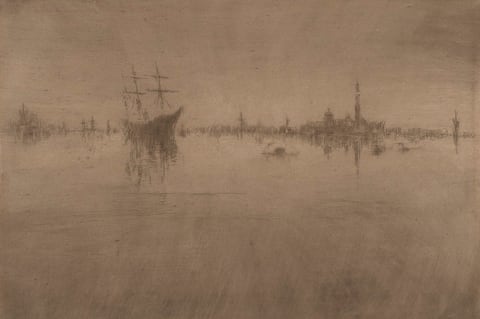
  1. A work made of etching and drypoint in brown on cream laid paper.
    Nocturne, from Venice, a Series of Twelve Etchings (the "First Venice Set")James McNeill Whistler, 1879–80Courtesy of the Art Institute of Chicago
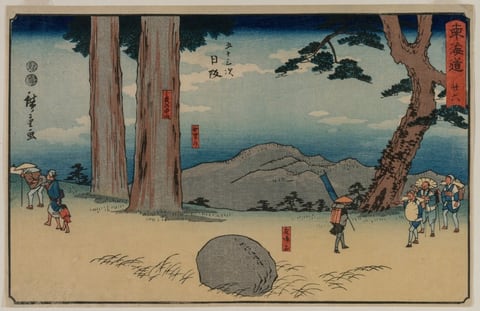
  2. Nissaka: The Night-Weeping Stone at Sayo no Nakayama, from the series The Fifty-Three Stations of the Tōkaidō, by Utagawa Hiroshige, c. 1848–50
    Nissaka: The Night-Weeping Stone at Sayo no Nakayama, from the series The Fifty-Three Stations of the TōkaidōUtagawa Hiroshige, c. 1848–50Courtesy of the Cleveland Museum of Art
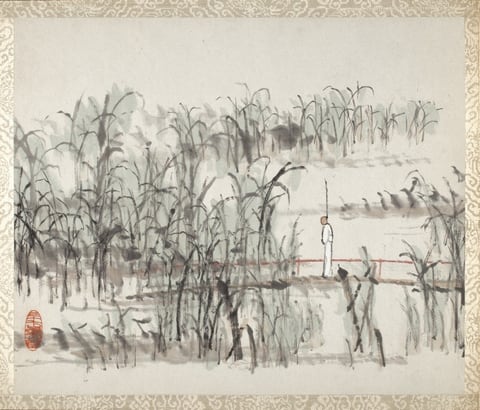
  3. A work made of album leaves; ink and color on paper.
    Album of Landscapes and Calligraphy for Liu SongfuXugu, Qing dynasty (1644–1911), 1895/96Courtesy of the Art Institute of Chicago

Section 3, north wall
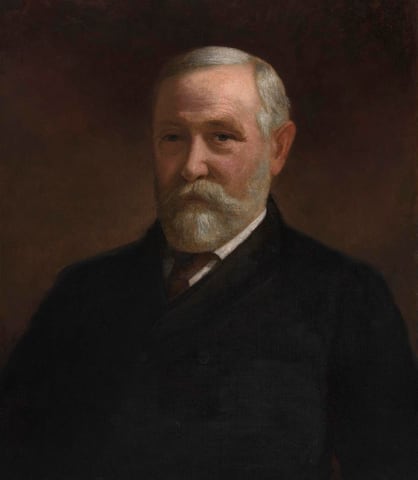
  1. Artist: William Thomas Mathews, Sitter: Benjamin Harrison, Current owner: National Portrait Gallery, Smithsonian Institution
    Benjamin HarrisonWilliam Thomas Mathews, 1899Courtesy of the National Portrait Gallery, Smithsonian Institution
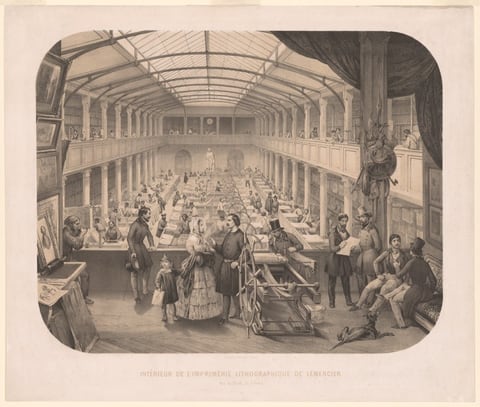
  2. A work made of lithograph from two stones on off-white wove paper.
    Interior of the Lemercier Lithographic Printing HouseCharles Villemin, n.d.Courtesy of the Art Institute of Chicago