Floor plan

Time and placeThe 19th century

The 19th century

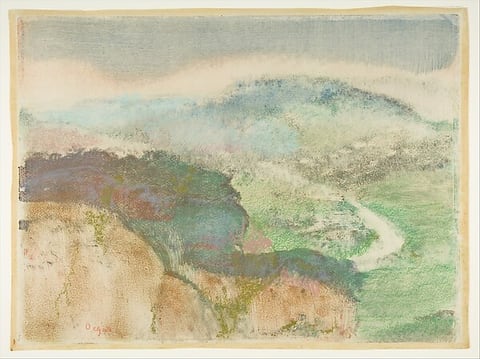
Landscape, by Edgar Degas, 1892
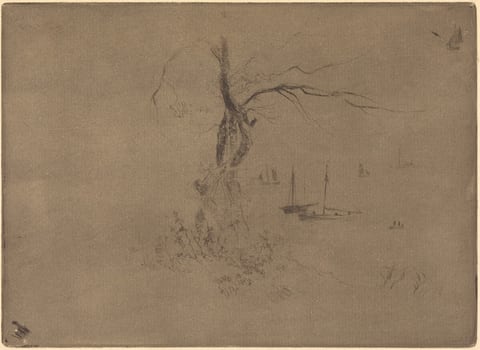
The image shows a sparse drawing of a landscape. A tree with elongated branches is on the left side, with a twist in its trunk. Near the horizon, there are several sailing boats on calm water. The composition suggests a vast openness and distance. The sketching is subtle and precise, focusing on gentle contouring and minimal detail. The color palette is monochromatic, dominated by a muted brown tone. The overall impact is serene and understated, inviting the viewer to focus on the hints of narrative within the scene.
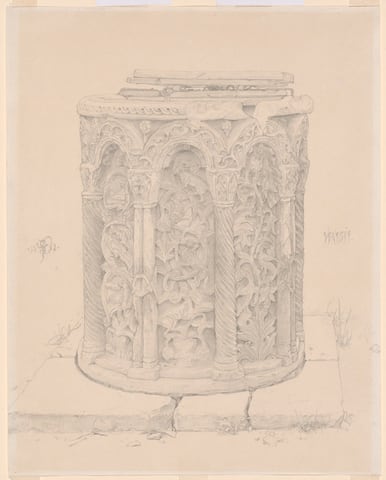
A work made of graphite on ivory wove paper.
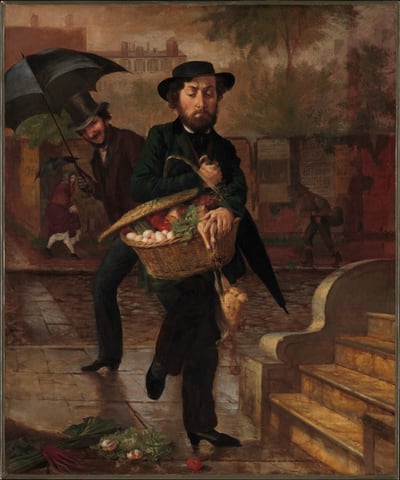
Young Husband: First Marketing, by Lilly Martin Spencer, 1854
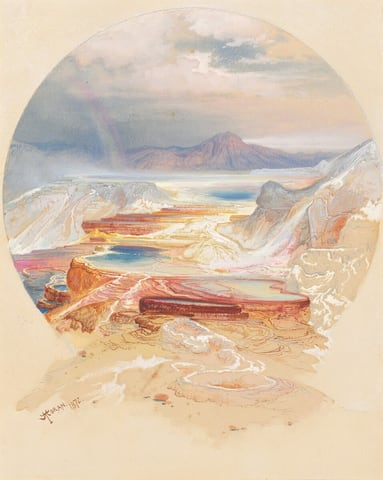
This painting shows a view looking out over a vast landscape. Most of the painting is circular, with a small part of the bottom bleeding out of the circle towards us. The top third of the circle shows a mountain range with a large purple peak in the distance. In front of the mountain is a faint rainbow. A body of water flows from in front of the mountain to the bottom of the painting, weaving in between shorter white peaks. Towards the bottom, the water appears to flow into small, layered pools of various bright colors including yellow, orange, red, pink, blue, and teal. The sky is a light blue-gray color. The background of the painting outside of the circle is plain paper.
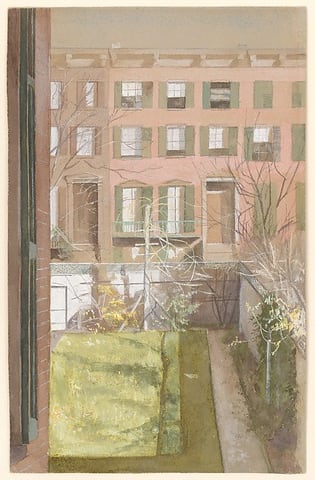
Garden View, Brooklyn, by Fidelia Bridges, ca. 1867
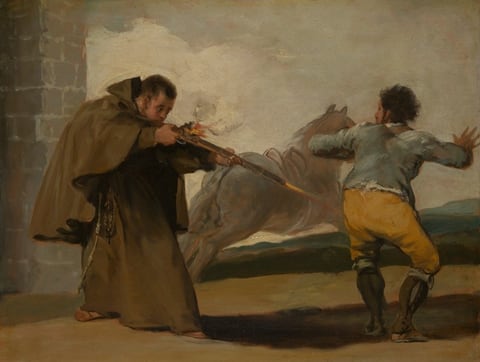
Small painting, friar shoots man with yellow pants as horse runs off.
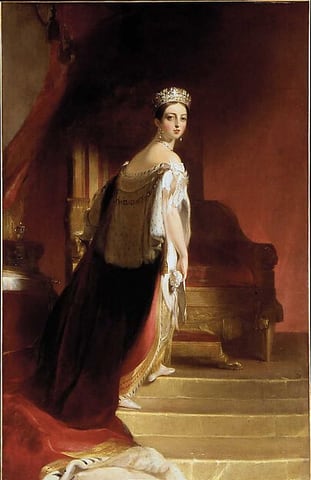
Queen Victoria, by Thomas Sully, 1838

The works in this room are listed below.

Works in this room

Works made in the 19th century, anywhere in the world.

Section 1, north wall

  1. Landscape, by Edgar Degas, 1892
    LandscapeEdgar Degas, 1892Courtesy of The Metropolitan Museum of Art
  2. The image shows a sparse drawing of a landscape. A tree with elongated branches is on the left side, with a twist in its trunk. Near the horizon, there are several sailing boats on calm water. The composition suggests a vast openness and distance. The sketching is subtle and precise, focusing on gentle contouring and minimal detail. The color palette is monochromatic, dominated by a muted brown tone. The overall impact is serene and understated, inviting the viewer to focus on the hints of narrative within the scene.
    Arbres et Bateaux (Trees and Boats)Félix-Hilaire BuhotCourtesy National Gallery of Art, Washington
  3. A work made of graphite on ivory wove paper.
    A Byzantine Well-headFrederic Leighton, 1st Baron Leighton of Stretton, 1852Courtesy of the Art Institute of Chicago
  4. Young Husband: First Marketing, by Lilly Martin Spencer, 1854
    Young Husband: First MarketingLilly Martin Spencer, 1854Courtesy of The Metropolitan Museum of Art

Section 1, south wall

  1. This painting shows a view looking out over a vast landscape. Most of the painting is circular, with a small part of the bottom bleeding out of the circle towards us. The top third of the circle shows a mountain range with a large purple peak in the distance. In front of the mountain is a faint rainbow. A body of water flows from in front of the mountain to the bottom of the painting, weaving in between shorter white peaks. Towards the bottom, the water appears to flow into small, layered pools of various bright colors including yellow, orange, red, pink, blue, and teal. The sky is a light blue-gray color. The background of the painting outside of the circle is plain paper.
    Minerva Terrace, YellowstoneThomas Moran, 1872Courtesy National Gallery of Art, Washington
  2. Garden View, Brooklyn, by Fidelia Bridges, ca. 1867
    Garden View, BrooklynFidelia Bridges, ca. 1867Courtesy of The Metropolitan Museum of Art
  3. Small painting, friar shoots man with yellow pants as horse runs off.
    Friar Pedro Shoots El Maragato as His Horse Runs OffFrancisco Goya, c. 1806Courtesy of the Art Institute of Chicago
  4. Queen Victoria, by Thomas Sully, 1838
    Queen VictoriaThomas Sully, 1838Courtesy of The Metropolitan Museum of Art

Section 2, south wall
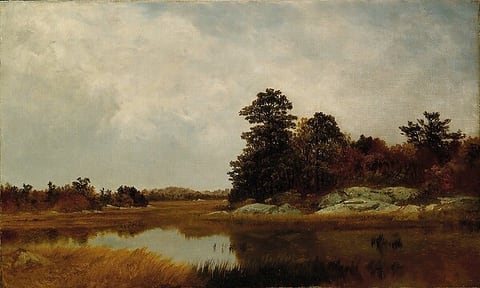
  1. October in the Marshes, by John Frederick Kensett, 1872
    October in the MarshesJohn Frederick Kensett, 1872Courtesy of The Metropolitan Museum of Art
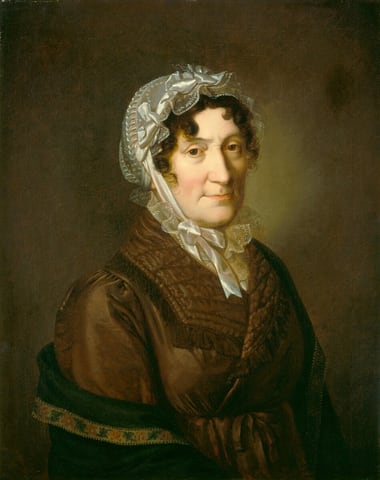
  2. The portrait shows the upper half of a seated woman with a round face, wrinkles, and dark hair. She wears a bonnet, a brown dress with layers, and a shawl or cloak. The background is a muted dark brown.
    Portrait of a LadyUnrecorded maker, probably c. 1820Courtesy National Gallery of Art, Washington
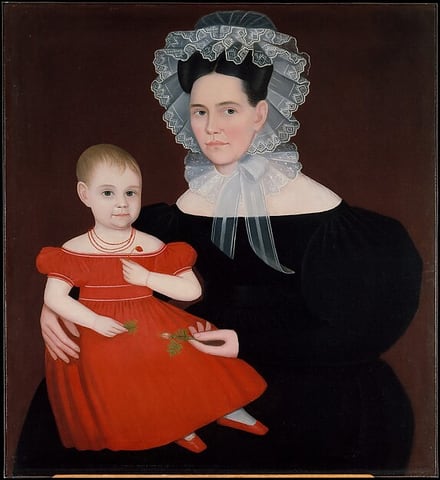
  3. Mrs. Mayer and Daughter, by Ammi Phillips, 1835–40
    Mrs. Mayer and DaughterAmmi Phillips, 1835–40Courtesy of The Metropolitan Museum of Art
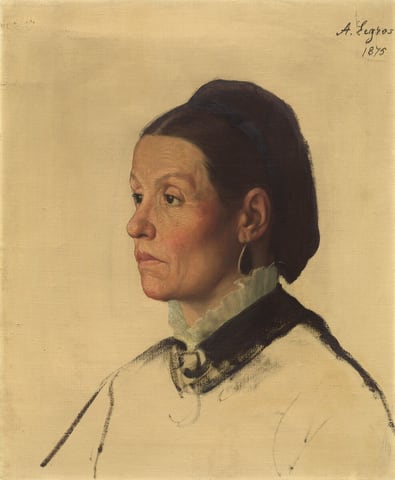
  4. The image portrays a woman in a profile view, with her head turned towards the left. She has medium-length dark hair styled back, wearing a high-collared garment with ruffled edges. She has a sharp nose, defined cheekbones, and a firm chin. The background is a plain, light-colored canvas, and the artist's signature "A. Legros" and the year "1875" are seen in the upper right corner.
    Portrait of a WomanAlphonse Legros, 1875Courtesy National Gallery of Art, Washington

Section 2, north wall
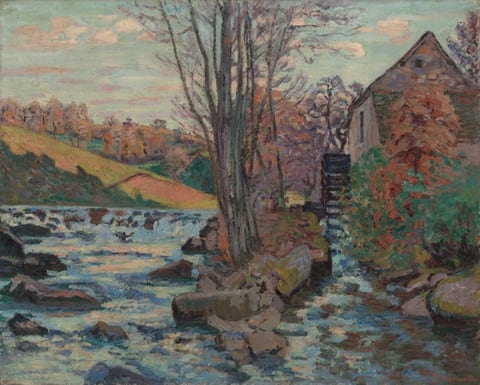
  1. A work made of oil on canvas.
    Mill of Pont MaupuitJean Baptiste Armand Guillaumin, c. 1900Courtesy of the Art Institute of Chicago
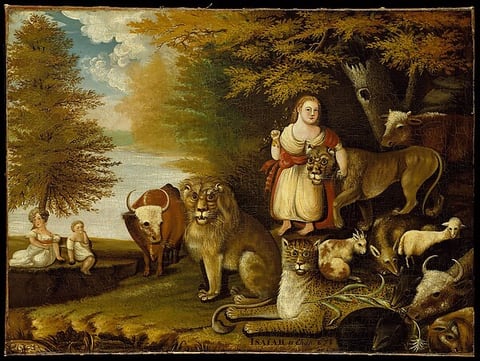
  2. Peaceable Kingdom, by Edward Hicks, ca. 1830–32
    Peaceable KingdomEdward Hicks, ca. 1830–32Courtesy of The Metropolitan Museum of Art
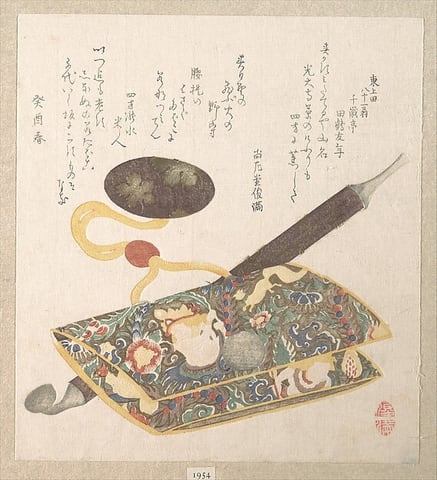
  3. Tobacco Pouch and Pipe, by Kubo Shunman, 1813
    Tobacco Pouch and PipeKubo Shunman, 1813Courtesy of The Metropolitan Museum of Art
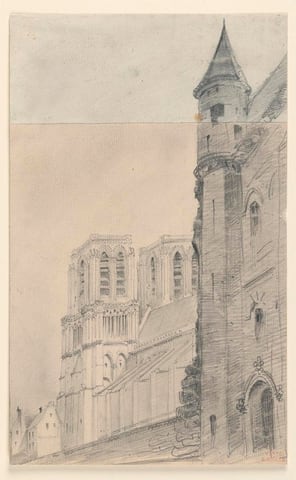
  4. CATHEDRAL OF NOTRE DAME IN PARIS
    Cathedral of Notre Dame in ParisCharles Nicolas Ransonnette, 1825–1840Courtesy of Cooper Hewitt, Smithsonian Design Museum