Floor plan

Time and place19th-century United States
19th-century United States
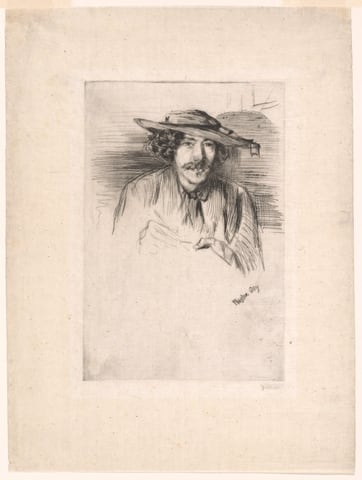
A work made of drypoint with light plate tone on thin ivory japanese paper.
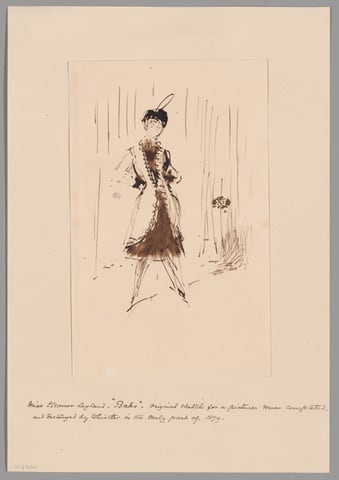
A work made of pen and brown ink, with brush and brown ink, on cream pseudo-laid paper tipped onto cream wove paper.
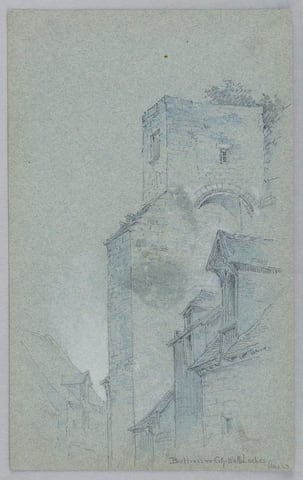
BUTTRESSES ON CITY WALLS; LOCHES
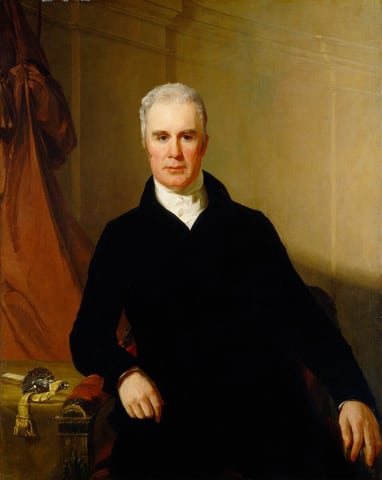
The image shows an upper-body portrait of a man seated in a formal position. The man is depicted with a slight turn of his head, directly facing the viewer with a composed expression. He has short gray hair that is neatly styled. His facial features include a high forehead and firm jawline. He is dressed in a dark formal jacket with a high-collared white shirt visible at the neckline. His left hand rests on the arm of the chair, which is ornately carved with a scroll design. A fabric with an intricate pattern is draped over the back of the chair. There is no visible jewelry. In the background, there is a muted backdrop with a warm hue. On the left side of the image, a flowing drapery in a rich reddish tone adds depth to the setting.
STUDY OF FOLIAGE
A work made of brush and black gray wash heightened with white gouache over graphite, on cream laminate board.
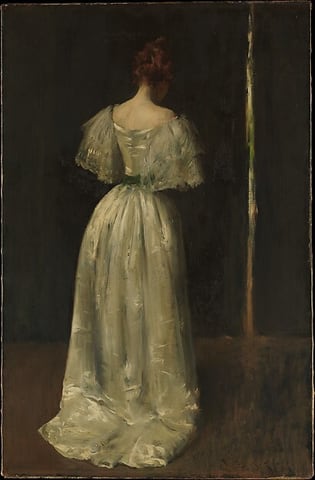
Seventeenth Century Lady, by William Merritt Chase, ca. 1895
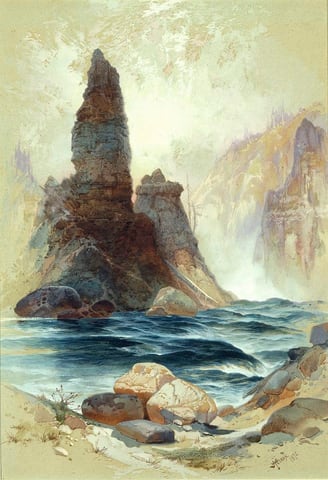
Above Tower Falls, Yellowstone, by Thomas Moran, 1872

The works in this room are listed below.

Works in this room

Works made in the United States in the 19th century.

Section 1, north wall

  1. A work made of drypoint with light plate tone on thin ivory japanese paper.
    Whistler with a HatJames McNeill Whistler, 1859Courtesy of the Art Institute of Chicago
  2. A work made of pen and brown ink, with brush and brown ink, on cream pseudo-laid paper tipped onto cream wove paper.
    Study for "The Blue Girl: Portrait of Miss Elinor Leyland"James McNeill Whistler, c. 1879Courtesy of the Art Institute of Chicago
  3. BUTTRESSES ON CITY WALLS; LOCHES
    Buttresses on City Walls; LochesArnold William Brunner, 1883Courtesy of Cooper Hewitt, Smithsonian Design Museum
  4. The image shows an upper-body portrait of a man seated in a formal position. The man is depicted with a slight turn of his head, directly facing the viewer with a composed expression. He has short gray hair that is neatly styled. His facial features include a high forehead and firm jawline. He is dressed in a dark formal jacket with a high-collared white shirt visible at the neckline. His left hand rests on the arm of the chair, which is ornately carved with a scroll design. A fabric with an intricate pattern is draped over the back of the chair. There is no visible jewelry. In the background, there is a muted backdrop with a warm hue. On the left side of the image, a flowing drapery in a rich reddish tone adds depth to the setting.
    Charles Carnan RidgelyThomas Sully, 1820Courtesy National Gallery of Art, Washington

Section 1, south wall

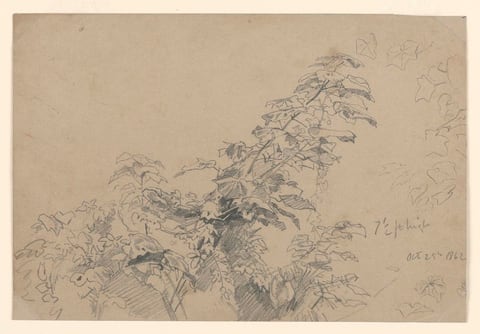
  1. STUDY OF FOLIAGE
    Study of foliageWilliam Trost Richards, October 25, 1862Courtesy of Cooper Hewitt, Smithsonian Design Museum
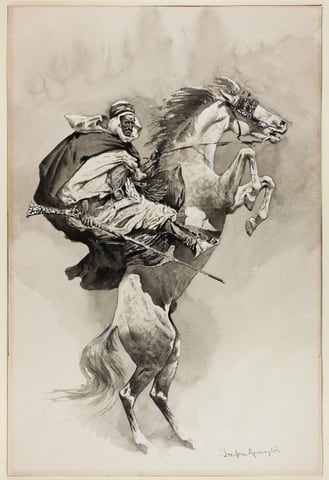
  2. A work made of brush and black gray wash heightened with white gouache over graphite, on cream laminate board.
    "As They Threw their Animals Back upon their Haunches," illustration for An Arabian Day and Night, in Harper's New Monthly MagazineFrederic Remington, n.d.Courtesy of the Art Institute of Chicago
  3. Seventeenth Century Lady, by William Merritt Chase, ca. 1895
    Seventeenth Century LadyWilliam Merritt Chase, ca. 1895Courtesy of The Metropolitan Museum of Art
  4. Above Tower Falls, Yellowstone, by Thomas Moran, 1872
    Above Tower Falls, YellowstoneThomas Moran, 1872Courtesy of the Smithsonian American Art Museum

Section 2, south wall
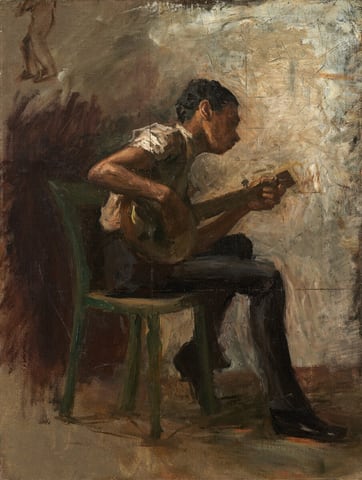
  1. A young, gangly, brown-skinned boy sits on a green chair and leans over the banjo he plays in this loosely painted, vertical composition. His body faces our right in profile, and his head leans to his left and away from us. Light comes from our left to highlight his ear and the side of his chin, but throws his profile into shadow against the lighter background. The boy has short black hair and wears a white shirt with the sleeves rolled up, black pants, and black shoes. The floor is loosely painted with streaks of earth brown, taupe, and dark moss green. The wall behind the boy is painted with visible strokes of parchment brown, peachy tan, pearl white, and fog gray. The space to our left of the boy is dark brown, and an outline of a standing person is sketched in the top left corner. A grid is overlaid across the boy’s body and the chair.
    Study for "The Dancing Lesson": The Banjo PlayerThomas Eakins, probably 1877Courtesy National Gallery of Art, Washington
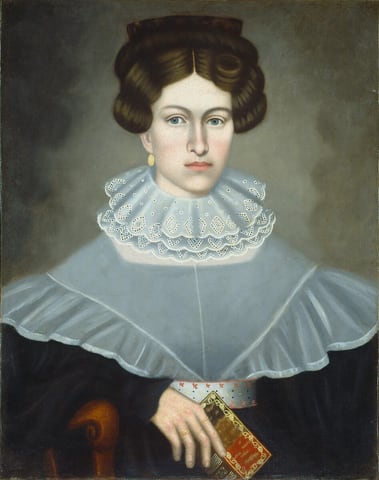
  2. The image shows a woman portrait from the waist up. She is seated upright, holding a book in her left hand. She has blue eyes, dark brown hair styled with rolls and a braided crown, and wears elegant 19th-century clothing with a lace collar, a blue-gray garment, and gold earrings. The background is plain, and she is seated on a wooden chair.
    Woman Holding a BookErastus Salisbury Field, c. 1835Courtesy National Gallery of Art, Washington
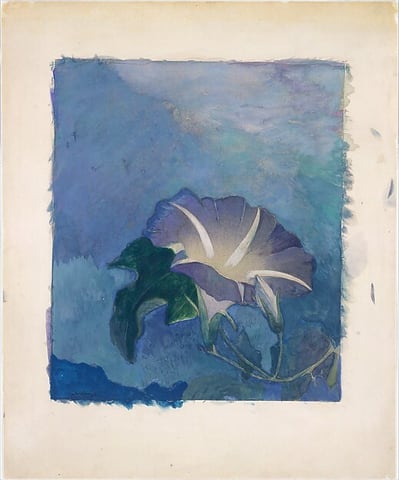
  3. Nocturne, by John La Farge, ca. 1885
    NocturneJohn La Farge, ca. 1885Courtesy of The Metropolitan Museum of Art
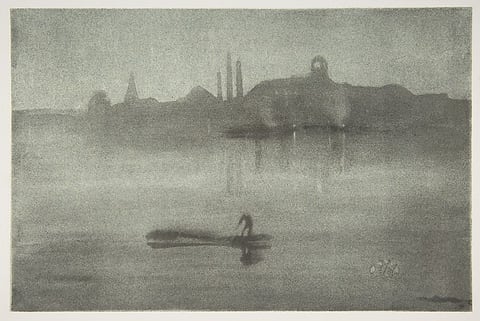
  4. Nocturne (Nocturne: The Thames at Battersea), by James McNeill Whistler, 1878
    Nocturne (Nocturne: The Thames at Battersea)James McNeill Whistler, 1878Courtesy of The Metropolitan Museum of Art

Section 2, north wall
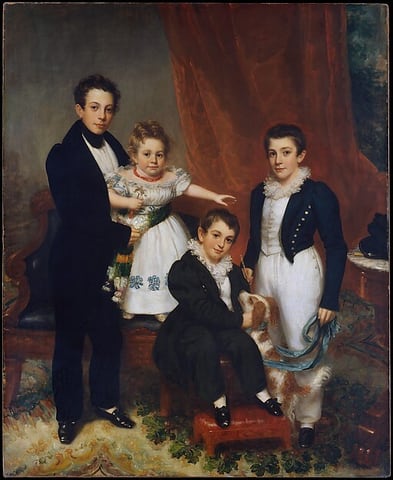
  1. The Knapp Children, by Samuel Lovett Waldo, ca. 1833–34
    The Knapp ChildrenSamuel Lovett Waldo, ca. 1833–34Courtesy of The Metropolitan Museum of Art
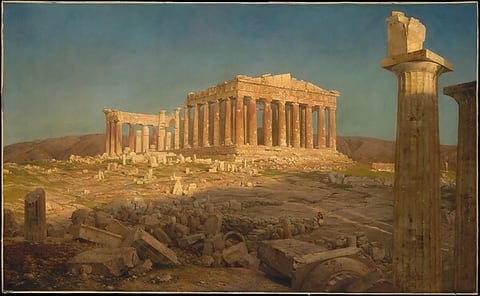
  2. The Parthenon, by Frederic Edwin Church, 1871
    The ParthenonFrederic Edwin Church, 1871Courtesy of The Metropolitan Museum of Art

Section 3, north wall
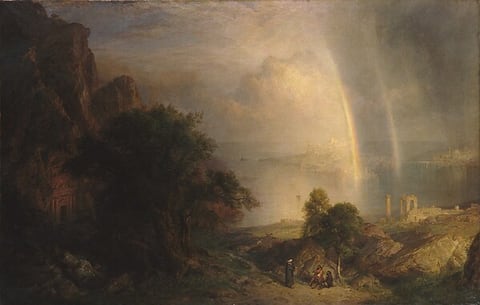
  1. The Aegean Sea, by Frederic Edwin Church, ca. 1877
    The Aegean SeaFrederic Edwin Church, ca. 1877Courtesy of The Metropolitan Museum of Art
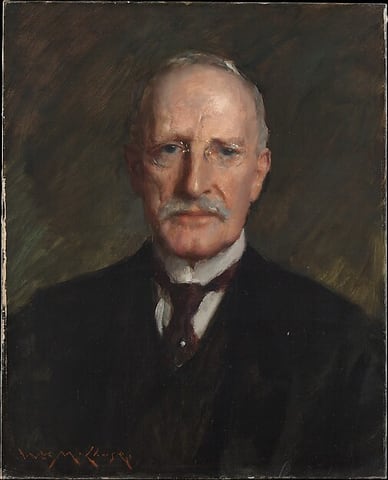
  2. Edward Guthrie Kennedy, by William Merritt Chase, ca. 1895
    Edward Guthrie KennedyWilliam Merritt Chase, ca. 1895Courtesy of The Metropolitan Museum of Art