18th-century Japan, room 2
Works in this room
Works made in Japan in the 18th century.
Section 1, north wall
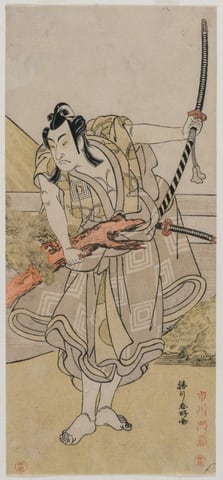
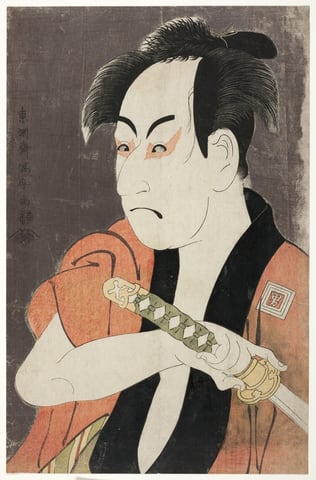
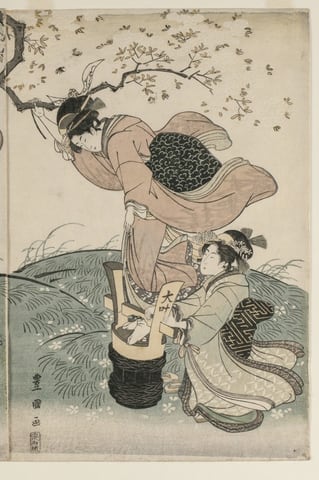
Ichikawa Monnosuke II as Soga no GorōKatsukawa Shunkō, 1779Courtesy of the Cleveland Museum of Art The actor Ichikawa Omezo as the manservant IppeiTōshūsai Sharaku, 1794Courtesy of the Art Institute of Chicago Cherry Blossoms in the WindUtagawa Toyokuni, late 1790sCourtesy of the Cleveland Museum of Art
Section 1, south wall
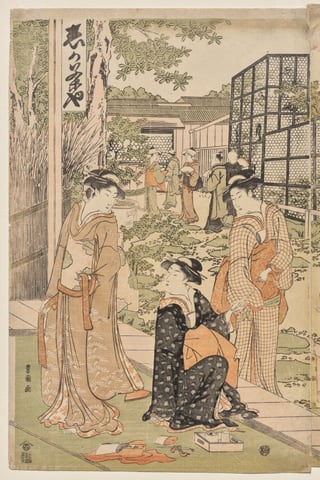
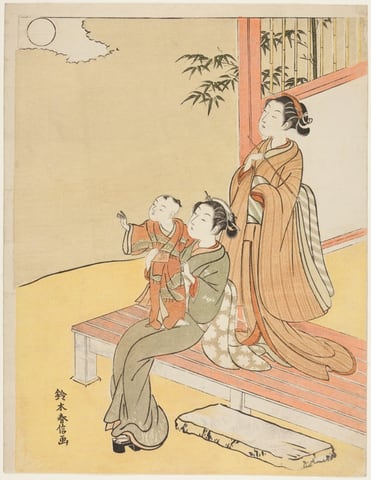
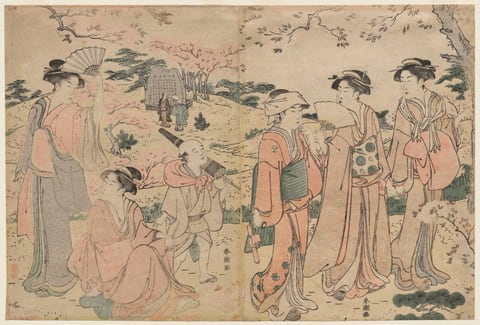
The Shika TeahouseUtagawa Toyokuni, early 1790sCourtesy of the Cleveland Museum of Art Viewing the MoonSuzuki Harunobu, c. 1767/68Courtesy of the Art Institute of Chicago Women Viewing Cherry Blossoms at AsukayamaKatsukawa Shunchô, 1780sCourtesy of the Cleveland Museum of Art
Section 2, south wall
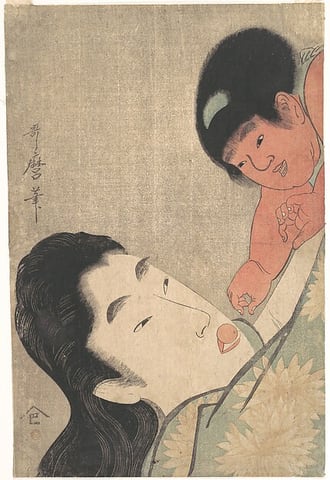
Yamauba and Kintarō Playing with a CherryKitagawa Utamaro, ca. 1795Courtesy of The Metropolitan Museum of Art 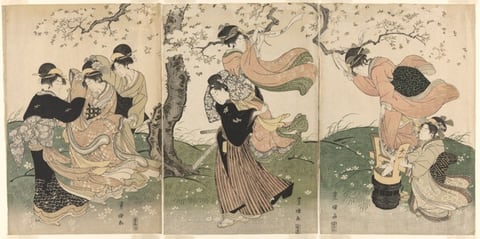
A Windy Day under the Cherry TreesUtagawa Toyokuni, c. 1797Courtesy of the Art Institute of Chicago
Section 2, north wall
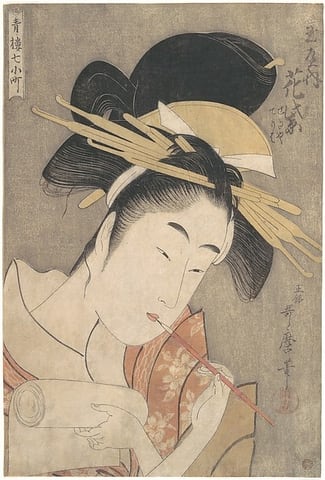
“Hanamurasaki of the Tamaya,” from the series Seven Komachi of the Pleasure Quarters (Seirō Nana Komachi)Kitagawa Utamaro, ca. 1790Courtesy of The Metropolitan Museum of Art 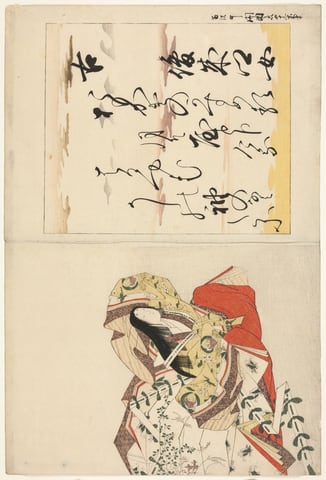
The Poetess Shunzei no Musume, from the series The Thirty-six Immortal Women Poets (Nishikizuri onna sanjurokkasen)Chôbunsai Eishi, Edo period (1615–1868), 1801Courtesy of the Art Institute of Chicago 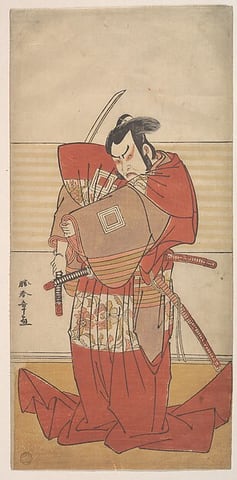
The Actor Ishikawa Danjuro V Performing a Shibaroku Act with a Drawn Sword in His HandKatsukawa Shunshō, ca. 1781Courtesy of The Metropolitan Museum of Art
Section 3, north wall
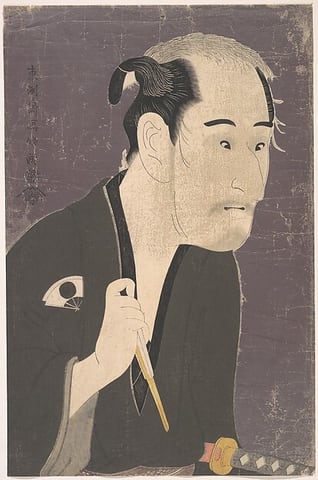
The Actor Onoye Matsusuke as a RoninTōshūsai SharakuCourtesy of The Metropolitan Museum of Art 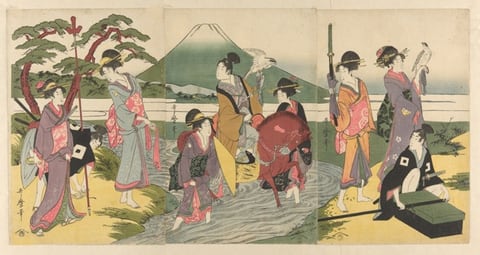
Young man and his party crossing a stream before Mt. FujiKitagawa Utamaro, c. 1798/1800Courtesy of the Art Institute of Chicago
Section 3, south wall
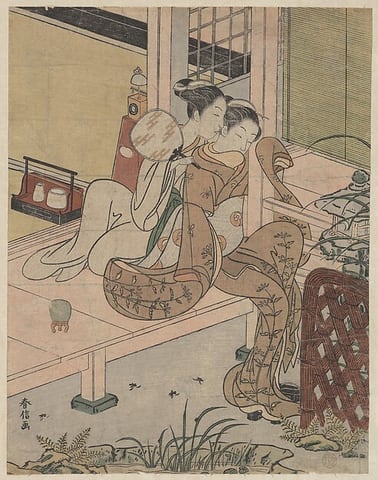
The GossipsSuzuki Harunobu, ca. 1767Courtesy of The Metropolitan Museum of Art 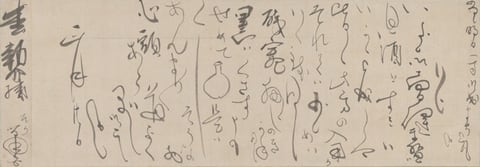
Handwritten LetterSoga Shohaku, c. 1754Courtesy of the Art Institute of Chicago 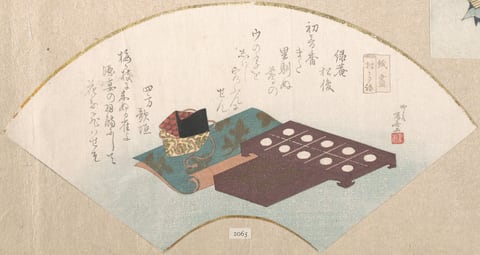
Outfit for the Game of IncenseRyūryūkyo Shinsai, 19th centuryCourtesy of The Metropolitan Museum of Art