Floor plan

Time and place18th-century Britain
18th-century Britain
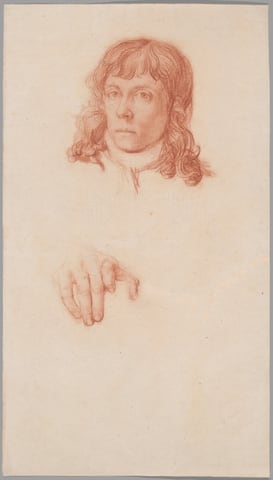
A work made of red chalk on cream laid paper.
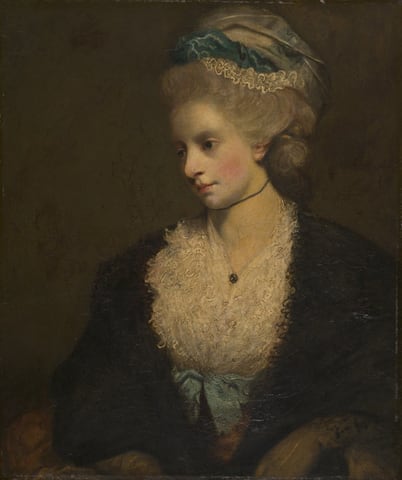
A work made of oil on canvas.
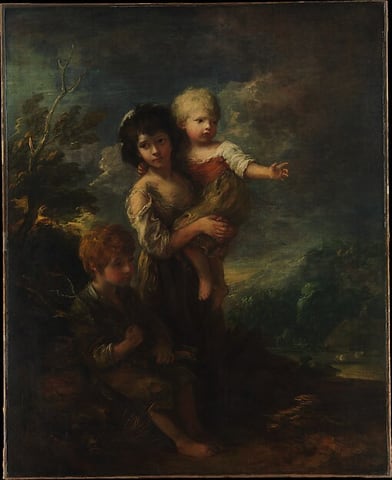
Cottage Children (The Wood Gatherers), by Thomas Gainsborough, 1787
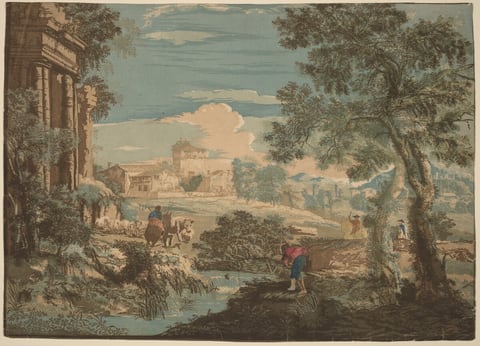
The image shows a landscape scene from an elevated viewpoint. There are large columns of a classical ruin and a leafy tree on the left. On the right, there is a spreading tree with intricate leaves. In the background, there is a pastoral landscape with figures and animals. A shepherd and a cow are guiding a flock of sheep, and buildings can be seen in the distance. The horizon divides the image into sky and earth. The brushstrokes are detailed, capturing textures effectively. The color palette consists of earthy tones with touches of brighter colors on the figures' clothing.

The works in this room are listed below.

Works in this room

Works made in Britain in the 18th century.

Section 1, north wall

  1. A work made of red chalk on cream laid paper.
    Self-PortraitJohn Flaxman, c. 1779Courtesy of the Art Institute of Chicago
  2. A work made of oil on canvas.
    Theophilia GwatkinJoshua Reynolds, 1776–81Courtesy of the Art Institute of Chicago

Section 1, south wall

  1. Cottage Children (The Wood Gatherers), by Thomas Gainsborough, 1787
    Cottage Children (The Wood Gatherers)Thomas Gainsborough, 1787Courtesy of The Metropolitan Museum of Art
  2. The image shows a landscape scene from an elevated viewpoint. There are large columns of a classical ruin and a leafy tree on the left. On the right, there is a spreading tree with intricate leaves. In the background, there is a pastoral landscape with figures and animals. A shepherd and a cow are guiding a flock of sheep, and buildings can be seen in the distance. The horizon divides the image into sky and earth. The brushstrokes are detailed, capturing textures effectively. The color palette consists of earthy tones with touches of brighter colors on the figures' clothing.
    Heroic Landscape with Fisherman, Cows, and HorsemenJohn Baptist Jackson, 1744Courtesy National Gallery of Art, Washington

Section 2, south wall
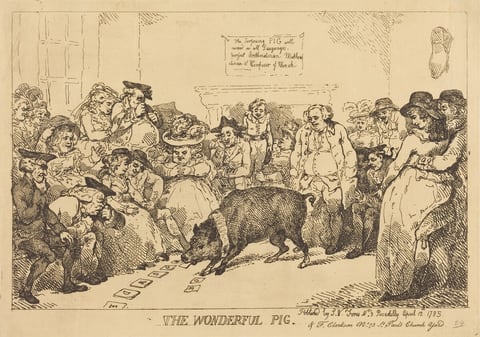
  1. This is a drawing showing a pig performing a trick for an audience. It depicts a group of people watching the pig interacting with cards on the floor. The detailed image shows the varied facial expressions of the audience members. There is text at the top of the image suggesting the pig has a unique ability, possibly related to languages. The drawing captures a moment of entertainment in a satirical style, with lines and cross-hatching used to emphasize the humor.
    The Wonderful PigThomas Rowlandson, 1785Courtesy National Gallery of Art, Washington
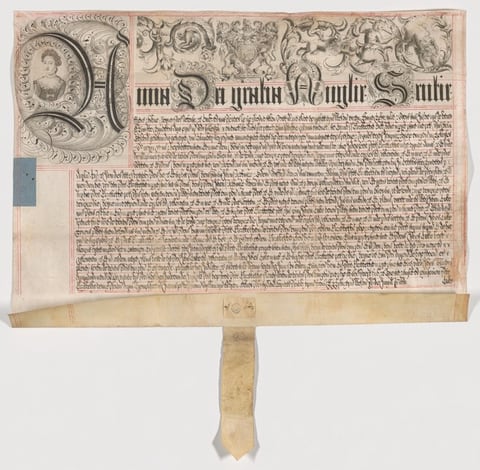
  2. A work made of engraved letterhead, pen and ink calligraphy, and graphite ruling on parchment, folded with strap and (missing) seal.
    Recovery Document (Land Title Grant)Unrecorded British maker, 1702/14 (Queen Anne period)Courtesy of the Art Institute of Chicago
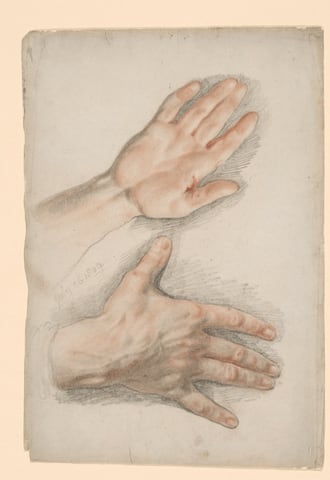
  3. A work made of red and black chalk on gray wove paper.
    Two Studies of a Right HandThomas Lawrence, July 26, 1800Courtesy of the Art Institute of Chicago

Section 2, north wall
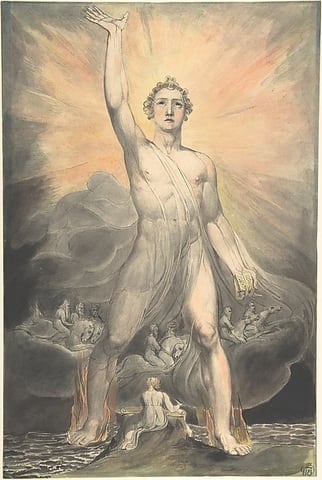
  1. Angel of the Revelation (Book of Revelation, chapter 10), by William Blake, ca. 1803–5
    Angel of the Revelation (Book of Revelation, chapter 10)William Blake, ca. 1803–5Courtesy of The Metropolitan Museum of Art
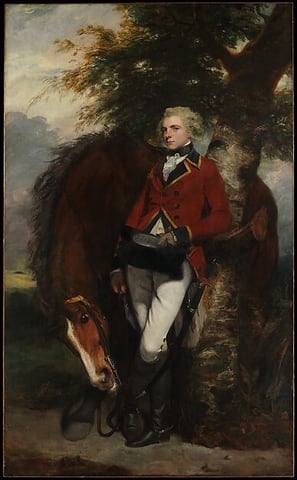
  2. Captain George K. H. Coussmaker (1759–1801), by Joshua Reynolds, 1782
    Captain George K. H. Coussmaker (1759–1801)Joshua Reynolds, 1782Courtesy of The Metropolitan Museum of Art

Section 3, north wall
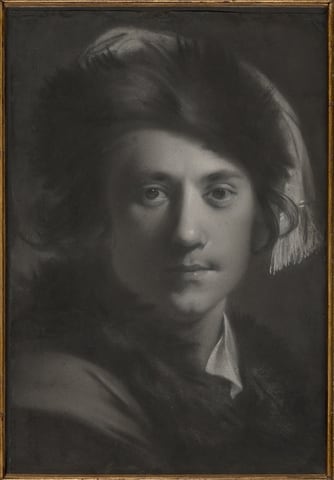
  1. Black, gray pastel portrait of man in a fur hat.
    Self-Portrait in a Fur CapJoseph Wright of Derby, 1765/68Courtesy of the Art Institute of Chicago
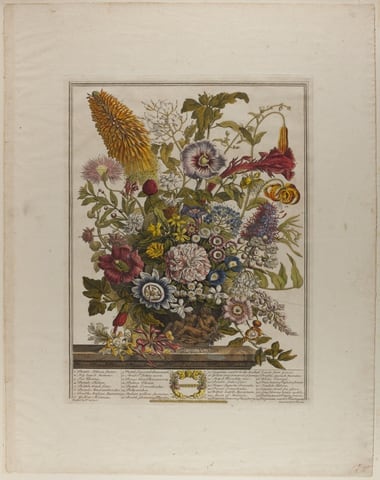
  2. A work made of engraving in black ink with opaque and translucent watercolor on cream laid paper.
    August, from Twelve Months of FlowersHenry Fletcher, n.d.Courtesy of the Art Institute of Chicago

Section 3, south wall
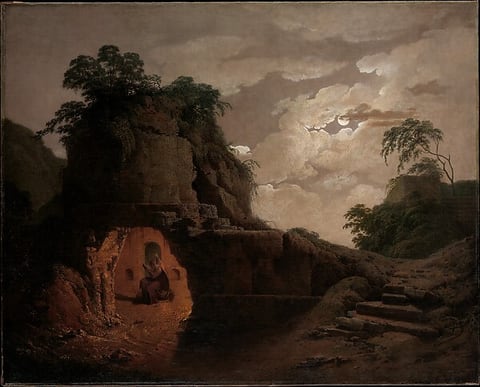
  1. Virgil's Tomb by Moonlight, with Silius Italicus Declaiming, by Joseph Wright of Derby, 1779
    Virgil's Tomb by Moonlight, with Silius Italicus DeclaimingJoseph Wright of Derby, 1779Courtesy of The Metropolitan Museum of Art
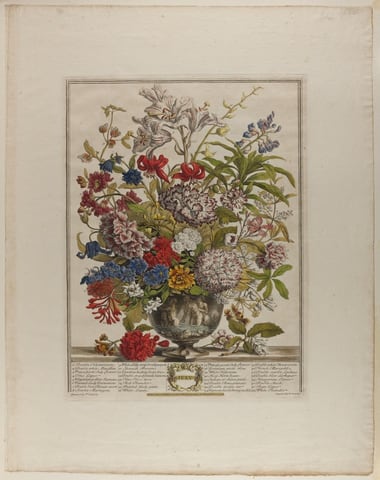
  2. A work made of engraving in black ink with opaque and translucent watercolor on cream laid paper.
    July, from Twelve Months of FlowersHenry Fletcher, n.d.Courtesy of the Art Institute of Chicago

Section 4, south wall
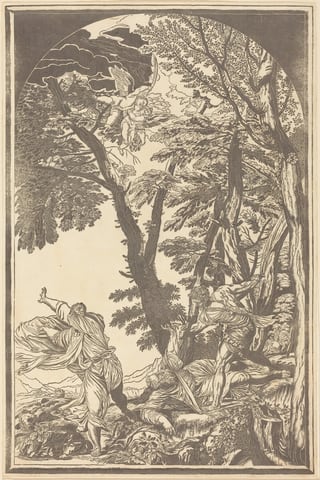
  1. This drawing depicts multiple figures in a forest setting. An angelic figure hovers at the top with wings outstretched. The forest below is filled with intricately detailed trees. Figures on the ground are in dynamic poses, one showing surprise or fear, and another reaching upwards. The composition is detailed with flowing garments and textured foliage, evoking tension and animation.
    The Death of Saint Peter MartyrJohn Baptist Jackson, 1739Courtesy National Gallery of Art, Washington
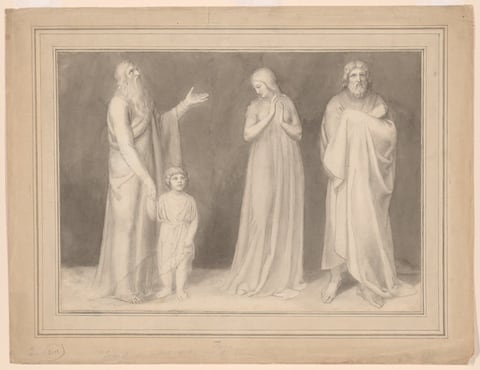
  2. A work made of pen and black ink and brush and black ink wash, with touches of pen and brown ink, on ivory laid paper.
    Hannah Presenting Samuel to EliJohn Flaxman, c. 1783Courtesy of the Art Institute of Chicago
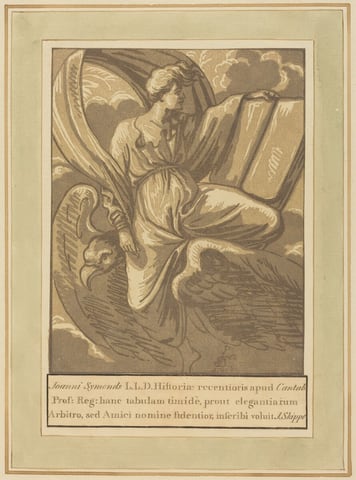
  3. This is a drawing of a seated figure on a large bird. The image depicts a classically draped figure seated on a stylized bird. The figure holds an open book and gazes into the distance. The bird has sharp features and spread wings. The background contains swirling clouds. The scene is framed with a border, and there is text at the bottom. The lines are bold and the shades are muted.
    Saint John the EvangelistJohn Skippe, 1771Courtesy National Gallery of Art, Washington