Floor plan

Time and placeThe 17th century

The 17th century

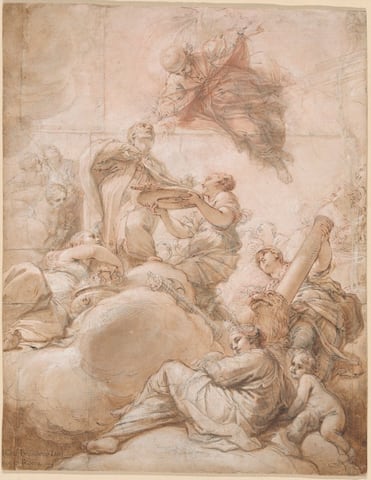
A work made of pen and brown ink and brush and brown wash, over black and red chalk, heightened with white opaque watercolor, on joined sheets of laid paper, mounted to paperboard.
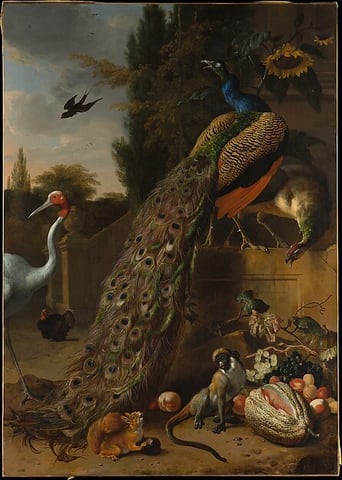
Peacocks, by Melchior d' Hondecoeter, 1683
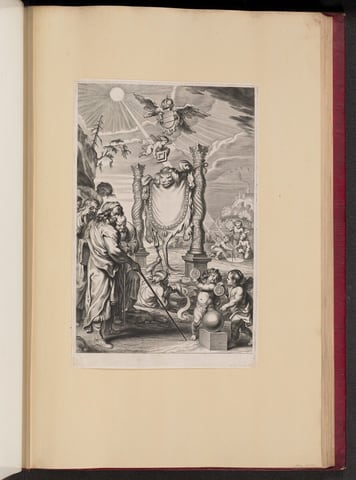
This is a drawing of a mythological or allegorical scene. The scene features various figures of different ages engaged in activities around a central structure resembling an ornate draped curtain held up by columns. There is a celestial element shining down from the top, and an emblem or coat of arms held by winged figures at the very top. The figures are dressed in flowing robes and interact with each other and objects such as a globe and a staff. The composition is rich with symbolism, typical of artwork focused on narrative depth and storytelling.
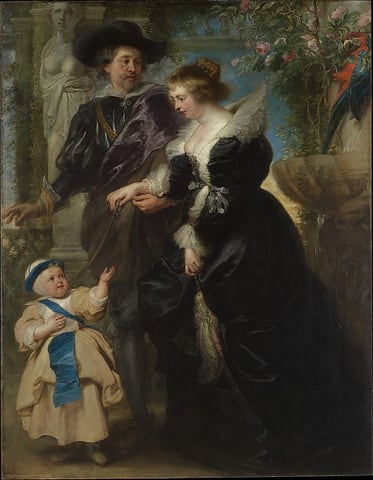
Rubens, Helena Fourment (1614–1673), and Their Son Frans (1633–1678), by Peter Paul Rubens, ca. 1635
A work made of oil on copper.
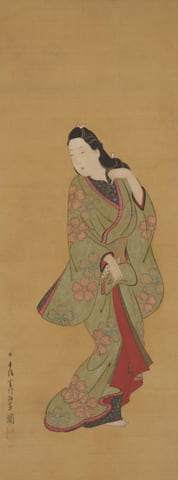
A work made of hanging scroll; ink and colors on paper.
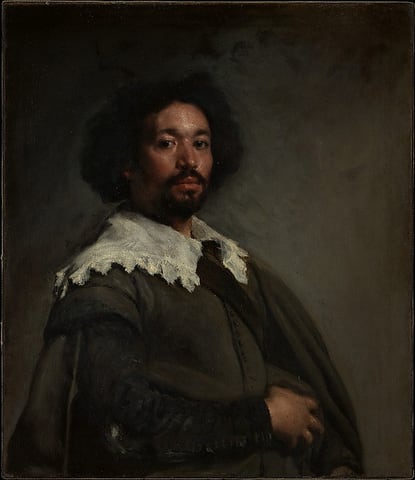
Juan de Pareja (ca. 1608–1670), by Diego Velázquez, 1650

The works in this room are listed below.

Works in this room

Works made in the 17th century, anywhere in the world.

Section 1, north wall

  1. A work made of pen and brown ink and brush and brown wash, over black and red chalk, heightened with white opaque watercolor, on joined sheets of laid paper, mounted to paperboard.
    Allegory of the Elevation of Cardinal Deacon Oddone Colonna to the Papal Chair as Pope Martin VBenedetto Luti, 1700Courtesy of the Art Institute of Chicago
  2. Peacocks, by Melchior d' Hondecoeter, 1683
    PeacocksMelchior d' Hondecoeter, 1683Courtesy of The Metropolitan Museum of Art
  3. This is a drawing of a mythological or allegorical scene. The scene features various figures of different ages engaged in activities around a central structure resembling an ornate draped curtain held up by columns. There is a celestial element shining down from the top, and an emblem or coat of arms held by winged figures at the very top. The figures are dressed in flowing robes and interact with each other and objects such as a globe and a staff. The composition is rich with symbolism, typical of artwork focused on narrative depth and storytelling.
    Title Page for G. de St. Vincent, Opus Geometricum Quadraturae CirculiCornelis Galle II, 1647Courtesy National Gallery of Art, Washington

Section 1, south wall

  1. Rubens, Helena Fourment (1614–1673), and Their Son Frans (1633–1678), by Peter Paul Rubens, ca. 1635
    Rubens, Helena Fourment (1614–1673), and Their Son Frans (1633–1678)Peter Paul Rubens, ca. 1635Courtesy of The Metropolitan Museum of Art
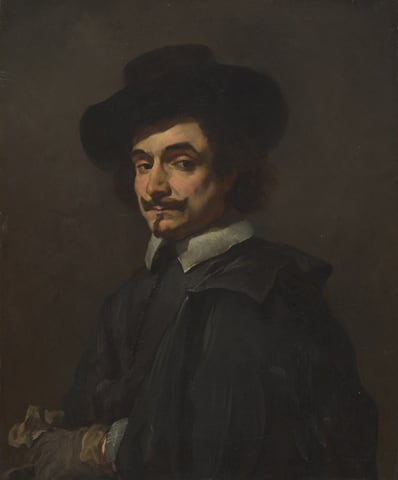
  2. A work made of oil on copper.
    Portrait of a ManJan Baptist Weenix, c. 1650Courtesy of the Art Institute of Chicago
  3. A work made of hanging scroll; ink and colors on paper.
    Beauty Turning Her HeadHishikawa Moronobu, c. 1685-94Courtesy of the Art Institute of Chicago
  4. Juan de Pareja (ca. 1608–1670), by Diego Velázquez, 1650
    Juan de Pareja (ca. 1608–1670)Diego Velázquez, 1650Courtesy of The Metropolitan Museum of Art

Section 2, south wall
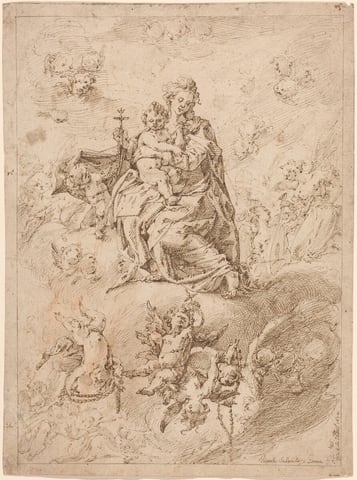
  1. The image depicts a woman seated with a child in her lap. The woman looks down at the child, who has curly hair. Both figures are intricately drawn in a detailed line drawing style. The woman wears a headdress and flowing garment, holding a cross-topped staff. The child clutches her arm. Surrounding them are cloud-like forms and cherubic figures with wings, some holding rosary beads. In the background, more clouds and angelic faces are sketched.
    The Madonna of the RosaryVicente Salvador Gómez, 1674Courtesy National Gallery of Art, Washington
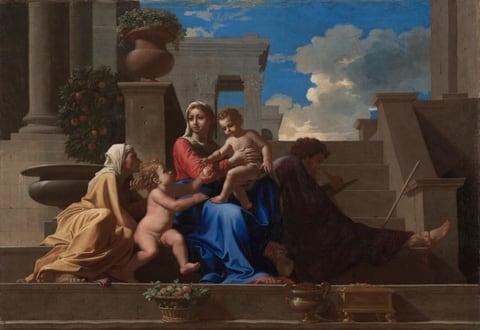
  2. The Holy Family on the Steps, by Nicolas Poussin, 1648
    The Holy Family on the StepsNicolas Poussin, 1648Courtesy of the Cleveland Museum of Art
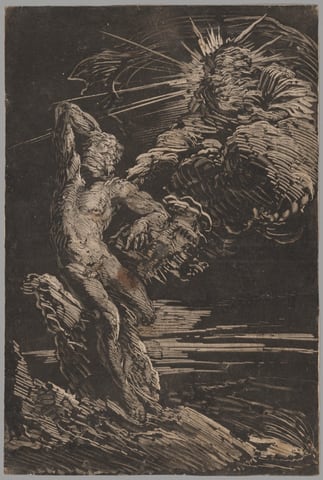
  3. Drawing of god, radiating light, reaching down from clouds, touching male figure.
    The Creation of AdamGiovanni Benedetto Castiglione, c. 1645/50Courtesy of the Art Institute of Chicago
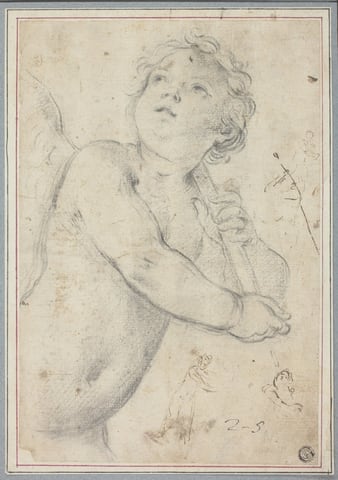
  4. A work made of black chalk with pen and brown ink on cream laid paper.
    Putto Holding StaffGuido Reni, n.d.Courtesy of the Art Institute of Chicago

Section 2, north wall
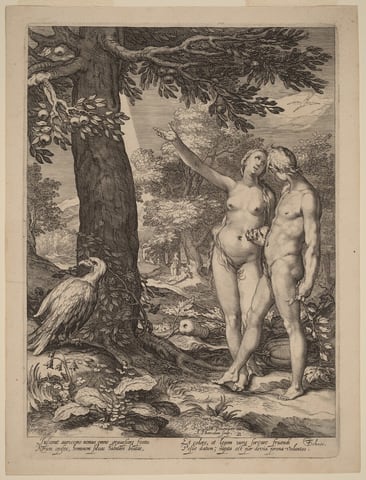
  1. This is a drawing of two nude figures standing beneath a fruit-bearing tree surrounded by elements of nature. The drawing depicts a scene in a lush outdoor setting, featuring intricately detailed branches and leaves of the large tree as well as an eagle-like bird perched nearby. In the background are additional trees extending into a forested area, and a winding path leading into the distance. The foreground includes various plants and the ground is littered with their leaves. The figures are positioned at the center, engaged in a gesture of pointing towards the fruit in the tree. The scene is rendered in fine details with attention to the texture and flow of the natural elements surrounding the figures.
    Adam and Eve before the Tree of KnowledgeJan Saenredam, 1604Courtesy National Gallery of Art, Washington
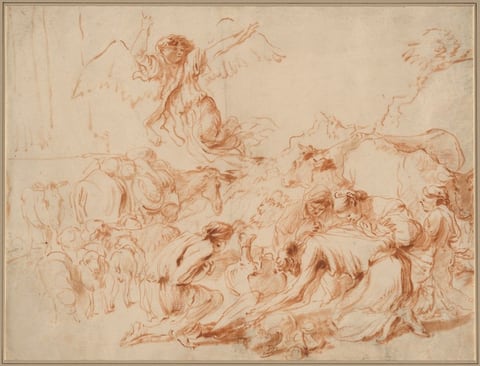
  2. A work made of red oil paint on ivory laid paper.
    The Angel Departing from the Family of Tobit (?)Giovanni Benedetto Castiglione, c. 1655Courtesy of the Art Institute of Chicago
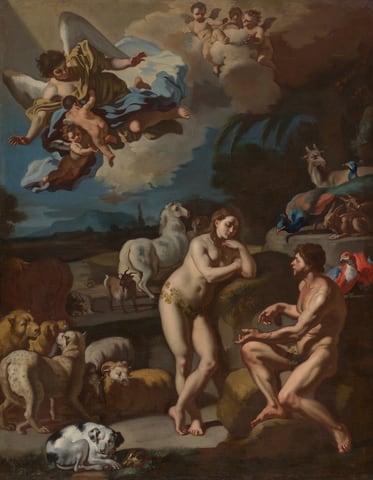
  3. A work made of oil on canvas.
    Adam and Eve in ParadiseFrancesco Solimena, c. 1700Courtesy of the Art Institute of Chicago

Section 3, north wall
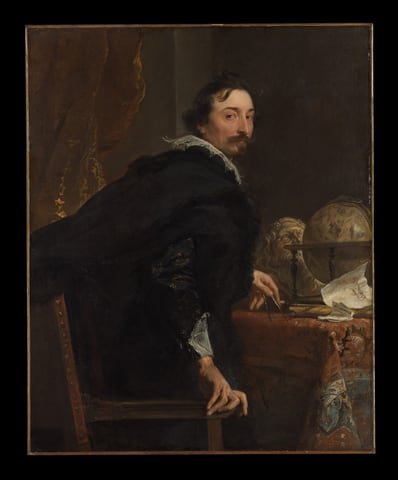
  1. Lucas van Uffel (died 1637), by Anthony van Dyck, ca. 1622
    Lucas van Uffel (died 1637)Anthony van Dyck, ca. 1622Courtesy of The Metropolitan Museum of Art
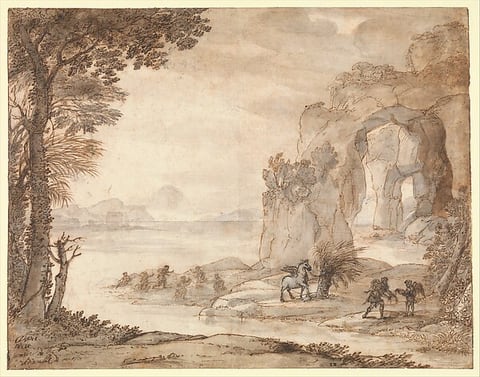
  2. Perseus and the Origin of Coral, by Claude Lorrain (Claude Gellée), ca. 1671
    Perseus and the Origin of CoralClaude Lorrain (Claude Gellée), ca. 1671Courtesy of The Metropolitan Museum of Art