Floor plan

Time and placeThe 17th century

The 17th century

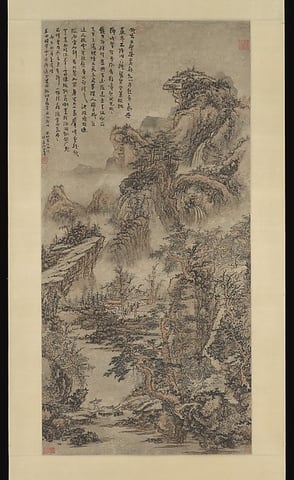
Wooded Mountains at Dusk, by Kuncan, dated 1666
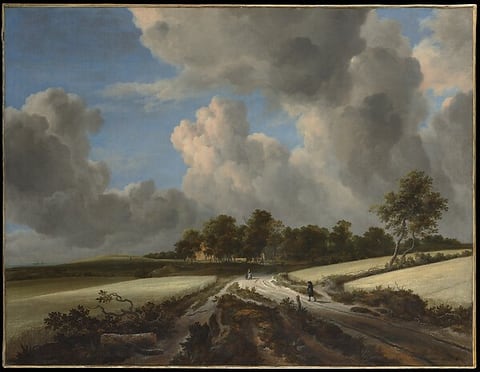
Wheat Fields, by Jacob van Ruisdael, ca. 1670
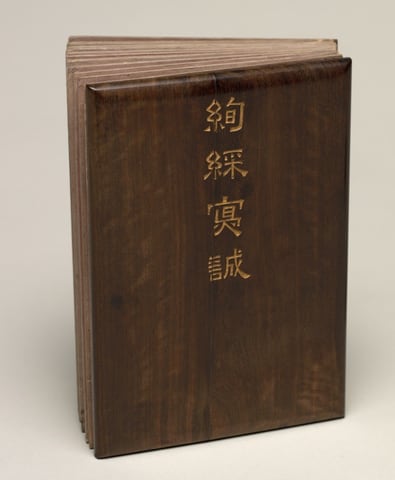
Desk Album: Flower and Bird Paintings, by Zhang Ruoai, 1700s
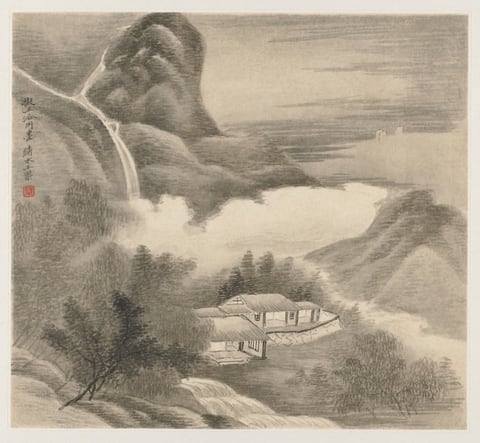
Album of Landscapes: Leaf 5, by Wang Gai, 1677
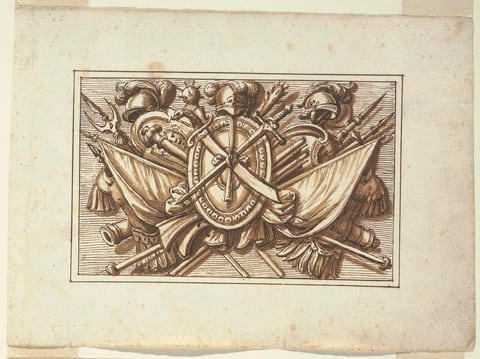
ONE SET OF TROPHIES OF WEAPONS OF WAR AS A DECORATION FOR HORIZONTAL PANELS. INTENDED TO BE ENGRAVED
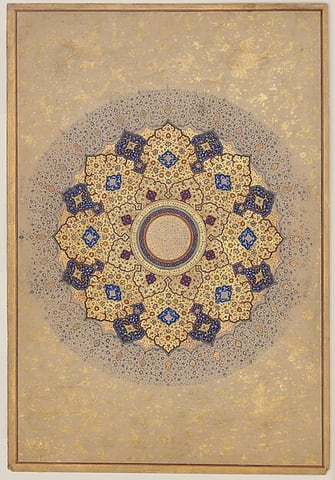
"Rosette Bearing the Names and Titles of Shah Jahan", Folio from the Shah Jahan Album, recto: ca. 1645; verso: ca. 1630–40
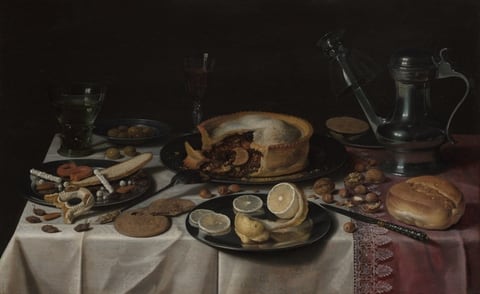
A work made of oil on panel.
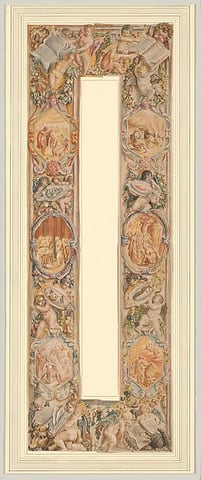
Border Designs for the Mortlake "Acts of the Apostles" Tapestries, by Franz Cleyn, ca. 1626–36

The works in this room are listed below.

Works in this room

Works made in the 17th century, anywhere in the world.

Section 1, north wall

  1. Wooded Mountains at Dusk, by Kuncan, dated 1666
    Wooded Mountains at DuskKuncan, dated 1666Courtesy of The Metropolitan Museum of Art
  2. Wheat Fields, by Jacob van Ruisdael, ca. 1670
    Wheat FieldsJacob van Ruisdael, ca. 1670Courtesy of The Metropolitan Museum of Art
  3. Desk Album: Flower and Bird Paintings, by Zhang Ruoai, 1700s
    Desk Album: Flower and Bird PaintingsZhang Ruoai, 1700sCourtesy of the Cleveland Museum of Art
  4. Album of Landscapes: Leaf 5, by Wang Gai, 1677
    Album of Landscapes: Leaf 5Wang Gai, 1677Courtesy of the Cleveland Museum of Art

Section 1, south wall

  1. ONE SET OF TROPHIES OF WEAPONS OF WAR AS A DECORATION FOR HORIZONTAL PANELS. INTENDED TO BE ENGRAVED
    One set of trophies of weapons of war as a decoration for horizontal panels. Intended to be engravedFrancesco Bedeschini, Italian, 1675-1699Courtesy of Cooper Hewitt, Smithsonian Design Museum
  2. "Rosette Bearing the Names and Titles of Shah Jahan", Folio from the Shah Jahan Album, recto: ca. 1645; verso: ca. 1630–40
    "Rosette Bearing the Names and Titles of Shah Jahan", Folio from the Shah Jahan AlbumUnrecorded maker, recto: ca. 1645; verso: ca. 1630–40Courtesy of The Metropolitan Museum of Art
  3. A work made of oil on panel.
    Still LifePieter Claesz, c. 1625Courtesy of the Art Institute of Chicago
  4. Border Designs for the Mortlake "Acts of the Apostles" Tapestries, by Franz Cleyn, ca. 1626–36
    Border Designs for the Mortlake "Acts of the Apostles" TapestriesFranz Cleyn, ca. 1626–36Courtesy of The Metropolitan Museum of Art

Section 2, south wall
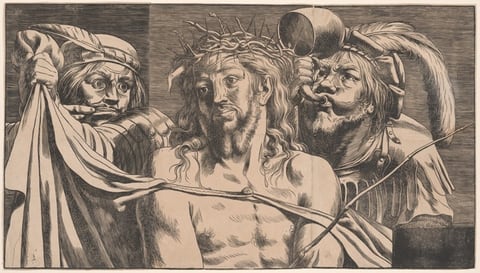
  1. A work made of woodcut on three joined sheets of ivory laid paper.
    The Mocking of ChristWerner van den Valckert, c. 1620Courtesy of the Art Institute of Chicago
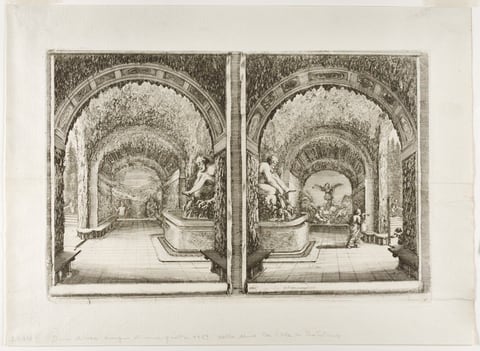
  2. A work made of etching on ivory laid paper.
    The Grotto of Pan and FameStefano della Bella, 1653/55Courtesy of the Art Institute of Chicago
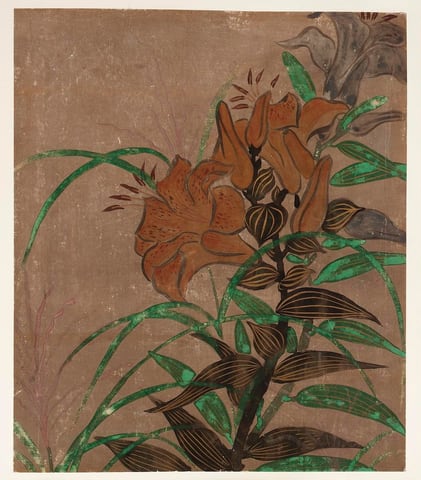
  3. Screen or fusuma (fragment)
    Tiger lilies and grassStyle of Ogata Kenzan, 1663-1868Courtesy of the National Museum of Asian Art, Smithsonian Institution
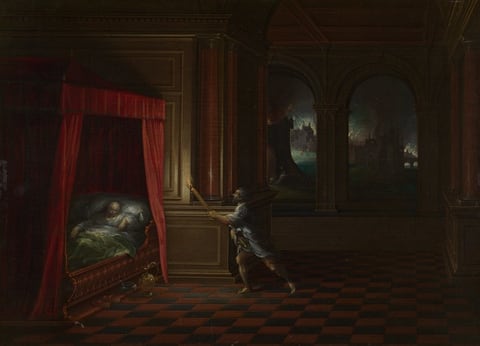
  4. A work made of oil on panel.
    Aeneas Rescuing Anchises from Burning TroyHendrick van Steenwijck, the Younger, c. 1610Courtesy of the Art Institute of Chicago

Section 2, north wall
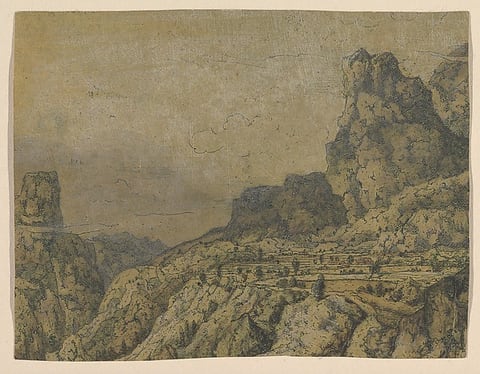
  1. Mountain Valley with a Plateau, by Hercules Segers, ca. 1625–30
    Mountain Valley with a PlateauHercules Segers, ca. 1625–30Courtesy of The Metropolitan Museum of Art
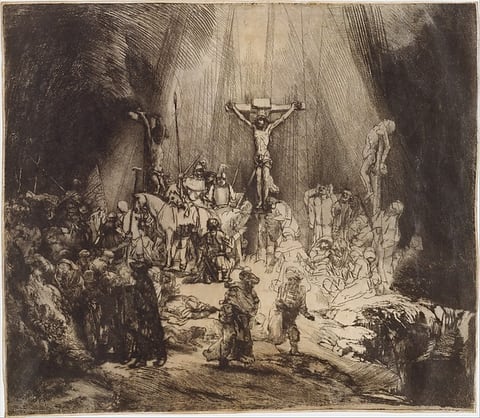
  2. Christ Crucified between the Two Thieves: The Three Crosses, by Rembrandt van Rijn, 1653
    Christ Crucified between the Two Thieves: The Three CrossesRembrandt van Rijn, 1653Courtesy of The Metropolitan Museum of Art
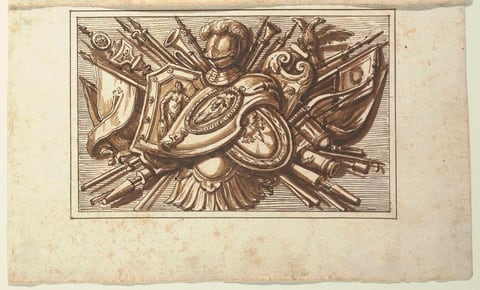
  3. ONE OF A SET OF TROPHIES OF WEAPONS OF WAR AS A DECORATION OF A HORIZONTAL PANEL
    One of a set of trophies of weapons of war as a decoration of a horizontal panelFrancesco Bedeschini, Italian, 1675-1699Courtesy of Cooper Hewitt, Smithsonian Design Museum
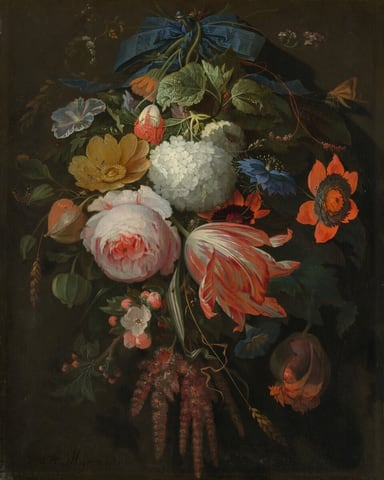
  4. A bouquet of flowers against a dark brown background hangs from a sapphire-blue bow to fill this vertical still life painting. The three largest blooms make a pyramid at the center. A pale pink, flat-leaved carnation is to the lower right of this trio. A red and white striped tulip with flame-shaped petals is next to it, to our right, and a white viburnum bloom, which is made of dozens of smaller clusters, is above. A tan-colored spider builds a web at the center of these three blossoms. Using the face of a clock to work around this trio, we find a spotted bug on a smaller viburnum and some frosty green leaves at noon. A muted orange moth rests on a stalk nearby. Down the right side, the layered vivid blue petals of a love-in-the-mist explode like a starburst. Two coral-red peonies, a mostly closed peony, a topaz-blue morning glory, and the fuzzy fingers of amaranth bring us to six o’clock. Up the left side are delicate pink crab apple blossoms, a spray of Chinese lanterns, a yellow rose with ants crawling across its splayed petals, a striped morning glory, and a few blue, orange, and red buds. A caterpillar rears up on a Chinese lantern bud and a ladybug sits on a leaf nearby. A few stalks of wheat are scattered throughout. Stems weave through the blue ribbon at the top, which is tied around a protruding nail. The artist signed the lower left corner, “AB Mignon f,” with the AB conjoined in a monogram.
    A Hanging Bouquet of FlowersAbraham Mignon, probably 1665/1670Courtesy National Gallery of Art, Washington