Floor plan

Time and placeThe 16th century

The 16th century

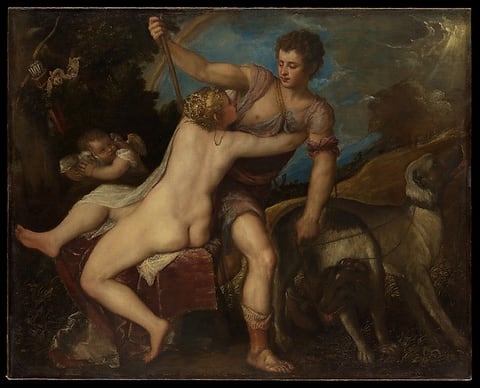
Venus and Adonis, by Titian, 1550s
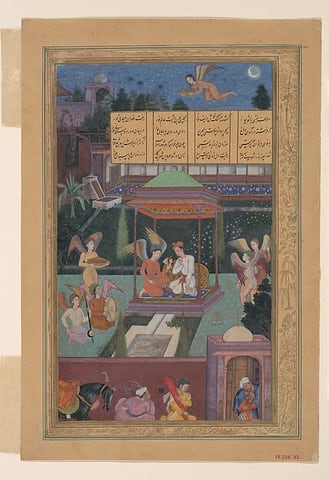
"The Story of the Princess of the Blue Pavillion: The Youth of Rum Is Entertained in a Garden by a Fairy and her Maidens", Folio from a Khamsa (Quintet) of Amir Khusrau Dihlavi, by Amir Khusrau Dihlavi, 1597–98
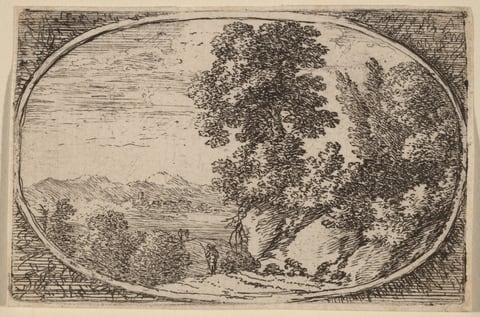
The image shows a landscape viewed from above. The scene is oval, framed by tree branches on each side. Distant mountains form a boundary near the top. Delicate, finely executed lines create detailed foliage and landscape features. A winding path with a small figure adds scale. Lush trees climb upwards, with a muted color palette of the paper and dark brown and black lines providing contrast.
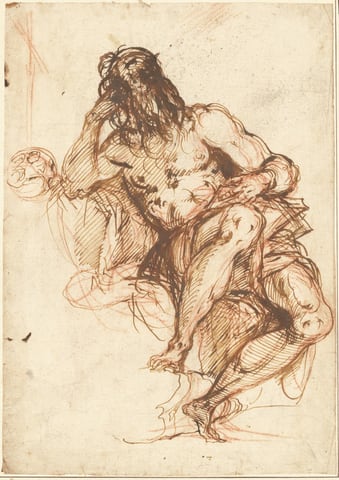
The image shows a sketch of a seated bearded figure holding an orb. The figure appears muscular, with a beard merging into long hair. The face is not detailed, and draped fabric covers part of the body. There is no jewelry, and the background is plain.
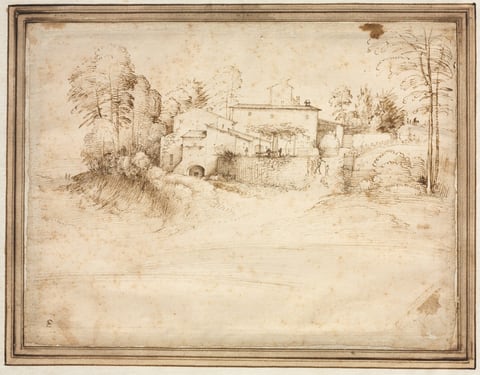
Farmhouse on the Slope of a Hill, by Fra Bartolommeo, c. 1508
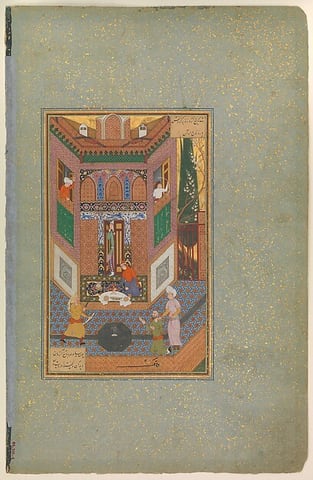
"A Ruffian Spares the Life of a Poor Man", Folio 4v from a Mantiq al-Tayr (Language of the Birds), by Farid al-Din `Attar, ca. 1600
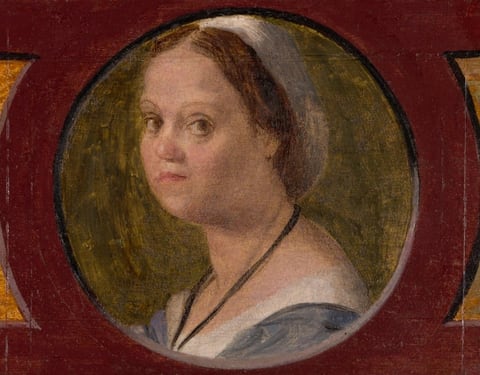
A work made of oil on panel.
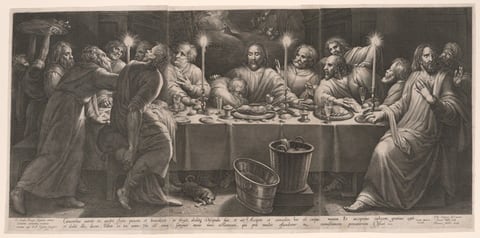
A work made of engraving on three joined sheets of laid paper.

The works in this room are listed below.

Works in this room

Works made in the 16th century, anywhere in the world.

First room, north wall

  1. Venus and Adonis, by Titian, 1550s
    Venus and AdonisTitian, 1550sCourtesy of The Metropolitan Museum of Art
  2. "The Story of the Princess of the Blue Pavillion: The Youth of Rum Is Entertained in a Garden by a Fairy and her Maidens", Folio from a Khamsa (Quintet) of Amir Khusrau Dihlavi, by Amir Khusrau Dihlavi, 1597–98
    "The Story of the Princess of the Blue Pavillion: The Youth of Rum Is Entertained in a Garden by a Fairy and her Maidens", Folio from a Khamsa (Quintet) of Amir Khusrau DihlaviAmir Khusrau Dihlavi, 1597–98Courtesy of The Metropolitan Museum of Art
  3. The image shows a landscape viewed from above. The scene is oval, framed by tree branches on each side. Distant mountains form a boundary near the top. Delicate, finely executed lines create detailed foliage and landscape features. A winding path with a small figure adds scale. Lush trees climb upwards, with a muted color palette of the paper and dark brown and black lines providing contrast.
    The Boulder Crowned with TreesHerman van SwaneveltCourtesy National Gallery of Art, Washington
  4. The image shows a sketch of a seated bearded figure holding an orb. The figure appears muscular, with a beard merging into long hair. The face is not detailed, and draped fabric covers part of the body. There is no jewelry, and the background is plain.
    Saint JeromeAlessandro Vittoria, 1565/1570Courtesy National Gallery of Art, Washington

First room, south wall

  1. Farmhouse on the Slope of a Hill, by Fra Bartolommeo, c. 1508
    Farmhouse on the Slope of a HillFra Bartolommeo, c. 1508Courtesy of the Cleveland Museum of Art
  2. "A Ruffian Spares the Life of a Poor Man", Folio 4v from a Mantiq al-Tayr (Language of the Birds), by Farid al-Din `Attar, ca. 1600
    "A Ruffian Spares the Life of a Poor Man", Folio 4v from a Mantiq al-Tayr (Language of the Birds)Farid al-Din `Attar, ca. 1600Courtesy of The Metropolitan Museum of Art
  3. A work made of oil on panel.
    Lucrezia di Lippo di Iacopo GuidiAndrea del Sarto, 1525–28Courtesy of the Art Institute of Chicago
  4. A work made of engraving on three joined sheets of laid paper.
    The Last SupperJan Harmensz. Muller, 1594Courtesy of the Art Institute of Chicago

Second room, south wall
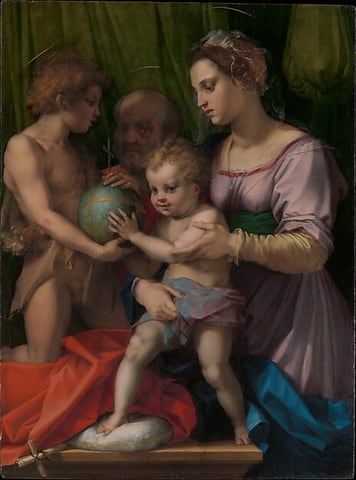
  1. The Holy Family with the Young Saint John the Baptist, by Andrea del Sarto, ca. 1528
    The Holy Family with the Young Saint John the BaptistAndrea del Sarto, ca. 1528Courtesy of The Metropolitan Museum of Art
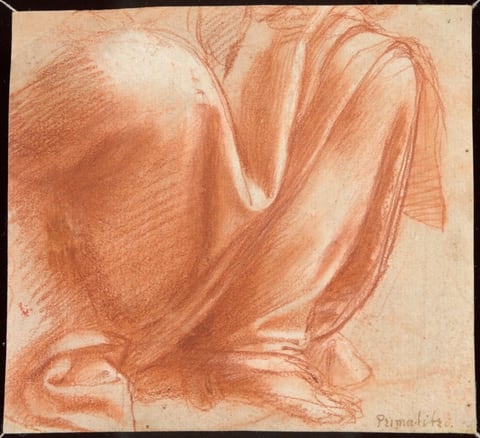
  2. A work made of red chalk and brush and red chalk wash (recto) and black chalk, with black chalk grid lines, (verso) on cream laid paper.
    A Drapery Study for the Knees of a Seated Allegorical Figure of Charity (recto); Bust of a Naked Allegorical Figure of Charity with Two Putti (verso)Giovanni Antonio di Francesco Sogliani, 1520/30Courtesy of the Art Institute of Chicago
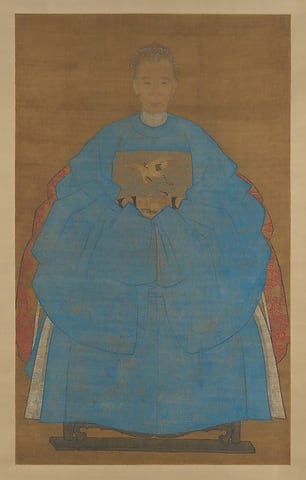
  3. Portrait of the wife of Yizhai, by Ruan Zude, datable to 1561 or 1620
    Portrait of the wife of YizhaiRuan Zude, datable to 1561 or 1620Courtesy of The Metropolitan Museum of Art

Second room, north wall
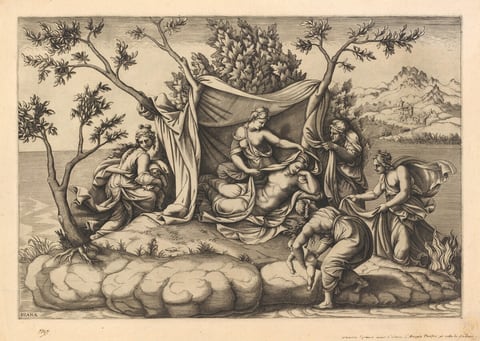
  1. Latona Giving Birth to Apollo and Diana on the Island of Delos, by Diana Scultori, 1561-1565
    Latona Giving Birth to Apollo and Diana on the Island of DelosDiana Scultori, 1561-1565Courtesy National Gallery of Art, Washington
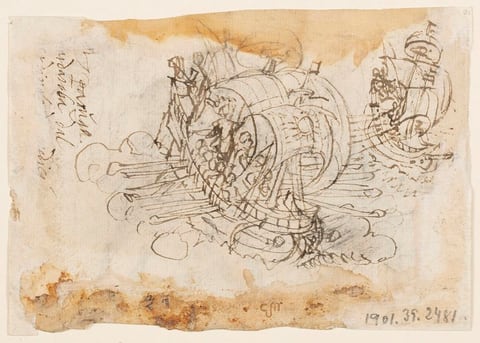
  2. TWO GALLEYS AT SEA
    Two Galleys at SeaJan van der Straet, called Stradanus, ca. 1587 – 1590Courtesy of Cooper Hewitt, Smithsonian Design Museum
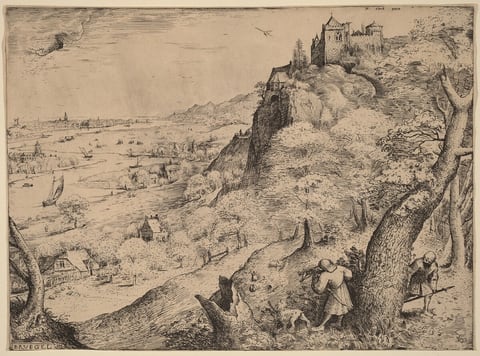
  3. The image shows a landscape with a city in the distance, a castle on a cliff, fields, forests, and two figures with a dog hunting. There are sailboats on water and houses on farmland. The style is detailed with etching lines in sepia tones.
    The Rabbit HuntersPieter Bruegel, 1560Courtesy National Gallery of Art, Washington

Third room, north wall
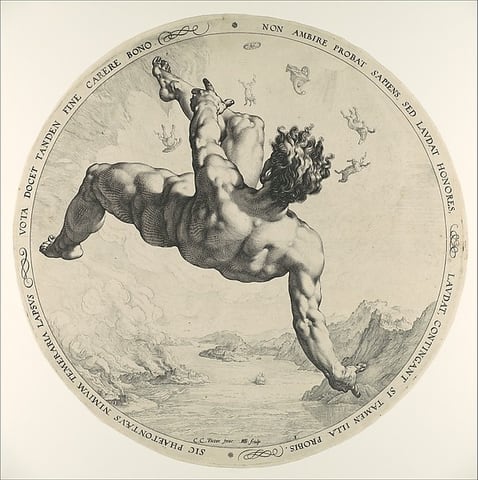
  1. Phaeton, from "The Four Disgracers", by Hendrick Goltzius, 1588
    Phaeton, from "The Four Disgracers"Hendrick Goltzius, 1588Courtesy of The Metropolitan Museum of Art
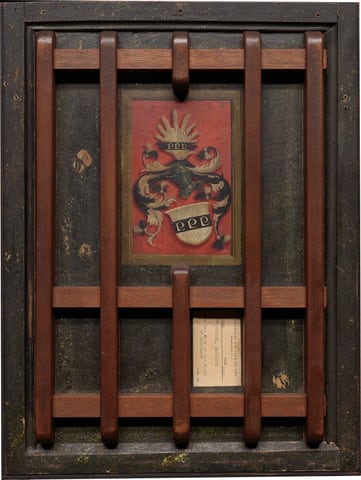
  2. The image shows a pattern of vertical and horizontal wooden bars forming a grid-like design. In the center, there is a rectangular panel with a decorative emblem against a red background. The emblem features swirling shapes. The structured wooden grid and ornate emblem suggest a vintage heraldic shield or coat of arms.
    Margarethe Vöhlin [reverse]Bernhard Strigel, 1527Courtesy National Gallery of Art, Washington