Floor plan

Time and place16th-century Netherlands
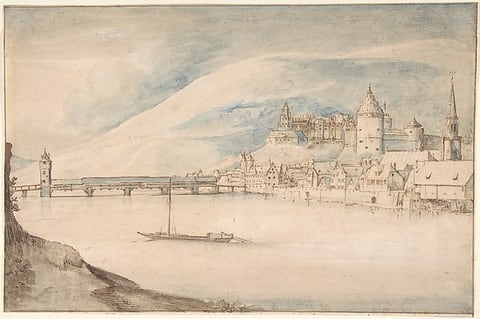
16th-century Netherlands
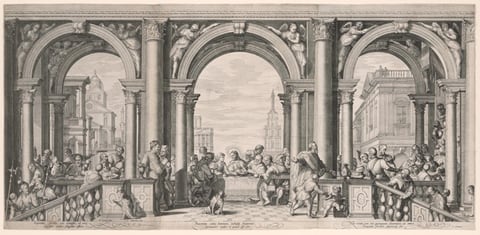
A work made of engraving on three joined sheets of ivory laid paper.
View of Heidelberg, by Jan Brueghel the Elder, ca. 1588–89
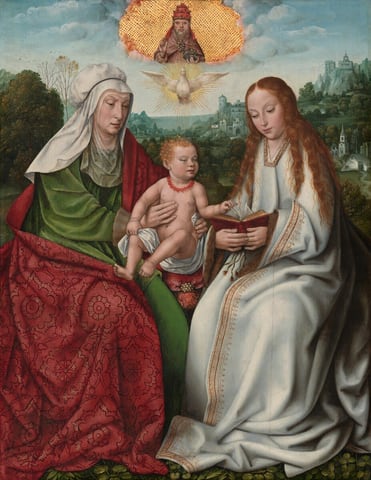
This painting depicts three people seated side-by-side outdoors. The central person is a young, nude child with curly, reddish hair and a red beaded necklace, sitting on a red cushion. Their head is turned to the right. The woman on the left wears a white head covering, a sheer veil around her neck, a green dress, and a red cloak with floral designs. She holds the torso of the child and drapes a white cloth around its legs. The woman on the right has long, flowing reddish hair and wears a white dress or robe with gold detailing down the front, on the neckline, and on the wrists. She holds an open red book, and the child is turning one of the thin pages. All three people have pale skin. Above them, in the cloudy blue sky, there is a white dove with its wings outstretched, gold lines radiating from it. Above the dove, there is an image of a crowned bearded man with pale skin, wearing red robes and holding an orb. He is against a golden background with red dots that breaks through the pale clouds. The background shows a landscape with green trees, hills, and pale blue buildings.
A work made of engraving on two joined sheets of ivory laid paper.
A work made of engraving on three joined sheets of laid paper.
The image shows an elderly man seated from the waist up. He is angled slightly away from the viewer, resting his head on one hand and leaning on the other arm. The man has a deeply lined face, a large beard, curly hair, and appears focused on something outside the frame. He wears flowing garments and a book is under his arm. In the background, there are rugged, mountainous rock formations. Ornate text frames the image at the bottom.

The works in this room are listed below.

Works in this room

Works made in the Netherlands in the 16th century.

First room, north wall

  1. A work made of engraving on three joined sheets of ivory laid paper.
    Christ at the Feast of SimonJan Saenredam, c. 1590-1600Courtesy of the Art Institute of Chicago
  2. View of Heidelberg, by Jan Brueghel the Elder, ca. 1588–89
    View of HeidelbergJan Brueghel the Elder, ca. 1588–89Courtesy of The Metropolitan Museum of Art
  3. This painting depicts three people seated side-by-side outdoors. The central person is a young, nude child with curly, reddish hair and a red beaded necklace, sitting on a red cushion. Their head is turned to the right. The woman on the left wears a white head covering, a sheer veil around her neck, a green dress, and a red cloak with floral designs. She holds the torso of the child and drapes a white cloth around its legs. The woman on the right has long, flowing reddish hair and wears a white dress or robe with gold detailing down the front, on the neckline, and on the wrists. She holds an open red book, and the child is turning one of the thin pages. All three people have pale skin. Above them, in the cloudy blue sky, there is a white dove with its wings outstretched, gold lines radiating from it. Above the dove, there is an image of a crowned bearded man with pale skin, wearing red robes and holding an orb. He is against a golden background with red dots that breaks through the pale clouds. The background shows a landscape with green trees, hills, and pale blue buildings.
    Saint Anne with the Virgin and the Christ ChildMaster of Frankfurt, c. 1511/1515Courtesy National Gallery of Art, Washington

First room, south wall

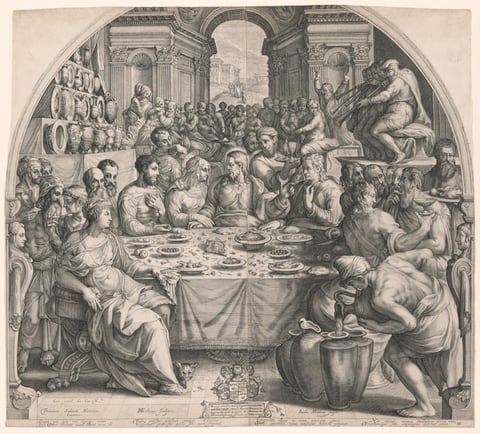
  1. A work made of engraving on two joined sheets of ivory laid paper.
    The Wedding at CanaHendrick Goltzius, c. 1590-1610Courtesy of the Art Institute of Chicago
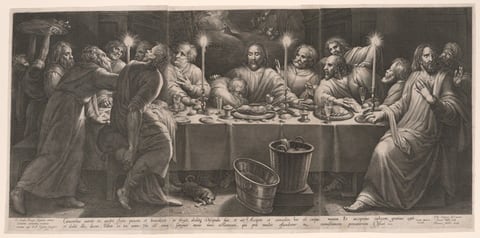
  2. A work made of engraving on three joined sheets of laid paper.
    The Last SupperJan Harmensz. Muller, 1594Courtesy of the Art Institute of Chicago
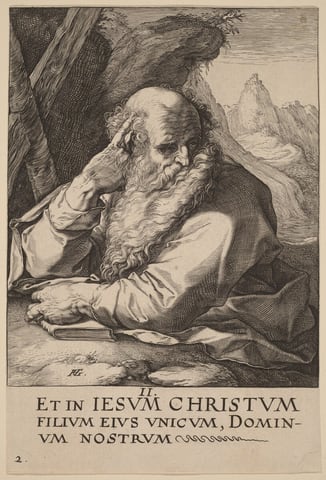
  3. The image shows an elderly man seated from the waist up. He is angled slightly away from the viewer, resting his head on one hand and leaning on the other arm. The man has a deeply lined face, a large beard, curly hair, and appears focused on something outside the frame. He wears flowing garments and a book is under his arm. In the background, there are rugged, mountainous rock formations. Ornate text frames the image at the bottom.
    Saint AndrewHendrick Goltzius, probably 1589Courtesy National Gallery of Art, Washington

Second room, south wall
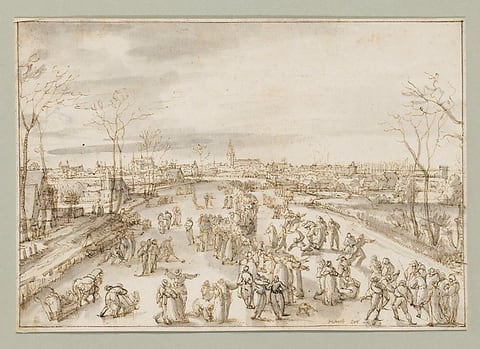
  1. Ice skaters on the Amstel in Amsterdam, by Hans Bol, 1589
    Ice skaters on the Amstel in AmsterdamHans Bol, 1589Courtesy of The Metropolitan Museum of Art
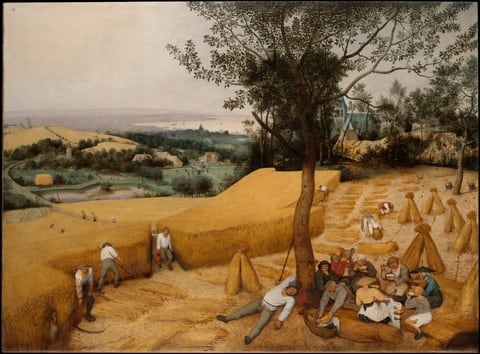
  2. The Harvesters, by Pieter Bruegel, 1565
    The HarvestersPieter Bruegel, 1565Courtesy of The Metropolitan Museum of Art
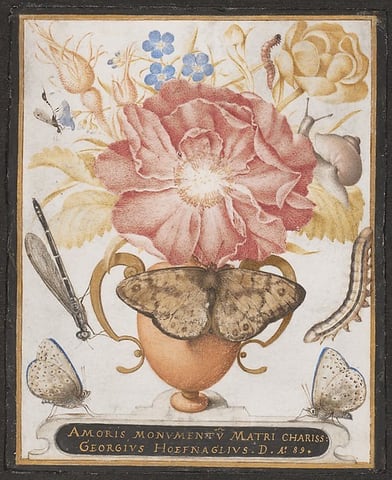
  3. Still Life with Flowers, a Snail and Insects, by Joris Hoefnagel, 1589
    Still Life with Flowers, a Snail and InsectsJoris Hoefnagel, 1589Courtesy of The Metropolitan Museum of Art

Second room, north wall
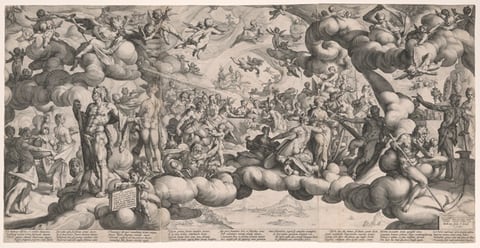
  1. A work made of engraving on three joined sheets of ivory laid paper.
    The Wedding of Cupid and PsycheHendrick Goltzius, 1587Courtesy of the Art Institute of Chicago
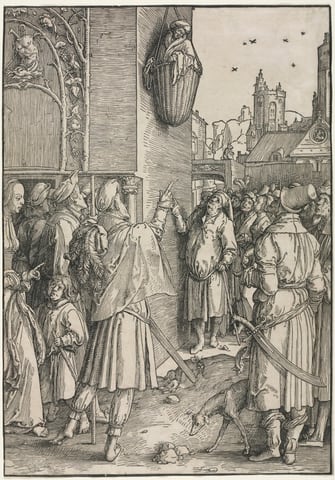
  2. The Power of Women: The Poet Virgil Suspended in a Basket, by Lucas van Leyden, c. 1512
    The Power of Women: The Poet Virgil Suspended in a BasketLucas van Leyden, c. 1512Courtesy of the Cleveland Museum of Art
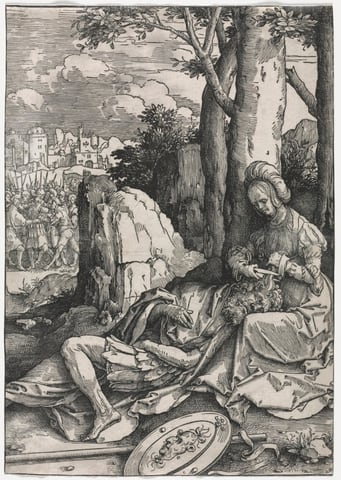
  3. The Power of Women: Samson and Delilah, by Lucas van Leyden, c. 1512
    The Power of Women: Samson and DelilahLucas van Leyden, c. 1512Courtesy of the Cleveland Museum of Art
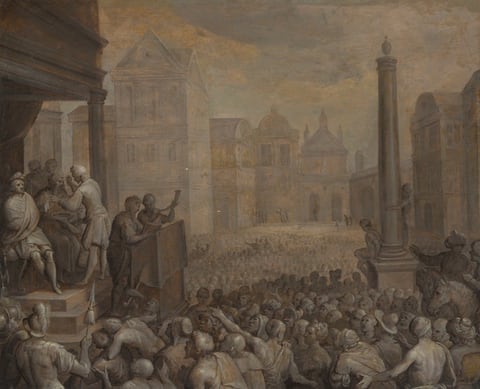
  4. A work made of oil on panel.
    The Judgement of ZaleucusOtto van Veen, c. 1605Courtesy of the Art Institute of Chicago

Third room, north wall
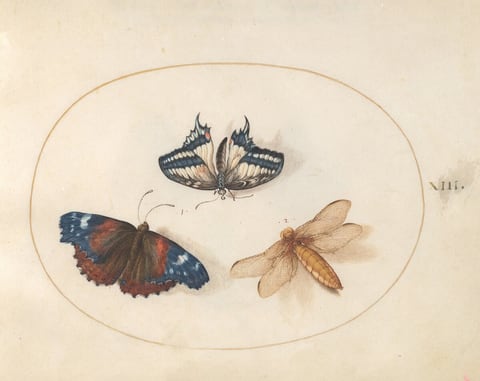
  1. Three insects are depicted in the image: a butterfly with dark blue and red wings on the bottom left, a larger butterfly with white, black, and blue patterns at the top center, and a dragonfly with brown and gold tones on the bottom right. The color palette includes rich blues, reds, browns, and golds against a neutral background. The central butterfly is positioned higher than the other two insects, with the left butterfly and right dragonfly symmetrically arranged below.
    Plate 13: Yellow Swallowtail and Red Admiral Butterflies with a Dragonfly (Broad-Bodied Chaser?)Joris Hoefnagel, c.1575/1590sCourtesy National Gallery of Art, Washington
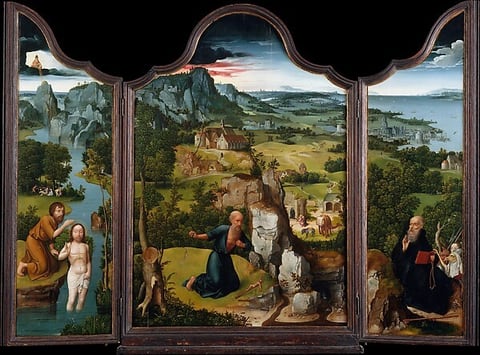
  2. The Penitence of Saint Jerome, by Joachim Patinir, ca. 1515
    The Penitence of Saint JeromeJoachim Patinir, ca. 1515Courtesy of The Metropolitan Museum of Art
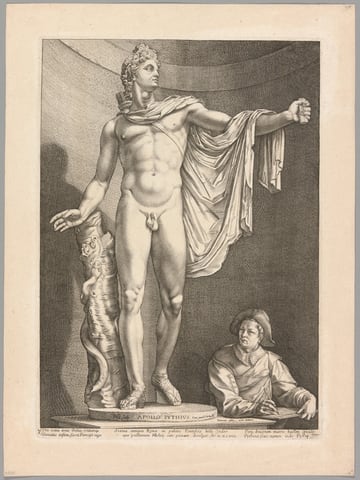
  3. A work made of engraving in black on cream laid paper.
    The Apollo Belvedere, plate 3 from Three Famous Antique SculpturesHendrick Goltzius, c. 1592, printed c. 1617Courtesy of the Art Institute of Chicago