Floor plan

Artist galleriesUnrecorded makers

Unrecorded makers

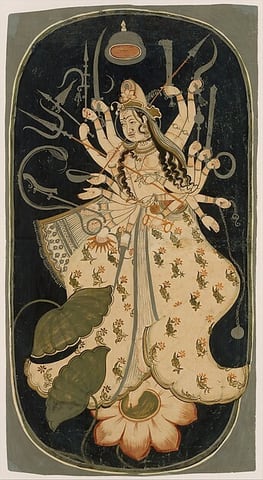
Mahadevi, the Great Goddess, ca. 1725
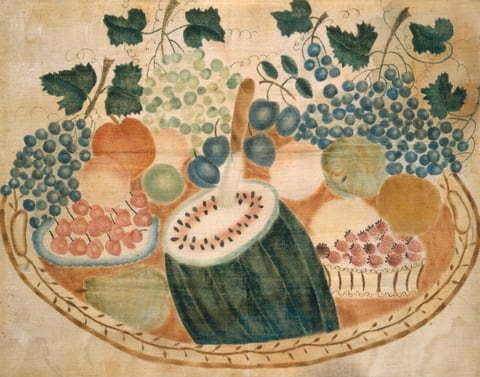
The image shows a large cut watermelon in a woven basket surrounded by various fruits including grapes, peaches, and small round red fruits. The color palette includes greens, blues, oranges, and browns. The basket takes up most of the space and is filled with fruits, with grape clusters hanging above it.
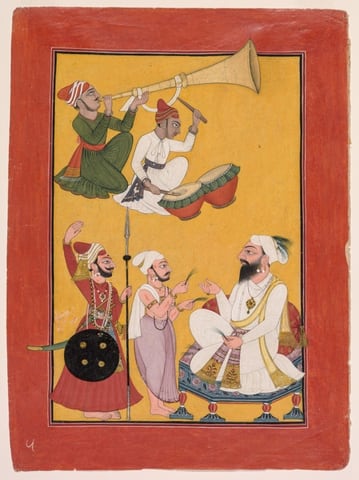
Celebrations of Krishna's Birth, from a Bhagavata Purana, c. 1725–30
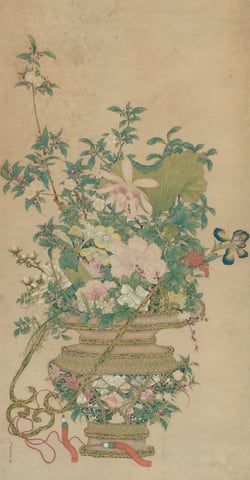
A vertical painting of a bundle of many types of flowers set in a vase-like vessel. The bottom of this vessel contains netted rope through which many blossoms can be seen. A plethora of blooms and leaves extend upward from the top of the vessel.
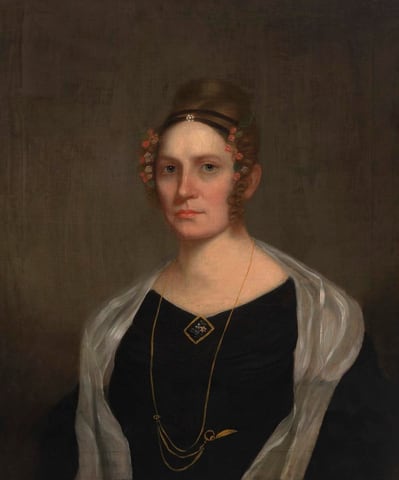
Artist: Unidentified Artist, Sitter: Abigail Powers Fillmore, Current owner: National Portrait Gallery, Smithsonian Institution
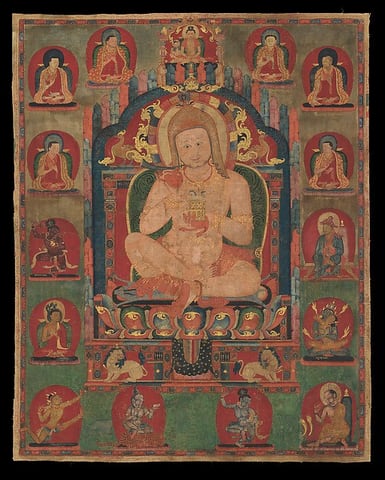
Mahasiddha Jnanatapa, ca. 1350
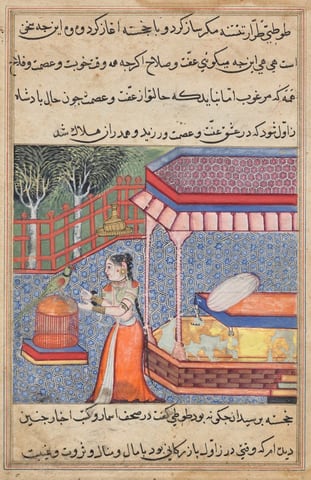
The parrot addresses Khujasta at the beginning of the thirty-sixth night, from a Tuti-nama (Tales of a Parrot), c. 1560
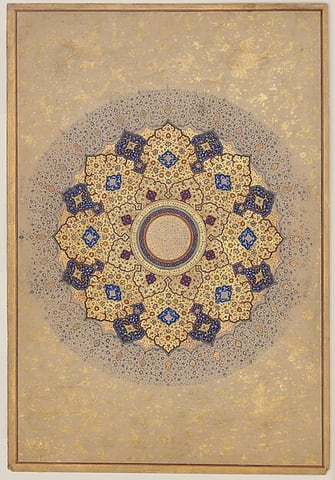
"Rosette Bearing the Names and Titles of Shah Jahan", Folio from the Shah Jahan Album, recto: ca. 1645; verso: ca. 1630–40

The works in this room are listed below.

Works in this room

Works whose makers the museums don't name.

First room, north wall

  1. Mahadevi, the Great Goddess, ca. 1725
    Mahadevi, the Great GoddessUnrecorded Indian maker, ca. 1725Courtesy of The Metropolitan Museum of Art
  2. The image shows a large cut watermelon in a woven basket surrounded by various fruits including grapes, peaches, and small round red fruits. The color palette includes greens, blues, oranges, and browns. The basket takes up most of the space and is filled with fruits, with grape clusters hanging above it.
    Fruit on a TrayUnrecorded American maker, c. 1840Courtesy National Gallery of Art, Washington
  3. Celebrations of Krishna's Birth, from a Bhagavata Purana, c. 1725–30
    Celebrations of Krishna's Birth, from a Bhagavata PuranaUnrecorded Indian maker, c. 1725–30Courtesy of the Cleveland Museum of Art
  4. A vertical painting of a bundle of many types of flowers set in a vase-like vessel. The bottom of this vessel contains netted rope through which many blossoms can be seen. A plethora of blooms and leaves extend upward from the top of the vessel.
    Flowers of the Four SeasonsUnrecorded Chinese maker, Qing dynasty (1644–1911), 18th/19th centuryCourtesy of the Art Institute of Chicago

First room, south wall

  1. Artist: Unidentified Artist, Sitter: Abigail Powers Fillmore, Current owner: National Portrait Gallery, Smithsonian Institution
    Abigail Powers FillmoreUnrecorded maker, c. 1840Courtesy of the National Portrait Gallery, Smithsonian Institution
  2. Mahasiddha Jnanatapa, ca. 1350
    Mahasiddha JnanatapaUnrecorded Himalayan maker, ca. 1350Courtesy of The Metropolitan Museum of Art
  3. The parrot addresses Khujasta at the beginning of the thirty-sixth night, from a Tuti-nama (Tales of a Parrot), c. 1560
    The parrot addresses Khujasta at the beginning of the thirty-sixth night, from a Tuti-nama (Tales of a Parrot)Unrecorded Indian maker, c. 1560Courtesy of the Cleveland Museum of Art
  4. "Rosette Bearing the Names and Titles of Shah Jahan", Folio from the Shah Jahan Album, recto: ca. 1645; verso: ca. 1630–40
    "Rosette Bearing the Names and Titles of Shah Jahan", Folio from the Shah Jahan AlbumUnrecorded maker, recto: ca. 1645; verso: ca. 1630–40Courtesy of The Metropolitan Museum of Art

Second room, south wall
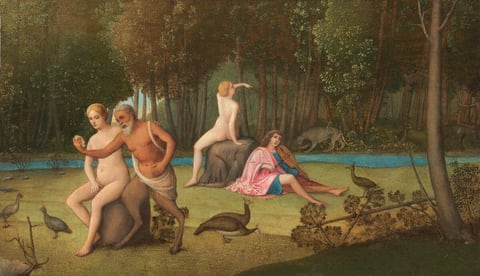
  1. Two women, a man, and a satyr, a man with goat’s legs, are in two pairs in a forested landscape in this horizontal painting. The pale-skinned women are nude, and their blond hair is tied up and back. One woman sits on a brown boulder to the left of center. One hand covers her groin, and the other hand rests on the satyr’s shoulder. The satyr has deeply tanned skin, short white hair, and a long white beard. A white cloth wraps over one shoulder and across his hips. He holds up an object, perhaps a shell, with one hand. That arm crosses over the woman’s breasts. His other hand is by his lower belly, and he looks at the shell. A bit farther back and to our right, a second nude woman also sits on a boulder. She faces away from us and holds up a long stick with her left arm, which arcs over her body. A clean-shaven, pale-skinned man sits with his back against the boulder. He has long brown hair and looks off to the distance to our right. He wears a carnation-pink robe over a sapphire-blue tunic. His legs splay in front of him, his feet bare, as he holds a bow to a violin-like instrument tucked under his chin. The two pairs sit in a grassy glade occupied also by five pheasant- or peacock-like birds. A thin river running behind the glade is lined with spindly trees that together make an impenetrable bronze-brown and laurel-green canopy. The second woman’s stick points or is directed to a gray, mountain lion-like cat on the far bank. Closer inspection reveals deer and another person, who points, tucked among the trunks. A glimpse of blue sky is visible through a break in the tree trunks.
    OrpheusUnrecorded Italian maker, c. 1515Courtesy National Gallery of Art, Washington
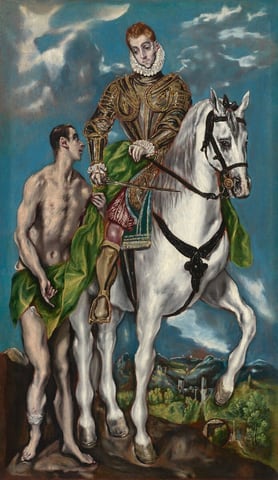
  2. A nearly nude man with peachy skin stands next to and looks up at a man with ashen, ivory-colored skin, wearing armor and riding a bright white horse in this vertical painting. The horizon line comes less than a quarter of the way up the composition, and the sky behind the men and horse is vivid, aqua blue with a few silvery-gray and pale, yellow clouds floating along the top edge of the composition. The painting is created with long, blended brushstrokes, and the limbs and features of the two men and horse are elongated and have delicate, dark outlines. The horse’s body is angled to our right but it looks at us from the corners of its dark eyes. One front leg is raised. The rider looks down toward the man on foot at his side, to our left. The rider has dark, arched eyebrows, a long, straight nose, a pointed chin, and short, copper-orange hair. Wide ruffs pleated into figure-eights encircle his neck and wrists. His chest and arms are covered with plates of steel-gray armor edged and decorated with gold bands and medallions. He wears crimson-red pantaloons and stockings with mustard-yellow boots. With his right hand, to our left, he holds the gold hilt of a long, thin sword along the horse’s body. With his other hand, he holds a swath of lime-green fabric, which drapes down the side of the horse and across the hips of the man standing next to the rider. The sheen of the fabric is suggested with canary-yellow highlights where it catches the light. The standing man has short, dark brown hair and eyebrows. He looks to our right in profile, toward the rider, with pink lips parted. He holds the green fabric with his left hand, to our right, and he has a bandage around his leg near his right ankle. The horse and man stand on a spit of dark brown land, with a landscape of trees, buildings, and mountains deep in the distance beyond.
    Saint Martin and the BeggarUnrecorded Greek maker, 1600/1614Courtesy National Gallery of Art, Washington
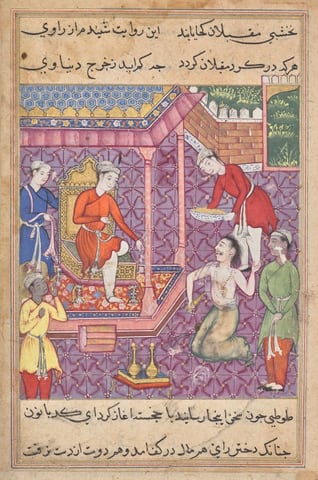
  3. The magician disguised as a Brahman returns to claim his “daughter-in-law,” from a Tuti-nama (Tales of a Parrot): Thirty-fifth Night, c. 1560
    The magician disguised as a Brahman returns to claim his “daughter-in-law,” from a Tuti-nama (Tales of a Parrot): Thirty-fifth NightUnrecorded Indian maker, c. 1560Courtesy of the Cleveland Museum of Art
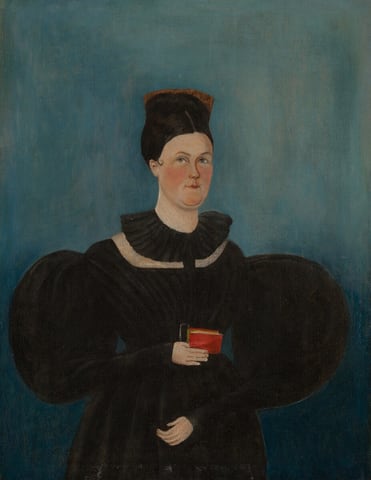
  4. The image shows a woman standing upright with a small red book in her right hand. She has a fair complexion, neutral expression, slightly arched eyebrows, and small, rounded lips. Her dark brown hair is styled in an updo with a black accessory. She wears a high-necked dark dress with puffed sleeves and a white collar. The background is plain blue. The woman is not wearing any visible jewelry, and the setting is minimalistic with only the book present.
    Anonymous WomanUnrecorded American maker, c. 1830Courtesy National Gallery of Art, Washington

Second room, north wall
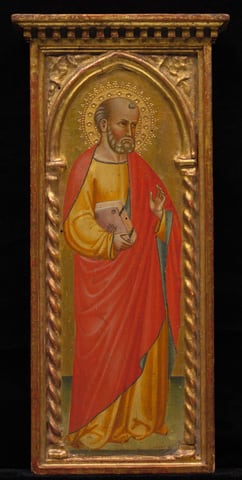
  1. Saint in Red Cloak, late 19th - early 20th century
    Saint in Red CloakUnrecorded Italian maker, late 19th - early 20th centuryCourtesy of the Cleveland Museum of Art
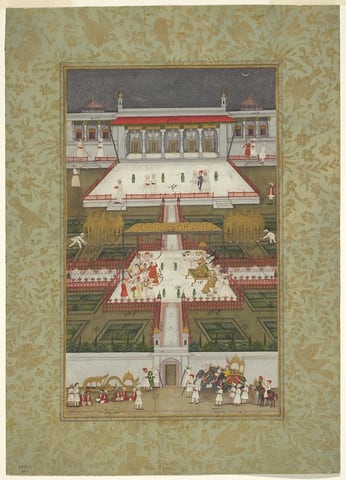
  2. A work made of opaque watercolor and gold on paper.
    Ruler Entertained by Dancers in a Paradise GardenUnrecorded Indian maker, Late 18th centuryCourtesy of the Art Institute of Chicago
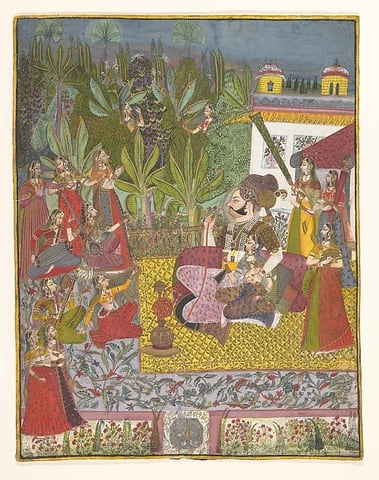
  3. Maharaja Bijay Singh in His Harem, ca. 1770
    Maharaja Bijay Singh in His HaremUnrecorded Indian maker, ca. 1770Courtesy of The Metropolitan Museum of Art
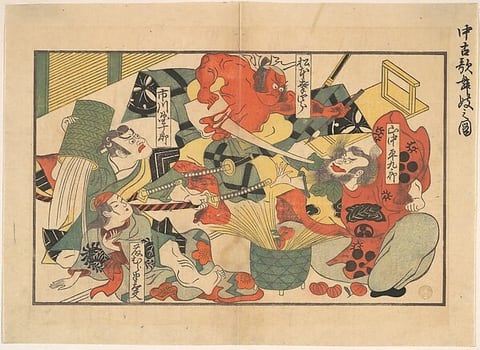
  4. The Advent of a Demon; Scene from a Performance in an old Kabuki Theatre
    The Advent of a Demon; Scene from a Performance in an old Kabuki TheatreUnrecorded Japanese makerCourtesy of The Metropolitan Museum of Art