Floor plan

Artist galleriesJohn Ramage's contemporaries
John Ramage's contemporaries
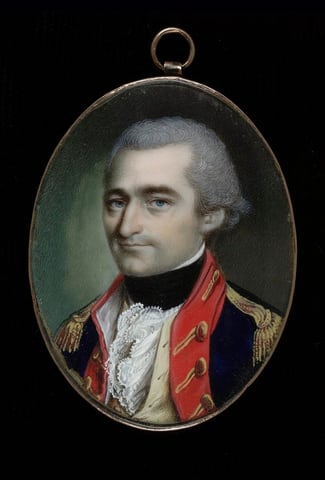
Col. Josiah Parker, by John Ramage, ca. 1789
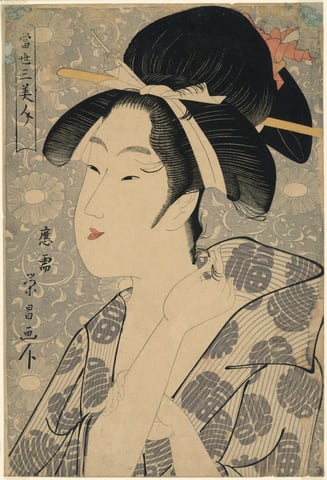
A work made of color woodblock print; oban.
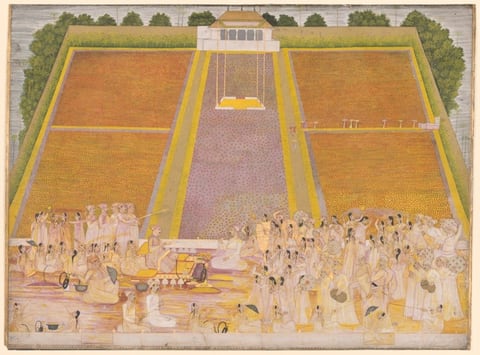
A work made of opaque watercolor and gold on paper.
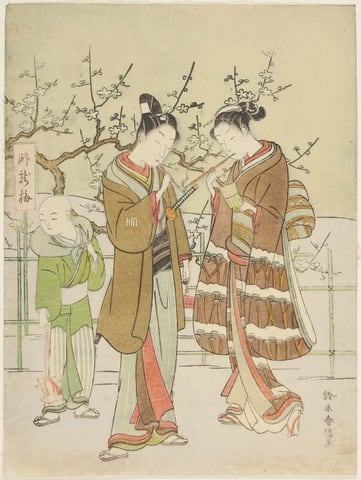
A work made of color woodblock print; chuban.
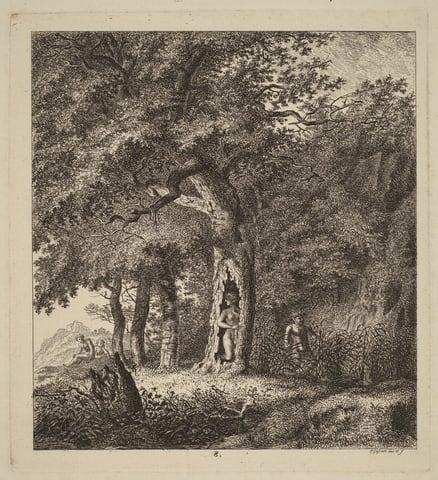
The image shows an etching of a forest scene with towering trees dominating the upper half. The horizon is not clearly visible due to dense foliage, but a line of trees and rocky outcrops in the distance provide a boundary. The fine lines and cross-hatching technique create detailed textures in the tree bark and foliage. The color palette is monochromatic, in shades of black and white emphasizing light and shadow. A large tree with a partially hollow trunk and figures scattered throughout the scene give a sense of scale and activity within the forest setting.
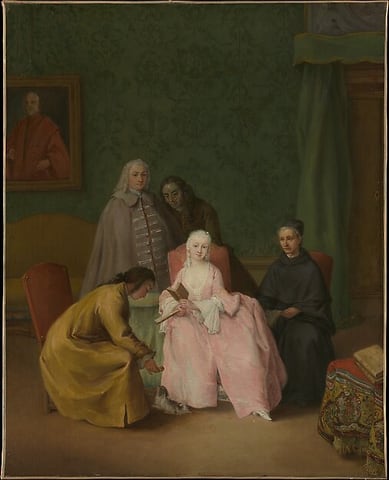
The Visit, by Pietro Longhi, 1746
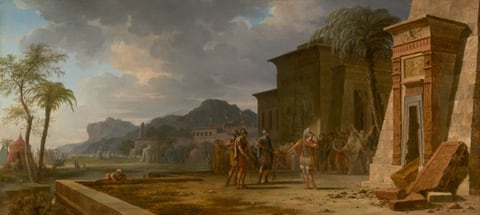
A work made of oil on canvas.
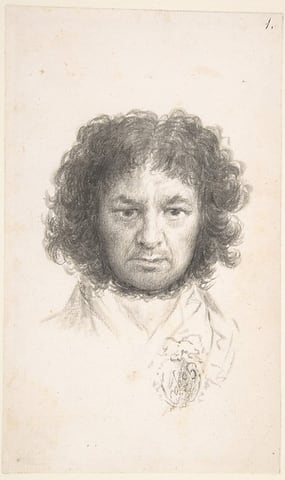
Self-Portrait, by Francisco Goya, ca. 1796

The works in this room are listed below.

Works in this room

A few works by John Ramage, then their contemporaries: makers of the same nationality born within 25 years of them, then works from the same century and place.

With their contemporaries

  1. Col. Josiah Parker, by John Ramage, ca. 1789
    Col. Josiah ParkerJohn Ramage, ca. 1789Courtesy of the Smithsonian American Art Museum
  2. A work made of color woodblock print; oban.
    Three Beauties of Our Time (Tosei san bijin)Chokosai Eisho, n.d.Courtesy of the Art Institute of Chicago
  3. A work made of opaque watercolor and gold on paper.
    Holi Festival in a Walled Garden with CelebrantsUnrecorded Indian maker, c. 1764Courtesy of the Art Institute of Chicago
  4. A work made of color woodblock print; chuban.
    Giving a Light by the Garyubai Plum TreeSuzuki Harunobu, c. 1767/68Courtesy of the Art Institute of Chicago

Their contemporaries

  1. The image shows an etching of a forest scene with towering trees dominating the upper half. The horizon is not clearly visible due to dense foliage, but a line of trees and rocky outcrops in the distance provide a boundary. The fine lines and cross-hatching technique create detailed textures in the tree bark and foliage. The color palette is monochromatic, in shades of black and white emphasizing light and shadow. A large tree with a partially hollow trunk and figures scattered throughout the scene give a sense of scale and activity within the forest setting.
    Wooded Landscape with a Nymph and a SatyrSalomon Gessner, 1764Courtesy National Gallery of Art, Washington
  2. The Visit, by Pietro Longhi, 1746
    The VisitPietro Longhi, 1746Courtesy of The Metropolitan Museum of Art
  3. A work made of oil on canvas.
    Alexander at the Tomb of Cyrus the GreatPierre Henri de Valenciennes, 1796Courtesy of the Art Institute of Chicago
  4. Self-Portrait, by Francisco Goya, ca. 1796
    Self-PortraitFrancisco Goya, ca. 1796Courtesy of The Metropolitan Museum of Art