Floor plan

Artist galleriesGeorges de La Tour's contemporaries
Georges de La Tour's contemporaries
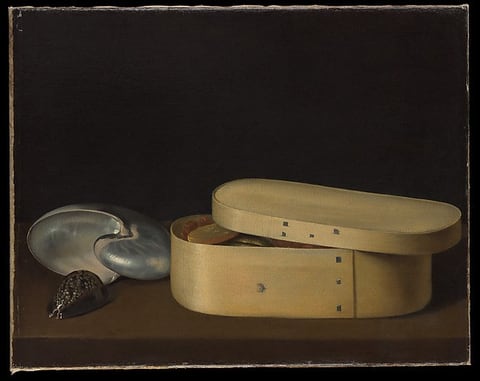
Still Life with Shells and a Chip-Wood Box, by Sebastian Stoskopff, late 1620s
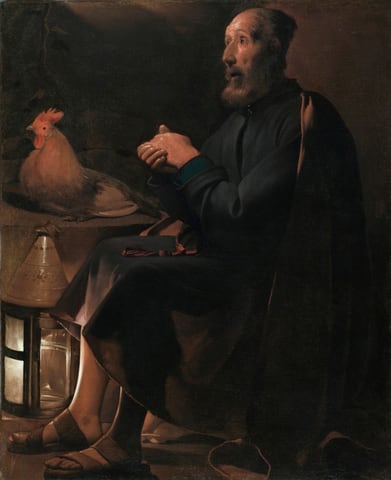
Saint Peter Repentant, by Georges de La Tour, 1645
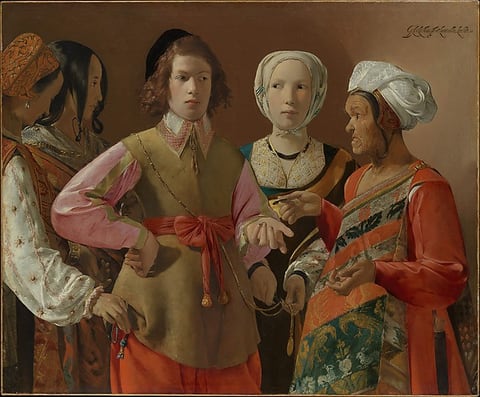
The Fortune-Teller, by Georges de La Tour, probably 1630s
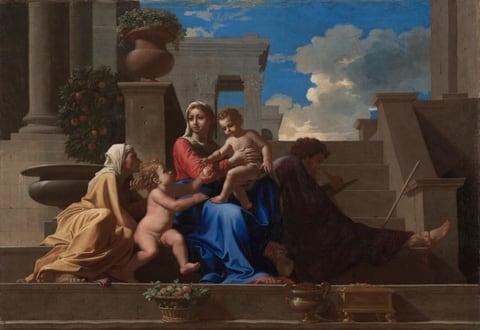
The Holy Family on the Steps, by Nicolas Poussin, 1648
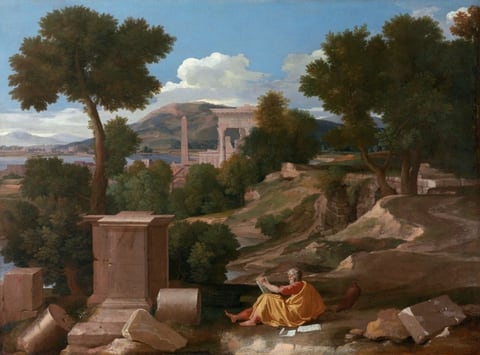
Painting of Greek landscape, classical architecture, yellow, red robed man reading.
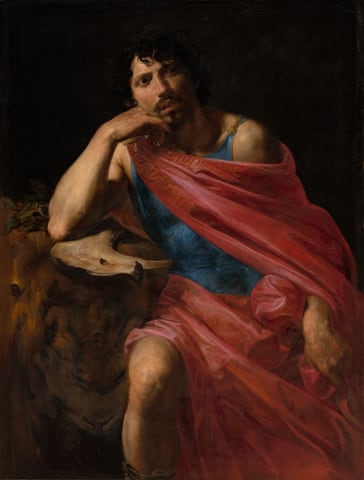
Samson, by Valentin de Boulogne, 1630–31

The works in this room are listed below.

Works in this room

A few works by Georges de La Tour, then their contemporaries: makers of the same nationality born within 25 years of them, then works from the same century and place.

Section 1, north wall

  1. Still Life with Shells and a Chip-Wood Box, by Sebastian Stoskopff, late 1620s
    Still Life with Shells and a Chip-Wood BoxSebastian Stoskopff, late 1620sCourtesy of The Metropolitan Museum of Art
  2. Saint Peter Repentant, by Georges de La Tour, 1645
    Saint Peter RepentantGeorges de La Tour, 1645Courtesy of the Cleveland Museum of Art
  3. The Fortune-Teller, by Georges de La Tour, probably 1630s
    The Fortune-TellerGeorges de La Tour, probably 1630sCourtesy of The Metropolitan Museum of Art

Section 1, south wall

  1. The Holy Family on the Steps, by Nicolas Poussin, 1648
    The Holy Family on the StepsNicolas Poussin, 1648Courtesy of the Cleveland Museum of Art
  2. Painting of Greek landscape, classical architecture, yellow, red robed man reading.
    Landscape with Saint John on PatmosNicolas Poussin, 1640Courtesy of the Art Institute of Chicago
  3. Samson, by Valentin de Boulogne, 1630–31
    SamsonValentin de Boulogne, 1630–31Courtesy of the Cleveland Museum of Art

Section 2, south wall
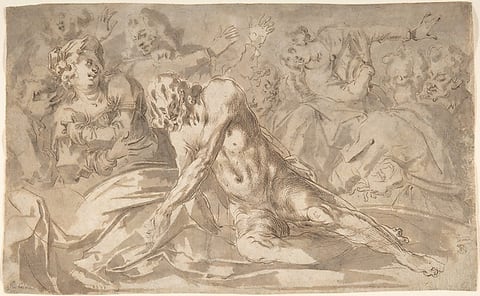
  1. The Raising of Lazarus, by Jacques Bellange, ca. 1606–8
    The Raising of LazarusJacques Bellange, ca. 1606–8Courtesy of The Metropolitan Museum of Art
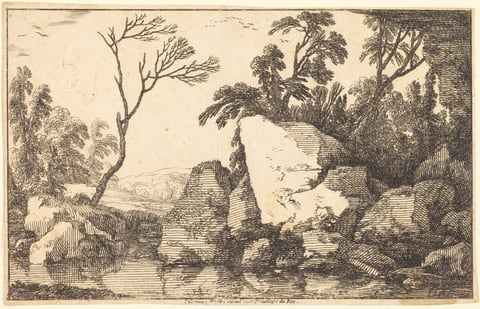
  2. The image is a landscape view with a natural scene depicted in fine etching. The horizon is situated towards the middle of the composition, where the land gently rises, and a subtle outline of distant hills is visible. Large rocks and foliage are depicted close to us, with a lone, barren tree extending upwards on the left side. The etching features intricate and well-defined brushstrokes, including thin lines and cross-hatching to create texture and depth. The color palette is monochromatic, with dark tones against a lighter background. In the distance, additional clusters of trees can be seen, rendered with similar linework to convey movement and detail.
    A Rocky PondLaurent de La Hyre, 1640Courtesy National Gallery of Art, Washington