Floor plan

Artist galleriesFrancis William Edmonds's contemporaries
Francis William Edmonds's contemporaries
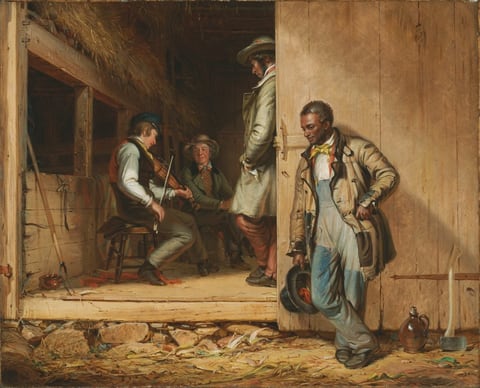
The Power of Music, by William Sidney Mount, 1847
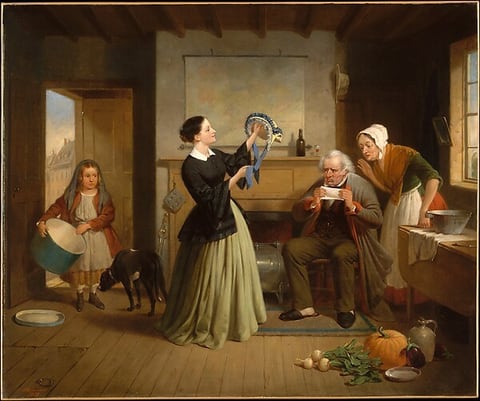
The New Bonnet, by Francis William Edmonds, 1858
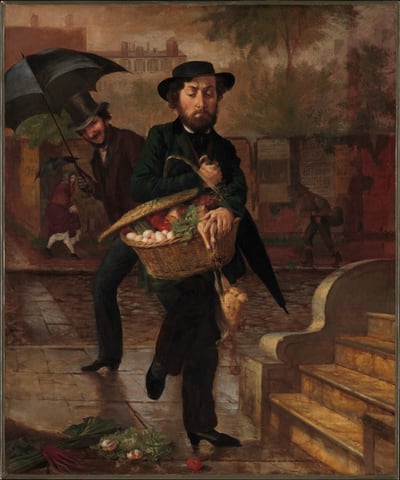
Young Husband: First Marketing, by Lilly Martin Spencer, 1854
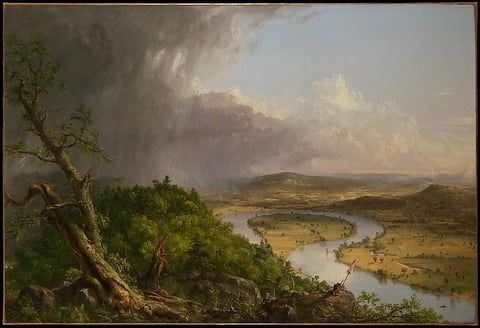
View from Mount Holyoke, Northampton, Massachusetts, after a Thunderstorm—The Oxbow, by Thomas Cole, 1836
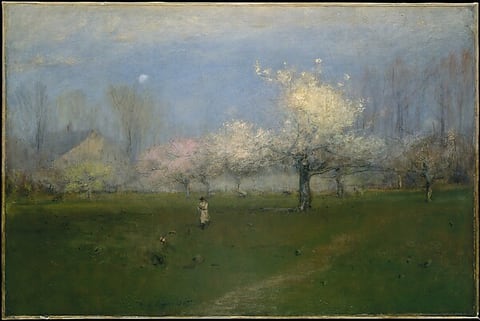
Spring Blossoms, Montclair, New Jersey, by George Inness, ca. 1891
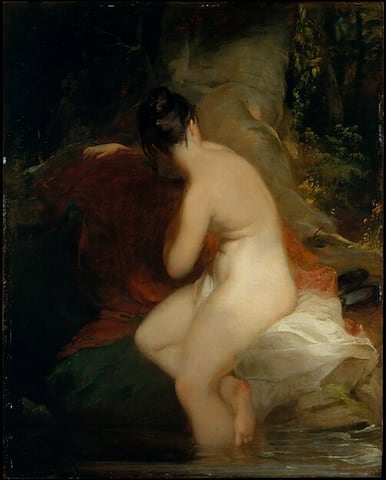
Musidora, by Thomas Sully, 1813–35

The works in this room are listed below.

Works in this room

A few works by Francis William Edmonds, then their contemporaries: makers of the same nationality born within 25 years of them, then works from the same century and place.

Section 1, north wall

  1. The Power of Music, by William Sidney Mount, 1847
    The Power of MusicWilliam Sidney Mount, 1847Courtesy of the Cleveland Museum of Art
  2. The New Bonnet, by Francis William Edmonds, 1858
    The New BonnetFrancis William Edmonds, 1858Courtesy of The Metropolitan Museum of Art
  3. Young Husband: First Marketing, by Lilly Martin Spencer, 1854
    Young Husband: First MarketingLilly Martin Spencer, 1854Courtesy of The Metropolitan Museum of Art

Section 1, south wall

  1. View from Mount Holyoke, Northampton, Massachusetts, after a Thunderstorm—The Oxbow, by Thomas Cole, 1836
    View from Mount Holyoke, Northampton, Massachusetts, after a Thunderstorm—The OxbowThomas Cole, 1836Courtesy of The Metropolitan Museum of Art
  2. Spring Blossoms, Montclair, New Jersey, by George Inness, ca. 1891
    Spring Blossoms, Montclair, New JerseyGeorge Inness, ca. 1891Courtesy of The Metropolitan Museum of Art
  3. Musidora, by Thomas Sully, 1813–35
    MusidoraThomas Sully, 1813–35Courtesy of The Metropolitan Museum of Art

Section 2, south wall
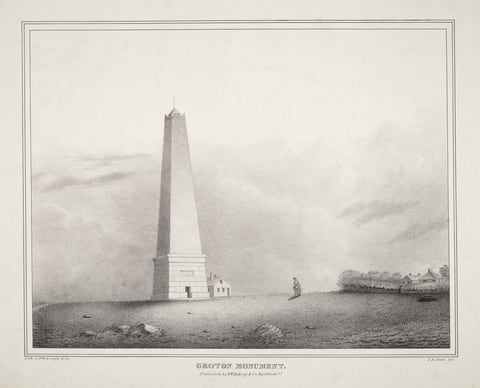
  1. The image shows a scene from a slightly elevated point of view. The horizon is low, highlighting the vast sky above. On the right, there are buildings surrounded by trees. In the center, there is a tall monument with a small structure at its base, slightly to the left. To the right of the monument, a person is standing. The drawing features detailed linework and delicate shading for the sky. The color palette is monochromatic with shades of gray. Rocks and grass in the foreground lead towards the monument and buildings in the distance.
    Groton MonumentJ.R. Butts, c. 1830-1840Courtesy National Gallery of Art, Washington
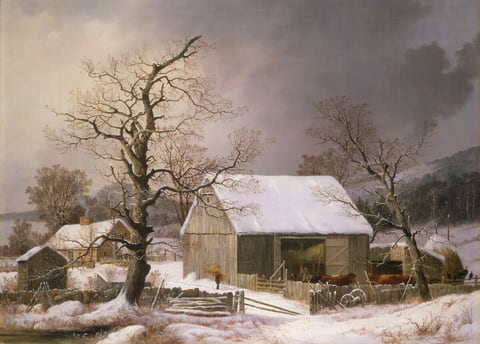
  2. This painting shows a winter landscape with snowy, rural terrain. It includes a large barn, a farmhouse, and some bare trees covered in snow. Some brown cows are fenced in by the barn on the left, and a person walking along a snowy path brings them a bundle of golden hay. The sky is overcast, with dark gray clouds, and the color palette of the painting consists of earth tones with variations of grey and brown among the white snow.
    Winter in the CountryGeorge Henry Durrie, c. 1859Courtesy National Gallery of Art, Washington