Floor plan

Artist galleriesFidelia Bridges's contemporaries
Fidelia Bridges's contemporaries
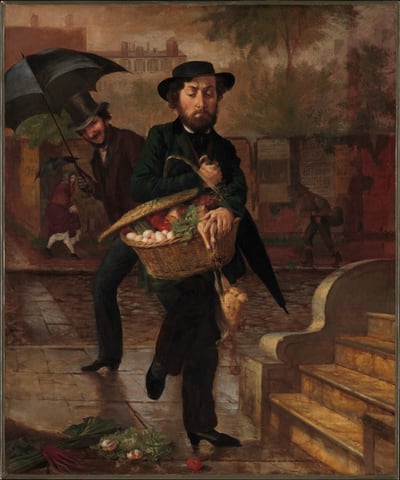
Young Husband: First Marketing, by Lilly Martin Spencer, 1854
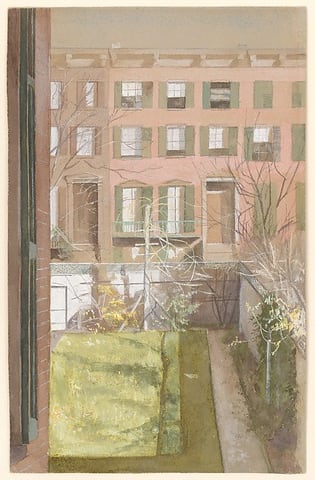
Garden View, Brooklyn, by Fidelia Bridges, ca. 1867
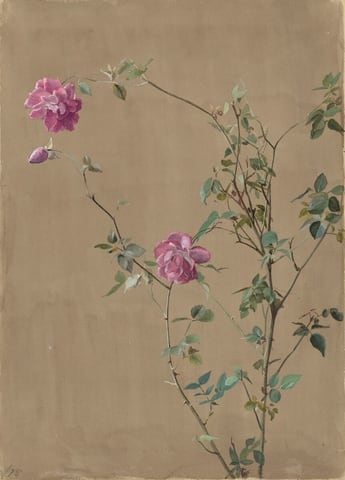
This detailed painting shows two pink roses and a pink bud on a long, thin green stem with green leaves and small green thorns. The tall stem rises near the right edge of the painting, with some thin branches reaching out to either side. The largest rose is positioned near the top left corner of the painting, with the small bud right below it. The other large flower is right around the center of the painting. The background is a flat beige color.
Oil painting
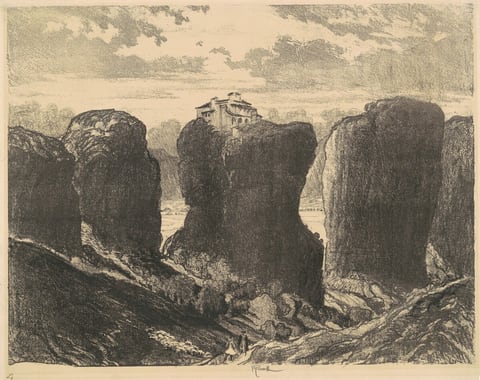
The image depicts a landscape with towering rock formations dominating the scene. The ground is rugged and textured, leading the eye towards the rock pillars in the center. A structure or building is perched atop one of these rocks. The background shows the horizon above the structure, with clouds and sky stretching out beyond. The artwork features detailed brushstrokes adding texture to the rocks. The color palette is monochromatic with varying shades of charcoal or ink, emphasizing the contrast between the rocks and the sky.
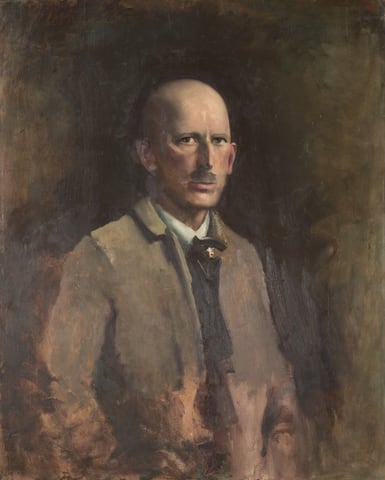
Self-Portrait, by Abbott Handerson Thayer, 1920

The works in this room are listed below.

Works in this room

A few works by Fidelia Bridges, then their contemporaries: makers of the same nationality born within 25 years of them, then works from the same century and place.

Section 1, north wall

  1. Young Husband: First Marketing, by Lilly Martin Spencer, 1854
    Young Husband: First MarketingLilly Martin Spencer, 1854Courtesy of The Metropolitan Museum of Art
  2. Garden View, Brooklyn, by Fidelia Bridges, ca. 1867
    Garden View, BrooklynFidelia Bridges, ca. 1867Courtesy of The Metropolitan Museum of Art
  3. This detailed painting shows two pink roses and a pink bud on a long, thin green stem with green leaves and small green thorns. The tall stem rises near the right edge of the painting, with some thin branches reaching out to either side. The largest rose is positioned near the top left corner of the painting, with the small bud right below it. The other large flower is right around the center of the painting. The background is a flat beige color.
    Pink RosesFidelia Bridges, 1875Courtesy National Gallery of Art, Washington
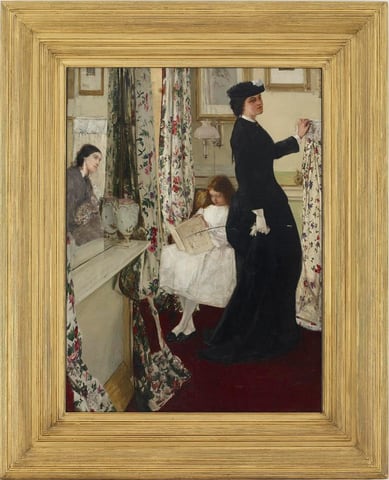
  4. Oil painting
    Harmony in Green and Rose: The Music RoomJames McNeill Whistler, 1860-1861Courtesy of the National Museum of Asian Art, Smithsonian Institution

Section 1, south wall

  1. The image depicts a landscape with towering rock formations dominating the scene. The ground is rugged and textured, leading the eye towards the rock pillars in the center. A structure or building is perched atop one of these rocks. The background shows the horizon above the structure, with clouds and sky stretching out beyond. The artwork features detailed brushstrokes adding texture to the rocks. The color palette is monochromatic with varying shades of charcoal or ink, emphasizing the contrast between the rocks and the sky.
    The Cliffs of the TrinityJoseph Pennell, 1913Courtesy National Gallery of Art, Washington
  2. Self-Portrait, by Abbott Handerson Thayer, 1920
    Self-PortraitAbbott Handerson Thayer, 1920Courtesy of the Cleveland Museum of Art

Section 2, south wall
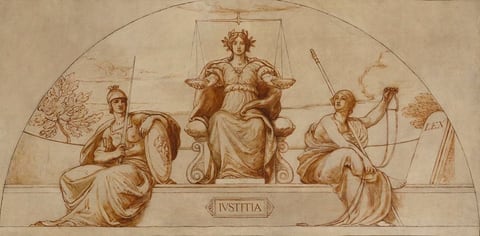
  1. Cartoon for mural of Minnesota State Capital, "Institute of Justice", by Kenyon Cox, ca. 1904
    Cartoon for mural of Minnesota State Capital, "Institute of Justice"Kenyon Cox, ca. 1904Courtesy of the Smithsonian American Art Museum
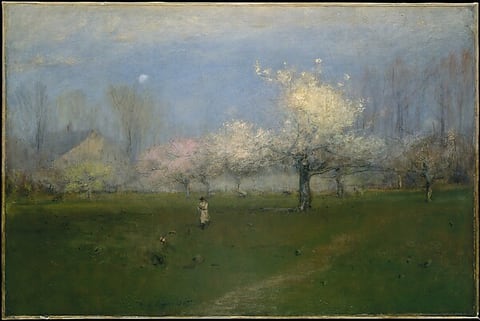
  2. Spring Blossoms, Montclair, New Jersey, by George Inness, ca. 1891
    Spring Blossoms, Montclair, New JerseyGeorge Inness, ca. 1891Courtesy of The Metropolitan Museum of Art