Basawan's contemporaries
Works in this room
A few works by Basawan, then their contemporaries: makers of the same nationality born within 25 years of them, then works from the same century and place.
With their contemporaries
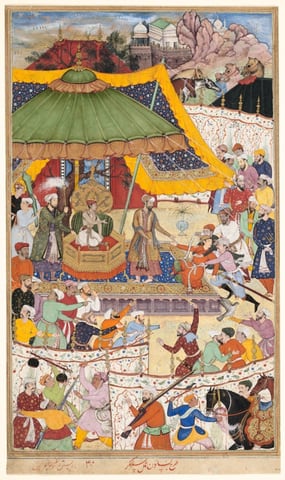
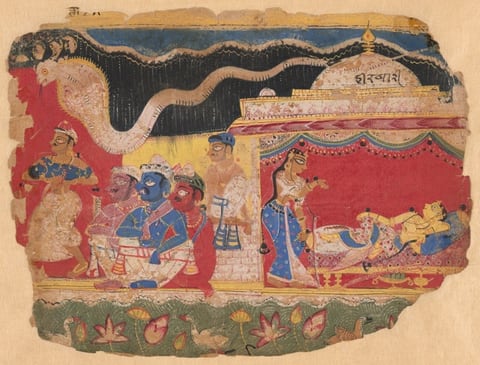
The Young Emperor Akbar Arrests the Insolent Shah Abu’l-Maali, Page from a Manuscript of the AkbarnamaBasawan, Mughal dynasty (1526-1857), c. 1590-1595Courtesy of the Art Institute of Chicago The Infant Krishna Spirited Away by Vasudev, from a copy of the Dispersed Bhagavat PuranaUnrecorded Indian maker, c. 1520–1530Courtesy of the Art Institute of Chicago
Their contemporaries
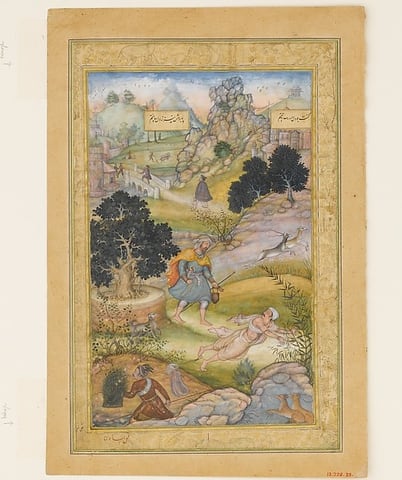
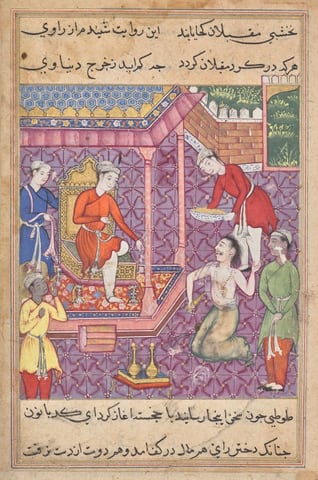
"A Muslim Pilgrim Learns a Lesson in Piety from a Brahman", Folio from a Khamsa (Quintet) of Amir Khusrau DihlaviAmir Khusrau Dihlavi, 1597–98Courtesy of The Metropolitan Museum of Art The magician disguised as a Brahman returns to claim his “daughter-in-law,” from a Tuti-nama (Tales of a Parrot): Thirty-fifth NightUnrecorded Indian maker, c. 1560Courtesy of the Cleveland Museum of Art
Their contemporaries, second
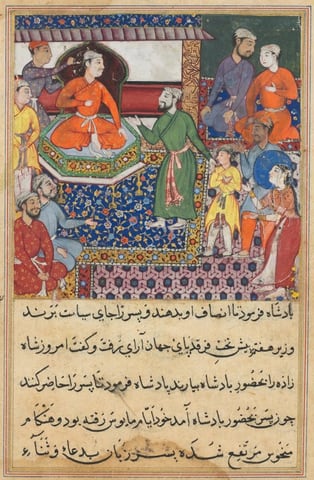
The handmaiden again pleads for the death of the prince, from a Tuti-nama (Tales of a Parrot): Eighth NightLalu, c. 1560Courtesy of the Cleveland Museum of Art 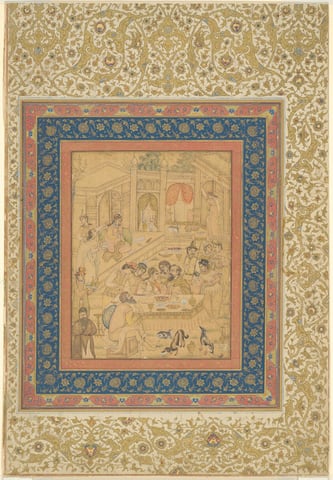
European Banquet Scene (or The Marriage Feast at Cana?)Mughal, Mughal period, c. 1600Courtesy of the Art Institute of Chicago
Their contemporaries, third
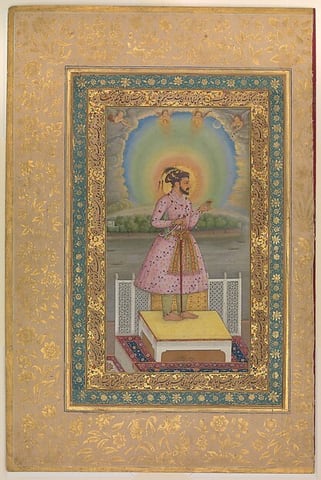
"Shah Jahan on a Terrace, Holding a Pendant Set With His Portrait", Folio from the Shah Jahan AlbumChitarman, recto: dated 1627–28; verso: ca. 1530–50Courtesy of The Metropolitan Museum of Art 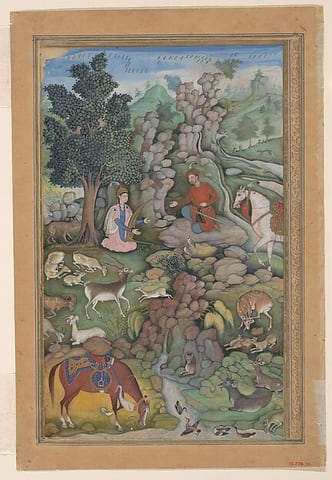
"Bahram Gur Sees a Herd of Deer Mesmerized by Dilaram' s Music", Folio from a Khamsa (Quintet) of Amir Khusrau DihlaviAmir Khusrau Dihlavi, 1597–98Courtesy of The Metropolitan Museum of Art