The Floating World, room 2
Works in this room
Japanese woodblock prints of the floating world: actors, courtesans, landscapes and the sea.
Section 1, north wall
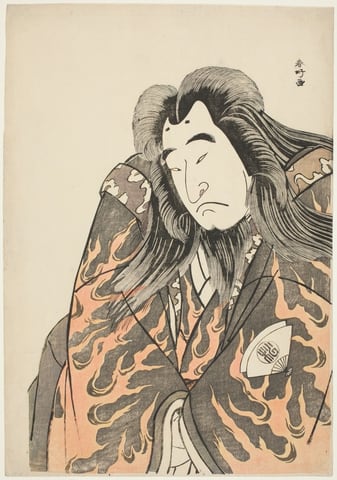
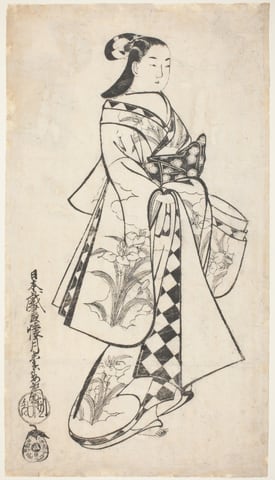
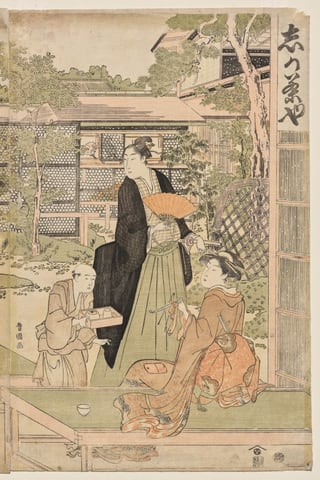
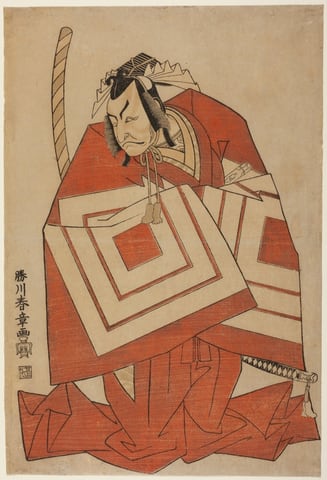
Actor Onoe Matsusuke I as Retired Emperor SutokuKatsukawa Shunkо̄, About 1780Courtesy of the Art Institute of Chicago Standing BeautyKaigetsudo Anchi, About 1714Courtesy of the Art Institute of Chicago The Shika TeahouseUtagawa Toyokuni, early 1790sCourtesy of the Cleveland Museum of Art
Section 1, south wall
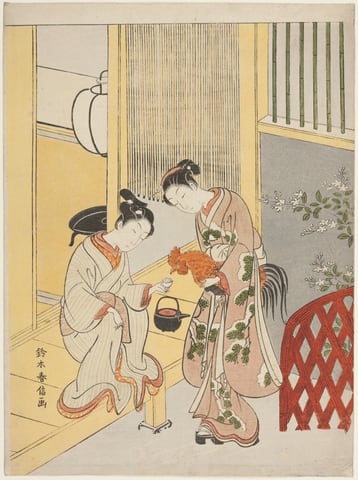
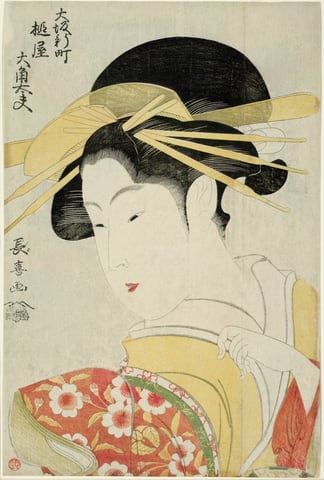
Delaying the announcement of dawnSuzuki Harunobu, c. 1767/68Courtesy of the Art Institute of Chicago Osumi, a Tayu of the Tsuchiya in the Shinmachi Quarter in OsakaEishosai Choki, c. 1796/97Courtesy of the Art Institute of Chicago The Actor Ichikawa Danjuro IV in a "Shibaraku" Role, Possibly from the Play Ima o Sakari Suehiro Genji (The Genji Clan Now at Its Zenith), Performed at the Nakamura Theater from the First Day of the Eleventh Month, 1768Katsukawa Shunshō, c. 1768Courtesy of the Art Institute of Chicago
Section 2, south wall
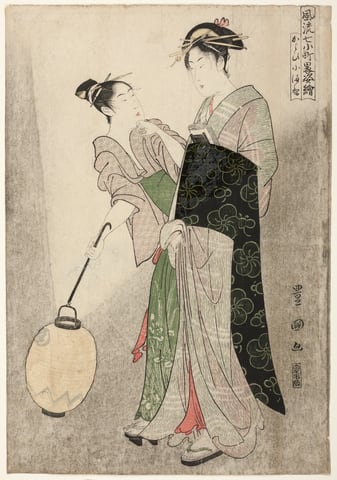
Courting Komachi (Kayoi Komachi), from the series Seven Fashionable Figures of Ono no Komachi (Furyu nana Komachi yatushi sugata-e)Utagawa Toyokuni, Edo period (1615–1868), about 1792Courtesy of the Art Institute of Chicago 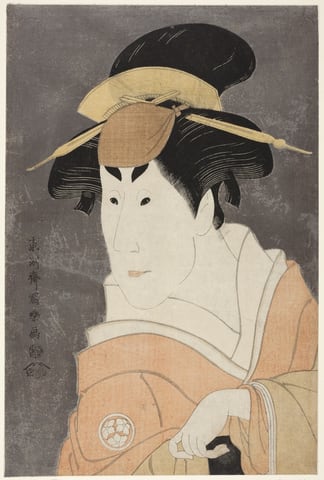
The actor Osagawa Tsuneyo II as Osan, Ippei’s elder sisterTōshūsai Sharaku, 1794Courtesy of the Art Institute of Chicago 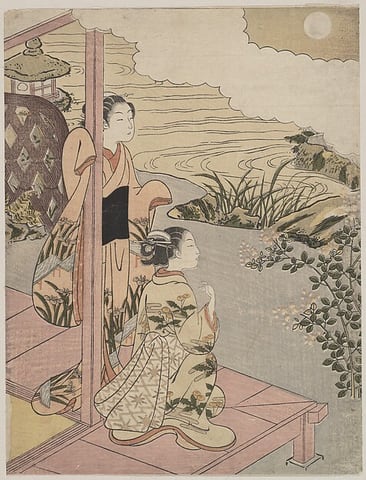
Two Girls on a Veranda beside a Stream with the MoonSuzuki HarunobuCourtesy of The Metropolitan Museum of Art
Section 2, north wall
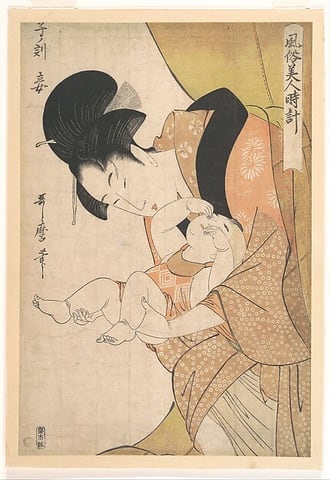
“Hour of the Rat: Mistress,” from the series Women’s Daily Customs (Fuzoku bijin tokei)Kitagawa Utamaro, 1790Courtesy of The Metropolitan Museum of Art 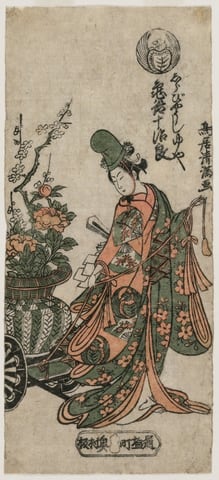
Kametani Jujiro as the Shirabyoshi Dancer YuyaTorii Kiyomitsu, c. early 1760sCourtesy of the Cleveland Museum of Art 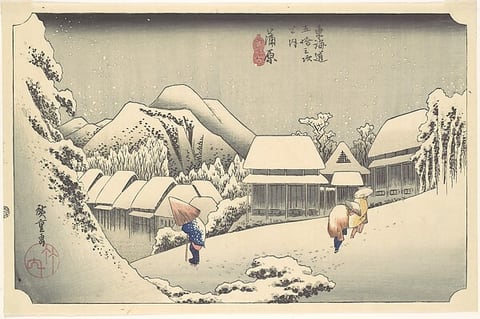
Evening Snow at Kanbara, from the series "Fifty-three Stations of the Tōkaidō"Utagawa Hiroshige, ca. 1833–34Courtesy of The Metropolitan Museum of Art
Section 3, north wall
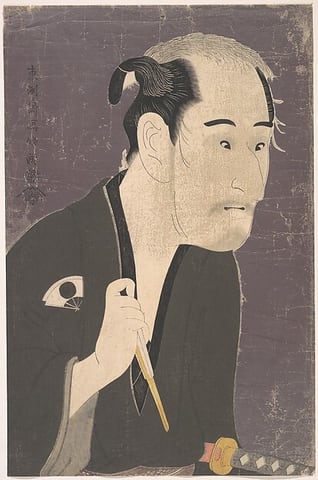
The Actor Onoye Matsusuke as a RoninTōshūsai SharakuCourtesy of The Metropolitan Museum of Art 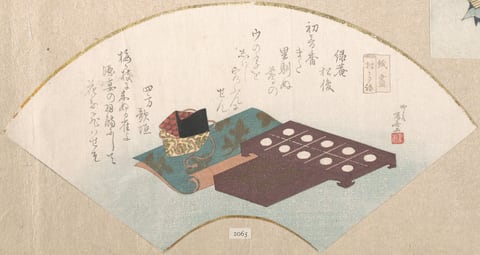
Outfit for the Game of IncenseRyūryūkyo Shinsai, 19th centuryCourtesy of The Metropolitan Museum of Art
Section 3, south wall
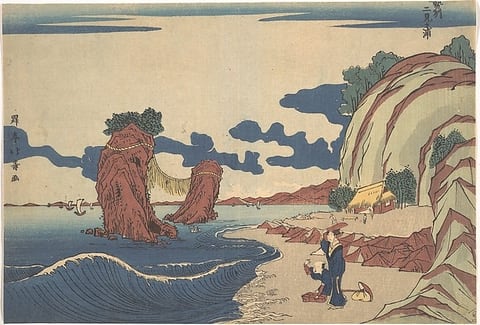
View of Futami Beach at IseShōtei Hokuju, ca. 1810–1820Courtesy of The Metropolitan Museum of Art 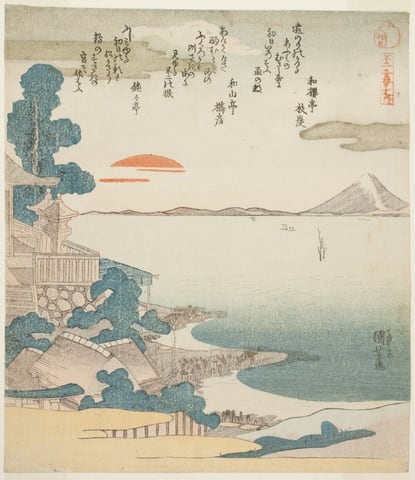
Dawn over Mout Fuji and Susaki, from the series "Five Views of Mount Fuji (Fuji goban no uchi)"Utagawa Kuniyoshi, c. 1827/29Courtesy of the Art Institute of Chicago