Ukiyo-e
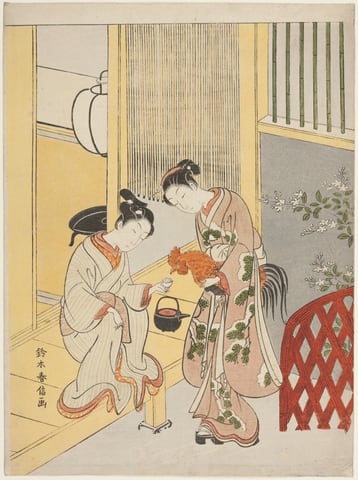
Works in this room
Japanese woodblock prints of the floating world: actors, courtesans, landscapes and the sea.
Section 1, north wall
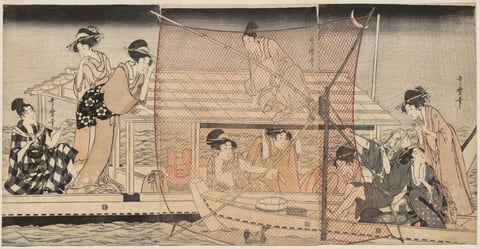
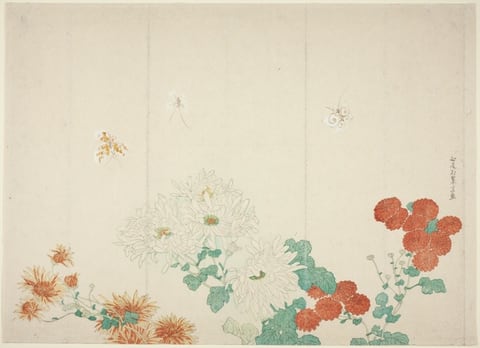
Net Fishing at Night on the Sumida RiverKitagawa Utamaro, c. 1800Courtesy of the Cleveland Museum of Art Three Types of ChrysanthemumsKitao Shigemasa, c. 1790Courtesy of the Art Institute of Chicago
Section 1, south wall
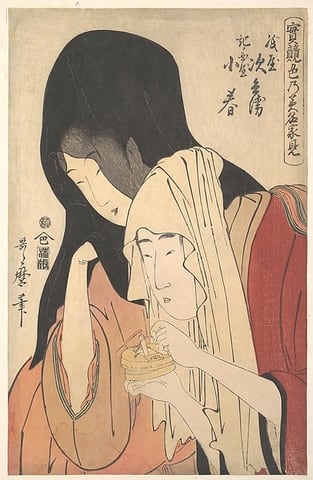
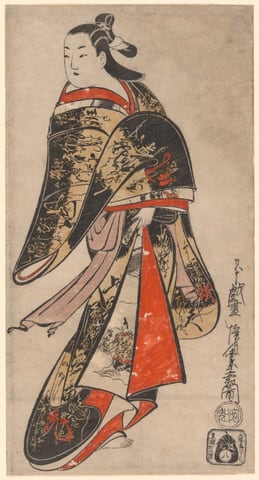
Jihei of Kamiya Eloping with the Geisha Koharu of Kinokuniya, from the series “True Feelings Compared: The Founts of Love” (Jitsu kurabe iro no Minakami)Kitagawa Utamaro, ca. 1798–99Courtesy of The Metropolitan Museum of Art Courtesan WalkingKaigetsudo Anchi, c. 1714Courtesy of the Art Institute of Chicago Delaying the announcement of dawnSuzuki Harunobu, c. 1767/68Courtesy of the Art Institute of Chicago
Section 2, south wall
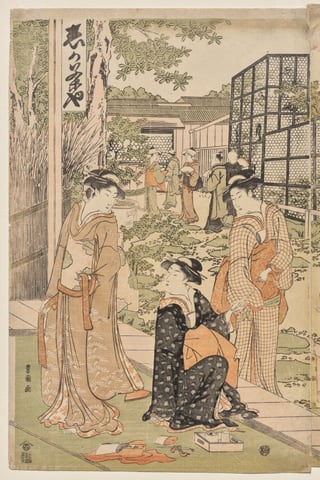
The Shika TeahouseUtagawa Toyokuni, early 1790sCourtesy of the Cleveland Museum of Art 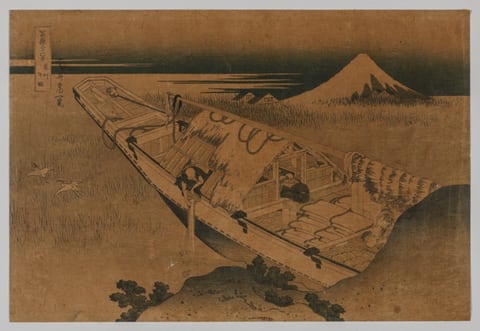
Fuji from Ushibori, Province of HitachiKatsushika Hokusai, 1760–1849Courtesy of the Cleveland Museum of Art 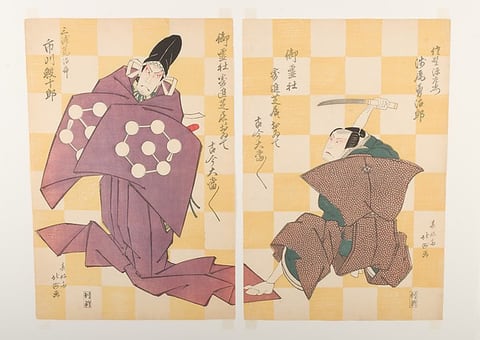
Kabuki Actors Asao Yūjirō as Sano Genzaemon and Ichikawa Ebijūrō I as Miura Arajirō, in the play Keisei Sano no FunabashiShunkōsai Hokushū, 1822Courtesy of The Metropolitan Museum of Art
Section 2, north wall
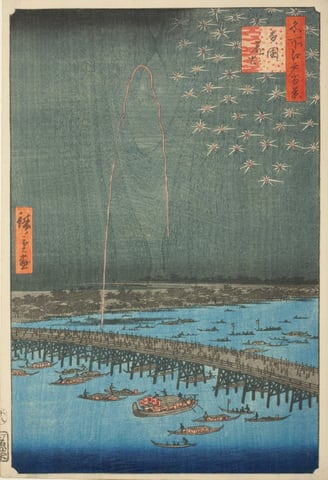
Fireworks at Ryōgoku (Ryōgoku hanabi), from the series One Hundred Famous Views of Edo (Meisho Edo hyakkei)Utagawa Hiroshige, 1858Courtesy of the Art Institute of Chicago 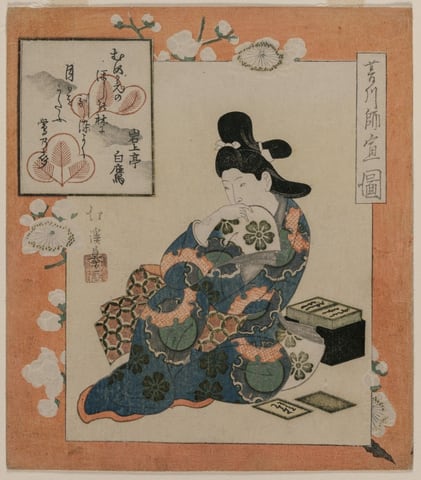
A Picture by Hishikawa Moronobu: Woman with a Set of Poem CardsTotoya Hokkei, mid 1820sCourtesy of the Cleveland Museum of Art 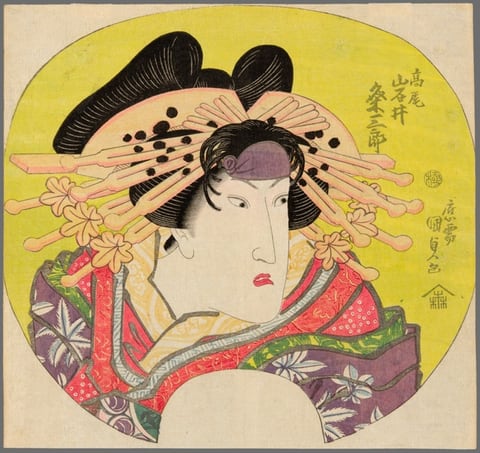
Iwai Kumesaburo II as the Courtesan Takao in Banzei Okuni KabukiUtagawa Kunisada, c. 1827Courtesy of the Art Institute of Chicago
Section 3, north wall
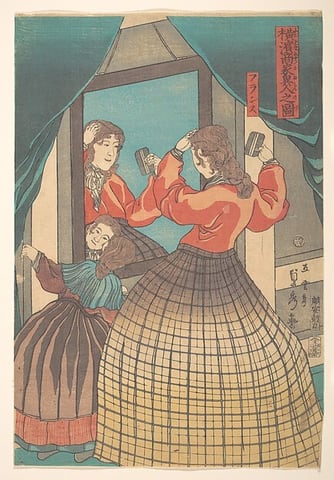
French Woman and Girl, from the series Foreign Merchants in Yokohama (Yokohama shōka ijin no zu)Utagawa (Gountei) Sadahide, 1st month, 1861Courtesy of The Metropolitan Museum of Art 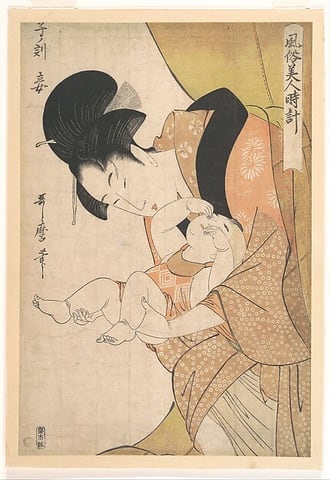
“Hour of the Rat: Mistress,” from the series Women’s Daily Customs (Fuzoku bijin tokei)Kitagawa Utamaro, 1790Courtesy of The Metropolitan Museum of Art 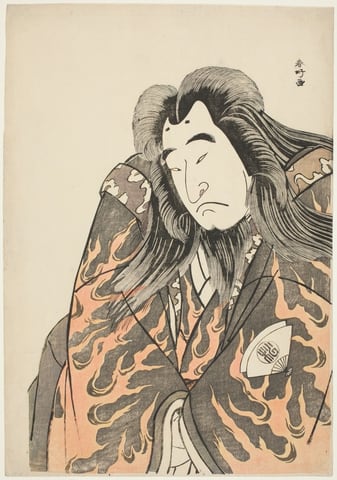
Actor Onoe Matsusuke I as Retired Emperor SutokuKatsukawa Shunkо̄, About 1780Courtesy of the Art Institute of Chicago
Section 3, south wall
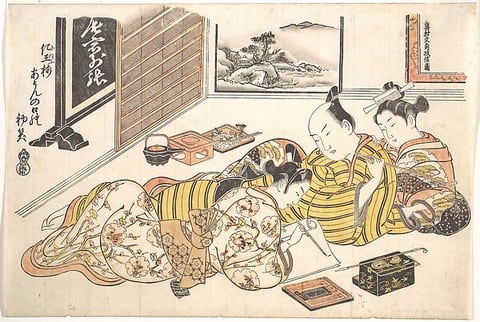
Plate from the Erotic Book Mounds of Dyed Colors: A Pattern Book for the Boudoir (Someiro no yama neya no hinagata), First MonthOkumura Masanobu, ca. 1736–44Courtesy of The Metropolitan Museum of Art 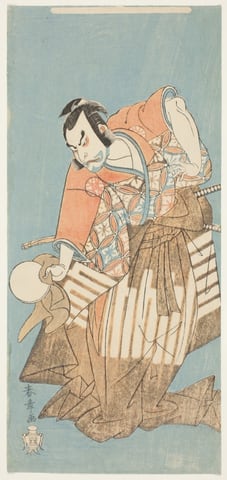
Actor Nakamura Nakazô I as Osada no Tarô in The Genji Clan Now at Its Zenith (Ima o sakari suehiro Genji)Katsukawa Shunshō, About 1768Courtesy of the Art Institute of Chicago