Ukiyo-e
Works in this room
Japanese woodblock prints of the floating world: actors, courtesans, landscapes and the sea.
Section 1, north wall
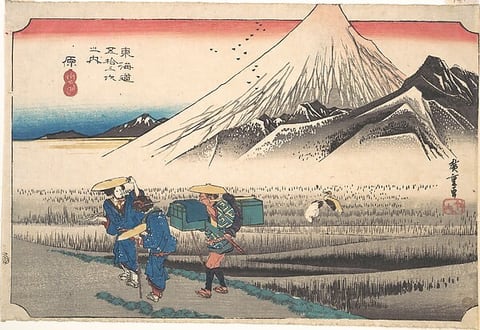
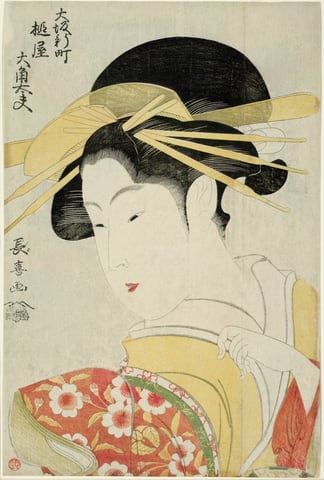
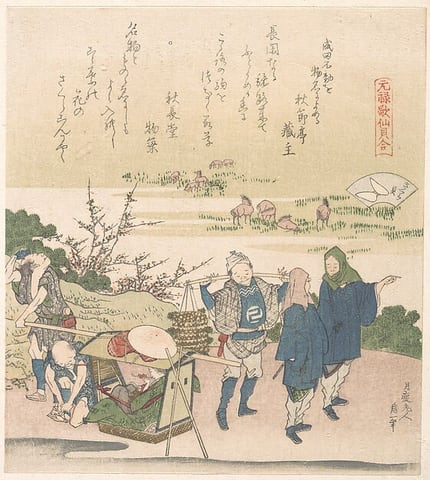
Hara: Mount Fuji in the Morning (Hara, Asa no Fuji), from the series Fifty-Three Stations of the Tōkaidō Road (Tōkaidō gojūsan tsugi), also known as the First Tōkaidō or Great TōkaidōUtagawa Hiroshige, ca. 1833–34Courtesy of The Metropolitan Museum of Art Osumi, a Tayu of the Tsuchiya in the Shinmachi Quarter in OsakaEishosai Choki, c. 1796/97Courtesy of the Art Institute of Chicago Cherry Shell, from the series Genroku Poetry Shell GamesKatsushika Hokusai, probably 1821Courtesy of The Metropolitan Museum of Art
Section 1, south wall
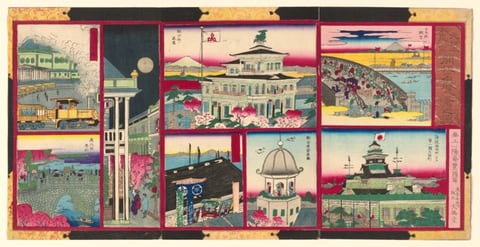
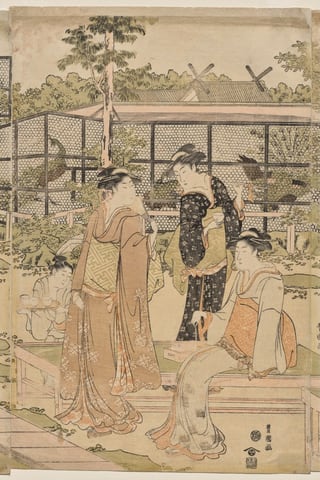
Eight Modern Views of Famous Places in Tokyo of Great Japan (Dai Nippon Tokyo kaika meisho hakkei no zu)Utagawa Kunisada II (Kunimasa III, Toyokuni IV), 1875Courtesy of the Art Institute of Chicago The Shika TeahouseUtagawa Toyokuni, early 1790sCourtesy of the Cleveland Museum of Art
Section 2, south wall
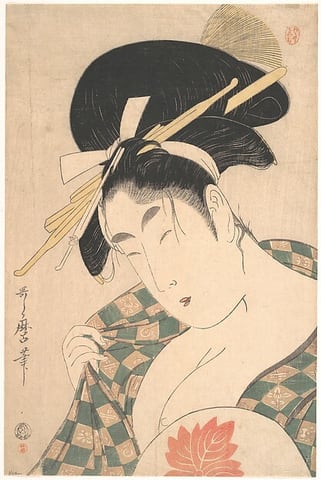
A CourtesanKitagawa UtamaroCourtesy of The Metropolitan Museum of Art 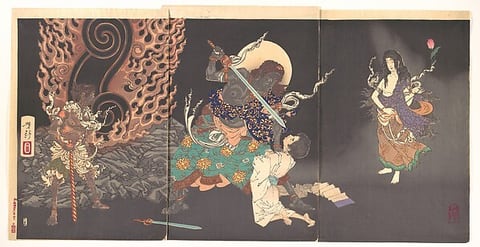
Fudō Myōō Threatening a NoviceTsukioka Yoshitoshi, 1885Courtesy of The Metropolitan Museum of Art 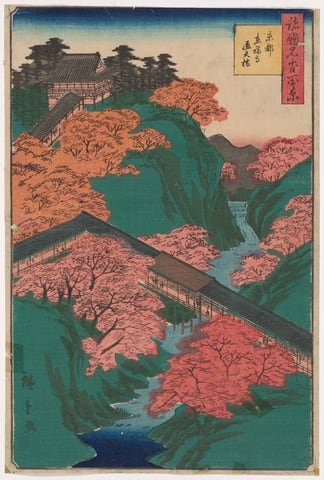
Tsuten-kyo Bridge, Tofuku Temple, Kyoto (Kyoto Tofukuji Tsutenkyo bashi) from the series “One Hundred Famous Views in the Various Provinces (Shokoku meisho hyakkei)”Utagawa Hiroshige II, 1859Courtesy of the Art Institute of Chicago
Section 2, north wall
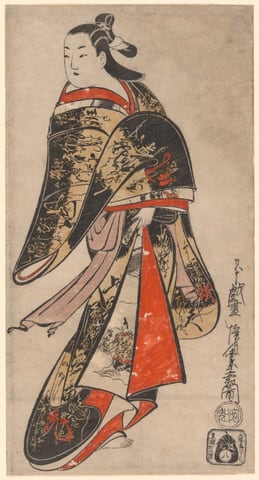
Courtesan WalkingKaigetsudo Anchi, c. 1714Courtesy of the Art Institute of Chicago 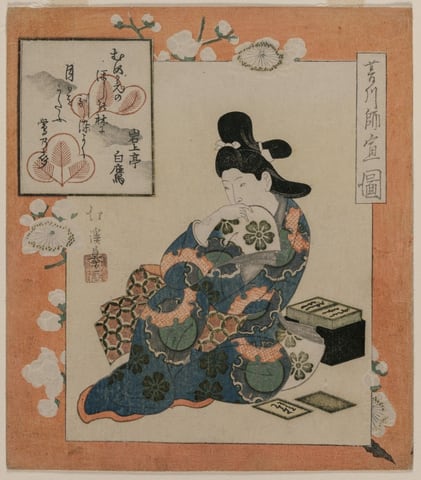
A Picture by Hishikawa Moronobu: Woman with a Set of Poem CardsTotoya Hokkei, mid 1820sCourtesy of the Cleveland Museum of Art 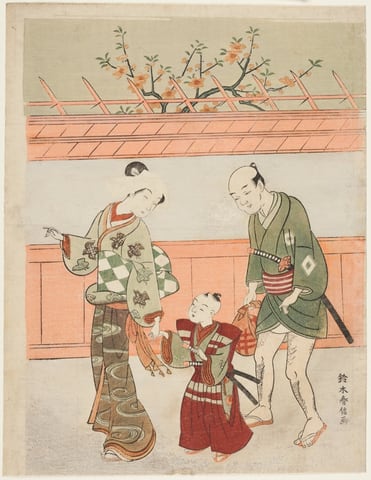
A Spring OutingSuzuki Harunobu, c. 1768Courtesy of the Art Institute of Chicago
Section 3, north wall
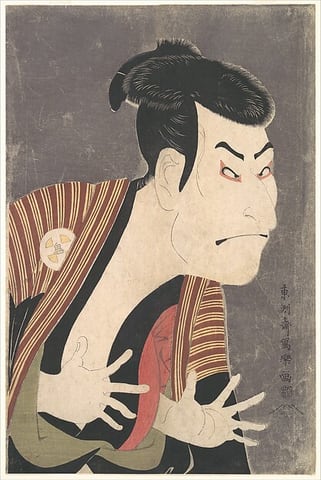
Kabuki Actor Ōtani Oniji III as Yakko EdobeiTōshūsai Sharaku, 1794Courtesy of The Metropolitan Museum of Art 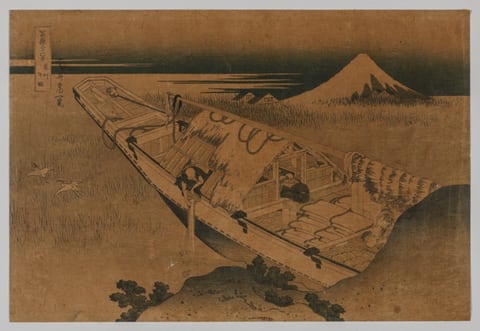
Fuji from Ushibori, Province of HitachiKatsushika Hokusai, 1760–1849Courtesy of the Cleveland Museum of Art 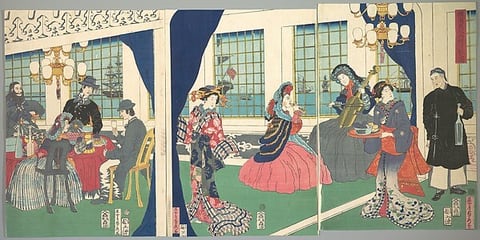
Foreigners in the Drawing Room of Foreign Merchant's House in YokohamaUtagawa (Gountei) Sadahide, 9th month, 1861Courtesy of The Metropolitan Museum of Art
Section 3, south wall
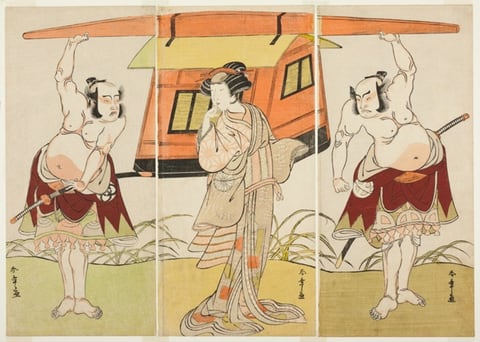
The Actors Otani Hiroji III as Yokambei (right), Nakamura Tomijuro I as Kuzunoha (center), and Bando Mitsugoro I as Yakambei (left), in the Last Scene from the Play Shinodazuma (The Wife from Shinoda Forest), Performed as a Supplement to the Play Kikyo-zome Onna Urakata (Female Diviner in Deep Violet), at the Morita Theater from the Ninth Day of the Ninth Month, 1776Katsukawa Shunshō, c. 1776Courtesy of the Art Institute of Chicago 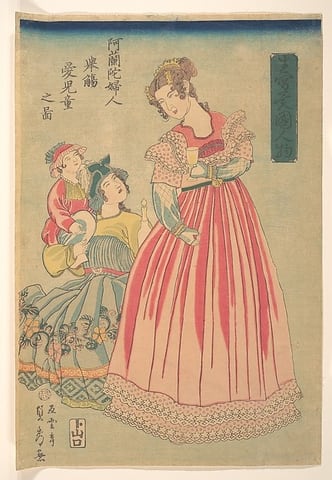
Dutch Woman and Child (Seisha ikoku jinbutsu Oranda fujin aijidō no zu)Utagawa (Gountei) Sadahide, 1860Courtesy of The Metropolitan Museum of Art