Ukiyo-e
Works in this room
Japanese woodblock prints of the floating world: actors, courtesans, landscapes and the sea.
Section 1, north wall
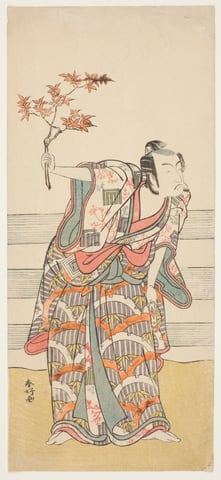
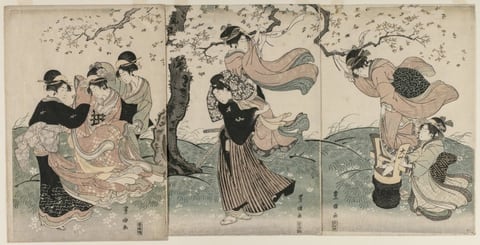
Actor Ichikawa Monnosuke II in an Unidentified RoleKatsukawa Shunkо̄, About 1785Courtesy of the Art Institute of Chicago Cherry Blossoms in the WindUtagawa Toyokuni, late 1790sCourtesy of the Cleveland Museum of Art
Section 1, south wall
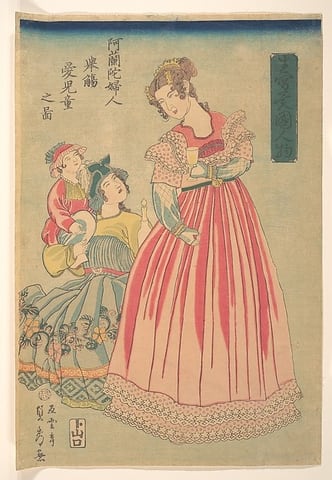
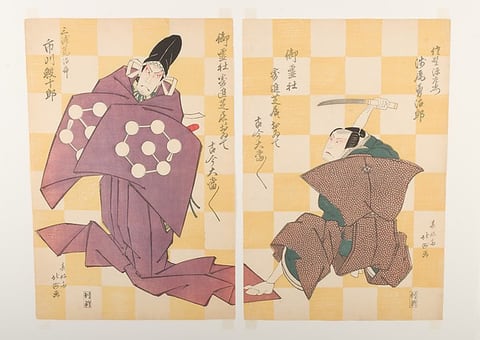
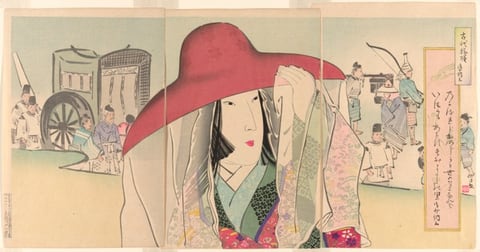
Dutch Woman and Child (Seisha ikoku jinbutsu Oranda fujin aijidō no zu)Utagawa (Gountei) Sadahide, 1860Courtesy of The Metropolitan Museum of Art Kabuki Actors Asao Yūjirō as Sano Genzaemon and Ichikawa Ebijūrō I as Miura Arajirō, in the play Keisei Sano no FunabashiShunkōsai Hokushū, 1822Courtesy of The Metropolitan Museum of Art Sei Shonagon, from the series Ancient Patterns (Kodai moyo)Kobayashi Kiyochika, Meiji period (1896–1912), 1896Courtesy of the Art Institute of Chicago
Section 2, south wall
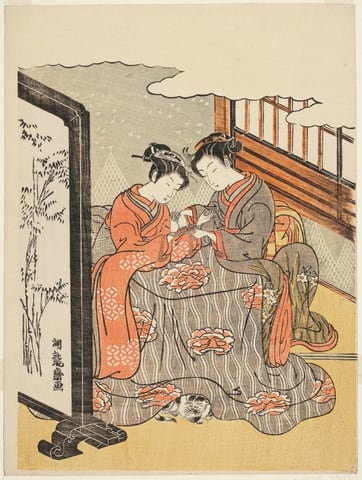
Two Young Women Playing Cat's CradleIsoda Koryusai, c. 1769Courtesy of the Art Institute of Chicago 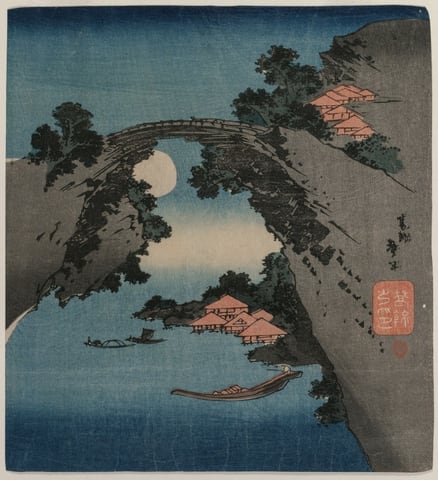
The Monkey BridgeKatsushika Taito II, early 1830sCourtesy of the Cleveland Museum of Art 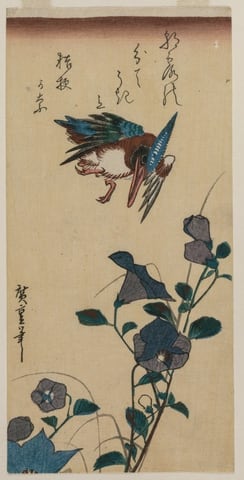
Kingfisher and Chinese BellflowersUtagawa Hiroshige, early or mid-1830sCourtesy of the Cleveland Museum of Art
Section 2, north wall
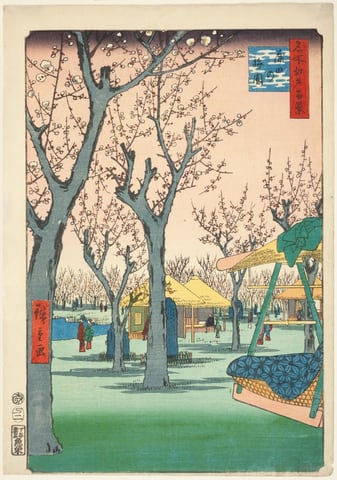
The Plum Orchard at Kamata (Kamata no umezono), from the series "One Hundred Famous Views of Edo (Meisho Edo hyakkei)"Utagawa Hiroshige, 1857Courtesy of the Art Institute of Chicago 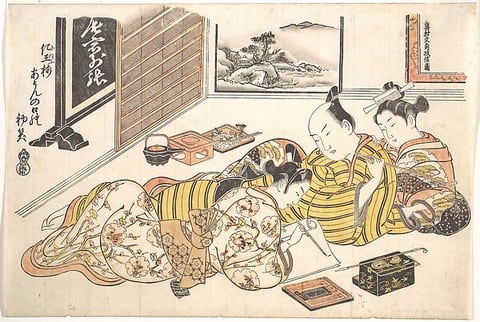
Plate from the Erotic Book Mounds of Dyed Colors: A Pattern Book for the Boudoir (Someiro no yama neya no hinagata), First MonthOkumura Masanobu, ca. 1736–44Courtesy of The Metropolitan Museum of Art 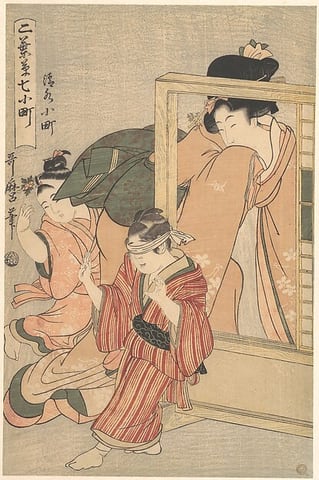
Kiyomizu Komachi, from the series Futabagusa nana KomachiKitagawa Utamaro, 1790sCourtesy of The Metropolitan Museum of Art
Section 3, north wall
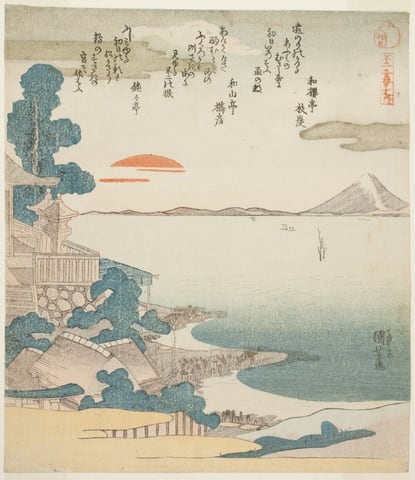
Dawn over Mout Fuji and Susaki, from the series "Five Views of Mount Fuji (Fuji goban no uchi)"Utagawa Kuniyoshi, c. 1827/29Courtesy of the Art Institute of Chicago 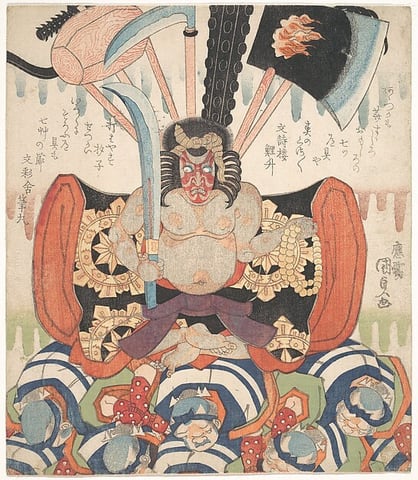
Danjūrō VII's Benkei as Fudō MyōōUtagawa Kunisada, ca. 1824Courtesy of The Metropolitan Museum of Art 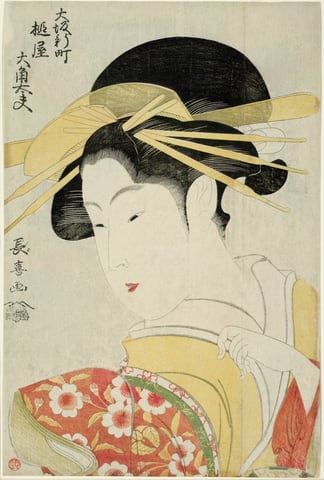
Osumi, a Tayu of the Tsuchiya in the Shinmachi Quarter in OsakaEishosai Choki, c. 1796/97Courtesy of the Art Institute of Chicago
Section 3, south wall
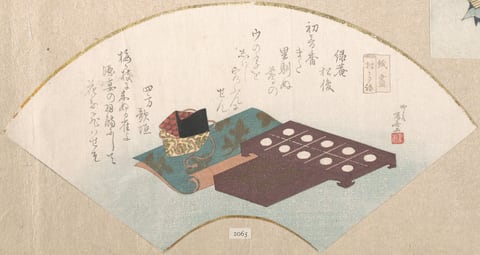
Outfit for the Game of IncenseRyūryūkyo Shinsai, 19th centuryCourtesy of The Metropolitan Museum of Art 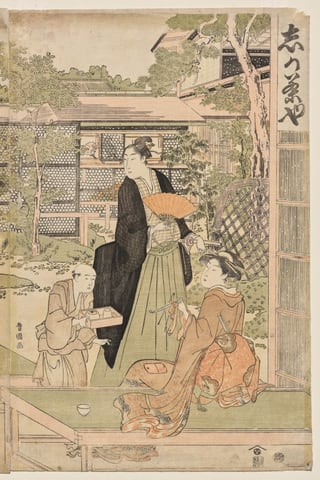
The Shika TeahouseUtagawa Toyokuni, early 1790sCourtesy of the Cleveland Museum of Art