Ukiyo-e
Works in this room
Japanese woodblock prints of the floating world: actors, courtesans, landscapes and the sea.
Section 1, north wall
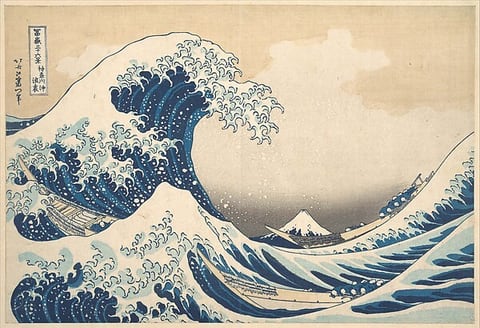
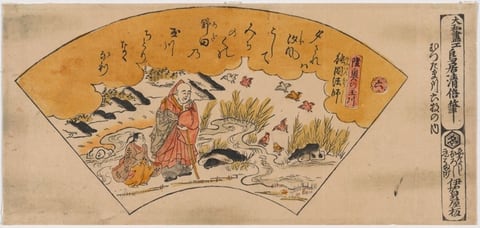
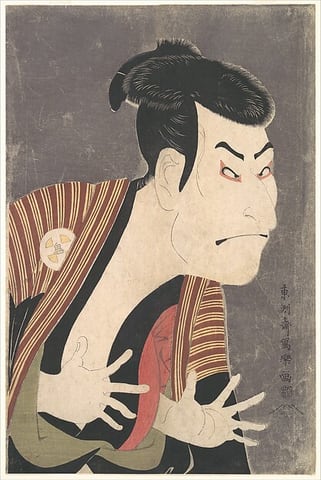
Under the Wave off Kanagawa (Kanagawa oki nami ura), or The Great Wave, from the series Thirty-six Views of Mount Fuji (Fugaku sanjūrokkei)Katsushika Hokusai, ca. 1830–32Courtesy of The Metropolitan Museum of Art The Priest Kobo Daishi at the Tama River in Kii Province from the series The Six Tama RiversTorii Kiyomasu, c. 1725-1735Courtesy of the Art Institute of Chicago Kabuki Actor Ōtani Oniji III as Yakko EdobeiTōshūsai Sharaku, 1794Courtesy of The Metropolitan Museum of Art
Section 1, south wall
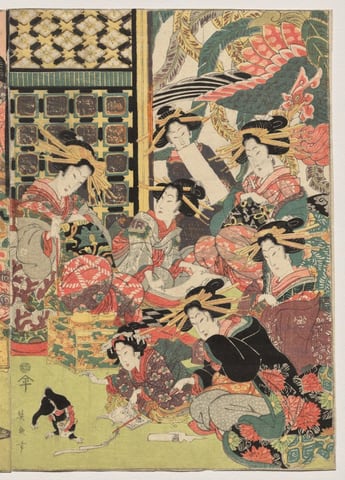
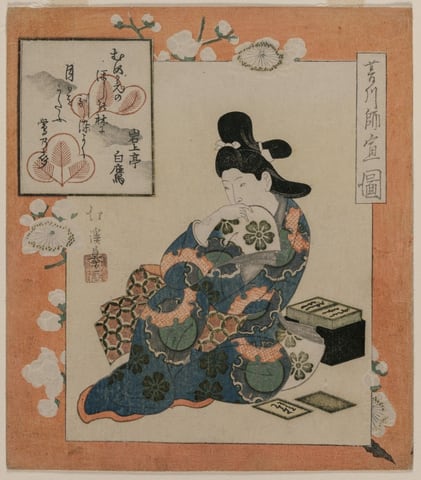
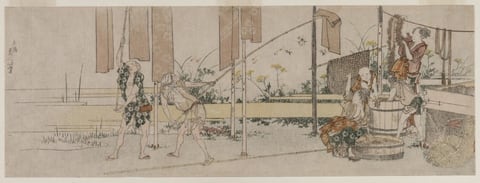
A Picture of the Viewing in the Pleasure QuartersKikukawa Eizan, 1810sCourtesy of the Cleveland Museum of Art A Picture by Hishikawa Moronobu: Woman with a Set of Poem CardsTotoya Hokkei, mid 1820sCourtesy of the Cleveland Museum of Art Dyers at WorkKatsushika Hokusai, c. 1800Courtesy of the Cleveland Museum of Art
Section 2, south wall
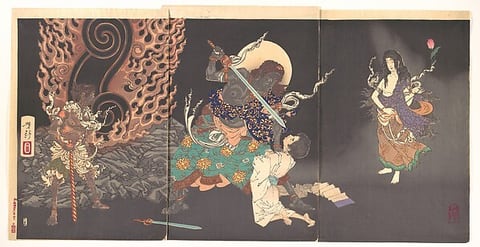
Fudō Myōō Threatening a NoviceTsukioka Yoshitoshi, 1885Courtesy of The Metropolitan Museum of Art 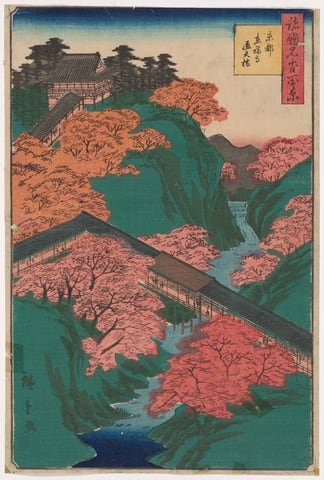
Tsuten-kyo Bridge, Tofuku Temple, Kyoto (Kyoto Tofukuji Tsutenkyo bashi) from the series “One Hundred Famous Views in the Various Provinces (Shokoku meisho hyakkei)”Utagawa Hiroshige II, 1859Courtesy of the Art Institute of Chicago 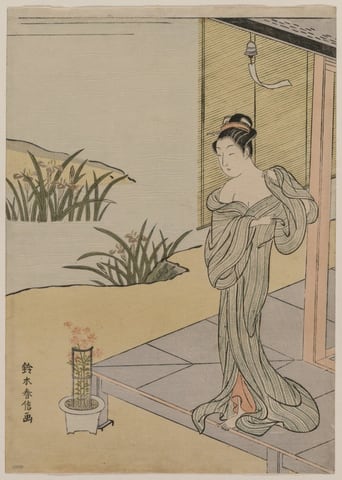
Young Woman Looking at a Pot of PinksSuzuki Harunobu, c. 1767Courtesy of the Cleveland Museum of Art
Section 2, north wall
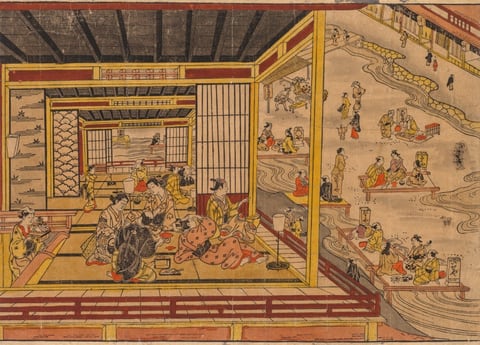
Tea House Beside the Kamo River in KyotoNishimura Shigenaga (Japanese, 1697(?)-1756), 1740sCourtesy of the Cleveland Museum of Art 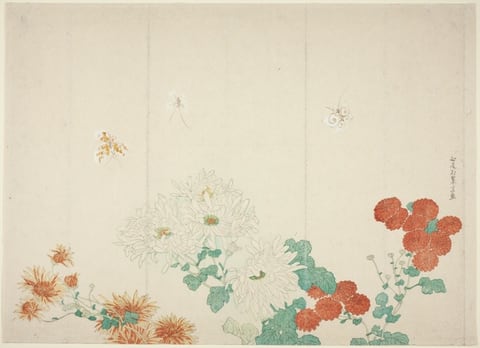
Three Types of ChrysanthemumsKitao Shigemasa, c. 1790Courtesy of the Art Institute of Chicago
Section 3, north wall
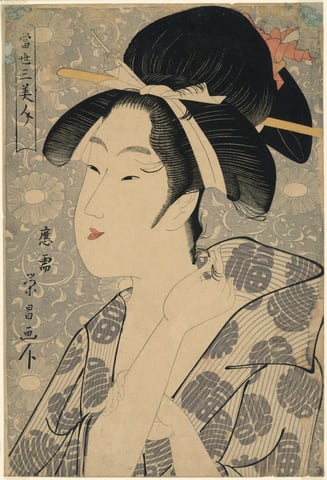
Three Beauties of Our Time (Tosei san bijin)Chokosai Eisho, n.d.Courtesy of the Art Institute of Chicago 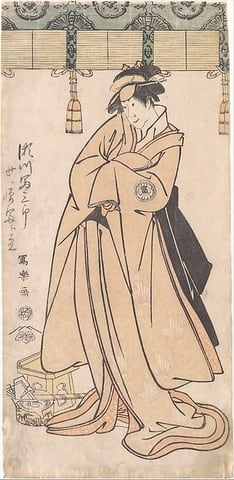
The Actor Segawa Tomisaburo II as the Otomos' Maid Wakakusa, Actually Prince KorehitoTōshūsai Sharaku, 1794–75Courtesy of The Metropolitan Museum of Art 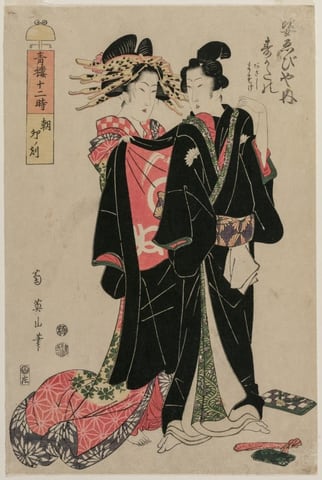
Sugatano of Sugata Ebisuya in the Morning, Hour of the Rabbit, from the series The Twelve Hours in the Pleasure QuartersKikukawa Eizan, 1812Courtesy of the Cleveland Museum of Art
Section 3, south wall
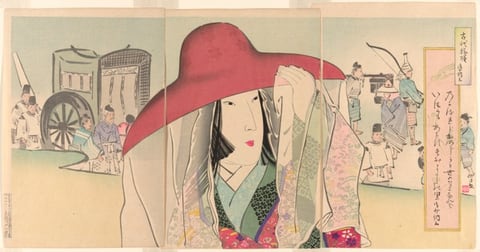
Sei Shonagon, from the series Ancient Patterns (Kodai moyo)Kobayashi Kiyochika, Meiji period (1896–1912), 1896Courtesy of the Art Institute of Chicago 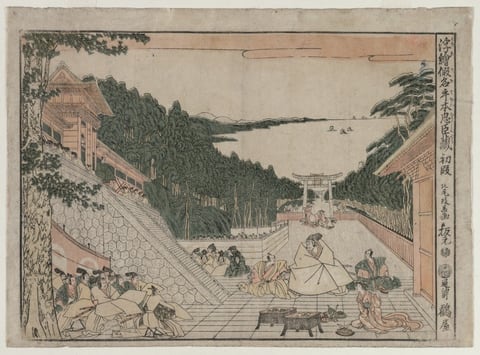
Perspective Pictures for The Treasure House of LoyaltyKitao Masayoshi, c. 1790sCourtesy of the Cleveland Museum of Art