Ukiyo-e
Works in this room
Japanese woodblock prints of the floating world: actors, courtesans, landscapes and the sea.
Section 1, north wall
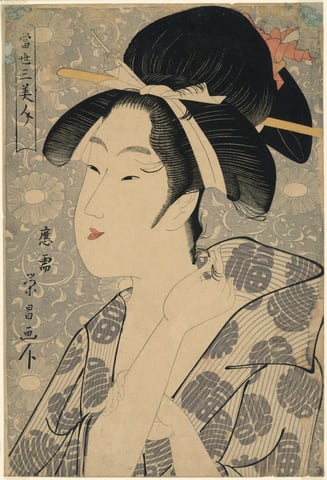
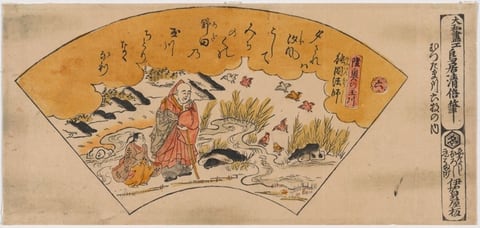
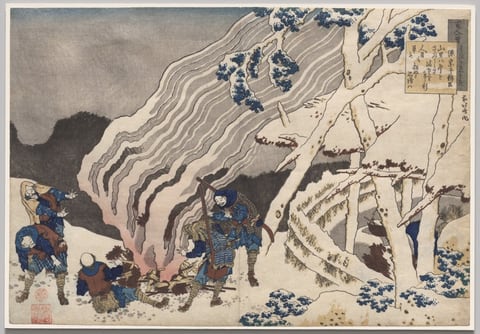
Three Beauties of Our Time (Tosei san bijin)Chokosai Eisho, n.d.Courtesy of the Art Institute of Chicago The Priest Kobo Daishi at the Tama River in Kii Province from the series The Six Tama RiversTorii Kiyomasu, c. 1725-1735Courtesy of the Art Institute of Chicago Poem by Minamoto no Muneyuki from the series One Hundred Poems by One Hundred Poets Explained by the NurseKatsushika Hokusai, 1835–36Courtesy of the Cleveland Museum of Art
Section 1, south wall
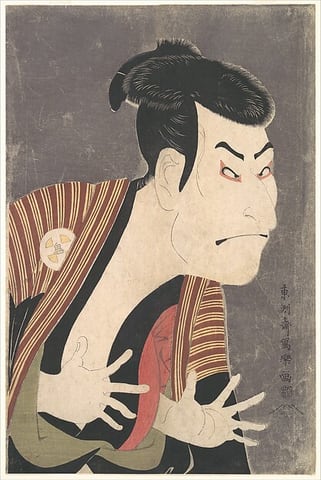
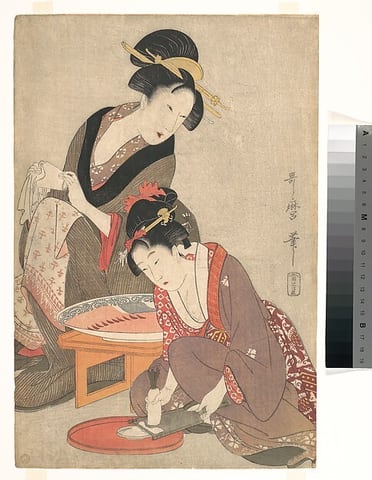
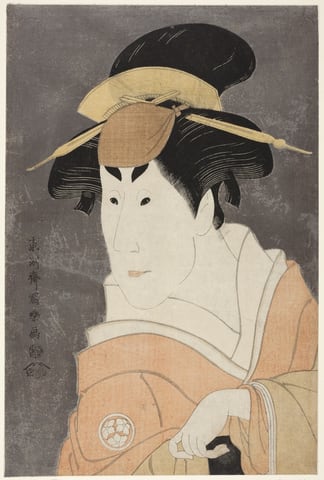
Kabuki Actor Ōtani Oniji III as Yakko EdobeiTōshūsai Sharaku, 1794Courtesy of The Metropolitan Museum of Art Women Grating Radish for SashimiKitagawa Utamaro, ca. 1798–99Courtesy of The Metropolitan Museum of Art The actor Osagawa Tsuneyo II as Osan, Ippei’s elder sisterTōshūsai Sharaku, 1794Courtesy of the Art Institute of Chicago
Section 2, south wall
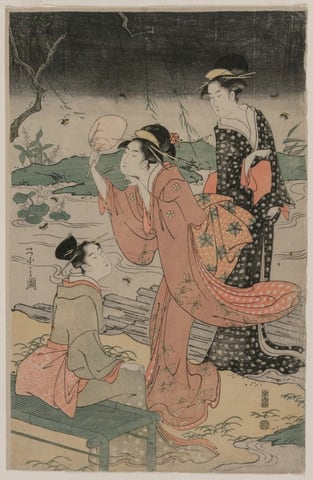
Women Beside a Stream Chasing FirefliesChôbunsai Eishi, c. 1796–97Courtesy of the Cleveland Museum of Art 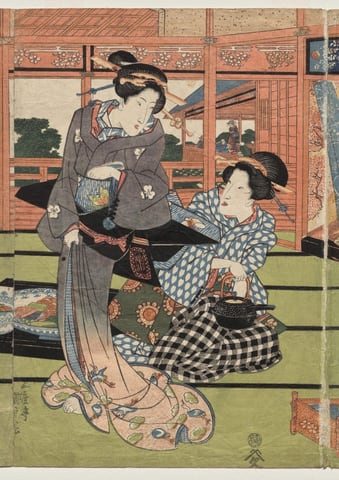
A View of the Large New Room at SakuraiUtagawa Kunisada, early or mid 1830sCourtesy of the Cleveland Museum of Art 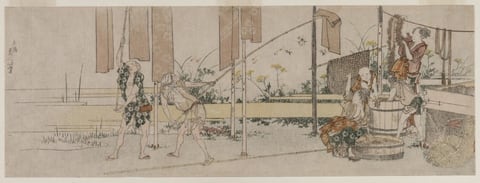
Dyers at WorkKatsushika Hokusai, c. 1800Courtesy of the Cleveland Museum of Art
Section 2, north wall

The Actor Segawa Tomisaburo II as the Otomos' Maid Wakakusa, Actually Prince KorehitoTōshūsai Sharaku, 1794–75Courtesy of The Metropolitan Museum of Art 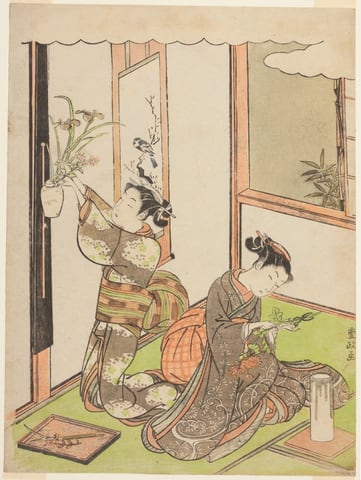
Flower ArrangingKitao Shigemasa, c. 1769Courtesy of the Art Institute of Chicago 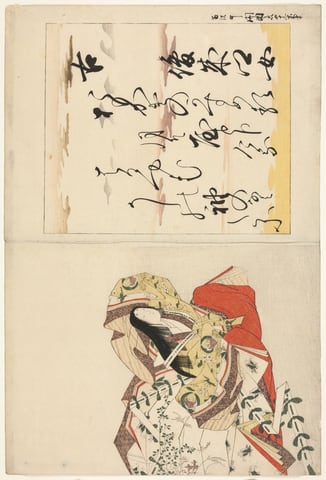
The Poetess Shunzei no Musume, from the series The Thirty-six Immortal Women Poets (Nishikizuri onna sanjurokkasen)Chôbunsai Eishi, Edo period (1615–1868), 1801Courtesy of the Art Institute of Chicago
Section 3, north wall
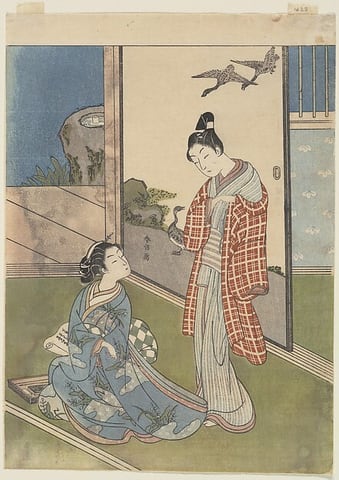
A Girl Writing a LetterSuzuki Harunobu, 18th centuryCourtesy of The Metropolitan Museum of Art 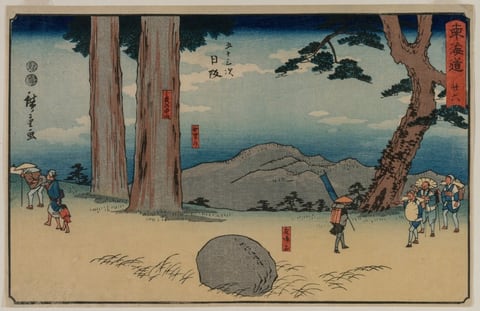
Nissaka: The Night-Weeping Stone at Sayo no Nakayama, from the series The Fifty-Three Stations of the TōkaidōUtagawa Hiroshige, c. 1848–50Courtesy of the Cleveland Museum of Art
Section 3, south wall
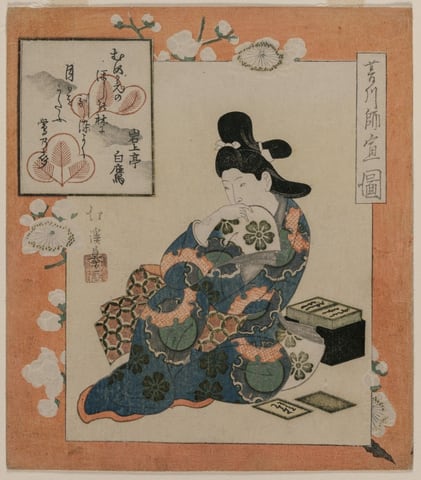
A Picture by Hishikawa Moronobu: Woman with a Set of Poem CardsTotoya Hokkei, mid 1820sCourtesy of the Cleveland Museum of Art 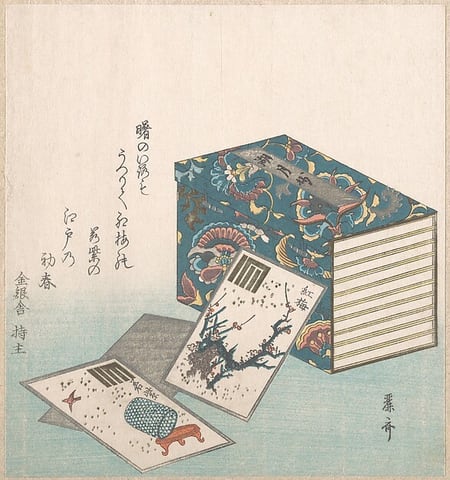
Books and CardsReisai, 18th–19th centuryCourtesy of The Metropolitan Museum of Art