Floor plan

Style galleriesRomanticism

Romanticism

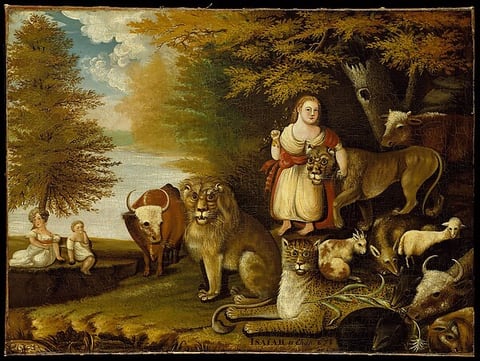
Peaceable Kingdom, by Edward Hicks, ca. 1830–32
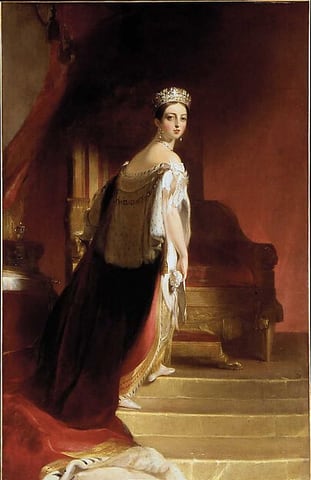
Queen Victoria, by Thomas Sully, 1838
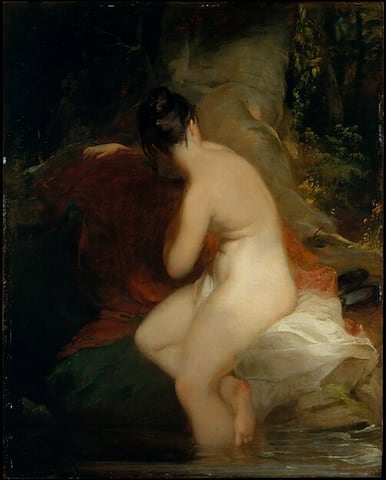
Musidora, by Thomas Sully, 1813–35
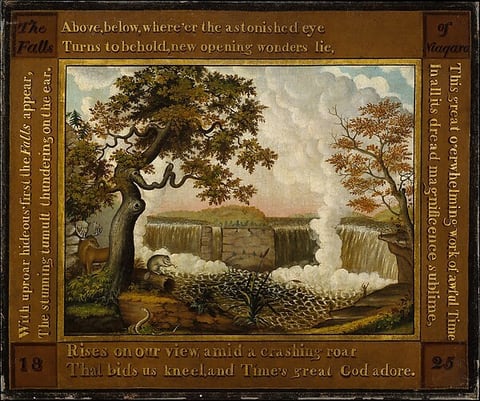
The Falls of Niagara, by Edward Hicks, ca. 1825
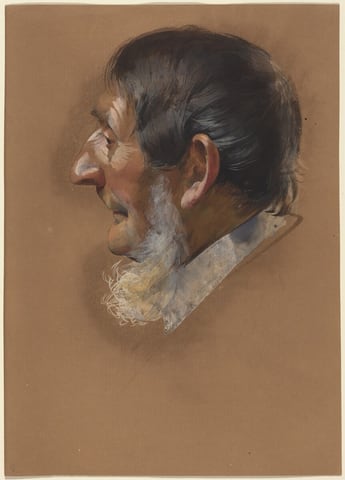
The image shows a man's head and part of his neck in profile view. The man is looking to the left, showcasing his facial features. He has a prominent nose, cheekbones, dark hair with hints of gray at the sides, and a white beard under his chin. He is wearing a gray collar that is partially visible. The background is a plain, muted brown color. There are no objects or jewelry visible in the image.
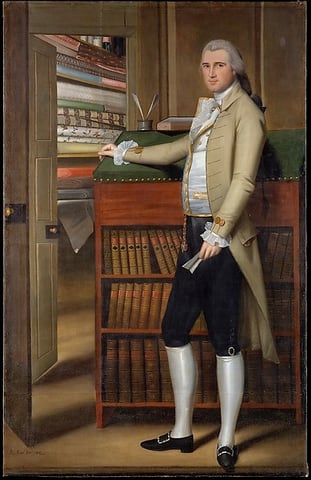
Elijah Boardman, by Ralph Earl, 1789

The works in this room are listed below.

Works in this room

Sublime landscapes, storms and feeling, from about 1780 to 1850.

Section 1, north wall

  1. Peaceable Kingdom, by Edward Hicks, ca. 1830–32
    Peaceable KingdomEdward Hicks, ca. 1830–32Courtesy of The Metropolitan Museum of Art
  2. Queen Victoria, by Thomas Sully, 1838
    Queen VictoriaThomas Sully, 1838Courtesy of The Metropolitan Museum of Art
  3. Musidora, by Thomas Sully, 1813–35
    MusidoraThomas Sully, 1813–35Courtesy of The Metropolitan Museum of Art

Section 1, south wall

  1. The Falls of Niagara, by Edward Hicks, ca. 1825
    The Falls of NiagaraEdward Hicks, ca. 1825Courtesy of The Metropolitan Museum of Art
  2. The image shows a man's head and part of his neck in profile view. The man is looking to the left, showcasing his facial features. He has a prominent nose, cheekbones, dark hair with hints of gray at the sides, and a white beard under his chin. He is wearing a gray collar that is partially visible. The background is a plain, muted brown color. There are no objects or jewelry visible in the image.
    Profile of a Man with SidewhiskersUnrecorded German maker, c. 1850Courtesy National Gallery of Art, Washington
  3. Elijah Boardman, by Ralph Earl, 1789
    Elijah BoardmanRalph Earl, 1789Courtesy of The Metropolitan Museum of Art

Section 2, south wall
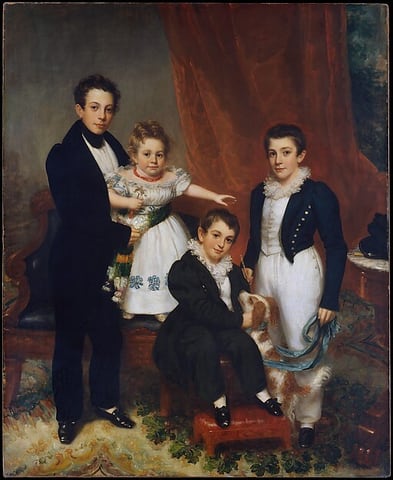
  1. The Knapp Children, by Samuel Lovett Waldo, ca. 1833–34
    The Knapp ChildrenSamuel Lovett Waldo, ca. 1833–34Courtesy of The Metropolitan Museum of Art
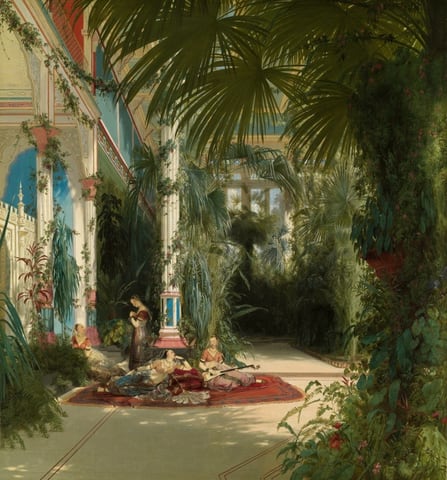
  2. Four women with musical instruments lounge in a massive garden courtyard.
    The Interior of the Palm House on the Pfaueninsel Near PotsdamCarl Blechen, 1834Courtesy of the Art Institute of Chicago
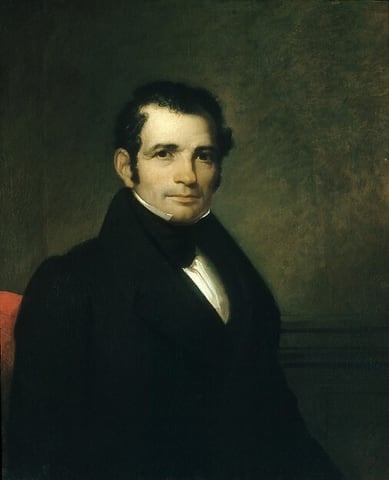
  3. Luman Reed, by Asher Brown Durand, 1835
    Luman ReedAsher Brown Durand, 1835Courtesy of The Metropolitan Museum of Art

Section 2, north wall
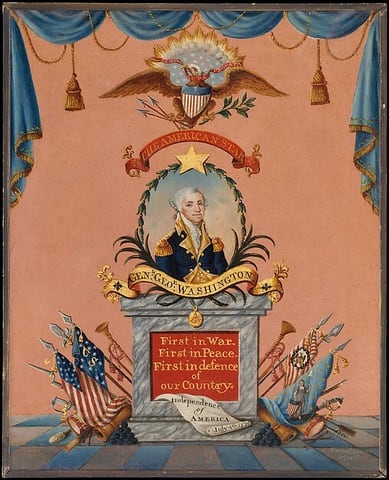
  1. The American Star (George Washington), by Frederick Kemmelmeyer, ca. 1803
    The American Star (George Washington)Frederick Kemmelmeyer, ca. 1803Courtesy of The Metropolitan Museum of Art
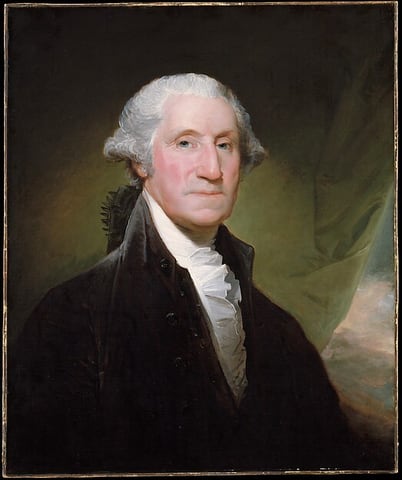
  2. George Washington, by Gilbert Stuart, begun 1795
    George WashingtonGilbert Stuart, begun 1795Courtesy of The Metropolitan Museum of Art
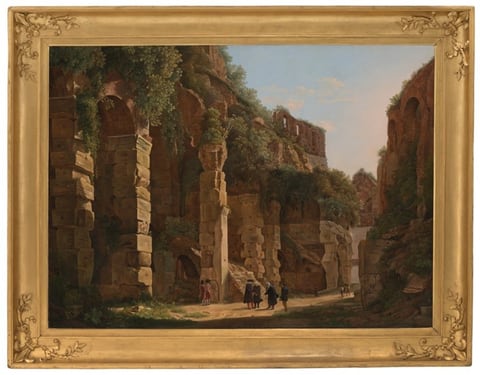
  3. A work made of oil on canvas.
    Inside the ColosseumFranz Ludwig Catel, c. 1823Courtesy of the Art Institute of Chicago

Section 3, north wall
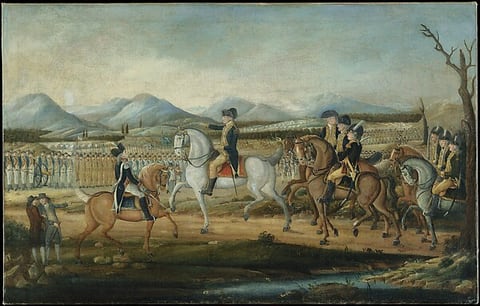
  1. Washington Reviewing the Western Army at Fort Cumberland, Maryland, by Frederick Kemmelmeyer, after 1795
    Washington Reviewing the Western Army at Fort Cumberland, MarylandFrederick Kemmelmeyer, after 1795Courtesy of The Metropolitan Museum of Art
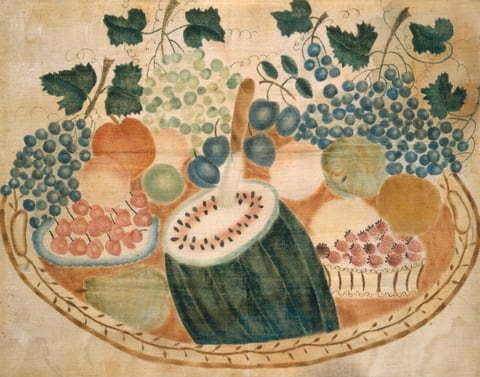
  2. The image shows a large cut watermelon in a woven basket surrounded by various fruits including grapes, peaches, and small round red fruits. The color palette includes greens, blues, oranges, and browns. The basket takes up most of the space and is filled with fruits, with grape clusters hanging above it.
    Fruit on a TrayUnrecorded American maker, c. 1840Courtesy National Gallery of Art, Washington
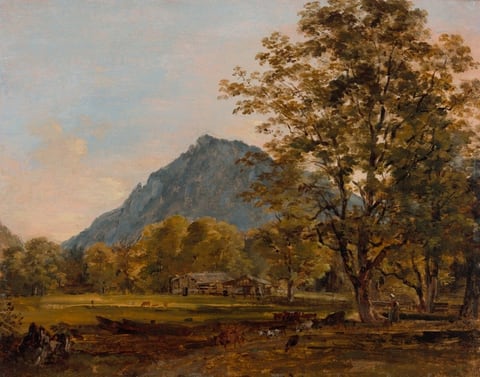
  3. A work made of oil on paper, laid onto cardboard.
    A Farmhouse in the Bavarian AlpsJohann Georg von Dillis, c. 1825Courtesy of the Art Institute of Chicago
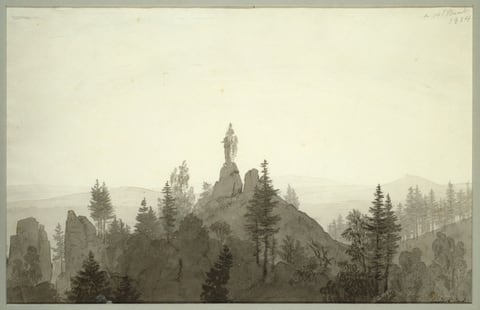
  4. Black ink drawing of forested landscape, statue of woman holding child at pinnacle of mountain.
    Statue of the Madonna in the MountainsCaspar David Friedrich, 1804Courtesy of the Art Institute of Chicago