Floor plan

Style galleriesPrints of the 19th century
Prints of the 19th century
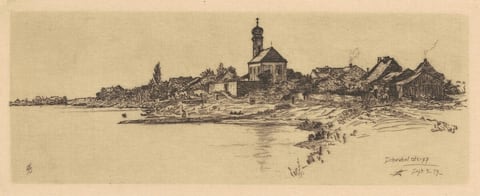
The image shows a village scene viewed from a low vantage point near a water's edge. A row of small, closely packed buildings and a church with an onion-shaped dome are prominently featured. There are gentle slopes leading towards the structures. The image uses fine, detailed line work to depict texture and depth in the buildings and natural landscape. The lines are delicate and varied, creating a sense of detail and softness. The color palette is monochromatic, with dark ink on a pale background, resulting in a classic and timeless feel.
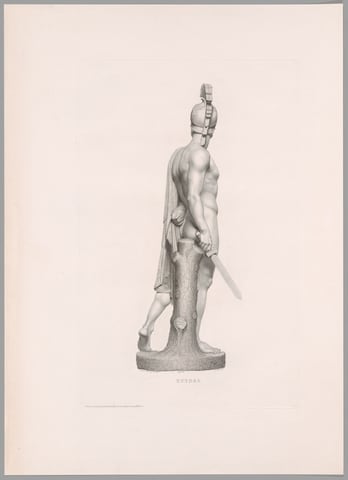
A work made of engraving and etching in black on ivory wove paper.
In My Dream I Saw in the Sky a Face of Mystery, by Odilon Redon, 1885
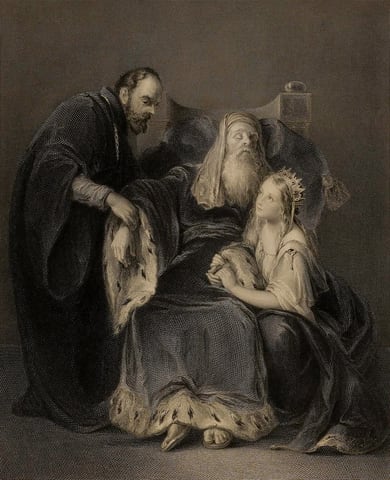
Lear and Cordelia, by Richard Hatfield, 1845
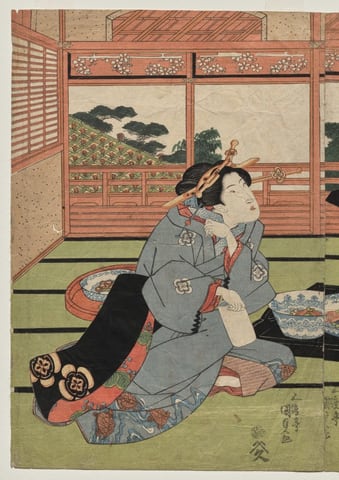
A View of the Large New Room at Sakurai, by Utagawa Kunisada, early or mid 1830s

The works in this room are listed below.

Works in this room

Prints made in the 19th century, from every museum.

Section 1, north wall

  1. The image shows a village scene viewed from a low vantage point near a water's edge. A row of small, closely packed buildings and a church with an onion-shaped dome are prominently featured. There are gentle slopes leading towards the structures. The image uses fine, detailed line work to depict texture and depth in the buildings and natural landscape. The lines are delicate and varied, creating a sense of detail and softness. The color palette is monochromatic, with dark ink on a pale background, resulting in a classic and timeless feel.
    SchwabelweissOtto Henry Bacher, 1879Courtesy National Gallery of Art, Washington
  2. A work made of engraving and etching in black on ivory wove paper.
    Ettore, Side View, from Oeuvre de CanovaAntonio Canova, 1817Courtesy of the Art Institute of Chicago
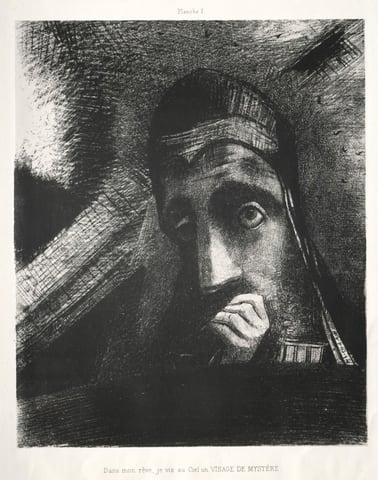
  3. In My Dream I Saw in the Sky a Face of Mystery, by Odilon Redon, 1885
    In My Dream I Saw in the Sky a Face of MysteryOdilon Redon, 1885Courtesy of the Cleveland Museum of Art

Section 1, south wall

  1. Lear and Cordelia, by Richard Hatfield, 1845
    Lear and CordeliaRichard Hatfield, 1845Courtesy of the Smithsonian American Art Museum
  2. A View of the Large New Room at Sakurai, by Utagawa Kunisada, early or mid 1830s
    A View of the Large New Room at SakuraiUtagawa Kunisada, early or mid 1830sCourtesy of the Cleveland Museum of Art

Section 2, south wall
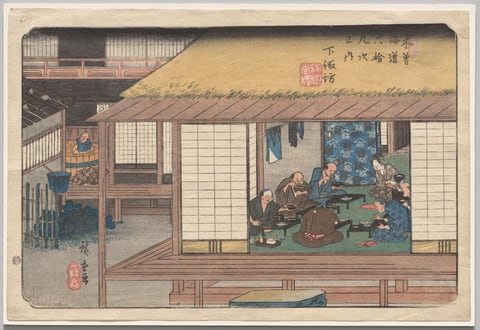
  1. Shimosuwa, from Sixty-Nine Stations of the Kisokaidō, by Utagawa Hiroshige, 1835–38
    Shimosuwa, from Sixty-Nine Stations of the KisokaidōUtagawa Hiroshige, 1835–38Courtesy of the Cleveland Museum of Art
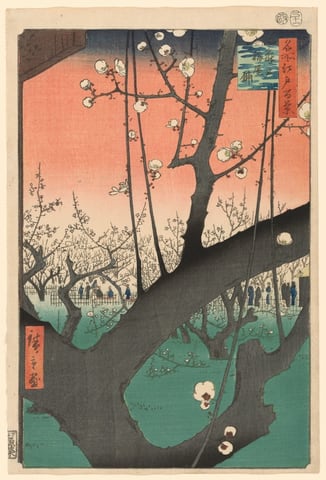
  2. A work made of color woodblock print; ōban.
    Plum Garden at Kameido (Kameido Umeyashiki), from the series "One Hundred Famous Views of Edo (Meisho Edo hyakkei)"Utagawa Hiroshige, 1857Courtesy of the Art Institute of Chicago
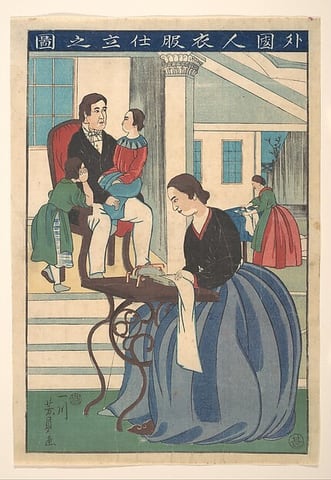
  3. Foreign Family with Wife Making Clothes (Gaikokujin ifuku shitate no zu), by Utagawa Yoshikazu, 1860
    Foreign Family with Wife Making Clothes (Gaikokujin ifuku shitate no zu)Utagawa Yoshikazu, 1860Courtesy of The Metropolitan Museum of Art

Section 2, north wall
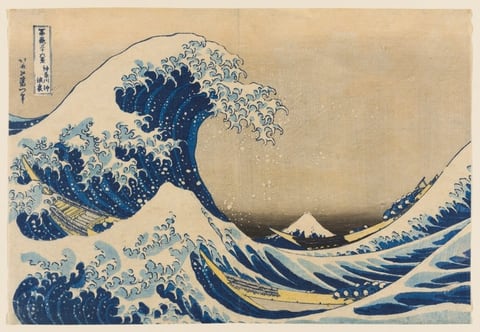
  1. A color woodblock print of a large crashing wave, looms over two narrow boats full of people. Mt Fuji in the background. There is a faint peach colored sky.
    Under the Wave off Kanagawa (Kanagawa oki nami ura), also known as The Great Wave, from the series "Thirty-Six Views of Mount Fuji (Fugaku sanjurokkei)"Katsushika Hokusai, 1830/33Courtesy of the Art Institute of Chicago
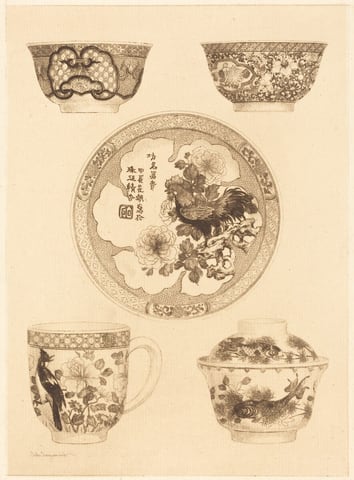
  2. The image features a collection of ceramics, including two bowls, a plate, a mug, and a lidded cup. The color palette is sepia-toned, with shades of brown. The plate has an intricate illustration of a rooster and floral patterns. Two bowls with different designs are above the plate. A mug with floral and bird illustrations sits on the left, and a lidded cup with fish and aquatic plants is on the right.
    Five Pieces of ChinaJules-Ferdinand JacquemartCourtesy National Gallery of Art, Washington
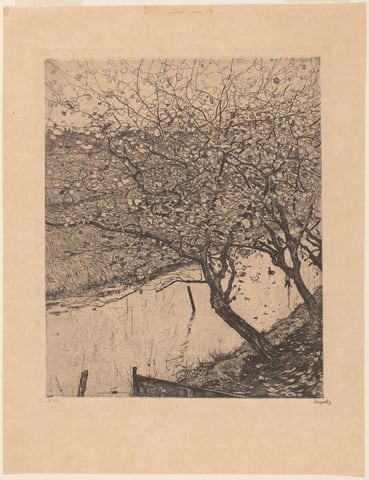
  3. The image shows a small body of water with grass-covered banks on either side. The viewpoint is slightly elevated, looking down at the scene. The horizon is in the upper third of the composition, separating the sky from the land. The artwork features intricate linework and stippling to create texture and detail, particularly in the tree branches. The color palette is monochrome, with shades of sepia and brown. A tree dominates the right side of the scene, leaning over the water. In the distance, more trees and fields are visible with minimal detail in the far background.
    Apple Trees along the Side of a DitchPieter Dupont, 1894Courtesy National Gallery of Art, Washington

Section 3, north wall
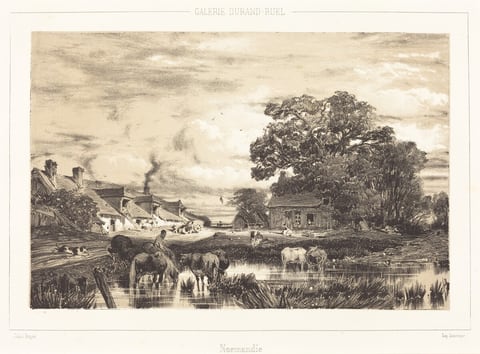
  1. This image shows a rural landscape with a pond in the foreground where cattle are being herded by a person on horseback. There are low buildings with smoking chimneys in the middle ground. Trees on the horizon separate the land from the sky, which is filled with clouds. The painting is detailed with a consistent brushwork, capturing foliage and buildings. The color palette is primarily sepia, giving a vintage and serene feel to the scene.
    View in Normandy (Vue prise en Normandie)Jules Dupré, 1835Courtesy National Gallery of Art, Washington
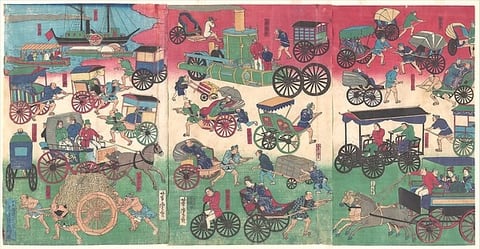
  2. Vehicles on the Streets of Tokyo, by Utagawa Yoshitora, 1870
    Vehicles on the Streets of TokyoUtagawa Yoshitora, 1870Courtesy of The Metropolitan Museum of Art

Section 3, south wall
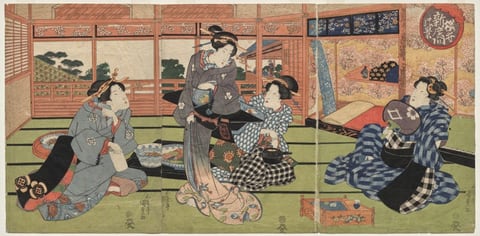
  1. A View of the Large New Room at Sakurai, by Utagawa Kunisada, early or mid 1830s
    A View of the Large New Room at SakuraiUtagawa Kunisada, early or mid 1830sCourtesy of the Cleveland Museum of Art
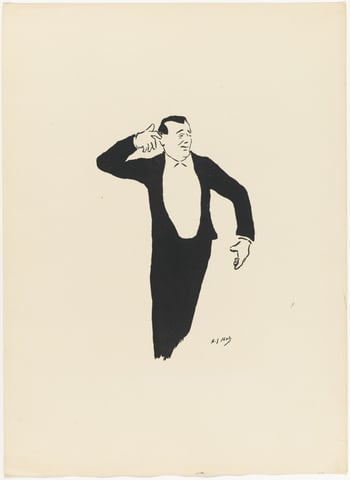
  2. A work made of lithograph on ivory wove paper.
    Paulus, from Le Café-ConcertHenri-Gabriel Ibels, 1893Courtesy of the Art Institute of Chicago
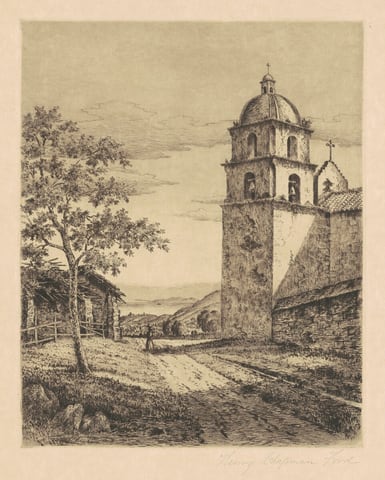
  3. The image features a large building with a domed tower on the right side. The horizon shows hills, trees, and the sky. The brushstrokes give detailed texture to the scene, with a focus on the landscape and architecture. The color palette is sepia-toned. A tree, fence, smaller buildings, and a figure on a path add depth and perspective to the scene.
    Mission Santa Barbara, Looking SouthHenry Chapman Ford, 1888Courtesy National Gallery of Art, Washington