Floor plan

Style galleriesNeoclassicism

Neoclassicism

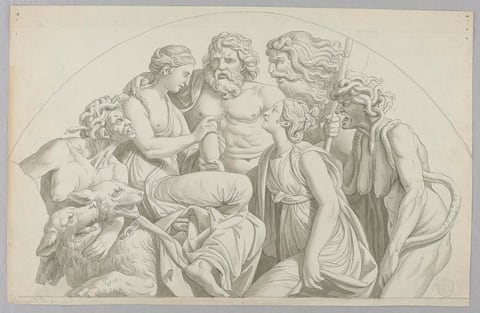
PSYCHE ASKS PROSERPINE TO PUT A LITTLE OF HER BEAUTY IN AN URN FOR VENUS
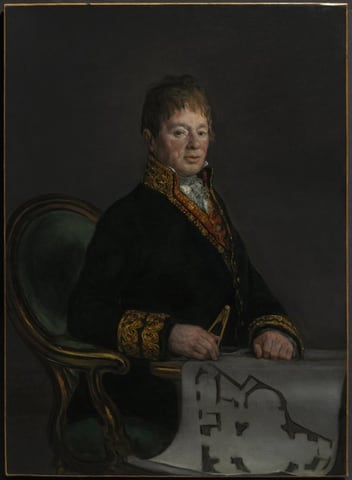
Portrait of Don Juan Antonio Cuervo, by Francisco Goya, 1819
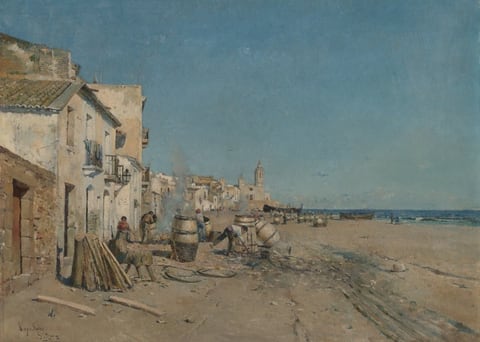
A work made of oil on masonite.
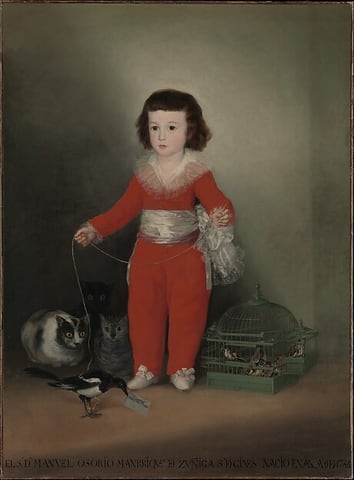
Manuel Osorio Manrique de Zuñiga (1784–1792), by Francisco Goya, 1787–88
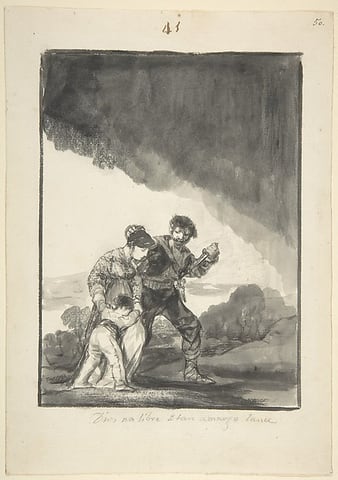
God save us from such a bitter fate; a bandit threatening a woman and a child with a knife, page 41 from the "Black Border Album" (E), by Francisco Goya, ca. 1816–20
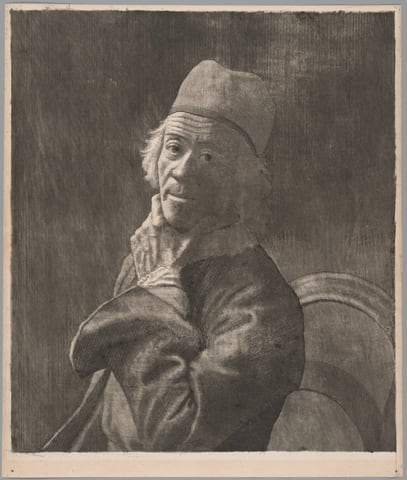
A work made of etching, roulette, and mezzotint in black on cream laid paper.
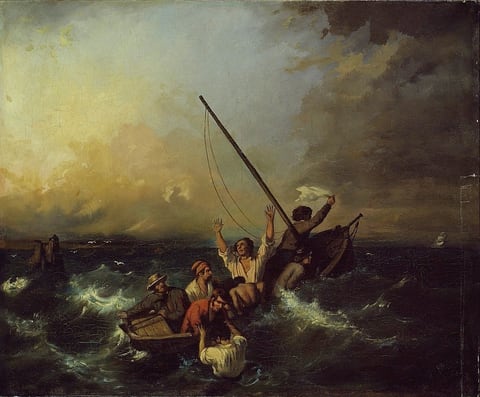
A work made of oil on canvas.

The works in this room are listed below.

Works in this room

Europe turns back to Greece and Rome: clear line, calm figures and civic virtue.

First room, north wall

  1. PSYCHE ASKS PROSERPINE TO PUT A LITTLE OF HER BEAUTY IN AN URN FOR VENUS
    Psyche Asks Proserpine to Put a Little of her Beauty in an Urn for VenusJohann August Nahl The Younger, ca. 1781Courtesy of Cooper Hewitt, Smithsonian Design Museum
  2. Portrait of Don Juan Antonio Cuervo, by Francisco Goya, 1819
    Portrait of Don Juan Antonio CuervoFrancisco Goya, 1819Courtesy of the Cleveland Museum of Art
  3. A work made of oil on masonite.
    SitgesJuan Roig y Soler, 19th centuryCourtesy of the Art Institute of Chicago

First room, south wall

  1. Manuel Osorio Manrique de Zuñiga (1784–1792), by Francisco Goya, 1787–88
    Manuel Osorio Manrique de Zuñiga (1784–1792)Francisco Goya, 1787–88Courtesy of The Metropolitan Museum of Art
  2. God save us from such a bitter fate; a bandit threatening a woman and a child with a knife, page 41 from the "Black Border Album" (E), by Francisco Goya, ca. 1816–20
    God save us from such a bitter fate; a bandit threatening a woman and a child with a knife, page 41 from the "Black Border Album" (E)Francisco Goya, ca. 1816–20Courtesy of The Metropolitan Museum of Art
  3. A work made of etching, roulette, and mezzotint in black on cream laid paper.
    The Large Self-PortraitJean Etienne Liotard, 1778/81Courtesy of the Art Institute of Chicago
  4. A work made of oil on canvas.
    ShipwreckAfter Eugène Isabey, 19th centuryCourtesy of the Art Institute of Chicago

Second room, south wall
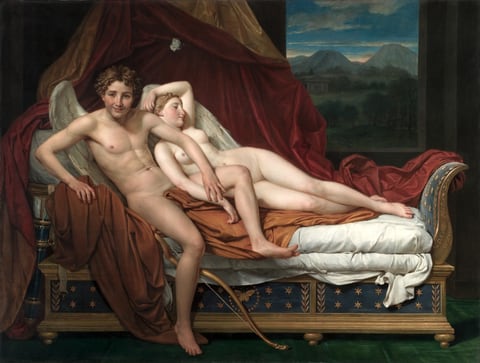
  1. Cupid and Psyche, by Jacques-Louis David, 1817
    Cupid and PsycheJacques-Louis David, 1817Courtesy of the Cleveland Museum of Art
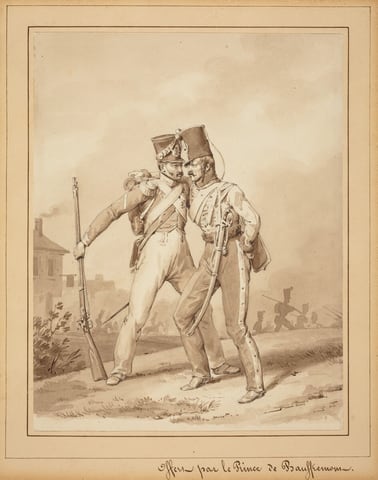
  2. The image features two men in military uniform engaging closely with each other. Both are shown from head to toe. The man on the left stands with his left leg forward, holding a rifle, and has his right arm around the shoulder of the other man. The man on the right has his right leg slightly bent, supporting his weight, and is holding a sword in his left hand. Each man has distinctive facial features. Both wear tall, elaborate military hats and detailed uniforms. The man on the left displays a strap over his shoulder, while the man on the right has intricate decorations on his jacket and trousers. In the background, there are a few more soldiers and part of a building to the left. The setting is monochromatic.
    Two GrenadiersVictor AdamCourtesy National Gallery of Art, Washington
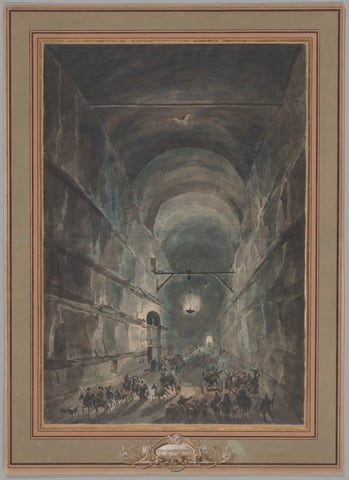
  3. A work made of handcolored etching in black on cream laid paper.
    The Grotto of Posillipo (La Grotta di Posillipo)Louis Jean Desprez, 1785/90Courtesy of the Art Institute of Chicago

Second room, north wall
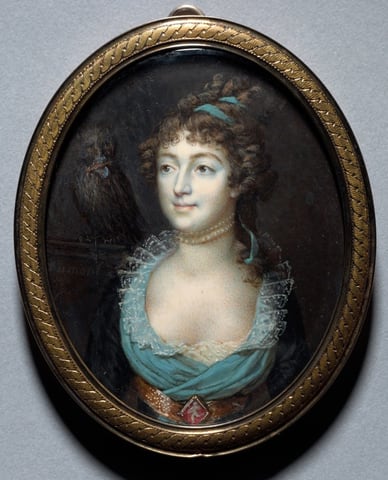
  1. Portrait of Mademoiselle Marie-Anne Adelaide Le Normand, by François Dumont, c. 1793
    Portrait of Mademoiselle Marie-Anne Adelaide Le NormandFrançois Dumont, c. 1793Courtesy of the Cleveland Museum of Art
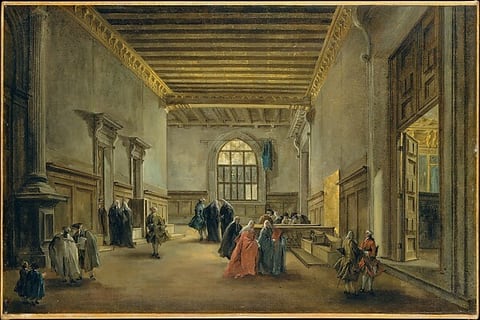
  2. The Antechamber of the Sala del Maggior Consiglio, by Francesco Guardi, ca. 1765–68
    The Antechamber of the Sala del Maggior ConsiglioFrancesco Guardi, ca. 1765–68Courtesy of The Metropolitan Museum of Art
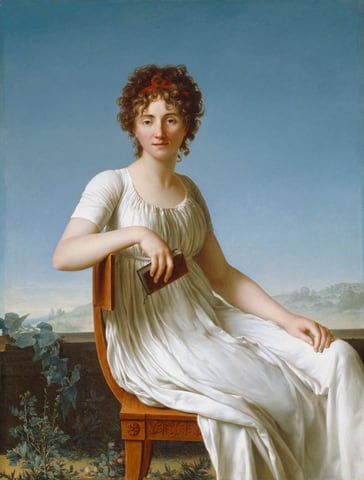
  3. A work made of oil on canvas.
    Portrait of Constance PipeletJean Baptiste François Désoria, 1797Courtesy of the Art Institute of Chicago
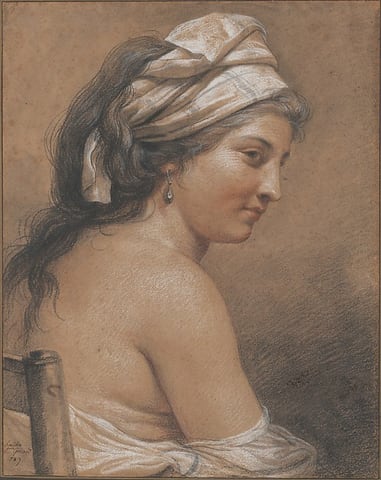
  4. Study of a Seated Woman Seen from Behind (Marie-Gabrielle Capet), by Adélaïde Labille-Guiard, 1789
    Study of a Seated Woman Seen from Behind (Marie-Gabrielle Capet)Adélaïde Labille-Guiard, 1789Courtesy of The Metropolitan Museum of Art

Third room, north wall
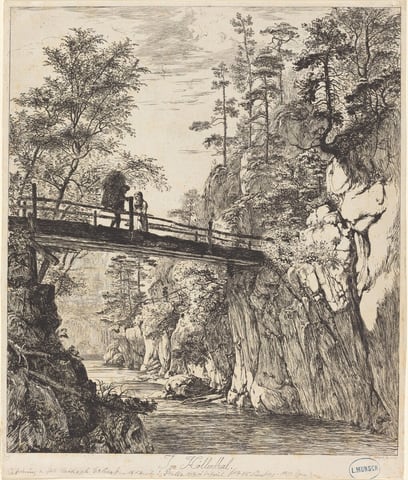
  1. The image shows a landscape with a wooden bridge crossing over a river in a valley. The scenery includes cliffs, trees, and flowing water below. The artwork features fine, detailed brushstrokes depicting the texture of the cliffs, foliage, and water. The color scheme is monochromatic with various shades of gray and sepia tones. Two figures are seen on the bridge, contributing to the sense of scale and activity in the serene setting.
    Im Höllenthal (In the Höllen Valley)Johann Christoph Erhard, 1818Courtesy National Gallery of Art, Washington
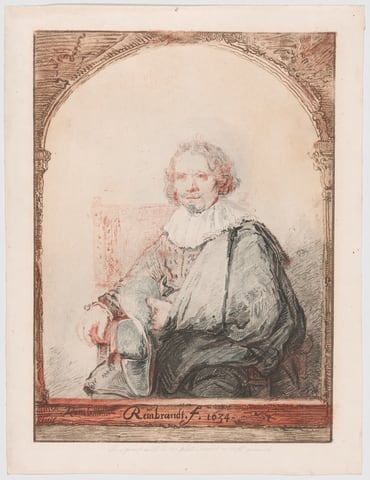
  2. A work made of soft ground etching from two plates, with roulette, on paper.
    Portrait of a Man in an Armchair, from Collection d'imitations de Dessins d'après les Principaux Maîtres Hollandais et FlamandsChristian Josi, 1826Courtesy of the Art Institute of Chicago