Mughal and Rajput painting
Works in this room
Jewel-bright painting from the Mughal court and the Rajput and Pahari kingdoms of India.
First room, north wall
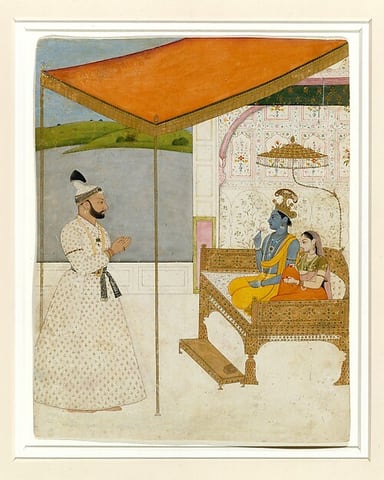
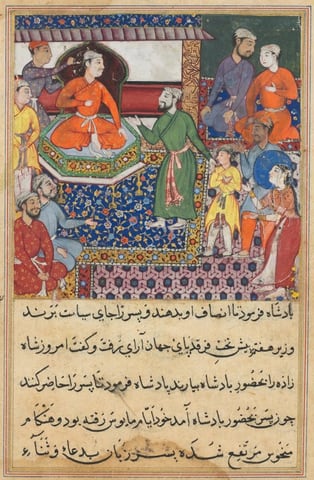
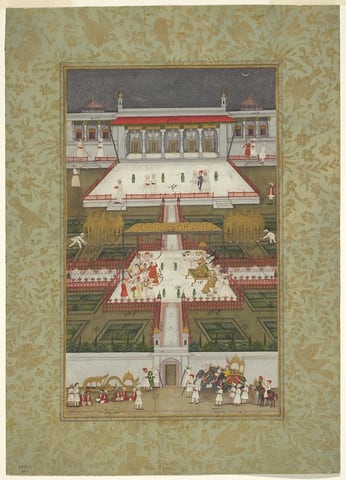
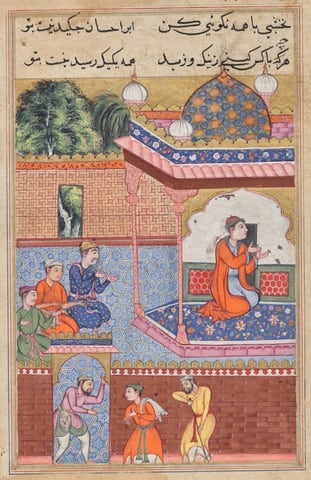
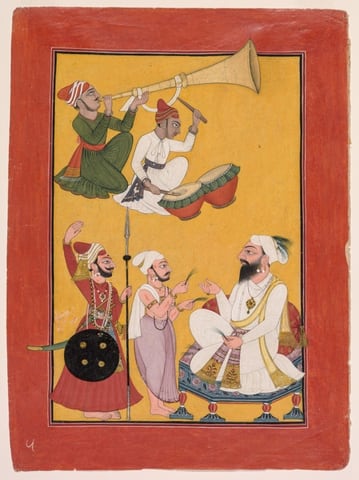
Raja Balwant Singh’s Vision of Krishna and RadhaNainsukh, ca. 1745–50Courtesy of The Metropolitan Museum of Art The handmaiden again pleads for the death of the prince, from a Tuti-nama (Tales of a Parrot): Eighth NightLalu, c. 1560Courtesy of the Cleveland Museum of Art Ruler Entertained by Dancers in a Paradise GardenUnrecorded Indian maker, Late 18th centuryCourtesy of the Art Institute of Chicago Kaiwan, Latif, and Sharif arrive at a house of worship, where they seek help from Khurshid who has become a mystical healer, from a Tuti-Nama (Tales of a Parrot): Thirty-second NightUnrecorded Indian maker, c. 1560Courtesy of the Cleveland Museum of Art
First room, south wall
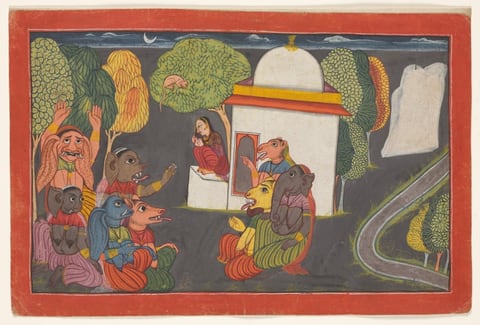
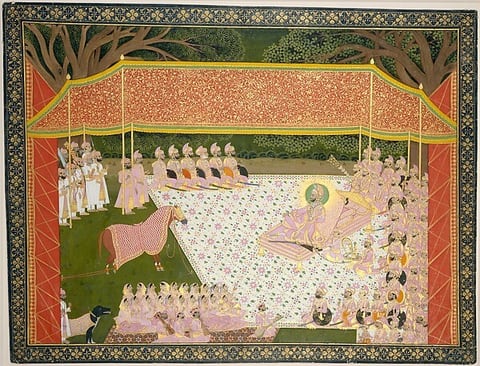
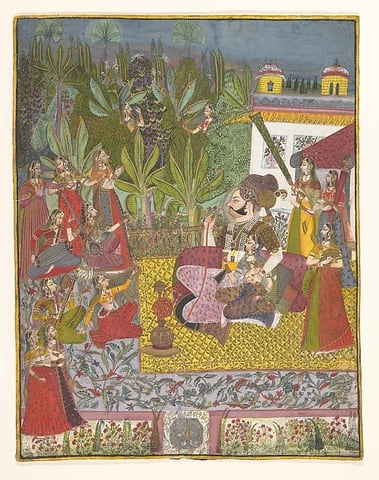
Hanuman spies Sita in the Ashoka Grove, from the “Shangri” RamayanaUnrecorded Indian maker, c. 1700–25Courtesy of the Cleveland Museum of Art Maharana Sarup Singh Inspects a Prize StallionTara, 1845–46Courtesy of The Metropolitan Museum of Art Maharaja Bijay Singh in His HaremUnrecorded Indian maker, ca. 1770Courtesy of The Metropolitan Museum of Art Celebrations of Krishna's Birth, from a Bhagavata PuranaUnrecorded Indian maker, c. 1725–30Courtesy of the Cleveland Museum of Art
Second room, south wall
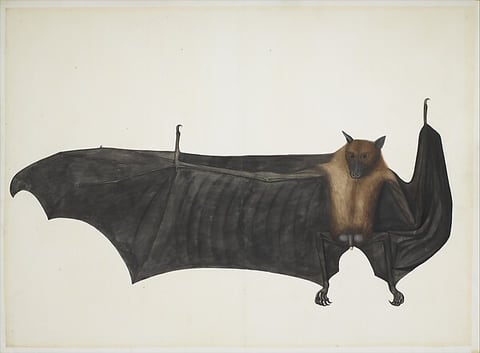
Great Indian Fruit BatBhawani Das, ca. 1777–82Courtesy of The Metropolitan Museum of Art 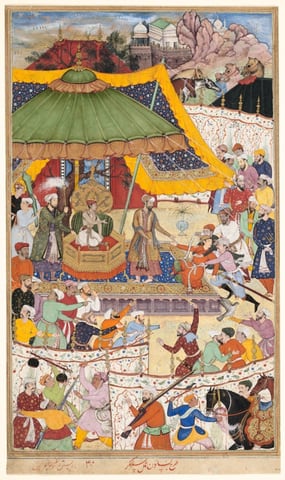
The Young Emperor Akbar Arrests the Insolent Shah Abu’l-Maali, Page from a Manuscript of the AkbarnamaBasawan, Mughal dynasty (1526-1857), c. 1590-1595Courtesy of the Art Institute of Chicago 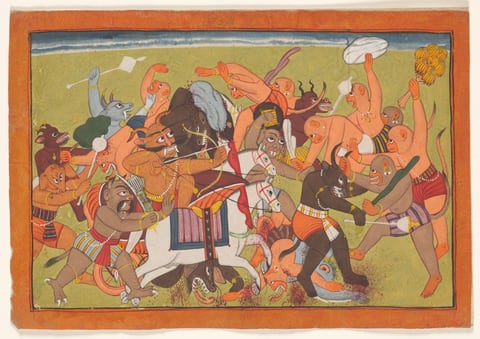
Battle between monkeys and demons, from the “Shangri” RamayanaUnrecorded Indian maker, c. 1700Courtesy of the Cleveland Museum of Art 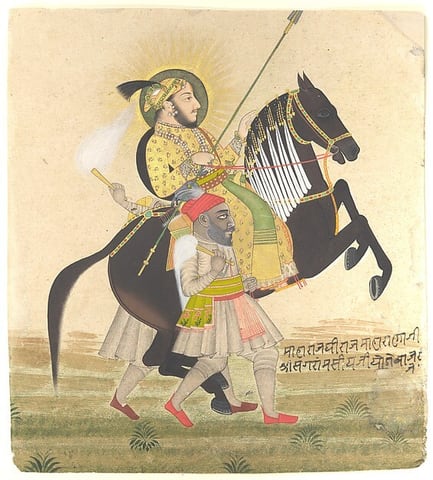
Maharana Sangram Singh Riding a Prize StallionStipple Master, ca. 1712Courtesy of The Metropolitan Museum of Art
Second room, north wall
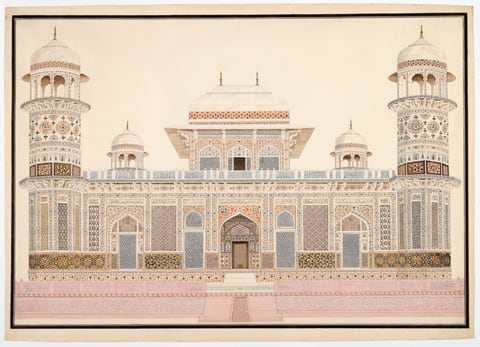
I'timad-ud-Daula's Tomb at AgraUnrecorded Indian maker, c. 1820Courtesy of the Art Institute of Chicago 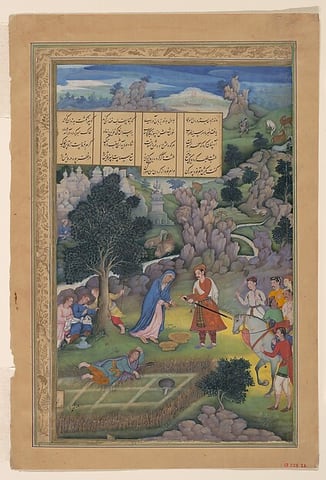
"A King Offers to Make Amends to a Bereaved Mother", Folio from a Khamsa (Quintet) of Amir Khusrau DihlaviAmir Khusrau Dihlavi, 1597–98Courtesy of The Metropolitan Museum of Art 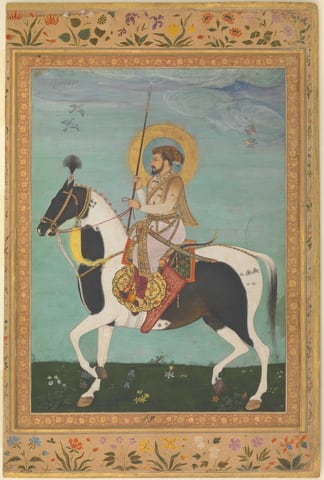
"Shah Jahan on Horseback", Folio from the Shah Jahan AlbumPayag, verso: ca. 1630; recto: ca. 1530–50Courtesy of The Metropolitan Museum of Art 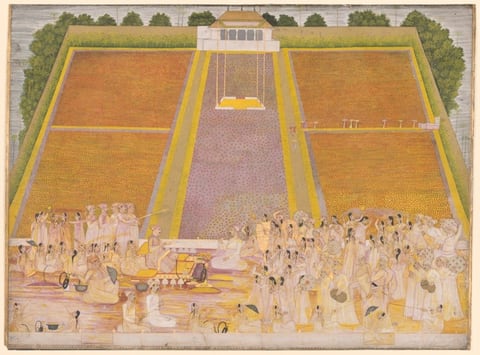
Holi Festival in a Walled Garden with CelebrantsUnrecorded Indian maker, c. 1764Courtesy of the Art Institute of Chicago