Floor plan

Style galleriesManuscripts

Manuscripts

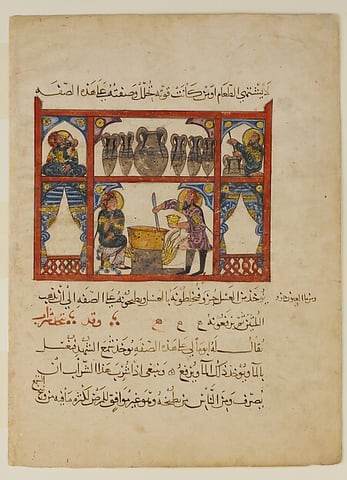
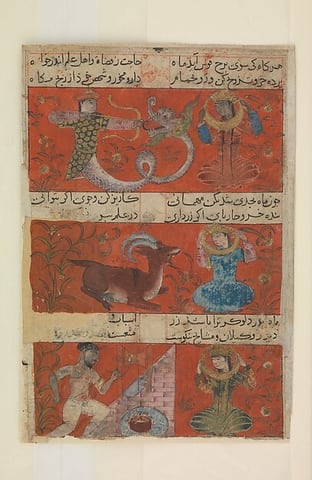
"Preparing Medicine from Honey", from a Dispersed Manuscript of an Arabic Translation of De Materia Medica of Dioscorides, by 'Abdullah ibn al-Fadl, dated 621 AH/1224 CE
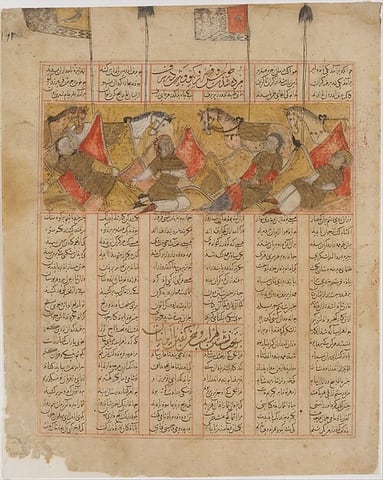
"The Four Knights of Kai Khusrau in the Mountains", Folio from a Shahnama (Book of Kings), by Abu'l Qasim Firdausi, dated 741 AH/1341 CE
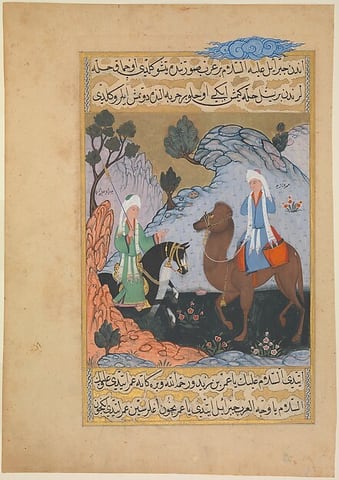
"The Angel Gabriel meets 'Amr ibn Zaid (the Shepherd)", Folio from a Siyer-i Nebi (the Life of the Prophet), by Mustafa ibn Vali, ca. 1595
"Tahmuras Defeats the Divs", Folio 23v from the Shahnama (Book of Kings) of Shah Tahmasp, by Abu'l Qasim Firdausi, ca. 1525
Folio from a Mu'nis al-ahrar fi daqa'iq al-ash'ar (The Free Man's Companion to the Subtleties of Poems) of Jajarmi, by Muhammad ibn Badr al-Din Jajarmi, dated 741 AH/1341 CE
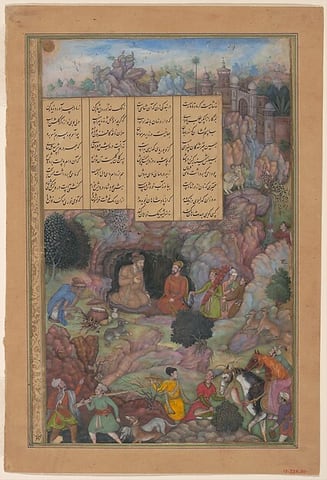
"Alexander Visits the Sage Plato in his Mountain Cave", Folio from a Khamsa (Quintet) of Amir Khusrau Dihlavi, by Amir Khusrau Dihlavi, 1597–98

The works in this room are listed below.

Works in this room

Every one of the collection's manuscripts, in today's hang.

Section 1, north wall

  1. "Preparing Medicine from Honey", from a Dispersed Manuscript of an Arabic Translation of De Materia Medica of Dioscorides, by 'Abdullah ibn al-Fadl, dated 621 AH/1224 CE
    "Preparing Medicine from Honey", from a Dispersed Manuscript of an Arabic Translation of De Materia Medica of Dioscorides'Abdullah ibn al-Fadl, dated 621 AH/1224 CECourtesy of The Metropolitan Museum of Art
  2. "The Four Knights of Kai Khusrau in the Mountains", Folio from a Shahnama (Book of Kings), by Abu'l Qasim Firdausi, dated 741 AH/1341 CE
    "The Four Knights of Kai Khusrau in the Mountains", Folio from a Shahnama (Book of Kings)Abu'l Qasim Firdausi, dated 741 AH/1341 CECourtesy of The Metropolitan Museum of Art
  3. "The Angel Gabriel meets 'Amr ibn Zaid (the Shepherd)", Folio from a Siyer-i Nebi (the Life of the Prophet), by Mustafa ibn Vali, ca. 1595
    "The Angel Gabriel meets 'Amr ibn Zaid (the Shepherd)", Folio from a Siyer-i Nebi (the Life of the Prophet)Mustafa ibn Vali, ca. 1595Courtesy of The Metropolitan Museum of Art

Section 1, south wall

  1. "Tahmuras Defeats the Divs", Folio 23v from the Shahnama (Book of Kings) of Shah Tahmasp, by Abu'l Qasim Firdausi, ca. 1525
    "Tahmuras Defeats the Divs", Folio 23v from the Shahnama (Book of Kings) of Shah TahmaspAbu'l Qasim Firdausi, ca. 1525Courtesy of The Metropolitan Museum of Art
  2. Folio from a Mu'nis al-ahrar fi daqa'iq al-ash'ar (The Free Man's Companion to the Subtleties of Poems) of Jajarmi, by Muhammad ibn Badr al-Din Jajarmi, dated 741 AH/1341 CE
    Folio from a Mu'nis al-ahrar fi daqa'iq al-ash'ar (The Free Man's Companion to the Subtleties of Poems) of JajarmiMuhammad ibn Badr al-Din Jajarmi, dated 741 AH/1341 CECourtesy of The Metropolitan Museum of Art
  3. "Alexander Visits the Sage Plato in his Mountain Cave", Folio from a Khamsa (Quintet) of Amir Khusrau Dihlavi, by Amir Khusrau Dihlavi, 1597–98
    "Alexander Visits the Sage Plato in his Mountain Cave", Folio from a Khamsa (Quintet) of Amir Khusrau DihlaviAmir Khusrau Dihlavi, 1597–98Courtesy of The Metropolitan Museum of Art

Section 2, south wall
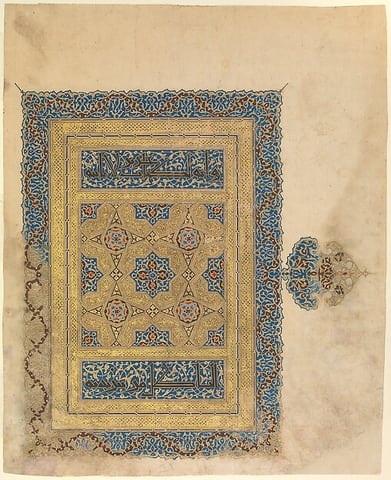
  1. Opening Folio of the 26th Volume of the "Anonymous Baghdad Qur'an", by Ahmad ibn al-Suhrawardi al-Bakri, 706 AH/1306–7 CE
    Opening Folio of the 26th Volume of the "Anonymous Baghdad Qur'an"Ahmad ibn al-Suhrawardi al-Bakri, 706 AH/1306–7 CECourtesy of The Metropolitan Museum of Art
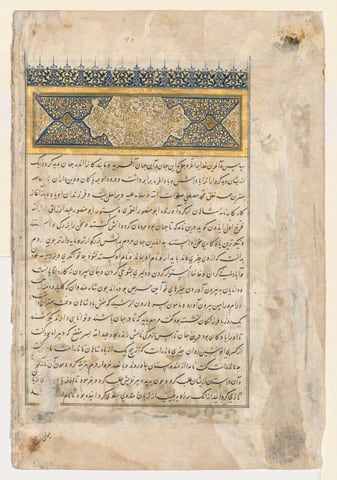
  2. Preface (verso) from a double-page frontispiece of a Shahnama of Firdausi (940-1019 or 1025), c. 1444
    Preface (verso) from a double-page frontispiece of a Shahnama of Firdausi (940-1019 or 1025)Unrecorded Persian maker, c. 1444Courtesy of the Cleveland Museum of Art
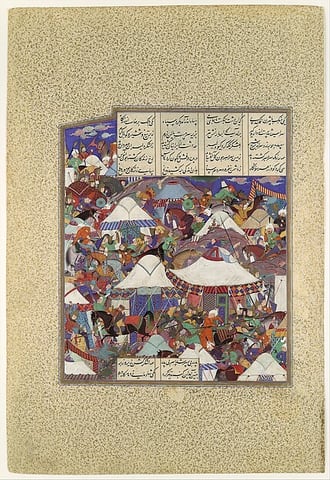
  3. "The Besotted Iranian Camp Attacked by Night", Folio 241r from the Shahnama (Book of Kings) of Shah Tahmasp, by Abu'l Qasim Firdausi, ca. 1525–30
    "The Besotted Iranian Camp Attacked by Night", Folio 241r from the Shahnama (Book of Kings) of Shah TahmaspAbu'l Qasim Firdausi, ca. 1525–30Courtesy of The Metropolitan Museum of Art

Section 2, north wall
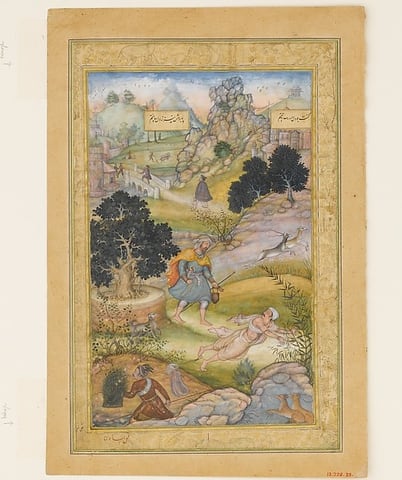
  1. "A Muslim Pilgrim Learns a Lesson in Piety from a Brahman", Folio from a Khamsa (Quintet) of Amir Khusrau Dihlavi, by Amir Khusrau Dihlavi, 1597–98
    "A Muslim Pilgrim Learns a Lesson in Piety from a Brahman", Folio from a Khamsa (Quintet) of Amir Khusrau DihlaviAmir Khusrau Dihlavi, 1597–98Courtesy of The Metropolitan Museum of Art
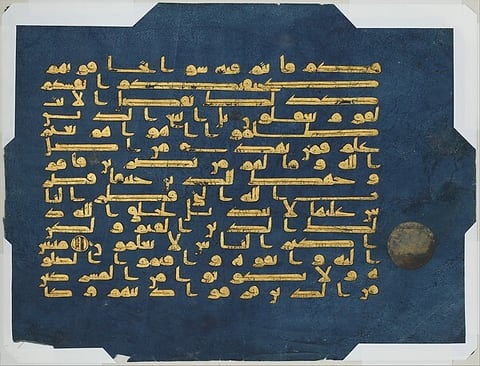
  2. Folio from the "Blue Qur'an", second half 9th–mid-10th century
    Folio from the "Blue Qur'an"Unrecorded maker, second half 9th–mid-10th centuryCourtesy of The Metropolitan Museum of Art
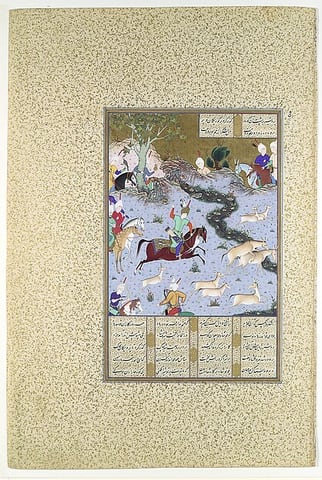
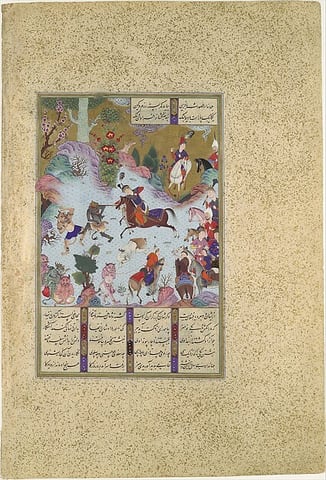
  3. "Bahram Gur Pins the Coupling Onagers", Folio 568r from the Shahnama (Book of Kings) of Shah Tahmasp, by Abu'l Qasim Firdausi, ca. 1530–35
    "Bahram Gur Pins the Coupling Onagers", Folio 568r from the Shahnama (Book of Kings) of Shah TahmaspAbu'l Qasim Firdausi, ca. 1530–35Courtesy of The Metropolitan Museum of Art

Section 3, north wall
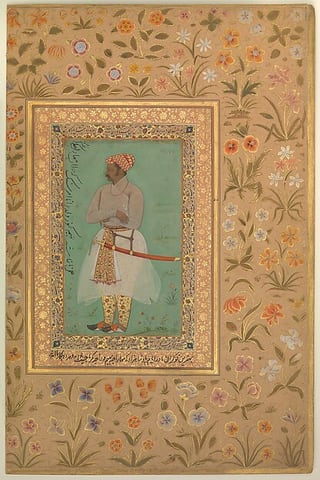
  1. "Portrait of Maharaja Bhim Kanwar", Folio from the Shah Jahan Album, by Nanha, verso: ca. 1615–29; recto: ca. 1540
    "Portrait of Maharaja Bhim Kanwar", Folio from the Shah Jahan AlbumNanha, verso: ca. 1615–29; recto: ca. 1540Courtesy of The Metropolitan Museum of Art
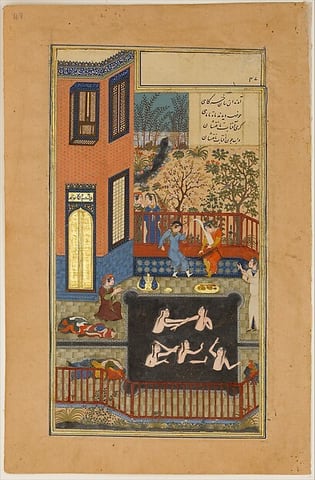
  2. "The Eavesdropper", Folio 47r from a Haft Paikar (Seven Portraits) of the Khamsa (Quintet) of Nizami of Ganja, by Maulana Azhar, ca. 1430
    "The Eavesdropper", Folio 47r from a Haft Paikar (Seven Portraits) of the Khamsa (Quintet) of Nizami of GanjaMaulana Azhar, ca. 1430Courtesy of The Metropolitan Museum of Art

Section 3, south wall
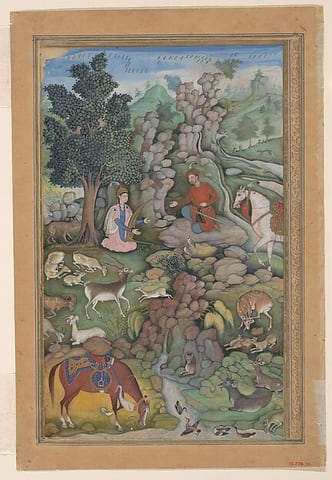
  1. "Bahram Gur Sees a Herd of Deer Mesmerized by Dilaram' s Music", Folio from a Khamsa (Quintet) of Amir Khusrau Dihlavi, by Amir Khusrau Dihlavi, 1597–98
    "Bahram Gur Sees a Herd of Deer Mesmerized by Dilaram' s Music", Folio from a Khamsa (Quintet) of Amir Khusrau DihlaviAmir Khusrau Dihlavi, 1597–98Courtesy of The Metropolitan Museum of Art
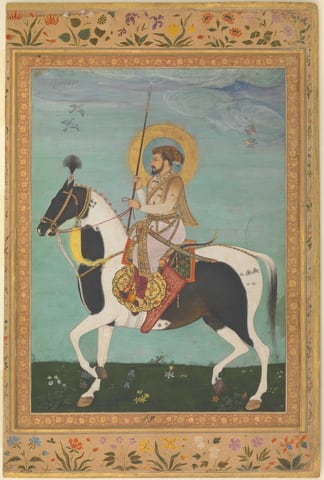
  2. "Shah Jahan on Horseback", Folio from the Shah Jahan Album, by Payag, verso: ca. 1630; recto: ca. 1530–50
    "Shah Jahan on Horseback", Folio from the Shah Jahan AlbumPayag, verso: ca. 1630; recto: ca. 1530–50Courtesy of The Metropolitan Museum of Art