Floor plan

Style galleriesThe Etching Revival

The Etching Revival

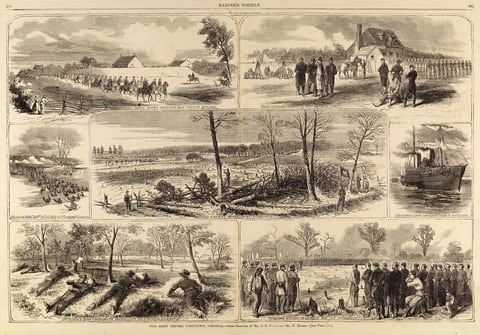
Our Army before Yorktown, Virginia, from Harper's Weekly, May 3, 1862, by Winslow Homer, 1862
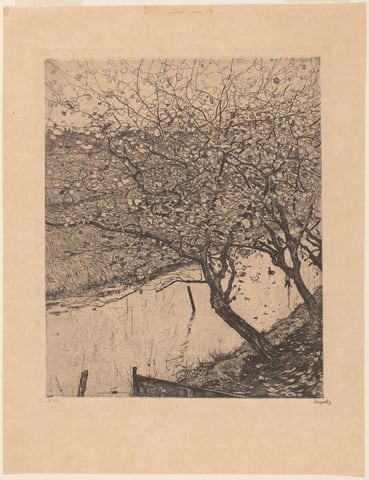
The image shows a small body of water with grass-covered banks on either side. The viewpoint is slightly elevated, looking down at the scene. The horizon is in the upper third of the composition, separating the sky from the land. The artwork features intricate linework and stippling to create texture and detail, particularly in the tree branches. The color palette is monochrome, with shades of sepia and brown. A tree dominates the right side of the scene, leaning over the water. In the distance, more trees and fields are visible with minimal detail in the far background.
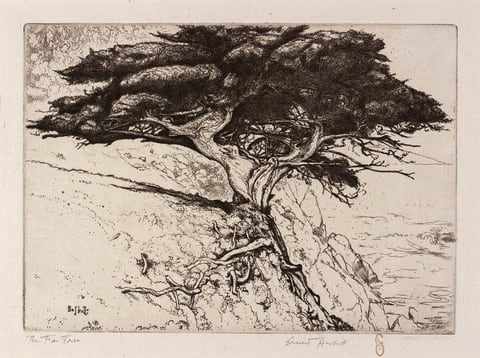
The Fan Tree, by Ernest Haskell, ca. 1915
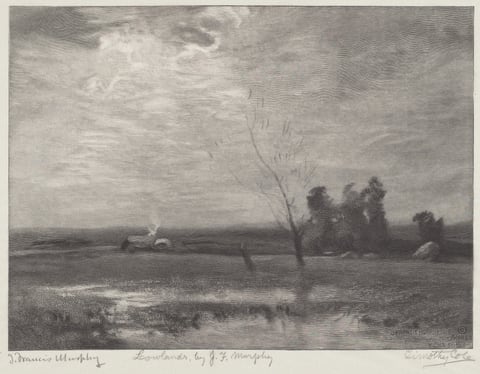
This print displays a landscape with a wide view of flat land stretching towards the horizon. The ground is covered in small black dots, with some bare patches in the bottom center. A few silhouetted trees and a hint of smoke coming up from behind some rocks are visible in the distance. The gray sky dominates the scene with soft, swirling clouds.
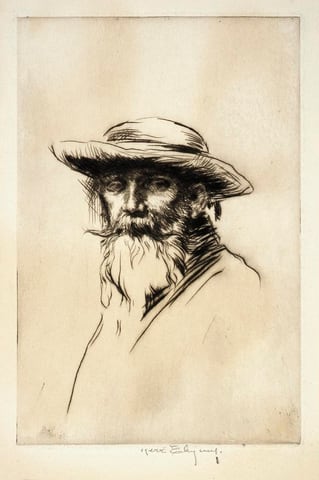
Head of an Old Man, by Kerr Eby, ca. 1918
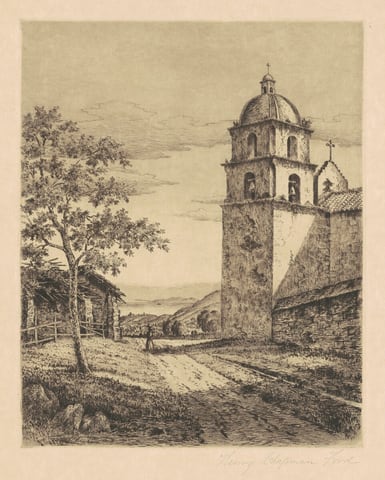
The image features a large building with a domed tower on the right side. The horizon shows hills, trees, and the sky. The brushstrokes give detailed texture to the scene, with a focus on the landscape and architecture. The color palette is sepia-toned. A tree, fence, smaller buildings, and a figure on a path add depth and perspective to the scene.

The works in this room are listed below.

Works in this room

Artists who took up the etching needle again, from Whistler to the Paris printmakers.

Section 1, north wall

  1. Our Army before Yorktown, Virginia, from Harper's Weekly, May 3, 1862, by Winslow Homer, 1862
    Our Army before Yorktown, Virginia, from Harper's Weekly, May 3, 1862Winslow Homer, 1862Courtesy of the Smithsonian American Art Museum
  2. The image shows a small body of water with grass-covered banks on either side. The viewpoint is slightly elevated, looking down at the scene. The horizon is in the upper third of the composition, separating the sky from the land. The artwork features intricate linework and stippling to create texture and detail, particularly in the tree branches. The color palette is monochrome, with shades of sepia and brown. A tree dominates the right side of the scene, leaning over the water. In the distance, more trees and fields are visible with minimal detail in the far background.
    Apple Trees along the Side of a DitchPieter Dupont, 1894Courtesy National Gallery of Art, Washington
  3. The Fan Tree, by Ernest Haskell, ca. 1915
    The Fan TreeErnest Haskell, ca. 1915Courtesy of the Smithsonian American Art Museum

Section 1, south wall

  1. This print displays a landscape with a wide view of flat land stretching towards the horizon. The ground is covered in small black dots, with some bare patches in the bottom center. A few silhouetted trees and a hint of smoke coming up from behind some rocks are visible in the distance. The gray sky dominates the scene with soft, swirling clouds.
    LowlandsTimothy Cole, 1918Courtesy National Gallery of Art, Washington
  2. Head of an Old Man, by Kerr Eby, ca. 1918
    Head of an Old ManKerr Eby, ca. 1918Courtesy of the Smithsonian American Art Museum
  3. The image features a large building with a domed tower on the right side. The horizon shows hills, trees, and the sky. The brushstrokes give detailed texture to the scene, with a focus on the landscape and architecture. The color palette is sepia-toned. A tree, fence, smaller buildings, and a figure on a path add depth and perspective to the scene.
    Mission Santa Barbara, Looking SouthHenry Chapman Ford, 1888Courtesy National Gallery of Art, Washington

Section 2, south wall
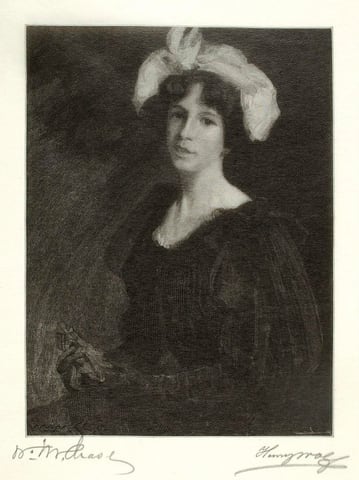
  1. Portrait of Mrs. C--, by Henry Wolf, 1894
    Portrait of Mrs. C--Henry Wolf, 1894Courtesy of the Smithsonian American Art Museum
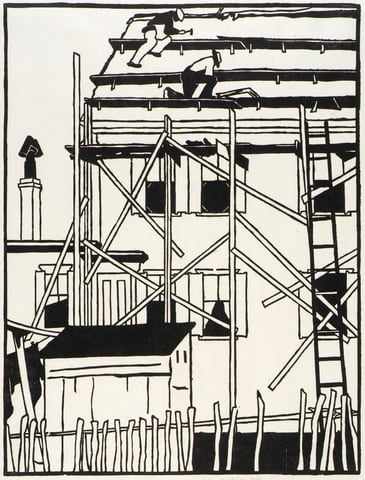
  2. Untitled, by Mildred McMillen, 1915
    UntitledMildred McMillen, 1915Courtesy of the Smithsonian American Art Museum
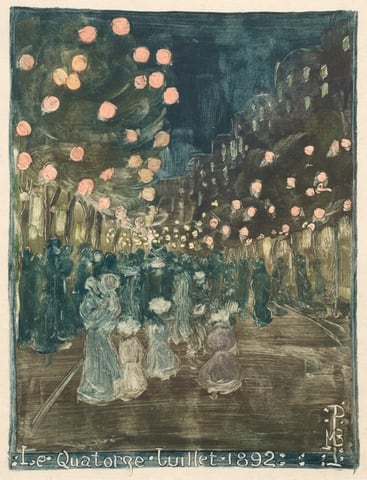
  3. Bastille Day, by Maurice Prendergast, 1892
    Bastille DayMaurice Prendergast, 1892Courtesy of the Cleveland Museum of Art

Section 2, north wall
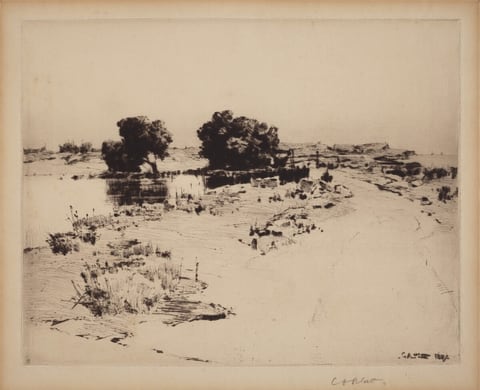
  1. The image depicts a landscape seen from a slightly elevated perspective, with a tranquil scene. The horizon is high in the composition, showing a vast view. There are a few distant trees and silhouettes blending into the sky. The brushstrokes are expressive and fluid, with a sketch-like quality depicting texture and movement in the trees and ground. The color palette is primarily monochrome, using shades of black and grey. Near the viewer, there are low plants and shrubs on sandy ground, leading to a small body of water reflecting dense trees. In the distance, the landscape becomes more open and sparse towards the horizon.
    Cape Ann WillowsCharles A. Platt, 1887Courtesy National Gallery of Art, Washington
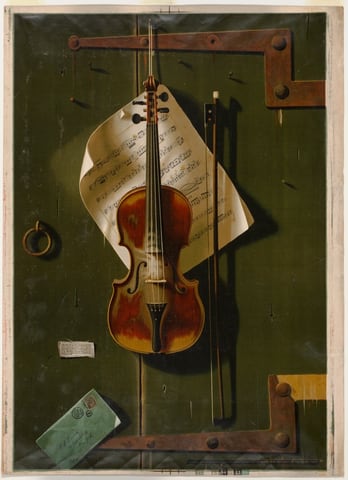
  2. A work made of color lithograph on paper.
    The Old ViolinWilliam Michael Harnett, 1887Courtesy of the Art Institute of Chicago

Section 3, north wall
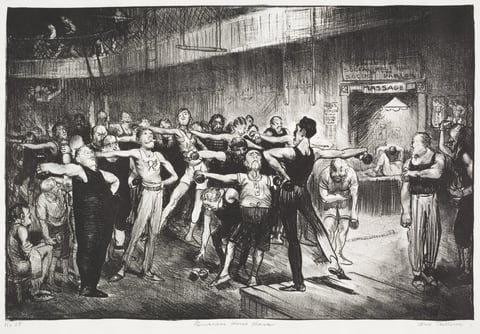
  1. Business Men's Class, by George Bellows, 1916
    Business Men's ClassGeorge Bellows, 1916Courtesy of the Cleveland Museum of Art
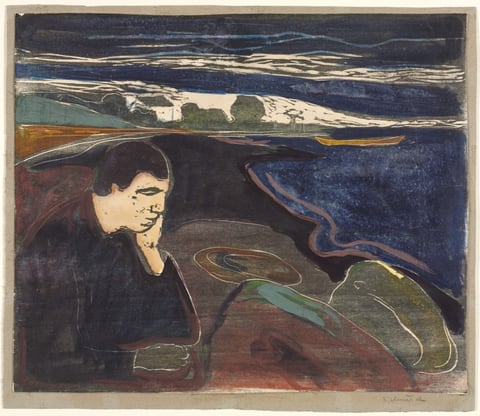
  2. Evening, Melancholy I, by Edvard Munch, 1896
    Evening, Melancholy IEdvard Munch, 1896Courtesy of the Cleveland Museum of Art

Section 3, south wall
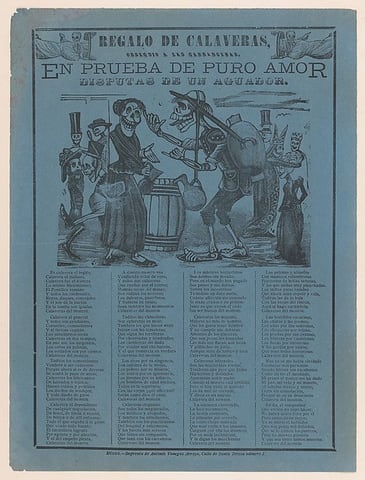
  1. In proof of true love, a watercarrier skeleton arguing with a woman (Posada); two skeleton angels in upper corners (Manilla), by José Guadalupe Posada, ca. 1890–96
    In proof of true love, a watercarrier skeleton arguing with a woman (Posada); two skeleton angels in upper corners (Manilla)José Guadalupe Posada, ca. 1890–96Courtesy of The Metropolitan Museum of Art
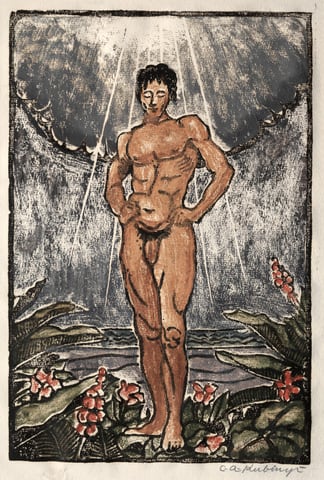
  2. The Creation, by Kálmán Kubinyi, before 1927
    The CreationKálmán Kubinyi, before 1927Courtesy of the Cleveland Museum of Art
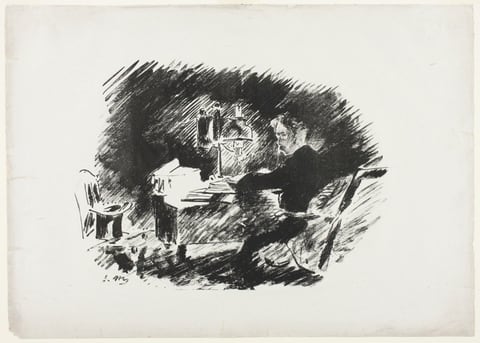
  3. A work made of transfer lithograph in black on gray china paper.
    Under the Lamp ("Once upon a midnight dreary..."), from The Raven (Le Corbeau)Édouard Manet, 1875Courtesy of the Art Institute of Chicago