Floor plan

Style galleriesDrawings

Drawings

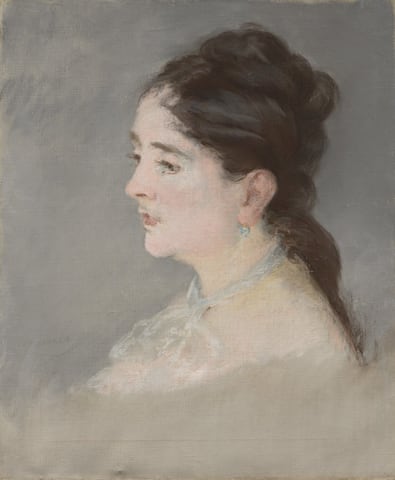
Claire Campbell, by Édouard Manet, 1876
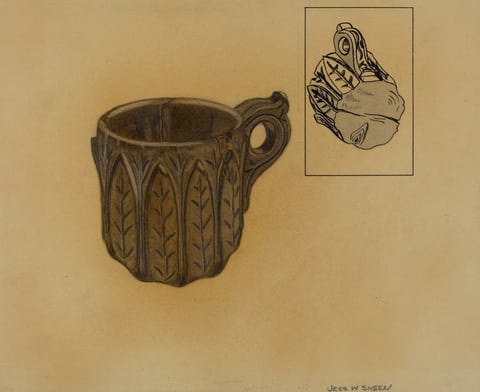
The image shows an illustration of a decorative cup with a relief design and handle to the left. The cup is brown with leaf patterns. The background is light tan. In the top right corner, there is a sketch of the cup's underside.
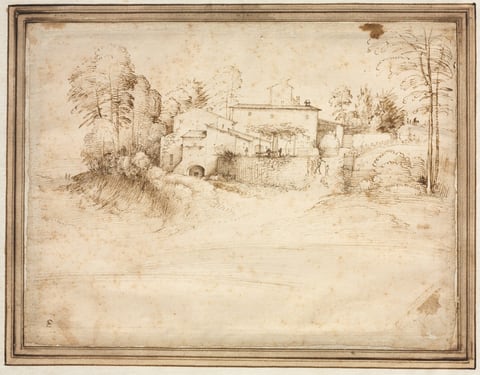
Farmhouse on the Slope of a Hill, by Fra Bartolommeo, c. 1508
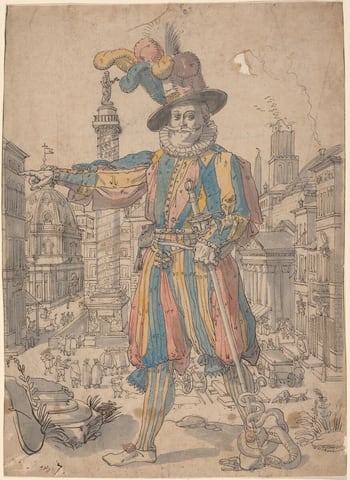
The artwork features a person standing prominently in front of an architectural scene. The individual has one arm extended out to the side, pointing with a gloved hand. The other hand holds a staff with a snake wrapped around it. The person has a stern facial expression, a beard and mustache, and wears a large hat with colorful feathers. They are dressed in a colorful suit with vertical stripes in red, blue, and yellow, paired with a ruffled collar and cuffs. The person also has an oversized sword at their hip. In the background, there is a Renaissance-style cityscape with architectural elements, people, and horse-drawn carriages.
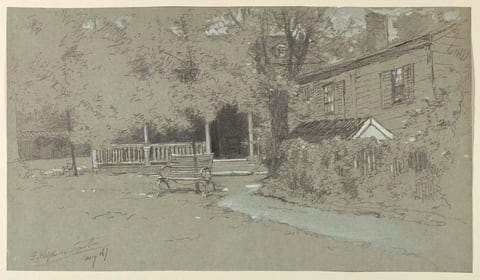
THE OLD HOPKINSON HOUSE, BORDENTOWN, NJ
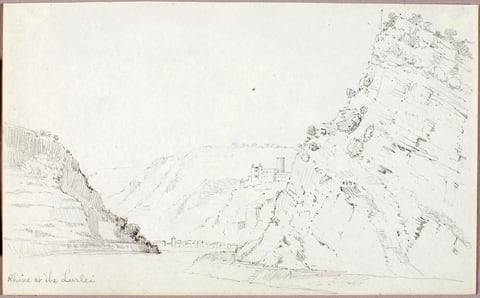
Rhine at the Lurlei, by George Elbert Burr, 1900

The works in this room are listed below.

Works in this room

Every one of the collection's drawings, in today's hang.

Section 1, north wall

  1. Claire Campbell, by Édouard Manet, 1876
    Claire CampbellÉdouard Manet, 1876Courtesy of the Cleveland Museum of Art
  2. The image shows an illustration of a decorative cup with a relief design and handle to the left. The cup is brown with leaf patterns. The background is light tan. In the top right corner, there is a sketch of the cup's underside.
    Wooden Shaving MugJesse W. Skeen, c. 1936Courtesy National Gallery of Art, Washington
  3. Farmhouse on the Slope of a Hill, by Fra Bartolommeo, c. 1508
    Farmhouse on the Slope of a HillFra Bartolommeo, c. 1508Courtesy of the Cleveland Museum of Art

Section 1, south wall

  1. The artwork features a person standing prominently in front of an architectural scene. The individual has one arm extended out to the side, pointing with a gloved hand. The other hand holds a staff with a snake wrapped around it. The person has a stern facial expression, a beard and mustache, and wears a large hat with colorful feathers. They are dressed in a colorful suit with vertical stripes in red, blue, and yellow, paired with a ruffled collar and cuffs. The person also has an oversized sword at their hip. In the background, there is a Renaissance-style cityscape with architectural elements, people, and horse-drawn carriages.
    Giovanni Grosso of the Swiss Guards Standing before a View of RomeUnrecorded Swiss makerCourtesy National Gallery of Art, Washington
  2. THE OLD HOPKINSON HOUSE, BORDENTOWN, NJ
    The Old Hopkinson House, Bordentown, NJFrancis Hopkinson Smith, ca. 1880Courtesy of Cooper Hewitt, Smithsonian Design Museum
  3. Rhine at the Lurlei, by George Elbert Burr, 1900
    Rhine at the LurleiGeorge Elbert Burr, 1900Courtesy of the Smithsonian American Art Museum

Section 2, south wall
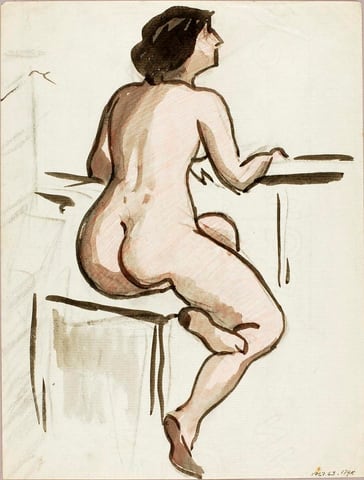
  1. Seated Female Nude, by Carl Newman
    Seated Female NudeCarl NewmanCourtesy of the Smithsonian American Art Museum
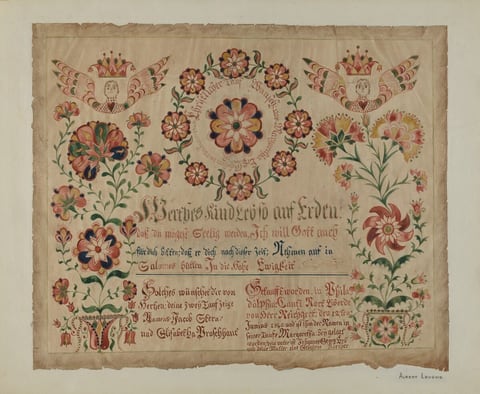
  2. This is a painting of a colorful floral design with text. The artwork features stylized flowers in shades of red, green, and yellow scattered across the page. In the center, there is calligraphic text in varying boldness and fonts, likely in German. Two symmetrical bird-like figures with human faces and crowns are above the text. The piece combines imagery with artistic lettering in a style reminiscent of traditional Pennsylvania German fraktur. The artwork is bordered by a thin line, suggesting it's part of a larger artifact or document.
    Pa. German Birth CertificateAlbert Levone, c. 1940Courtesy National Gallery of Art, Washington

Section 2, north wall
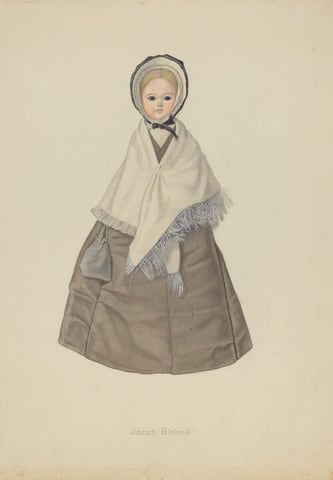
  1. The image depicts a young person standing upright with distinct facial features including rounded cheeks, a small mouth, and large eyes. They are wearing a brown dress with a cream-colored shawl, a bonnet with dark trim, and a pouch hanging from their left side. The background is plain and cream-colored.
    Quaker DollJacob Gielens, 1935/1942Courtesy National Gallery of Art, Washington
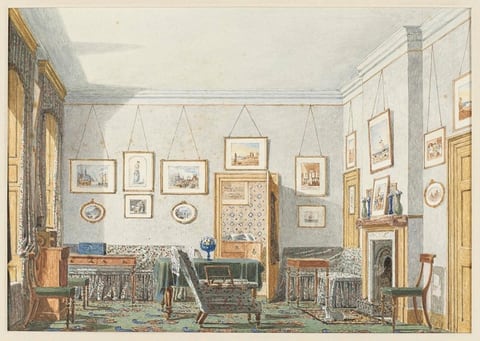
  2. GEORGE JAMES DRUMMOND'S ROOM AT OXFORD, 1853
    George James Drummond's Room at Oxford, 1853George Pyne, 1853Courtesy of Cooper Hewitt, Smithsonian Design Museum
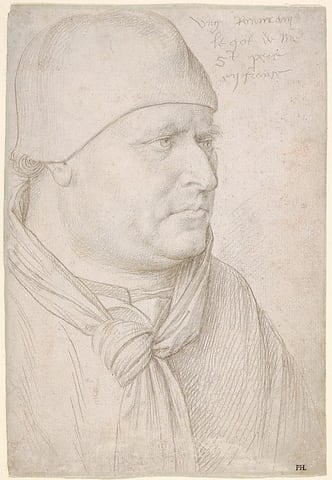
  3. Portrait of Alain de Coëtivy (1407–1474), by Jean Fouquet, ca. 1451–55
    Portrait of Alain de Coëtivy (1407–1474)Jean Fouquet, ca. 1451–55Courtesy of The Metropolitan Museum of Art

Section 3, north wall
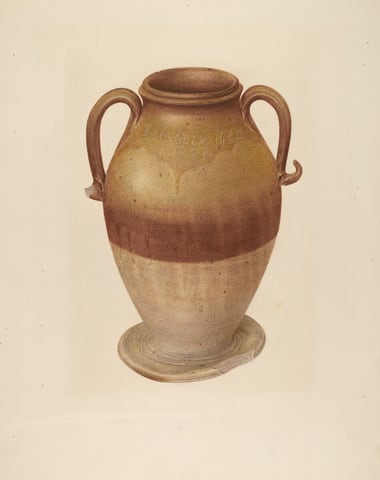
  1. The image shows a large ceramic vase with two curved handles positioned near the top on either side. The vase has an earthy color palette with shades of brown, beige, and a subtle hint of reddish-brown forming a band around its middle. The vase is centrally placed on a flat surface, and both handles extend outward at the top.
    VaseIsadore Goldberg, c. 1939Courtesy National Gallery of Art, Washington
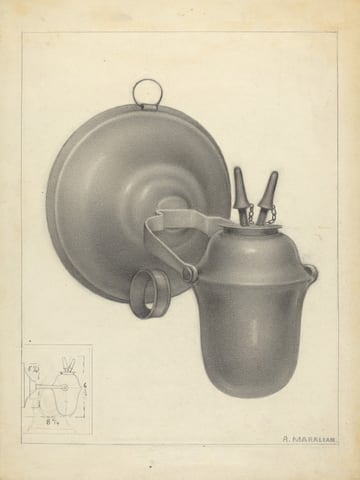
  2. The image depicts a detailed drawing of a wall-mounted vessel. It consists of a large, spherical body attached to a flat disc, with two smaller protrusions resembling handles or clips. The color palette is monochromatic with shades of gray, giving it a metallic or ceramic appearance. The objects are centrally positioned, with a small inset illustration in the bottom left corner showing annotations. The artist's signature, "A. Marshall," is located near the lower right corner of the image.
    LampArsen Maralian, c. 1936Courtesy National Gallery of Art, Washington
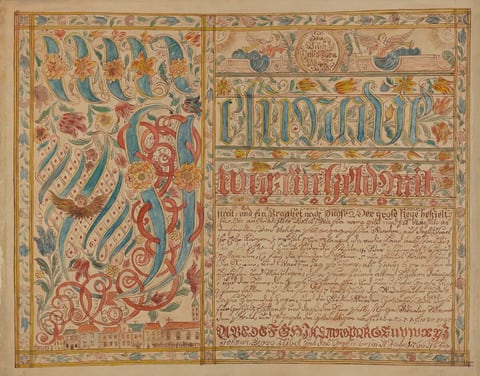
  3. This is a painting of an intricate and colorful illuminated manuscript page. The full-description includes a richly decorated page featuring elaborate calligraphy and floral motifs. The left side showcases swirling ornamental patterns with vibrant colors - blues, reds, and golds - interwoven with blooming flowers and a small figure with wings. In the lower portion, there is a depiction of small buildings. The right side contains text in different styles, with the top section written in large decorative letters and the lower section in a more detailed script. The overall design is bordered with floral elements and intertwining vines. This is in the style of illuminated manuscripts found in historical European documents and books.
    FrakturAlbert Levone, 1935/1942Courtesy National Gallery of Art, Washington

Section 3, south wall

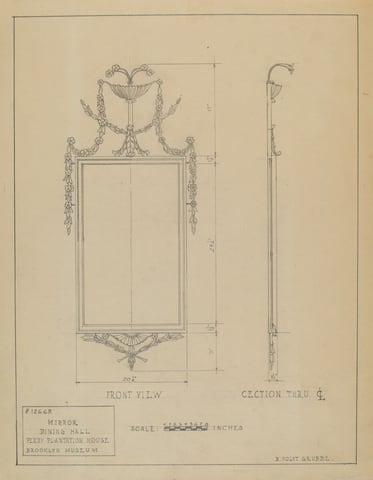
  1. This is a drawing of a decorative mirror. It presents a detailed design of an ornate mirror with two views: a front view and a sectional view. The mirror frame is embellished with elaborate motifs, including scrolls and floral elements. The sectional view shows the mirror's depth and structural details, indicating attention to construction. Measurements are included in inches, with title and notes providing context on the mirror's location and purpose as part of interior furnishings.
    MirrorB. Holst-Grubbe, 1935/1942Courtesy National Gallery of Art, Washington
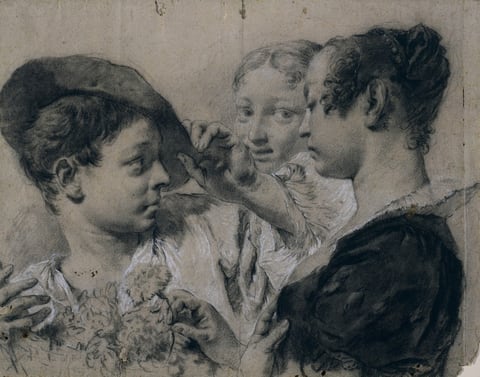
  2. A Young Woman Buying a Pink from a Young Man, by Giovanni Battista Piazzetta, c. 1740
    A Young Woman Buying a Pink from a Young ManGiovanni Battista Piazzetta, c. 1740Courtesy of the Cleveland Museum of Art