Floor plan

Style galleriesAmerican folk and design
American folk and design
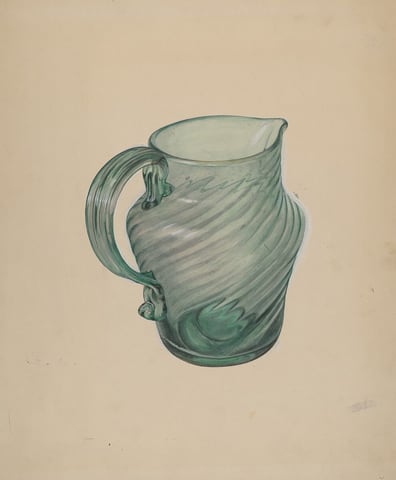
The image shows a translucent pitcher in soft, pale green with swirling, striped patterns and a curved handle. It is placed in the center of the frame, with a neutral off-white background. The spout faces slightly to the left and the handle curves from the right side.
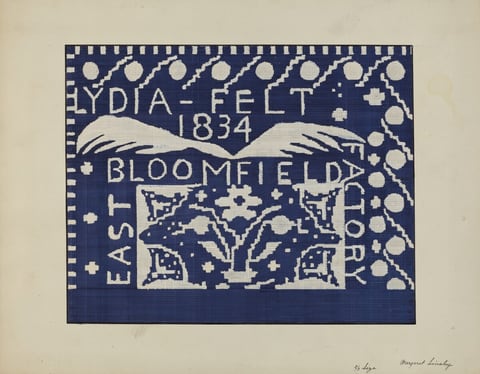
This is a drawing of a textile design. The image consists of a pattern with the text "LYDIA FELT 1834 BLOOMFIELD" displayed along with decorative motifs of abstract leaves and floral shapes in a contrasting color against a dark background. The composition also includes the word "EAST" placed vertically and "YORK" placed horizontally. The combination of geometric shapes and organic elements forms a unified aesthetic typical of traditional textile patterns.
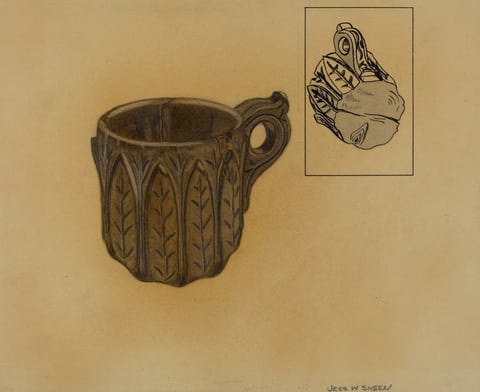
The image shows an illustration of a decorative cup with a relief design and handle to the left. The cup is brown with leaf patterns. The background is light tan. In the top right corner, there is a sketch of the cup's underside.
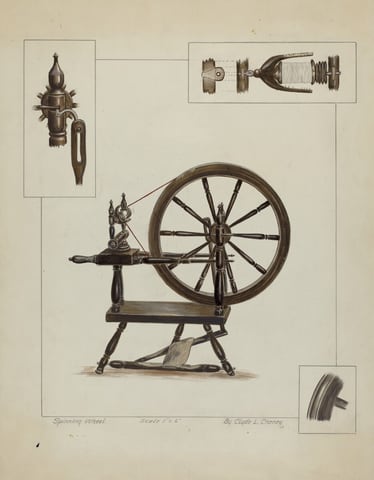
The image shows a spinning wheel with intricate details, surrounded by smaller insets highlighting specific components. The color palette consists of muted browns, greens, and beiges. The spinning wheel is positioned in the center, with its circular wheel on the right and the spinning mechanism on the left. Detailed insets are placed around the spinning wheel, each showing different mechanical elements.
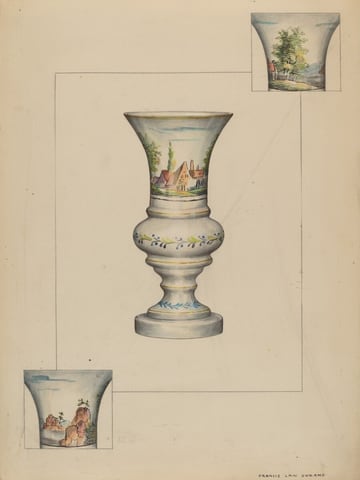
The image shows a large, intricately designed vase with a bulbous base and flared top at the center. The vase is decorated with painted scenes of a town or village. The color scheme includes shades of blue, green, brown, and touches of yellow and red. Surrounding the vase are two smaller detailed sections showing close-ups of the painted scenes on it. The main vase image is enclosed within a boxed outline on the page.
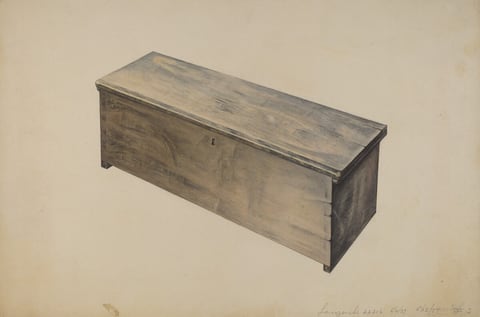
The image shows a large wooden chest with a rectangular design and a keyhole on its front panel. The chest has a weathered look in muted browns and grays. It is positioned in the center with its top, front, and side panels visible. The background is plain and light in color.

The works in this room are listed below.

Works in this room

The everyday art of early America, recorded in watercolour by the Index of American Design.

Section 1, north wall

  1. The image shows a translucent pitcher in soft, pale green with swirling, striped patterns and a curved handle. It is placed in the center of the frame, with a neutral off-white background. The spout faces slightly to the left and the handle curves from the right side.
    Glass PitcherBeverly Chichester, c. 1937Courtesy National Gallery of Art, Washington
  2. This is a drawing of a textile design. The image consists of a pattern with the text "LYDIA FELT 1834 BLOOMFIELD" displayed along with decorative motifs of abstract leaves and floral shapes in a contrasting color against a dark background. The composition also includes the word "EAST" placed vertically and "YORK" placed horizontally. The combination of geometric shapes and organic elements forms a unified aesthetic typical of traditional textile patterns.
    CoverletMargaret Linsley, c. 1940Courtesy National Gallery of Art, Washington
  3. The image shows an illustration of a decorative cup with a relief design and handle to the left. The cup is brown with leaf patterns. The background is light tan. In the top right corner, there is a sketch of the cup's underside.
    Wooden Shaving MugJesse W. Skeen, c. 1936Courtesy National Gallery of Art, Washington

Section 1, south wall

  1. The image shows a spinning wheel with intricate details, surrounded by smaller insets highlighting specific components. The color palette consists of muted browns, greens, and beiges. The spinning wheel is positioned in the center, with its circular wheel on the right and the spinning mechanism on the left. Detailed insets are placed around the spinning wheel, each showing different mechanical elements.
    Spinning WheelClyde L. Cheney, 1935/1942Courtesy National Gallery of Art, Washington
  2. The image shows a large, intricately designed vase with a bulbous base and flared top at the center. The vase is decorated with painted scenes of a town or village. The color scheme includes shades of blue, green, brown, and touches of yellow and red. Surrounding the vase are two smaller detailed sections showing close-ups of the painted scenes on it. The main vase image is enclosed within a boxed outline on the page.
    Fire Lighter VaseFrancis Law Durand, 1935/1942Courtesy National Gallery of Art, Washington
  3. The image shows a large wooden chest with a rectangular design and a keyhole on its front panel. The chest has a weathered look in muted browns and grays. It is positioned in the center with its top, front, and side panels visible. The background is plain and light in color.
    Utility ChestHenry Tomaszewski, 1937Courtesy National Gallery of Art, Washington

Section 2, south wall
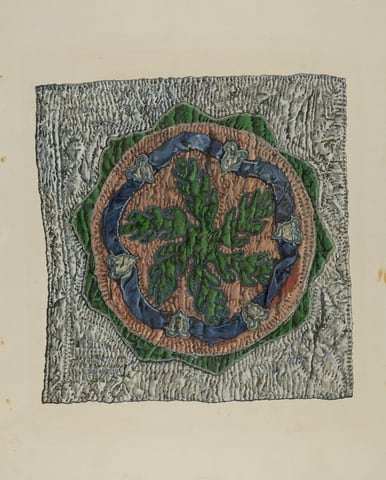
  1. The image shows various shapes and lines within a square border. In the center, there is an abstract circular pattern resembling a stylized floral design. The inner circle contains leaf-like shapes in green, surrounded by a ring resembling petals or decorative motifs. The overall effect is similar to a decorative shield or medallion. The background texture adds depth to the composition.
    Quilt Block - "E. Cooper" DesignFlorence Truelson, 1935/1942Courtesy National Gallery of Art, Washington
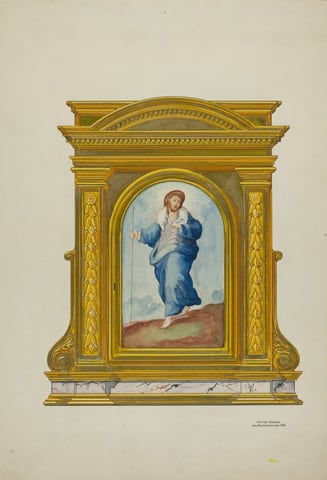
  2. The image shows a painted artwork within an ornate frame. The artwork features a figure standing with one hand raised. The figure has long hair and a beard, and wears flowing blue and white garments. The background shows an earthy surface and a sky. The frame is gold and elaborately designed. The scene is set against a blank, light-colored background.
    Original Tabernacle, for Communion VesselsDayton Brown, 1936Courtesy National Gallery of Art, Washington
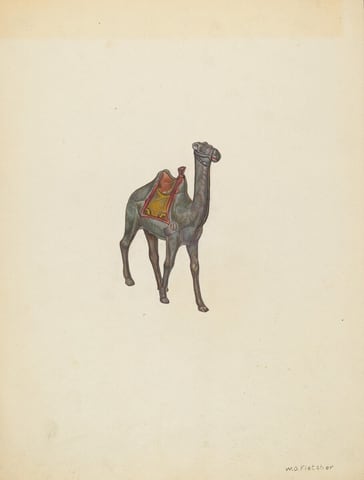
  3. This is a painting of a camel with a colorful saddle. The camel is centered in the image, standing against a plain, light-colored background. The animal is drawn with careful attention to detail, showcasing its distinctive humps, elongated neck, and slender legs. It is adorned with a vibrant saddle that features bright orange and red tones. The simplicity of the background emphasizes the camel.
    Bank CamelWilliam O. Fletcher, c. 1940Courtesy National Gallery of Art, Washington

Section 2, north wall
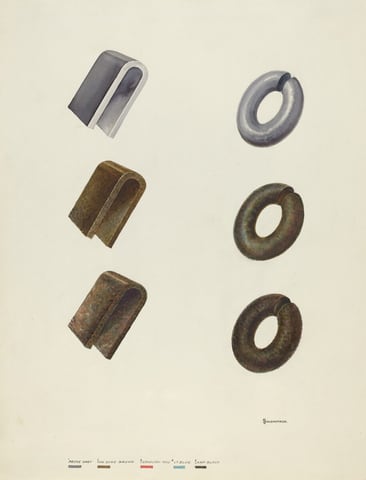
  1. The image shows five metallic objects arranged in a vertical column. These include three L-shaped brackets and two circular rings, in muted gray and rust-brown shades with a metallic sheen. The objects are positioned against a light, neutral background.
    Color Notes on IronGerald Transpota, 1935/1942Courtesy National Gallery of Art, Washington
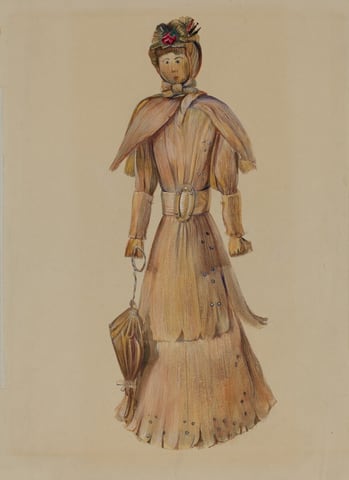
  2. The image shows a person standing upright. They have a round face with simple facial features, wearing a hat with a red flower and dark ribbon. Their outfit includes a belted dress or coat, pleated texture, a cape, and arm coverings. The person is holding a matching umbrella in their right hand. The background is plain and light tan.
    Corn Husk DollMina Lowry, c. 1936Courtesy National Gallery of Art, Washington
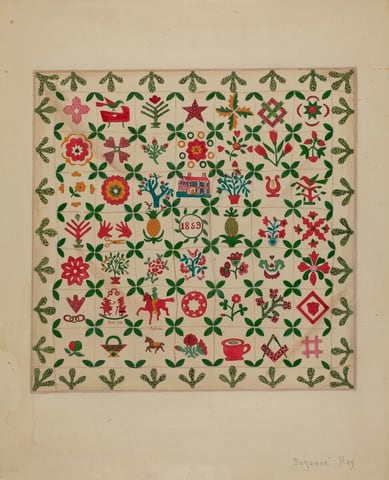
  3. This is a painting of a decorative quilt pattern. The image shows a grid of square sections with various colorful motifs including stars, flowers, a horse, a house, and a cup. The design features vibrant colors, symmetrical patterns, and a central section with the date "1859". The quilt border has leaf-like patterns creating a frame around the central grid. The style is folk art.
    Applique QuiltSuzanne Roy, 1938Courtesy National Gallery of Art, Washington

Section 3, north wall
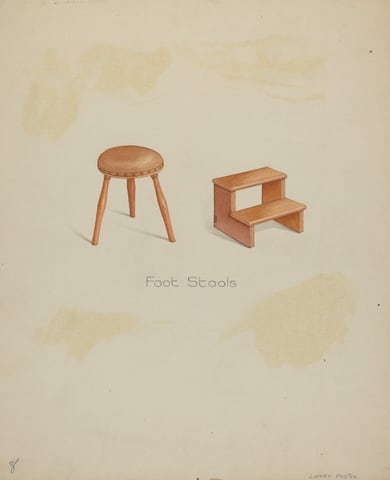
  1. The image shows two foot stools. One is a round stool with four legs and the other is a small two-step wooden staircase. The color palette includes shades of brown and tan against a light beige background. The round stool is positioned to the left, and the step-stool is to the right. Both are labeled with the words "Foot Stools" below them.
    Shaker StoolsLawrence Foster, 1935/1942Courtesy National Gallery of Art, Washington
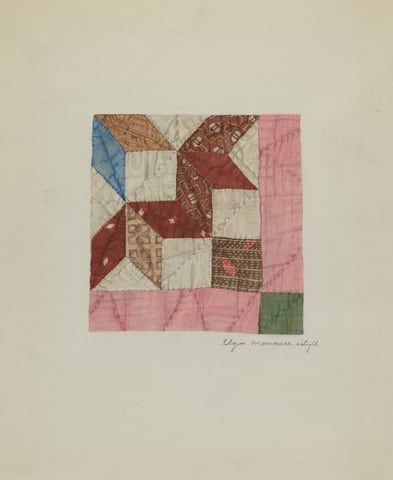
  2. This is a painting of a quilt design pattern. The image depicts a square quilt block featuring a variety of geometric shapes and patterns pieced together. The quilt features a mix of colors, including blues, reds, browns, and a pink border, with intricate patterns in the fabric segments. The textures and colors create an intricate optical composition resembling different geometric forms and depth. The piece is delicately framed within a larger white space, which emphasizes the detail of the quilt pattern. This is in the style of a traditional textile or quilting pattern illustrator.
    Cotton Bed QuiltElgin Moncure Styll, c. 1941Courtesy National Gallery of Art, Washington

Section 3, south wall
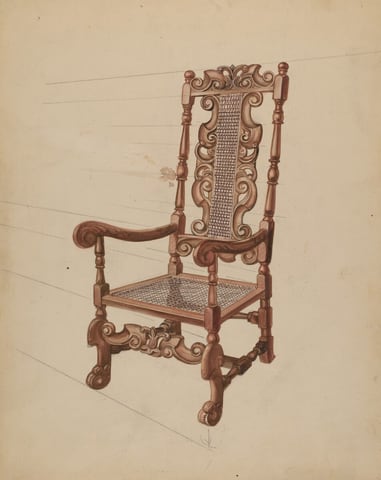
  1. The image shows an ornate chair with a high back, decorative carvings along its arms, legs, and backrest, a woven or cane seat and back, and intricate patterns. The chair is detailed with earthy brown tones and subtle shading accentuating the wood texture and design motifs. It is placed in the center of the image, facing slightly to the left, with linear guides indicating perspective and depth on a plain background.
    ArmchairAgnes Karlin, c. 1936Courtesy National Gallery of Art, Washington
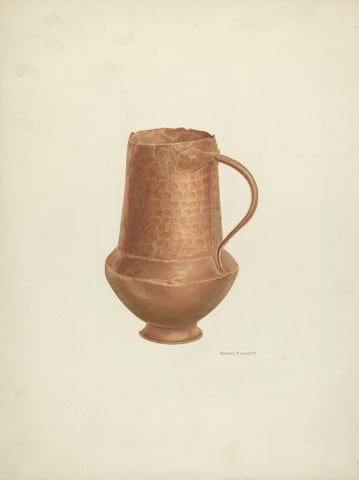
  2. The image shows a large, copper-colored pitcher with a hammered texture and a curving handle on the right side. The color palette consists of muted, warm tones of copper and brown against a pale beige background. The pitcher is centrally placed in the image, with its handle positioned on the right side.
    Copper CruetEdward Jewett, 1937Courtesy National Gallery of Art, Washington