Floor plan

The grand stairPortraits in Paint

Portraits in Paint

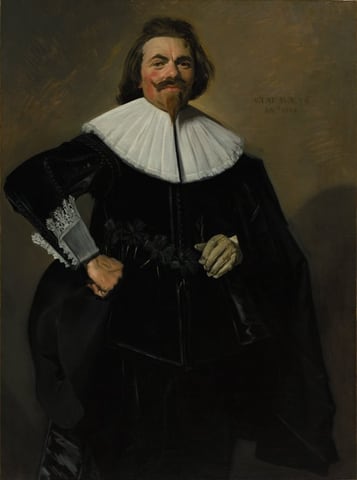
Portrait of Tieleman Roosterman, by Frans Hals, 1634
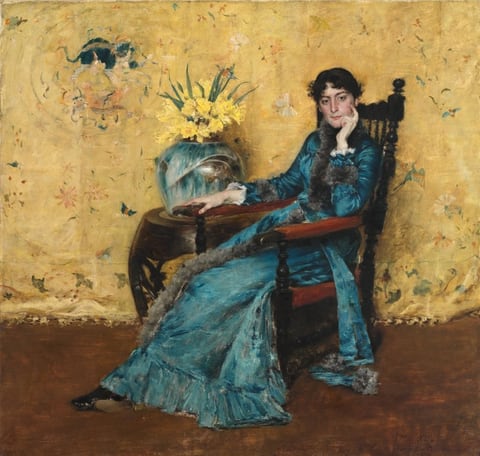
Portrait of Dora Wheeler, by William Merritt Chase, 1882–83
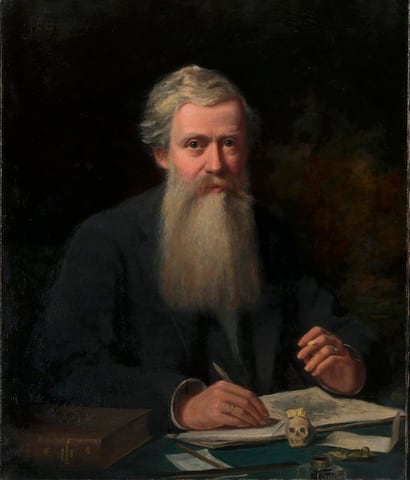
Portrait of Elliot Coues, by J. Edward Barclay, 1898
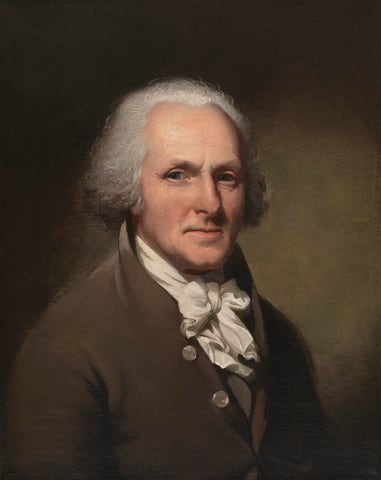
Artist: Charles Willson Peale, Sitter: Charles Willson Peale, Current owner: National Portrait Gallery, Smithsonian Institution
A work made of oil on canvas.
Self-Portrait, by Abbott Handerson Thayer, 1920
A work made of oil on canvas.
Portrait of a monk, possibly Chen Nga Tshultrim Bar, extending a blessing, late 11th–early 12th century

The works in this room are listed below.

Works in this room

Faces painted from life, from Renaissance panels to Gilded Age canvases. A portrait was a record, a likeness and often a statement of standing, and the best of them still hold the sitter's attention across a room.

First flight

  1. Portrait of Tieleman Roosterman, by Frans Hals, 1634
    Portrait of Tieleman RoostermanFrans Hals, 1634Courtesy of the Cleveland Museum of Art
  2. Portrait of Dora Wheeler, by William Merritt Chase, 1882–83
    Portrait of Dora WheelerWilliam Merritt Chase, 1882–83Courtesy of the Cleveland Museum of Art
  3. Portrait of Elliot Coues, by J. Edward Barclay, 1898
    Portrait of Elliot CouesJ. Edward Barclay, 1898Courtesy of the Smithsonian American Art Museum
  4. Artist: Charles Willson Peale, Sitter: Charles Willson Peale, Current owner: National Portrait Gallery, Smithsonian Institution
    Charles Willson Peale Self-PortraitCharles Willson Peale, c. 1791Courtesy of the National Portrait Gallery, Smithsonian Institution

First landing

  1. A work made of oil on canvas.
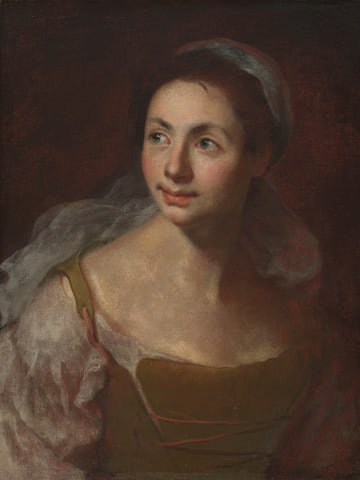
    Portrait of a GirlFrancesco Solimena, c. 1700Courtesy of the Art Institute of Chicago
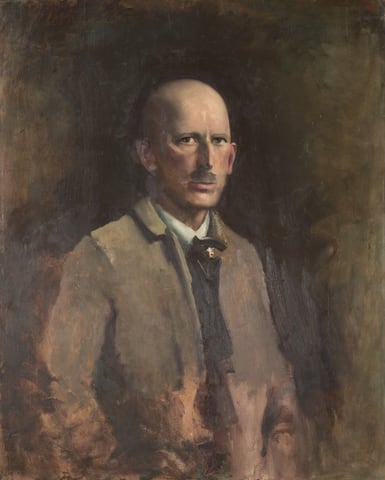
  2. Self-Portrait, by Abbott Handerson Thayer, 1920
    Self-PortraitAbbott Handerson Thayer, 1920Courtesy of the Cleveland Museum of Art
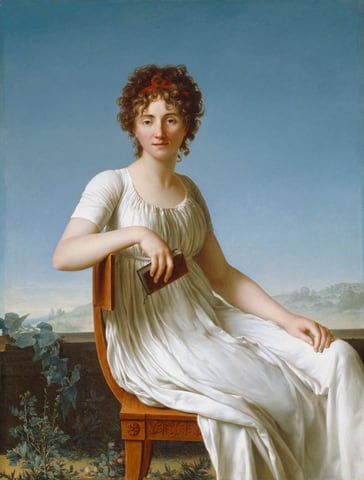
  3. A work made of oil on canvas.
    Portrait of Constance PipeletJean Baptiste François Désoria, 1797Courtesy of the Art Institute of Chicago
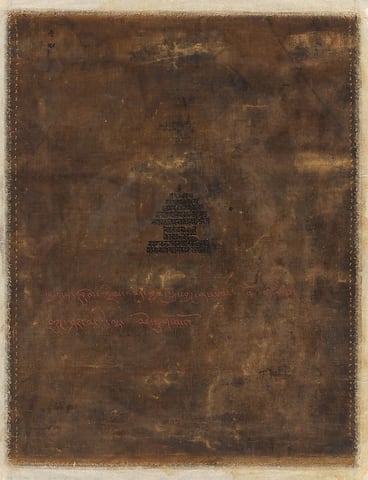
  4. Portrait of a monk, possibly Chen Nga Tshultrim Bar, extending a blessing, late 11th–early 12th century
    Portrait of a monk, possibly Chen Nga Tshultrim Bar, extending a blessingUnrecorded Himalayan maker, late 11th–early 12th centuryCourtesy of The Metropolitan Museum of Art

Second flight
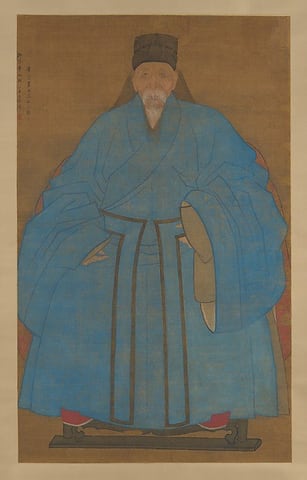
  1. Portrait of the artist’s great-granduncle Yizhai at the age of eighty-five, by Ruan Zude, dated 1561 or 1621
    Portrait of the artist’s great-granduncle Yizhai at the age of eighty-fiveRuan Zude, dated 1561 or 1621Courtesy of The Metropolitan Museum of Art
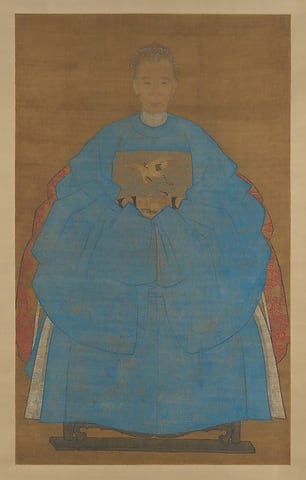
  2. Portrait of the wife of Yizhai, by Ruan Zude, datable to 1561 or 1620
    Portrait of the wife of YizhaiRuan Zude, datable to 1561 or 1620Courtesy of The Metropolitan Museum of Art
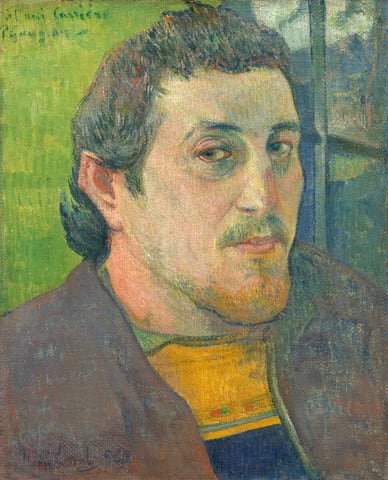
  3. Painted in muted lime green, plum purple, buttercup yellow, slate and royal blue, the head and shoulders of a man with peach-colored skin sitting in front of a window looks at us in this stylized, vertical portrait. His body and face are angled to our right but he looks at us from the corners of his eyes, which are grass-green with touches of yellow. One cobalt-blue eyebrow is cocked, and shading in denim blue, butter yellow, and fern green create hollows under both eyes. His flat nose has a broad bridge, and his pale pink lips are closed, the far corner pulled slightly up. His mustache is painted with visible strokes of forest green and his ginger-orange beard is trimmed along his prominent, jutting chin. His short, dark hair is brushed back from his temples and is painted with strokes of pine green, navy blue, and coral orange. His shirt has a wide, golden yellow stripe along the collar above indigo blue, under a grayish-violet purple jacket. The wall over his shoulder, in the upper left corner, is painted vivid lime green with long, vertical brushstrokes. The view through the window beyond his other shoulder is of vegetation and mountains. The portrait is painted with visible brushstrokes throughout, and is especially loose in the background, hair, and jacket. An inscription in dark green script in the upper left reads, “a l'ami Carriere PGauguin.” A second inscription in the lower left is written with dark brown paint: “l'ami Laval PGo.”
    Self-Portrait Dedicated to CarrièrePaul Gauguin, 1888 or 1889Courtesy National Gallery of Art, Washington
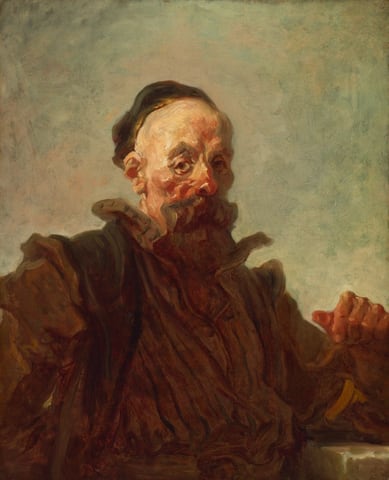
  4. Painting of bearded, ruddy-faced man in eighteenth century style clothing.
    Portrait of a Man in CostumeJean Honoré Fragonard, c. 1767–68Courtesy of the Art Institute of Chicago

Second landing
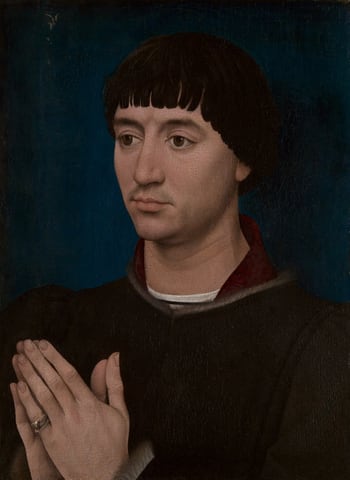
  1. Painted dark colored portrait of man, hands in prayer.
    Portrait of Jean Gros (recto); Coat of Arms of Jean Gros (verso)Rogier van der Weyden, 1460–64Courtesy of the Art Institute of Chicago
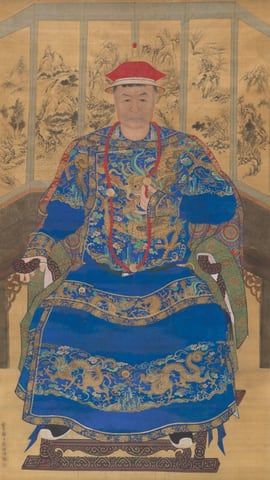
  2. A work made of hanging scroll; ink and color on silk.
    Portrait of an OfficialGu Jianlong, Qing dynasty (1644-1911), 17th centuryCourtesy of the Art Institute of Chicago
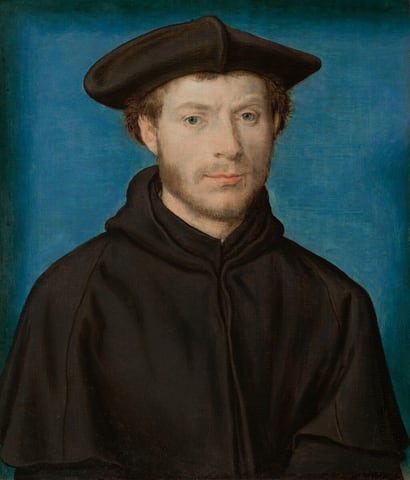
  3. This painting shows a man from the waist up. He is facing forward and gazes out at us. He has fair skin, light brown hair, a thin mustache and beard, and light green eyes. His expression is mostly neutral, although his peach lips are slightly turned up at the edges. He is wearing a black garment with a high collar and a hood and a black flat cap on his head. The background is plain blue, fading to black around the edges of the painting.
    Portrait of a ManCorneille de Lyon, c. 1536/1540Courtesy National Gallery of Art, Washington
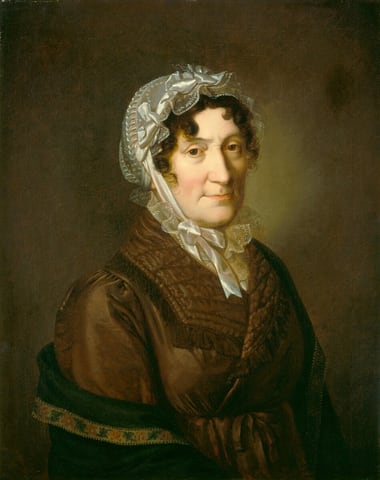
  4. The portrait shows the upper half of a seated woman with a round face, wrinkles, and dark hair. She wears a bonnet, a brown dress with layers, and a shawl or cloak. The background is a muted dark brown.
    Portrait of a LadyUnrecorded maker, probably c. 1820Courtesy National Gallery of Art, Washington