Japan
Works in this room
Works made in Japan, from every century in the collection.
Section 1, north wall
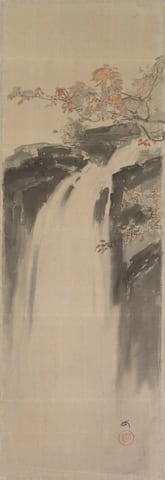
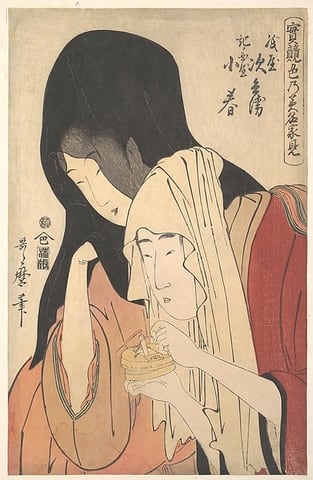
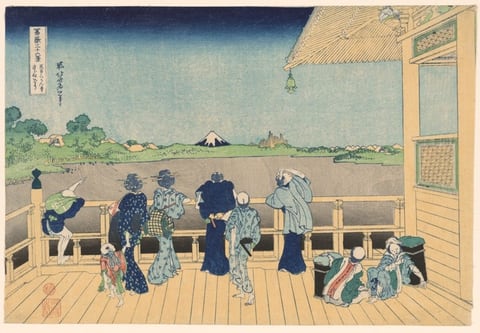
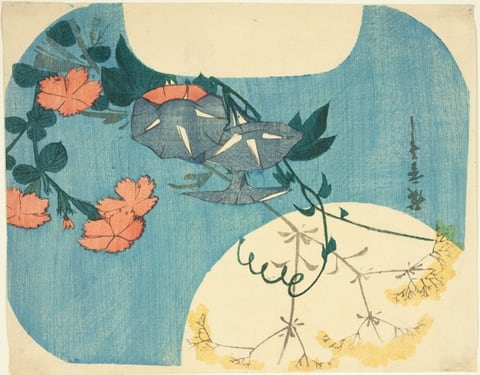
WaterfallYoshida Hiroshi, 1924Courtesy of the Cleveland Museum of Art Jihei of Kamiya Eloping with the Geisha Koharu of Kinokuniya, from the series “True Feelings Compared: The Founts of Love” (Jitsu kurabe iro no Minakami)Kitagawa Utamaro, ca. 1798–99Courtesy of The Metropolitan Museum of Art Sazai Hall at the Temple of the Five Hundred Arhats (Gohyakurakanji Sazaido), from the series "Thirty-six Views of Mount Fuji (Fugaku sanjurokkei)"Katsushika Hokusai, c. 1830/33Courtesy of the Art Institute of Chicago Morning Glories, Pinks, and Maiden Flower, from the series "Seven Autumn Flowers in Moonlight"Utagawa Hiroshige, 1830/44Courtesy of the Art Institute of Chicago
Section 1, south wall
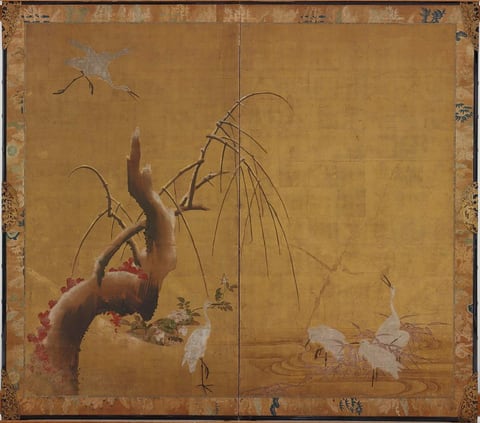
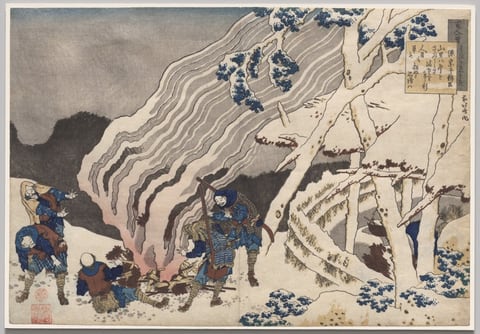
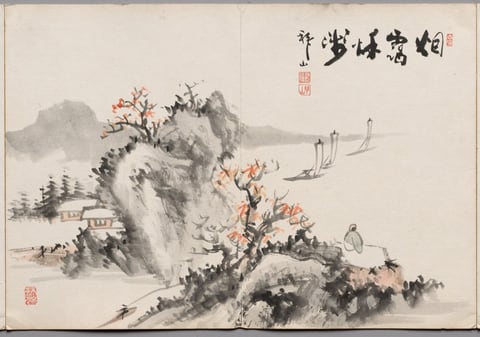
Herons and Old WIllowKano Sadanobu, 1615-1868Courtesy of the National Museum of Asian Art, Smithsonian Institution Poem by Minamoto no Muneyuki from the series One Hundred Poems by One Hundred Poets Explained by the NurseKatsushika Hokusai, 1835–36Courtesy of the Cleveland Museum of Art Painting Nine from Album of Paintings by HaizanYoshitsugu Haizan, late 1800s–early 1900sCourtesy of the Cleveland Museum of Art
Section 2, south wall
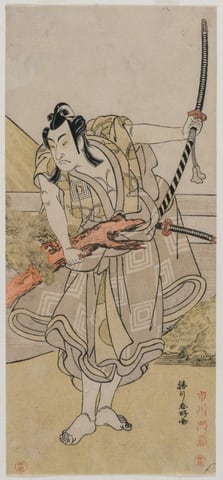
Ichikawa Monnosuke II as Soga no GorōKatsukawa Shunkō, 1779Courtesy of the Cleveland Museum of Art 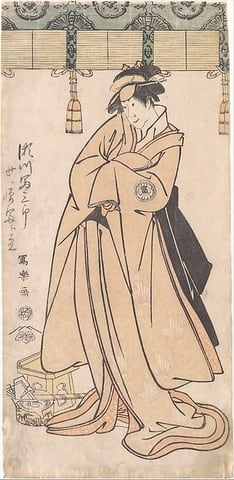
The Actor Segawa Tomisaburo II as the Otomos' Maid Wakakusa, Actually Prince KorehitoTōshūsai Sharaku, 1794–75Courtesy of The Metropolitan Museum of Art 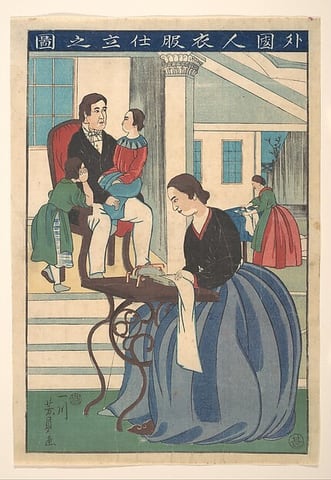
Foreign Family with Wife Making Clothes (Gaikokujin ifuku shitate no zu)Utagawa Yoshikazu, 1860Courtesy of The Metropolitan Museum of Art 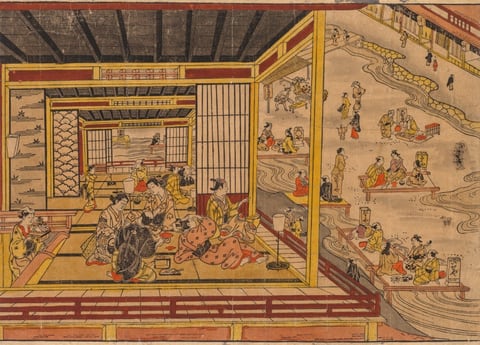
Tea House Beside the Kamo River in KyotoNishimura Shigenaga (Japanese, 1697(?)-1756), 1740sCourtesy of the Cleveland Museum of Art
Section 2, north wall
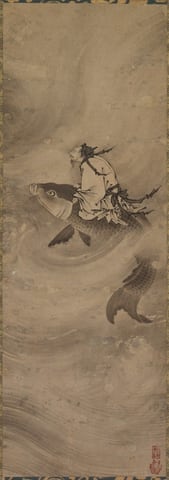
Immortal Riding on a CarpUnrecorded Japanese maker, c. 1600Courtesy of the Cleveland Museum of Art 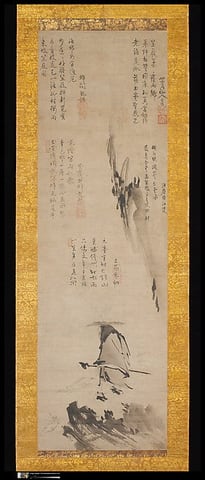
Su Shi (Dongpo) in a Bamboo Hat and ClogsZuigan Ryūsei, before 1460Courtesy of The Metropolitan Museum of Art 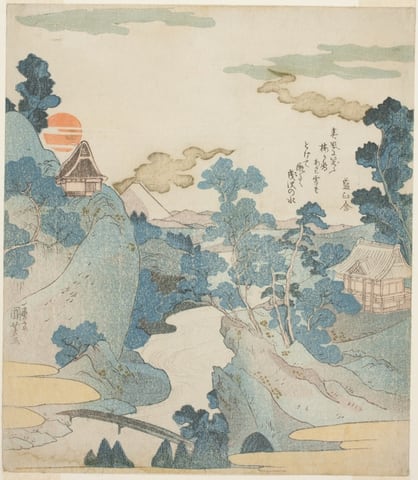
Distant View of Mount Fuji at Dawn from HakoneUtagawa Kuniyoshi, c. 1828/30Courtesy of the Art Institute of Chicago
Section 3, north wall
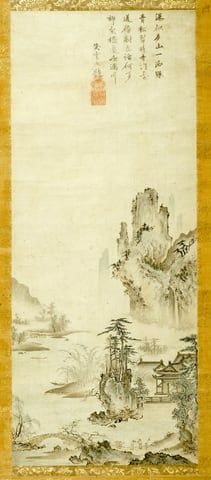
LandscapeOguri Sotan, 15th centuryCourtesy of the Art Institute of Chicago 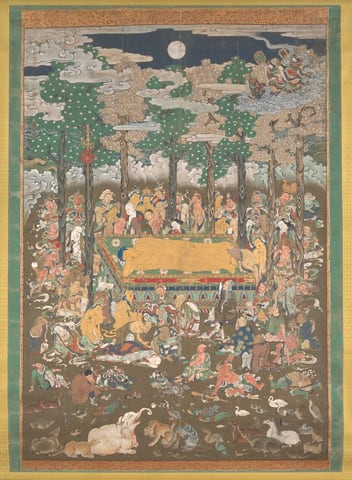
Nehan: Death of the BuddhaUnrecorded Japanese maker, late 17th/early 18th centuryCourtesy of the Art Institute of Chicago