Floor plan

Time and placeThe 20th century

The 20th century

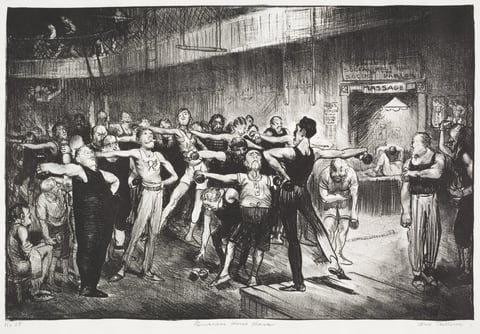
Business Men's Class, by George Bellows, 1916
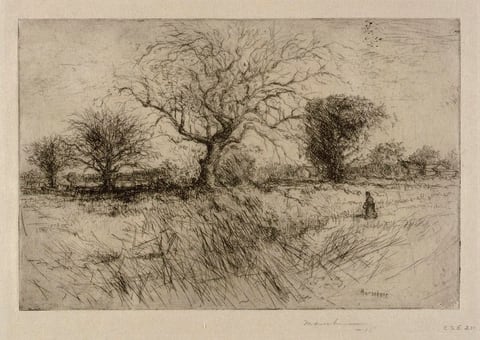
The Old Orchard, by Arthur A. Marschner, 1915
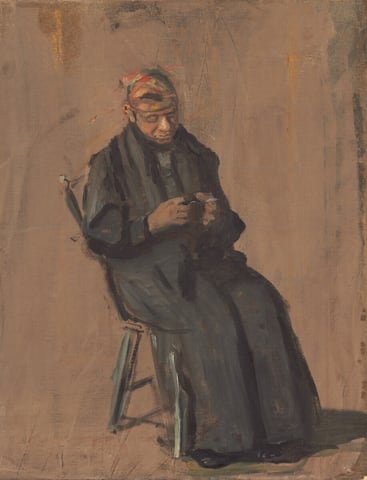
This painting shows a person seated on a stool or chair, wearing a long, dark-blue robe or gown. They are slightly turned toward the right, looking downward at something they hold in their hands, and their head is covered with a cloth or cap. The background is textured with earthy tones, mostly tan with some patches of yellow ochre and gray.
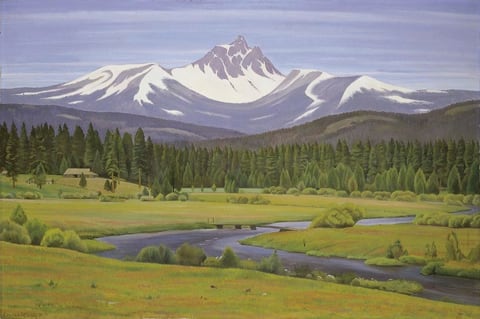
In the Cascade Mountains, by Edward Bruce, 1931
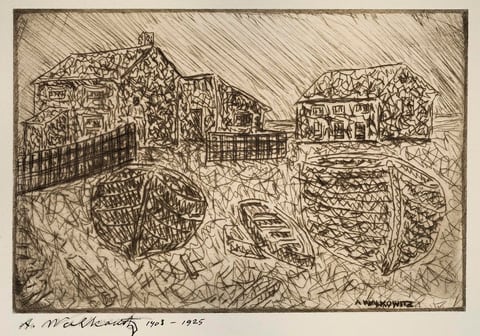
Abraham Walkowitz
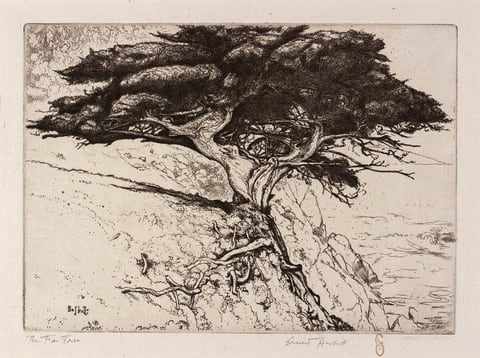
The Fan Tree, by Ernest Haskell, ca. 1915
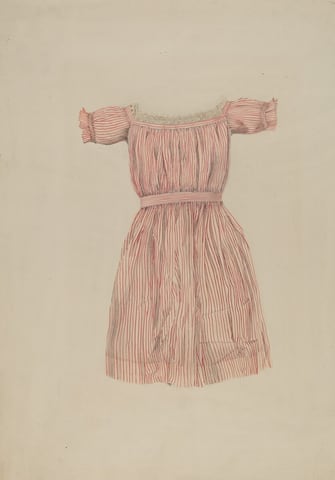
The image shows a dress with a pink and white vertical striped pattern. The color palette is predominantly soft pinks and whites with subtle shading for light and shadow effects on the fabric. The dress is positioned at the center of the image, with sleeves extending slightly outward to the sides.
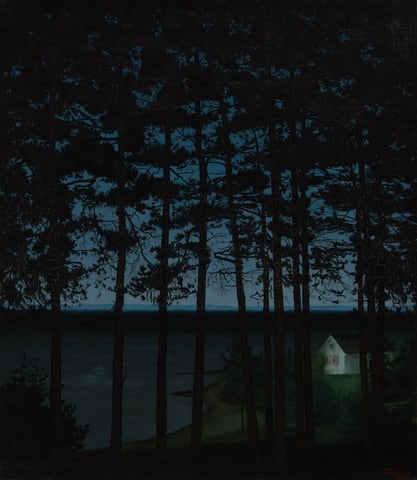
Dark twilight scene of a a brightly illuminated white cottage along the shore of an expansive body of water, seen through a thick of silhouetted trees.

The works in this room are listed below.

Works in this room

Works made in the 20th century, anywhere in the world.

Section 1, north wall

  1. Business Men's Class, by George Bellows, 1916
    Business Men's ClassGeorge Bellows, 1916Courtesy of the Cleveland Museum of Art
  2. The Old Orchard, by Arthur A. Marschner, 1915
    The Old OrchardArthur A. Marschner, 1915Courtesy of the Smithsonian American Art Museum
  3. This painting shows a person seated on a stool or chair, wearing a long, dark-blue robe or gown. They are slightly turned toward the right, looking downward at something they hold in their hands, and their head is covered with a cloth or cap. The background is textured with earthy tones, mostly tan with some patches of yellow ochre and gray.
    The ChaperoneThomas Eakins, c. 1908Courtesy National Gallery of Art, Washington
  4. In the Cascade Mountains, by Edward Bruce, 1931
    In the Cascade MountainsEdward Bruce, 1931Courtesy of the Smithsonian American Art Museum

Section 1, south wall

  1. Abraham Walkowitz
    Untitled (One Of Six Prints)Abraham Walkowitz, 1903-1925Courtesy of the Hirshhorn Museum and Sculpture Garden, Smithsonian Institution
  2. The Fan Tree, by Ernest Haskell, ca. 1915
    The Fan TreeErnest Haskell, ca. 1915Courtesy of the Smithsonian American Art Museum
  3. The image shows a dress with a pink and white vertical striped pattern. The color palette is predominantly soft pinks and whites with subtle shading for light and shadow effects on the fabric. The dress is positioned at the center of the image, with sleeves extending slightly outward to the sides.
    Child's DressLucien Verbeke, c. 1937Courtesy National Gallery of Art, Washington
  4. Dark twilight scene of a a brightly illuminated white cottage along the shore of an expansive body of water, seen through a thick of silhouetted trees.
    Fisherman's CottageHarald Oscar Sohlberg, 1906Courtesy of the Art Institute of Chicago

Section 2, south wall
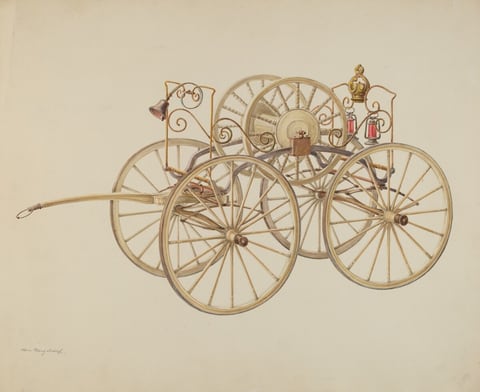
  1. This is a painting of a vintage fire hose cart. It is intricately designed, featuring a four-wheeled cart meant to hold a coiled fire hose. The painting showcases the cart's wooden spoked wheels and hose mechanism, as well as ornate wrought iron designs and a brass figure. A bell is depicted above one wheel. The painting captures the craftsmanship of the era and is reminiscent of the style of Charles Demuth, known for his attention to detail and focus on industrial and architectural elements.
    Fire Hose ReelHans Mangelsdorf, c. 1938Courtesy National Gallery of Art, Washington
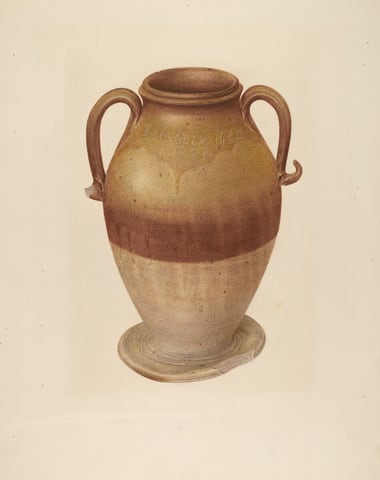
  2. The image shows a large ceramic vase with two curved handles positioned near the top on either side. The vase has an earthy color palette with shades of brown, beige, and a subtle hint of reddish-brown forming a band around its middle. The vase is centrally placed on a flat surface, and both handles extend outward at the top.
    VaseIsadore Goldberg, c. 1939Courtesy National Gallery of Art, Washington
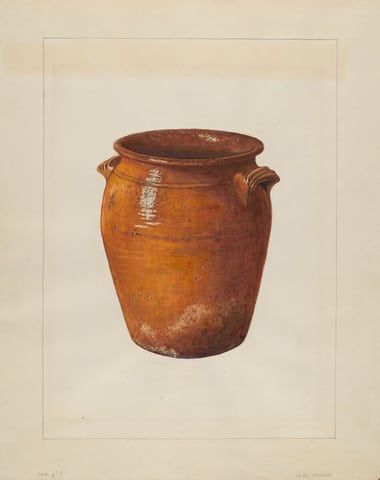
  3. The image features a large terracotta pot with two small handles on its sides. The pot is primarily in shades of earthy orange and brown with some lighter patches that suggest a slightly weathered texture. It is positioned centrally against a plain, light background.
    Preserving JarWilford H. Shurtliff, c. 1938Courtesy National Gallery of Art, Washington
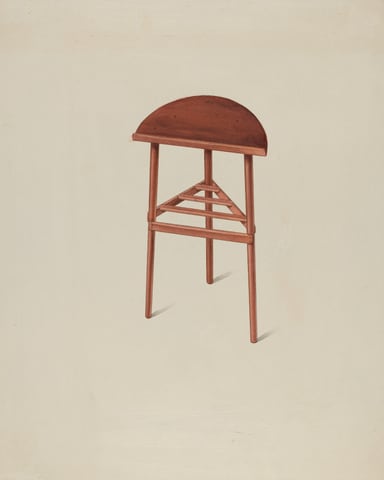
  4. The image shows a wooden stool with a semi-circular seat on a light beige background. The stool has four slim legs and a primarily brown color.
    Shaker Music RackAlfred H. Smith, c. 1936Courtesy National Gallery of Art, Washington

Section 2, north wall
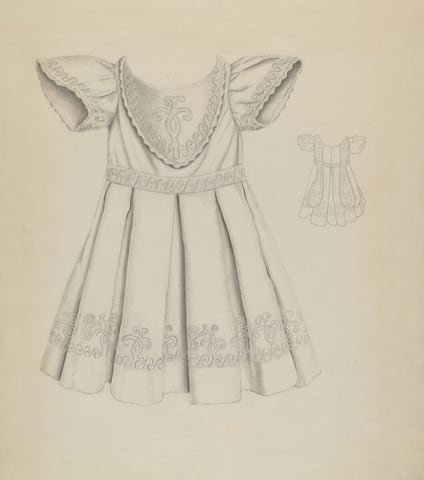
  1. The image shows a detailed sketch of a dress with short, puffed sleeves and a decorative neckline. There is a smaller sketch of the same dress to the right. The color palette is monochrome gray scale, with darker gray outlines and details against a light gray background. The main dress is centered, with the smaller sketch positioned to the right.
    Child's DressRay Price, c. 1937Courtesy National Gallery of Art, Washington
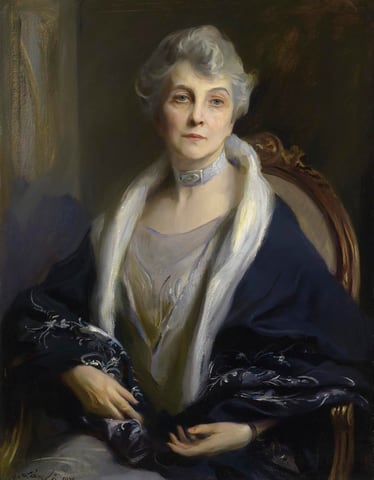
  2. Artist: Philip Alexius de László, Sitter: Clara Margaret Cook Kellogg, Current owner: National Portrait Gallery, Smithsonian Institution
    Clara Cook KelloggPhilip Alexius de László, 1929Courtesy of the National Portrait Gallery, Smithsonian Institution
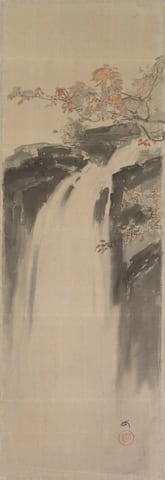
  3. Waterfall, by Yoshida Hiroshi, 1924
    WaterfallYoshida Hiroshi, 1924Courtesy of the Cleveland Museum of Art
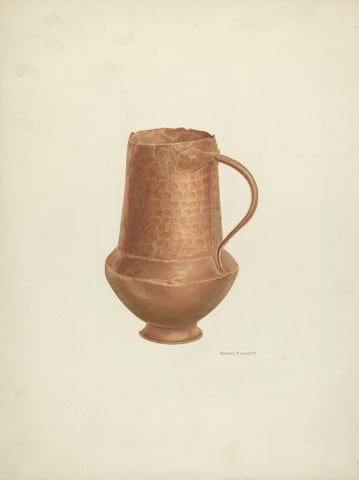
  4. The image shows a large, copper-colored pitcher with a hammered texture and a curving handle on the right side. The color palette consists of muted, warm tones of copper and brown against a pale beige background. The pitcher is centrally placed in the image, with its handle positioned on the right side.
    Copper CruetEdward Jewett, 1937Courtesy National Gallery of Art, Washington