Floor plan

Time and placeThe 20th century

The 20th century

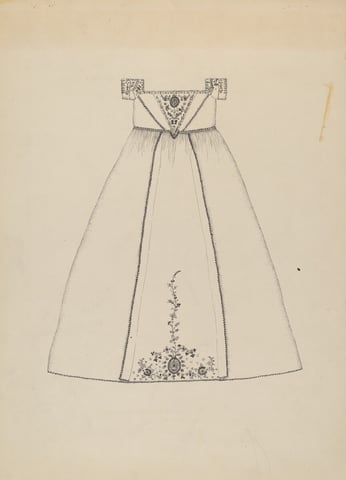
This is a drawing of a dress design. The illustration features a dress with a square neckline, adorned with embroidery around the bust area. The dress has a high waistline with a gathered skirt. The lower part of the dress also features floral embroidery patterns. The design emphasizes fine lines and delicate patterns.
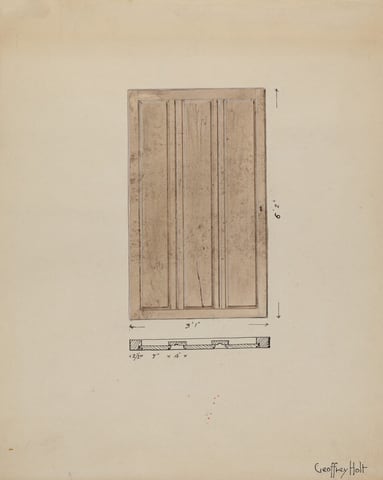
This is a drawing of a wooden door panel. It features a detailed rendering of a rectangular wooden door panel with vertical lines. Below the door panel, there is an elevation view showing the construction detail of the door in cross-section, with measurements indicating dimensions and proportions. The color palette is in shades of brown and beige. A signature in the lower right corner attributes the drawing to an artist named Geoffrey Holt.
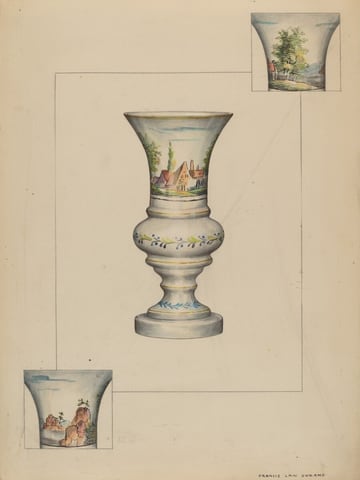
The image shows a large, intricately designed vase with a bulbous base and flared top at the center. The vase is decorated with painted scenes of a town or village. The color scheme includes shades of blue, green, brown, and touches of yellow and red. Surrounding the vase are two smaller detailed sections showing close-ups of the painted scenes on it. The main vase image is enclosed within a boxed outline on the page.
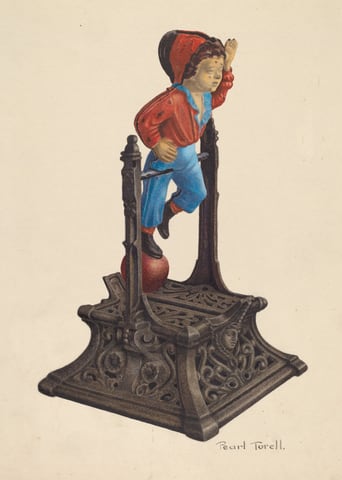
The sculpture depicts a young boy dressed in a bright red coat, blue shirt, and blue pants, with black shoes. He is wearing a black hat with a red rim and has curly hair. The boy is balanced on one foot atop a red ball, with one leg lifted behind him and one hand held high above his head. The sculpture is made of painted, cast metal with intricate designs and textures. The boy stands on an ornately decorated dark pedestal.
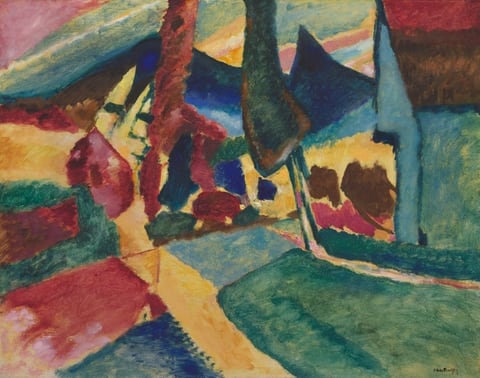
Vibrant yellow, red, blue, and green painting of landscape with trees and mountains.

The works in this room are listed below.

Works in this room

Works made in the 20th century, anywhere in the world.

Section 1, north wall

  1. This is a drawing of a dress design. The illustration features a dress with a square neckline, adorned with embroidery around the bust area. The dress has a high waistline with a gathered skirt. The lower part of the dress also features floral embroidery patterns. The design emphasizes fine lines and delicate patterns.
    Baptismal DressEvelyn Bailey, c. 1936Courtesy National Gallery of Art, Washington
  2. This is a drawing of a wooden door panel. It features a detailed rendering of a rectangular wooden door panel with vertical lines. Below the door panel, there is an elevation view showing the construction detail of the door in cross-section, with measurements indicating dimensions and proportions. The color palette is in shades of brown and beige. A signature in the lower right corner attributes the drawing to an artist named Geoffrey Holt.
    One of Original Inside Doors to SacristyGeoffrey Holt, c. 1936Courtesy National Gallery of Art, Washington
  3. The image shows a large, intricately designed vase with a bulbous base and flared top at the center. The vase is decorated with painted scenes of a town or village. The color scheme includes shades of blue, green, brown, and touches of yellow and red. Surrounding the vase are two smaller detailed sections showing close-ups of the painted scenes on it. The main vase image is enclosed within a boxed outline on the page.
    Fire Lighter VaseFrancis Law Durand, 1935/1942Courtesy National Gallery of Art, Washington

Section 1, south wall

  1. The sculpture depicts a young boy dressed in a bright red coat, blue shirt, and blue pants, with black shoes. He is wearing a black hat with a red rim and has curly hair. The boy is balanced on one foot atop a red ball, with one leg lifted behind him and one hand held high above his head. The sculpture is made of painted, cast metal with intricate designs and textures. The boy stands on an ornately decorated dark pedestal.
    Toy BankPearl Torell, c. 1939Courtesy National Gallery of Art, Washington
  2. Vibrant yellow, red, blue, and green painting of landscape with trees and mountains.
    Landscape with Two PoplarsVasily Kandinsky, 1912Courtesy of the Art Institute of Chicago

Section 2, south wall
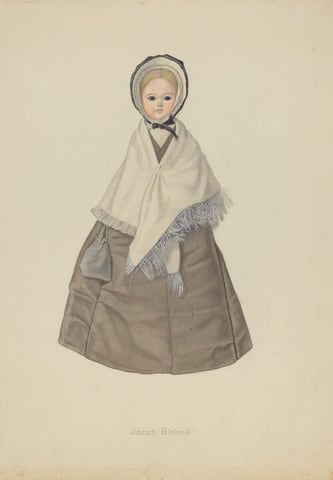
  1. The image depicts a young person standing upright with distinct facial features including rounded cheeks, a small mouth, and large eyes. They are wearing a brown dress with a cream-colored shawl, a bonnet with dark trim, and a pouch hanging from their left side. The background is plain and cream-colored.
    Quaker DollJacob Gielens, 1935/1942Courtesy National Gallery of Art, Washington
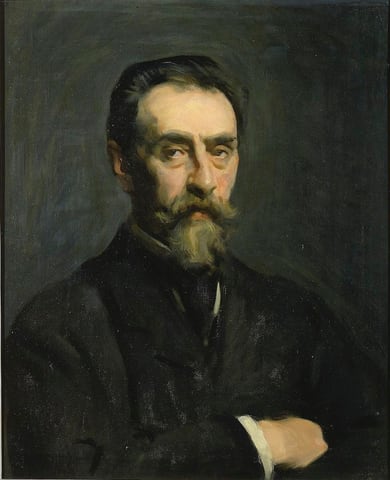
  2. Portrait of William E. Norton, by William Penhallow Henderson, 1901
    Portrait of William E. NortonWilliam Penhallow Henderson, 1901Courtesy of the Smithsonian American Art Museum

Section 2, north wall
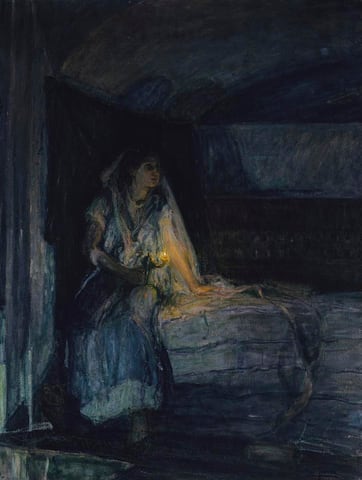
  1. Mary, by Henry Ossawa Tanner, ca. 1914
    MaryHenry Ossawa Tanner, ca. 1914Courtesy of the Smithsonian American Art Museum
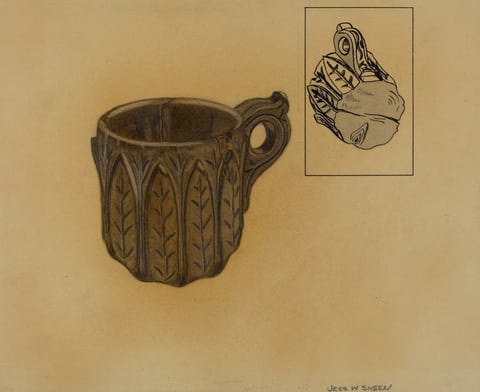
  2. The image shows an illustration of a decorative cup with a relief design and handle to the left. The cup is brown with leaf patterns. The background is light tan. In the top right corner, there is a sketch of the cup's underside.
    Wooden Shaving MugJesse W. Skeen, c. 1936Courtesy National Gallery of Art, Washington

Section 3, north wall
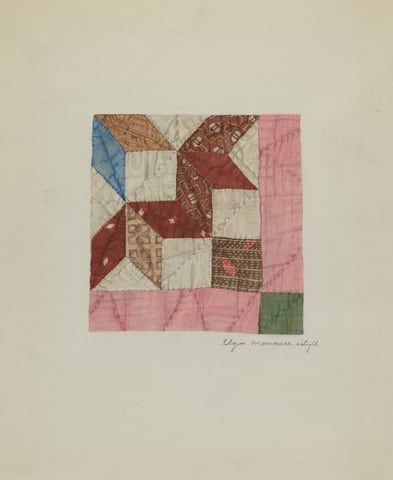
  1. This is a painting of a quilt design pattern. The image depicts a square quilt block featuring a variety of geometric shapes and patterns pieced together. The quilt features a mix of colors, including blues, reds, browns, and a pink border, with intricate patterns in the fabric segments. The textures and colors create an intricate optical composition resembling different geometric forms and depth. The piece is delicately framed within a larger white space, which emphasizes the detail of the quilt pattern. This is in the style of a traditional textile or quilting pattern illustrator.
    Cotton Bed QuiltElgin Moncure Styll, c. 1941Courtesy National Gallery of Art, Washington
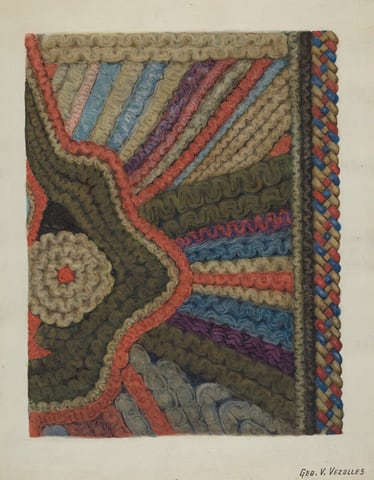
  2. The image displays wavy lines and shapes with a mix of colors, creating an abstract composition. Curved lines are intertwined, resembling braided patterns or woven fabric textures. On the left, there is a large, organic shape bordered by red, green, and beige. The right side showcases a rhythmic pattern resembling a braided rug, with strands of red, blue, and brown. The overall composition resembles a textured textile piece.
    Shaker Woolen RugGeorge V. Vezolles, 1935/1942Courtesy National Gallery of Art, Washington
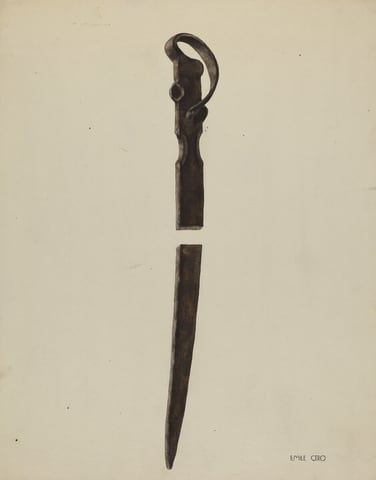
  3. The image shows a dark metal object with two parts: a handle and a blade. The color palette consists of shades of dark brown on a light beige background. The handle is located at the top center, and the blade portion is positioned below it, both aligned vertically in the center of the frame.
    SpitEmile Cero, c. 1938Courtesy National Gallery of Art, Washington

Section 3, south wall
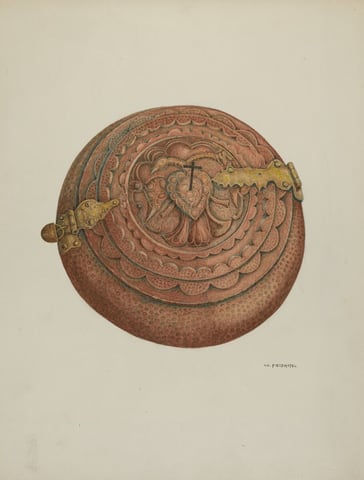
  1. The image features a round, ornately decorated object resembling a shield with metallic-looking decorative hinges on its surface. The color palette is primarily earthy tones such as brown, red, and hints of gold. The object is centered in the image, viewed from the front, with engravings decorating its surface. The background is plain and light in color.
    Baptismal FontWilliam Kieckhofel, c. 1941Courtesy National Gallery of Art, Washington
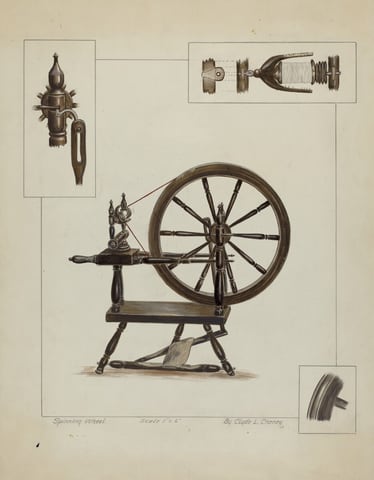
  2. The image shows a spinning wheel with intricate details, surrounded by smaller insets highlighting specific components. The color palette consists of muted browns, greens, and beiges. The spinning wheel is positioned in the center, with its circular wheel on the right and the spinning mechanism on the left. Detailed insets are placed around the spinning wheel, each showing different mechanical elements.
    Spinning WheelClyde L. Cheney, 1935/1942Courtesy National Gallery of Art, Washington

Section 4, south wall
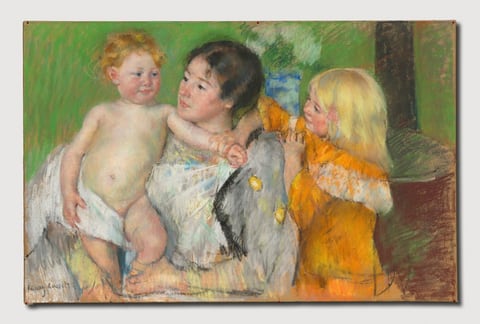
  1. After the Bath, by Mary Cassatt, 1901
    After the BathMary Cassatt, 1901Courtesy of the Cleveland Museum of Art
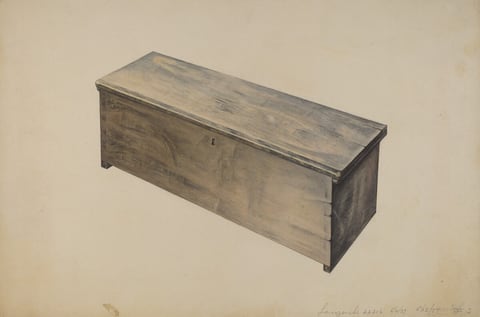
  2. The image shows a large wooden chest with a rectangular design and a keyhole on its front panel. The chest has a weathered look in muted browns and grays. It is positioned in the center with its top, front, and side panels visible. The background is plain and light in color.
    Utility ChestHenry Tomaszewski, 1937Courtesy National Gallery of Art, Washington