Floor plan

Time and placeThe 20th century

The 20th century

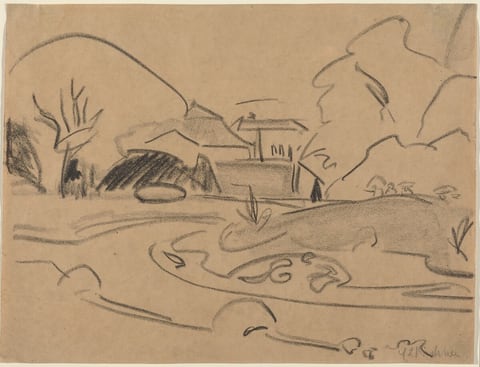
The image shows a landscape drawing with buildings, trees, and a winding path or water feature. The drawing is done in black charcoal on brownish background paper, creating a monochromatic color palette.
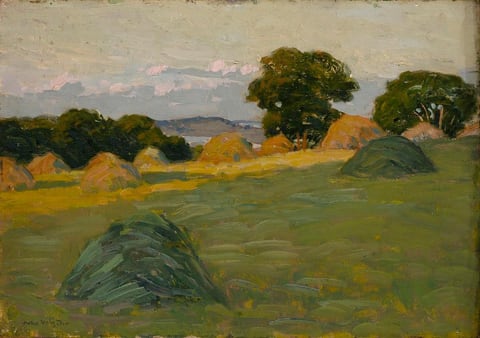
The Hill Field, by Arthur Wesley Dow, 1908-1910
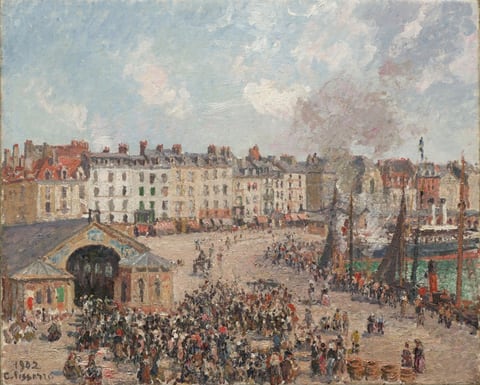
Fishmarket, by Camille Pissarro, 1902
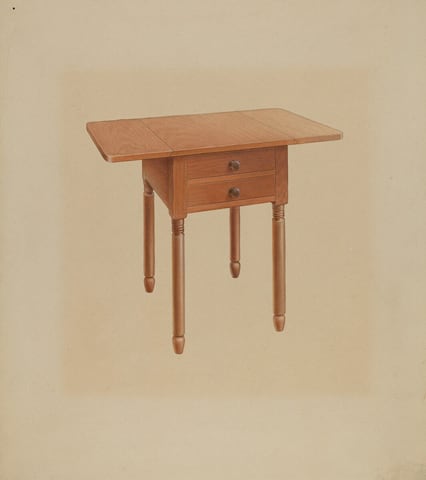
The image shows a wooden drop-leaf table with four turned legs and two drawers. The table's surface includes two side panels that can be raised or lowered. The color palette is warm brown tones. The table is centered in the image, with both leaves partially visible.
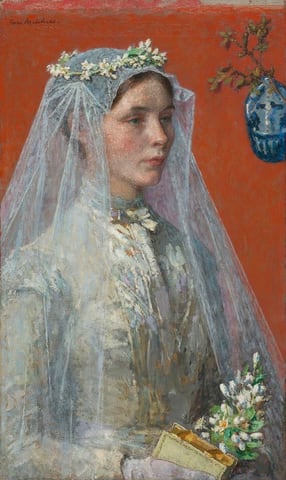
The Bride, by Gari Melchers, ca. 1907
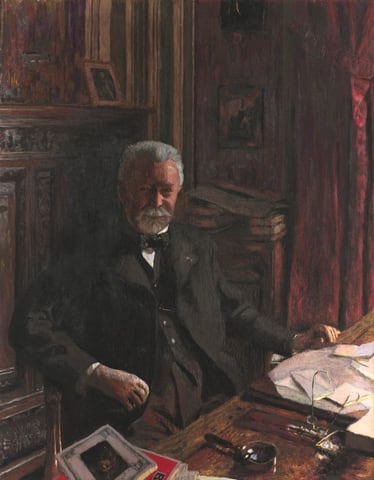
André Bénac, by Édouard Vuillard, 1936
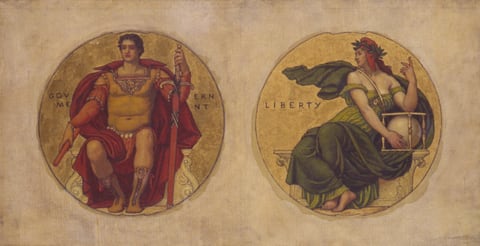
Study for mosaic in the Wisconsin State Capital "Government and Liberty", by Kenyon Cox, ca. 1912
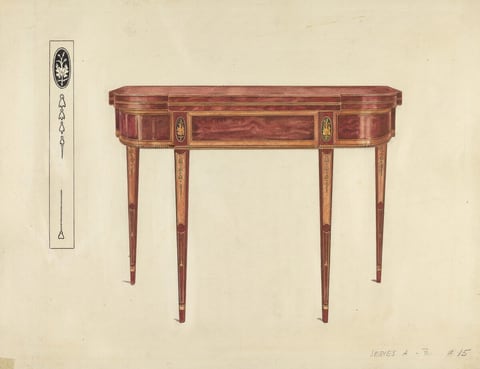
The image shows a wooden side table with a smooth surface and four tapered legs, as well as a decorative drawer front. The table has a rich brown color with gold accents and black inlay details. It is positioned towards the center of the image. On the left, there are design patterns in an oval shape and a thin line drawing. The background is off-white. There are handwritten numbers and letters at the bottom right corner of the image.

The works in this room are listed below.

Works in this room

Works made in the 20th century, anywhere in the world.

Section 1, north wall

  1. The image shows a landscape drawing with buildings, trees, and a winding path or water feature. The drawing is done in black charcoal on brownish background paper, creating a monochromatic color palette.
    Footpaths and Pavilion in the Dresden Grosser GartenErnst Ludwig Kirchner, c. 1909Courtesy National Gallery of Art, Washington
  2. The Hill Field, by Arthur Wesley Dow, 1908-1910
    The Hill FieldArthur Wesley Dow, 1908-1910Courtesy of the Smithsonian American Art Museum
  3. Fishmarket, by Camille Pissarro, 1902
    FishmarketCamille Pissarro, 1902Courtesy of the Cleveland Museum of Art
  4. The image shows a wooden drop-leaf table with four turned legs and two drawers. The table's surface includes two side panels that can be raised or lowered. The color palette is warm brown tones. The table is centered in the image, with both leaves partially visible.
    Shaker TableAlfred H. Smith, c. 1938Courtesy National Gallery of Art, Washington

Section 1, south wall

  1. The Bride, by Gari Melchers, ca. 1907
    The BrideGari Melchers, ca. 1907Courtesy of the Smithsonian American Art Museum
  2. André Bénac, by Édouard Vuillard, 1936
    André BénacÉdouard Vuillard, 1936Courtesy of the Cleveland Museum of Art
  3. Study for mosaic in the Wisconsin State Capital "Government and Liberty", by Kenyon Cox, ca. 1912
    Study for mosaic in the Wisconsin State Capital "Government and Liberty"Kenyon Cox, ca. 1912Courtesy of the Smithsonian American Art Museum
  4. The image shows a wooden side table with a smooth surface and four tapered legs, as well as a decorative drawer front. The table has a rich brown color with gold accents and black inlay details. It is positioned towards the center of the image. On the left, there are design patterns in an oval shape and a thin line drawing. The background is off-white. There are handwritten numbers and letters at the bottom right corner of the image.
    Card TableFlorence Choate, c. 1953Courtesy National Gallery of Art, Washington

Section 2, south wall
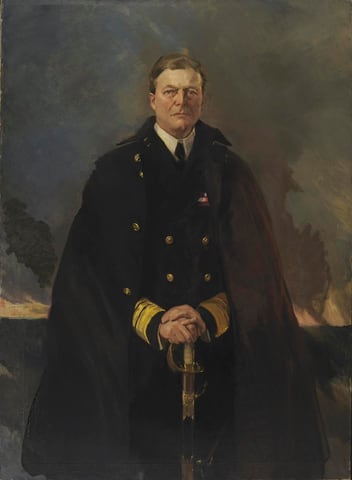
  1. Admiral Sir David Beatty, Lord Beatty, by Cecilia Beaux, ca. 1920
    Admiral Sir David Beatty, Lord BeattyCecilia Beaux, ca. 1920Courtesy of the Smithsonian American Art Museum
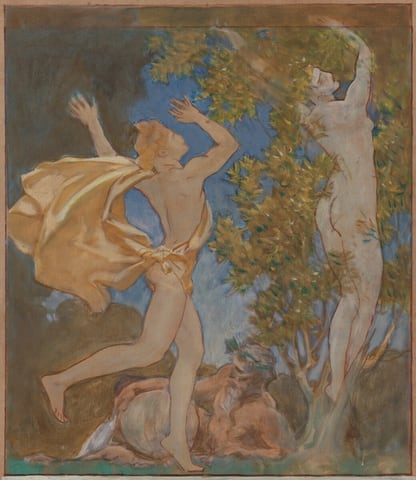
  2. This is a painting showing two people in nature. The person on the left appears to be running towards the right, with one leg in the air and their arms outstretched. They have tan, golden-toned skin, blond hair, and golden fabric draped loosely around them, billowing backward as they run. On the right is a pale person standing upright in a tree, their arms outstretched. They appear intertwined with the tree, with their feet nestled in the light brown trunk and their head and hands covered in olive-green leaves. The background features indistinct brown shapes against a clear blue sky.
    Apollo and DaphneJohn Singer Sargent, c. 1916/1919Courtesy National Gallery of Art, Washington
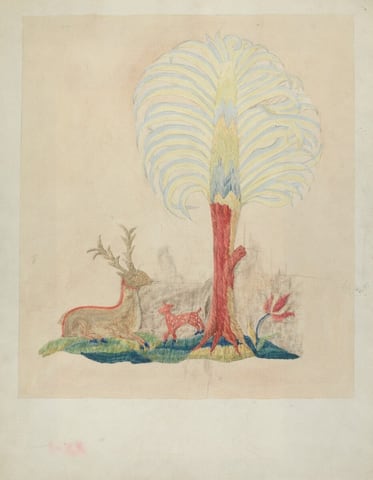
  3. This is a painting of two deer under a tree. The larger deer has antlers and is resting next to a smaller deer. They are depicted with red and brown strokes. The background shows a patch of earth and grass in green and blue. Beside the deer is a tree with colorful leaves or a feather-like structure and a red trunk. A pink flower is near the tree's base. The background is neutral. This painting is in the style of Henri Rousseau.
    Crewel EmbroideryHelen Dana, 1935/1942Courtesy National Gallery of Art, Washington
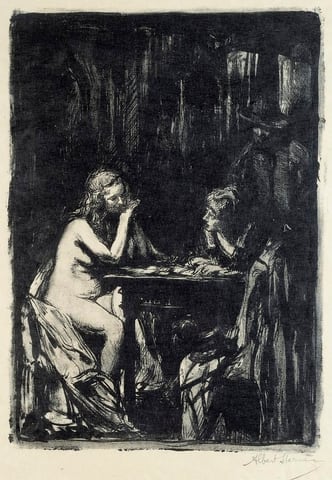
  4. The Stranger, by Albert Sterner, 1916
    The StrangerAlbert Sterner, 1916Courtesy of the Smithsonian American Art Museum

Section 2, north wall
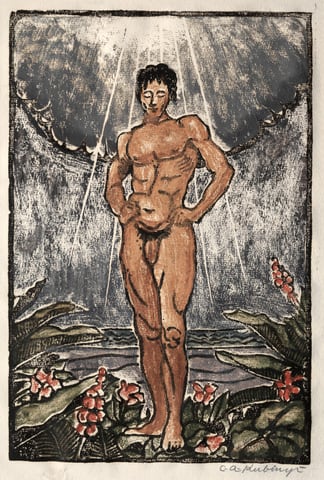
  1. The Creation, by Kálmán Kubinyi, before 1927
    The CreationKálmán Kubinyi, before 1927Courtesy of the Cleveland Museum of Art
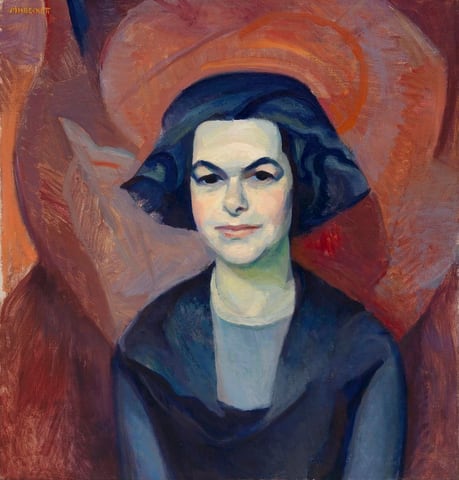
  2. Artist: Marion H. Beckett, Sitter: Theresa Helburn, Current owner: National Portrait Gallery, Smithsonian Institution
    Theresa HelburnMarion H. Beckett, 1922Courtesy of the National Portrait Gallery, Smithsonian Institution
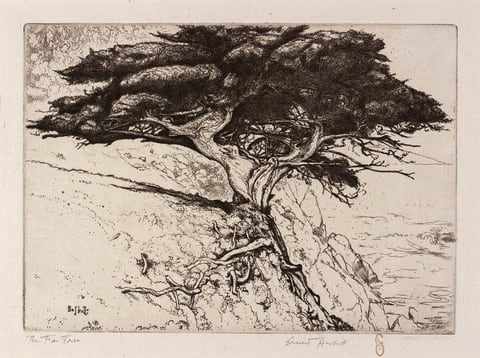
  3. The Fan Tree, by Ernest Haskell, ca. 1915
    The Fan TreeErnest Haskell, ca. 1915Courtesy of the Smithsonian American Art Museum
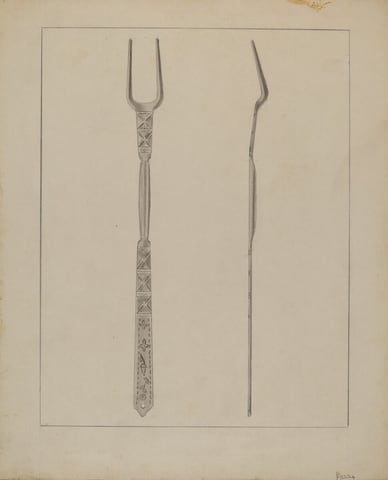
  4. This is a drawing of a tool with intricate patterns. The tool appears elongated with a pronged end, and features symmetrical geometric designs etched along the handle. The drawing also includes a side profile showing its slender form.
    ForkAnthony Zuccarello, c. 1936Courtesy National Gallery of Art, Washington