Floor plan

Time and placeThe 20th century

The 20th century

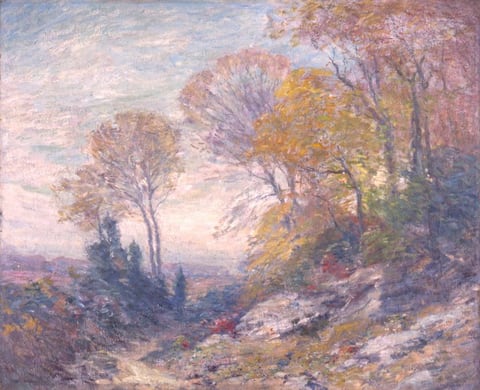
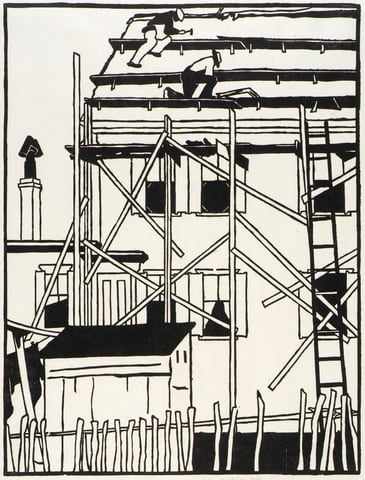
October Morning, by Frank A. Bicknell, ca. 1910
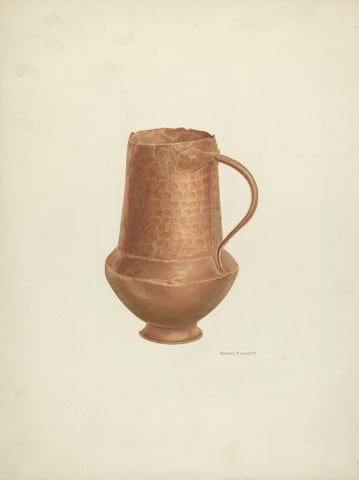
The image shows a large, copper-colored pitcher with a hammered texture and a curving handle on the right side. The color palette consists of muted, warm tones of copper and brown against a pale beige background. The pitcher is centrally placed in the image, with its handle positioned on the right side.
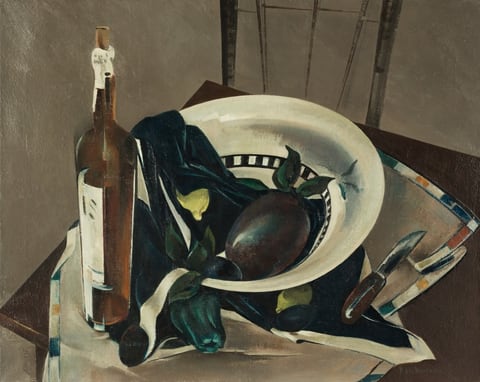
Still Life, by Preston Dickinson, c. 1924
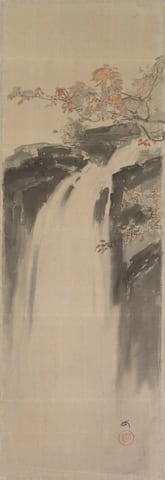
Waterfall, by Yoshida Hiroshi, 1924
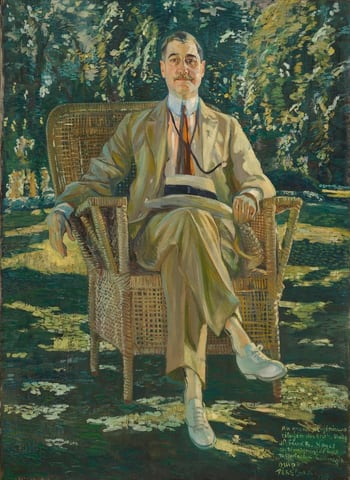
Artist: Ossip Perelma, Sitter: Frank Brett Noyes, Current owner: National Portrait Gallery, Smithsonian Institution
Untitled, by Mildred McMillen, 1915
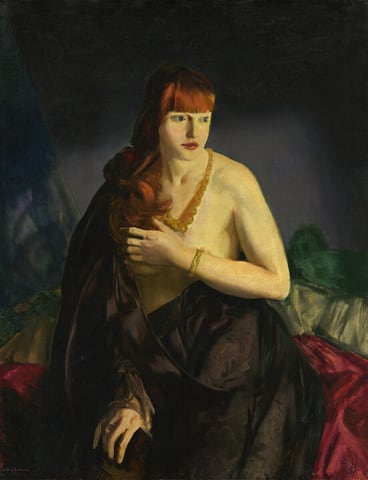
Shown from the knees up, a woman sits partially covered by a black cloth as she holds one forearm across her bare breasts in this vertical painting. The woman has pale, yellow-tinged skin and long, copper-red hair and bangs. Her body faces us, but she turns her head to look off to our right with large blue, wide-set eyes. Her cheeks are flushed, and her full, dark pink lips are closed. A strand of gradually larger amber-yellow beads hangs around her neck, and she wears a gold-colored bracelet on the arm braced across her chest, her left arm, to our right. Glimpses of pale pink nipples are visible. The voluminous black cloth drapes down over one shoulder and across her hips. She wears a ring on the other hand, which emerges from the cloth to rest on that knee. Piles of garnet red, peridot green, and forest green are piled up to chest height behind her, and the background is nickel gray around her body and darkens to black around the top and side edges. The scene is loosely painted, especially in the fabric and background. The artist signed the canvas in the lower left corner, “Geo. Bellows E.S.B.”

The works in this room are listed below.

Works in this room

Works made in the 20th century, anywhere in the world.

Section 1, north wall

  1. October Morning, by Frank A. Bicknell, ca. 1910
    October MorningFrank A. Bicknell, ca. 1910Courtesy of the Smithsonian American Art Museum
  2. The image shows a large, copper-colored pitcher with a hammered texture and a curving handle on the right side. The color palette consists of muted, warm tones of copper and brown against a pale beige background. The pitcher is centrally placed in the image, with its handle positioned on the right side.
    Copper CruetEdward Jewett, 1937Courtesy National Gallery of Art, Washington
  3. Still Life, by Preston Dickinson, c. 1924
    Still LifePreston Dickinson, c. 1924Courtesy of the Cleveland Museum of Art
  4. Waterfall, by Yoshida Hiroshi, 1924
    WaterfallYoshida Hiroshi, 1924Courtesy of the Cleveland Museum of Art

Section 1, south wall

  1. Artist: Ossip Perelma, Sitter: Frank Brett Noyes, Current owner: National Portrait Gallery, Smithsonian Institution
    Frank Brett NoyesOssip Perelma, 1917Courtesy of the National Portrait Gallery, Smithsonian Institution
  2. Untitled, by Mildred McMillen, 1915
    UntitledMildred McMillen, 1915Courtesy of the Smithsonian American Art Museum
  3. Shown from the knees up, a woman sits partially covered by a black cloth as she holds one forearm across her bare breasts in this vertical painting. The woman has pale, yellow-tinged skin and long, copper-red hair and bangs. Her body faces us, but she turns her head to look off to our right with large blue, wide-set eyes. Her cheeks are flushed, and her full, dark pink lips are closed. A strand of gradually larger amber-yellow beads hangs around her neck, and she wears a gold-colored bracelet on the arm braced across her chest, her left arm, to our right. Glimpses of pale pink nipples are visible. The voluminous black cloth drapes down over one shoulder and across her hips. She wears a ring on the other hand, which emerges from the cloth to rest on that knee. Piles of garnet red, peridot green, and forest green are piled up to chest height behind her, and the background is nickel gray around her body and darkens to black around the top and side edges. The scene is loosely painted, especially in the fabric and background. The artist signed the canvas in the lower left corner, “Geo. Bellows E.S.B.”
    Nude with Red HairGeorge Bellows, 1920Courtesy National Gallery of Art, Washington

Section 2, south wall
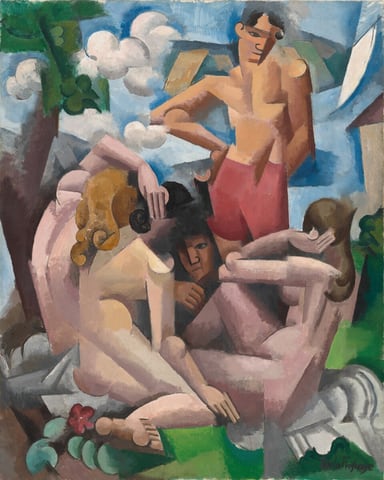
  1. This painting depicts a group of men and women created by a collection of angular, geometric shapes with flat planes and blocks of color. One person is standing, and they appear to be a bare-chested man with tan skin and short, dark hair, who is wearing red shorts. He has his hand on his hip and looks off to the right. At his feet appear to be several seated people, although they are only partially visible. Three women with pale skin seem to be facing away from us; we can see their legs, arms, and torsos, although these don't all fit together. The woman on the left has blonde hair, the woman on the right has brown hair, and the woman between them has short black hair. None of their faces are visible. In the middle of this group, at the center of the painting, we see the face and hand of another person who is looking to the left. This person has light brown skin, and we can't see the rest of their body. Surrounding elements include a blue sky with abstract cloud forms, an angular tree on the left, and patches of brown, white, and green on the ground, with one red flower. A tan rectangle under a red triangle on the right edge suggests a building.
    The BathersRoger de La Fresnaye, 1912Courtesy National Gallery of Art, Washington
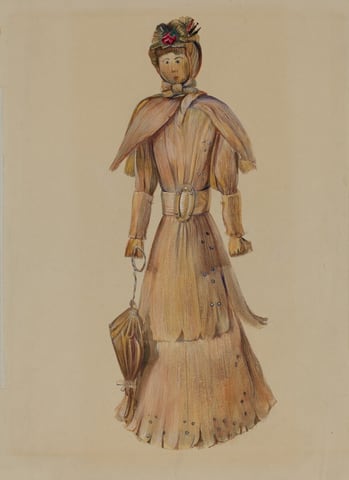
  2. The image shows a person standing upright. They have a round face with simple facial features, wearing a hat with a red flower and dark ribbon. Their outfit includes a belted dress or coat, pleated texture, a cape, and arm coverings. The person is holding a matching umbrella in their right hand. The background is plain and light tan.
    Corn Husk DollMina Lowry, c. 1936Courtesy National Gallery of Art, Washington
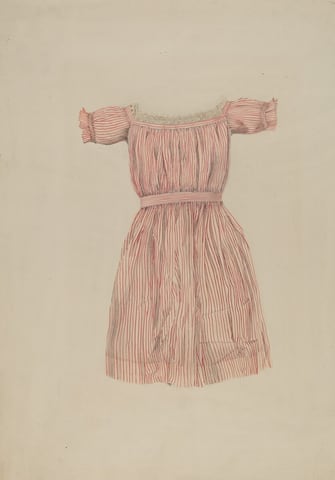
  3. The image shows a dress with a pink and white vertical striped pattern. The color palette is predominantly soft pinks and whites with subtle shading for light and shadow effects on the fabric. The dress is positioned at the center of the image, with sleeves extending slightly outward to the sides.
    Child's DressLucien Verbeke, c. 1937Courtesy National Gallery of Art, Washington
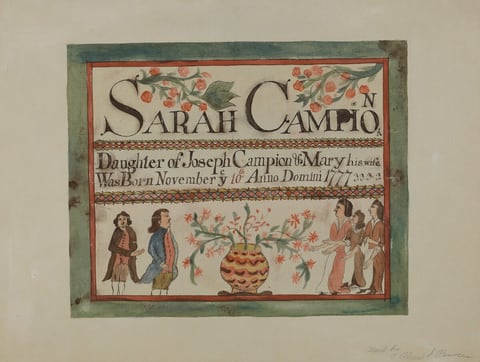
  4. This painting is a birth record for Sarah Campion, daughter of Joseph and Mary Campion, born on November 16th, 1777. It features elaborate calligraphy and ornamental designs. The borders contain floral patterns with red and orange-colored flowers and green leaves. The central text is decorative, and at the bottom are human-like figures in colonial attire standing beside a flower vase. The artwork reflects a style reminiscent of early American folk art, created by an anonymous folk artist capturing the essence of 18th-century American artistry.
    Pa. German Birth CertificateGlenn Pearce, c. 1936Courtesy National Gallery of Art, Washington

Section 2, north wall
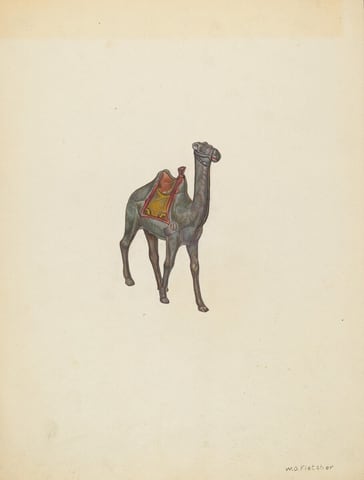
  1. This is a painting of a camel with a colorful saddle. The camel is centered in the image, standing against a plain, light-colored background. The animal is drawn with careful attention to detail, showcasing its distinctive humps, elongated neck, and slender legs. It is adorned with a vibrant saddle that features bright orange and red tones. The simplicity of the background emphasizes the camel.
    Bank CamelWilliam O. Fletcher, c. 1940Courtesy National Gallery of Art, Washington
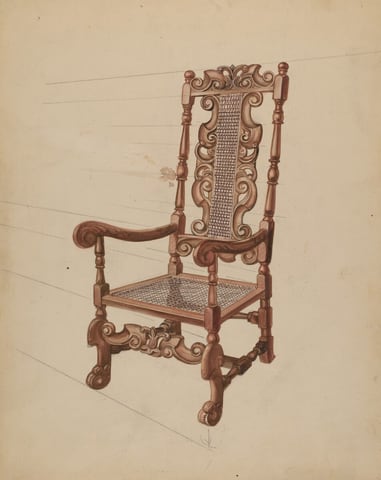
  2. The image shows an ornate chair with a high back, decorative carvings along its arms, legs, and backrest, a woven or cane seat and back, and intricate patterns. The chair is detailed with earthy brown tones and subtle shading accentuating the wood texture and design motifs. It is placed in the center of the image, facing slightly to the left, with linear guides indicating perspective and depth on a plain background.
    ArmchairAgnes Karlin, c. 1936Courtesy National Gallery of Art, Washington
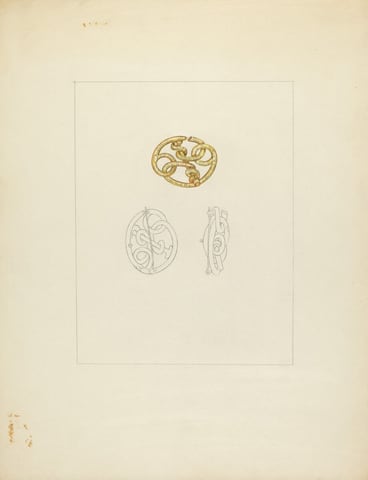
  3. This is a drawing of decorative motifs. The image shows three distinct designs with ornate, swirling patterns. The uppermost design is in gold color. Two additional designs are sketched below in a lighter tone, likely pencil. The use of line and form emphasizes intricate looping patterns that suggest inspiration from natural forms such as vines or waves. The composition is against a plain background, drawing attention to the details and shapes of the motifs, presenting a sense of simplicity and artistry.
    Gold BroochIsidore Steinberg, c. 1940Courtesy National Gallery of Art, Washington

Section 3, north wall
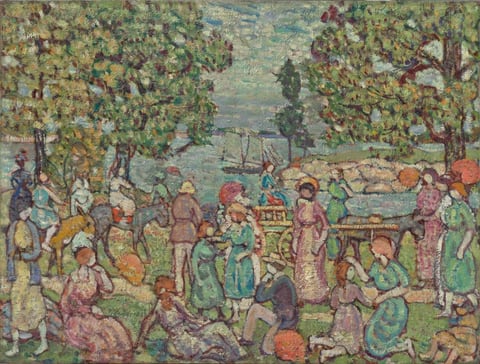
  1. On the Beach, No. 3, by Maurice Prendergast, c. 1915–18
    On the Beach, No. 3Maurice Prendergast, c. 1915–18Courtesy of the Cleveland Museum of Art
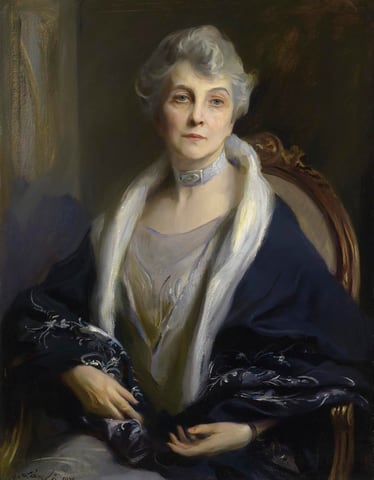
  2. Artist: Philip Alexius de László, Sitter: Clara Margaret Cook Kellogg, Current owner: National Portrait Gallery, Smithsonian Institution
    Clara Cook KelloggPhilip Alexius de László, 1929Courtesy of the National Portrait Gallery, Smithsonian Institution