Floor plan

Time and placeThe 20th century

The 20th century

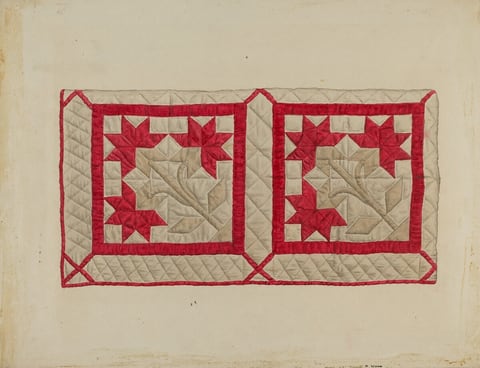
The image shows two large quilt blocks with a matching design, side by side. Each block consists of red and beige fabric with quilted stitching creating a textured appearance. The color palette includes primarily red, beige, and dark stitching outlining the patterns. The quilt blocks are placed centrally on a light-colored surface.
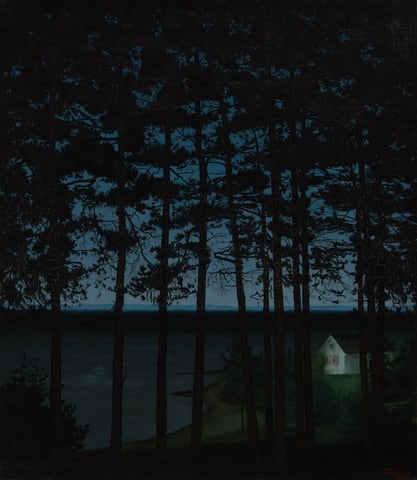
Dark twilight scene of a a brightly illuminated white cottage along the shore of an expansive body of water, seen through a thick of silhouetted trees.
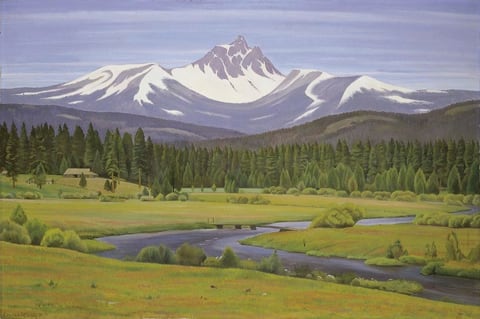
In the Cascade Mountains, by Edward Bruce, 1931
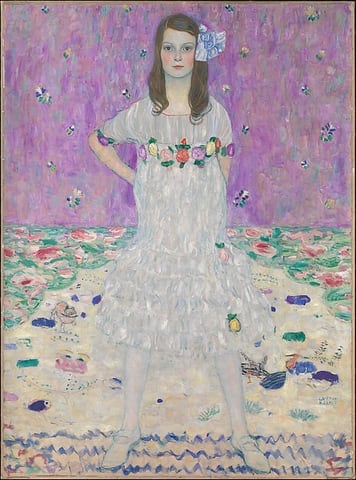
Mäda Primavesi (1903–2000), by Gustav Klimt, 1912–13
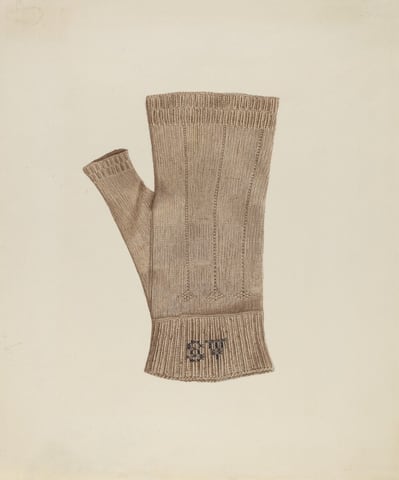
The image shows a beige knitted fingerless glove on a light-colored background. The glove is flat and displayed vertically, with the thumb-piece extending to the left. There is a subtle dark pattern or lettering at the base of the glove. The color palette is warm with beige tones against the light background, emphasizing the texture and design of the glove.
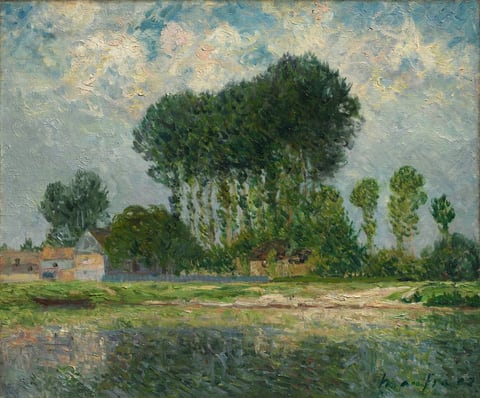
The River, by Maxime Maufra, 1902
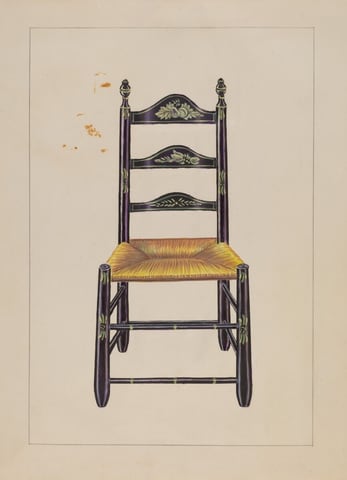
The image shows a wooden chair with a rush seat. It features ornate details on the backrest. The color palette includes dark wood tones, pale greenish detailing, and a warm yellowish hue for the seat. The chair is centrally positioned in the image, viewed from the front, with no other objects around it.

The works in this room are listed below.

Works in this room

Works made in the 20th century, anywhere in the world.

Section 1, north wall

  1. The image shows two large quilt blocks with a matching design, side by side. Each block consists of red and beige fabric with quilted stitching creating a textured appearance. The color palette includes primarily red, beige, and dark stitching outlining the patterns. The quilt blocks are placed centrally on a light-colored surface.
    Patchwork QuiltPaul Ward, c. 1936Courtesy National Gallery of Art, Washington
  2. Dark twilight scene of a a brightly illuminated white cottage along the shore of an expansive body of water, seen through a thick of silhouetted trees.
    Fisherman's CottageHarald Oscar Sohlberg, 1906Courtesy of the Art Institute of Chicago
  3. In the Cascade Mountains, by Edward Bruce, 1931
    In the Cascade MountainsEdward Bruce, 1931Courtesy of the Smithsonian American Art Museum

Section 1, south wall

  1. Mäda Primavesi (1903–2000), by Gustav Klimt, 1912–13
    Mäda Primavesi (1903–2000)Gustav Klimt, 1912–13Courtesy of The Metropolitan Museum of Art
  2. The image shows a beige knitted fingerless glove on a light-colored background. The glove is flat and displayed vertically, with the thumb-piece extending to the left. There is a subtle dark pattern or lettering at the base of the glove. The color palette is warm with beige tones against the light background, emphasizing the texture and design of the glove.
    Knitted GloveElizabeth Moutal, c. 1936Courtesy National Gallery of Art, Washington
  3. The River, by Maxime Maufra, 1902
    The RiverMaxime Maufra, 1902Courtesy of the Cleveland Museum of Art
  4. The image shows a wooden chair with a rush seat. It features ornate details on the backrest. The color palette includes dark wood tones, pale greenish detailing, and a warm yellowish hue for the seat. The chair is centrally positioned in the image, viewed from the front, with no other objects around it.
    Ladderback ChairGerald Bernhardt, c. 1936Courtesy National Gallery of Art, Washington

Section 2, south wall
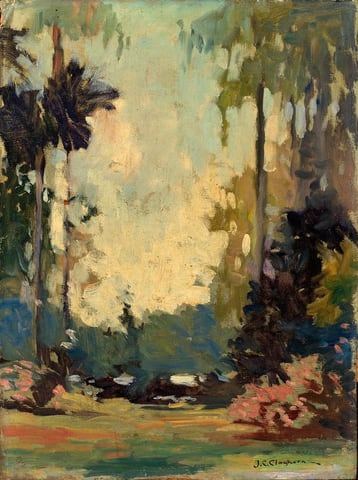
  1. A Florida Park, by Joseph C. Claghorn, before 1935
    A Florida ParkJoseph C. Claghorn, before 1935Courtesy of the Smithsonian American Art Museum
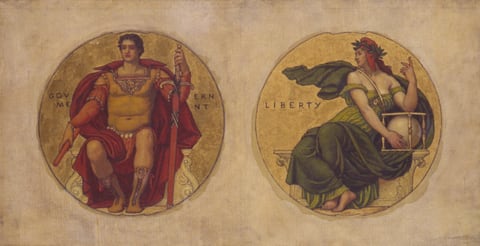
  2. Study for mosaic in the Wisconsin State Capital "Government and Liberty", by Kenyon Cox, ca. 1912
    Study for mosaic in the Wisconsin State Capital "Government and Liberty"Kenyon Cox, ca. 1912Courtesy of the Smithsonian American Art Museum
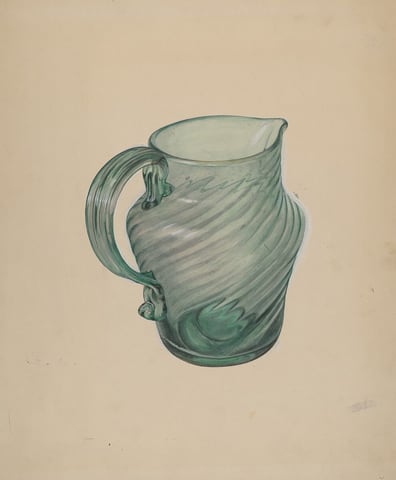
  3. The image shows a translucent pitcher in soft, pale green with swirling, striped patterns and a curved handle. It is placed in the center of the frame, with a neutral off-white background. The spout faces slightly to the left and the handle curves from the right side.
    Glass PitcherBeverly Chichester, c. 1937Courtesy National Gallery of Art, Washington
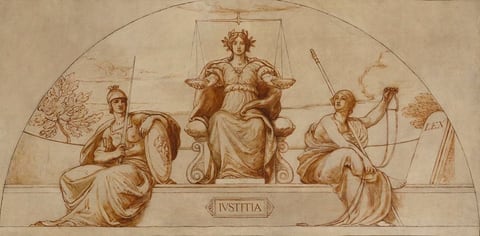
  4. Cartoon for mural of Minnesota State Capital, "Institute of Justice", by Kenyon Cox, ca. 1904
    Cartoon for mural of Minnesota State Capital, "Institute of Justice"Kenyon Cox, ca. 1904Courtesy of the Smithsonian American Art Museum

Section 2, north wall
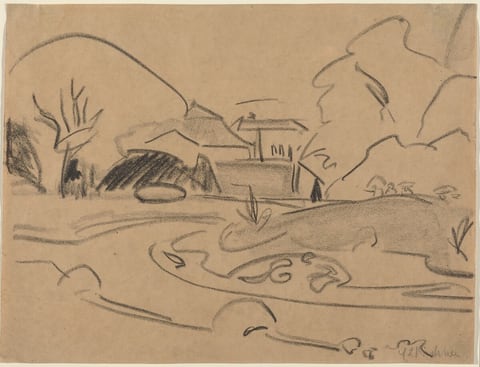
  1. The image shows a landscape drawing with buildings, trees, and a winding path or water feature. The drawing is done in black charcoal on brownish background paper, creating a monochromatic color palette.
    Footpaths and Pavilion in the Dresden Grosser GartenErnst Ludwig Kirchner, c. 1909Courtesy National Gallery of Art, Washington
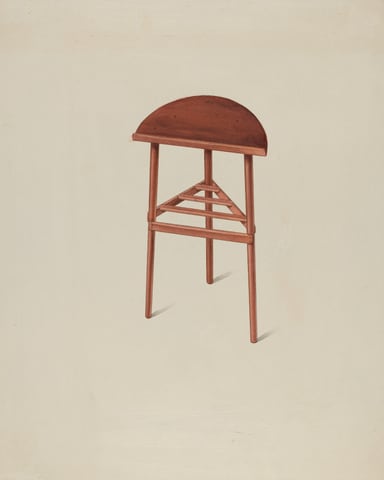
  2. The image shows a wooden stool with a semi-circular seat on a light beige background. The stool has four slim legs and a primarily brown color.
    Shaker Music RackAlfred H. Smith, c. 1936Courtesy National Gallery of Art, Washington
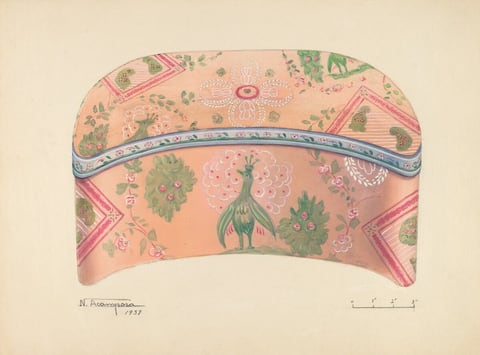
  3. The image shows a decorative curved object with intricate patterns. There is a large green peacock motif in the center, surrounded by floral and geometric patterns. The color palette includes soft pinks, greens, and blue accents outlining the curve of the object. The object is placed on a plain light background.
    BandboxNicholas Acampora, 1937Courtesy National Gallery of Art, Washington

Section 3, north wall
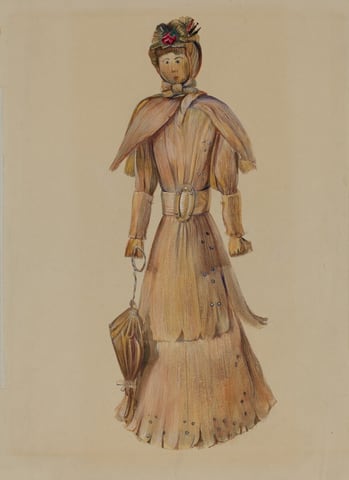
  1. The image shows a person standing upright. They have a round face with simple facial features, wearing a hat with a red flower and dark ribbon. Their outfit includes a belted dress or coat, pleated texture, a cape, and arm coverings. The person is holding a matching umbrella in their right hand. The background is plain and light tan.
    Corn Husk DollMina Lowry, c. 1936Courtesy National Gallery of Art, Washington
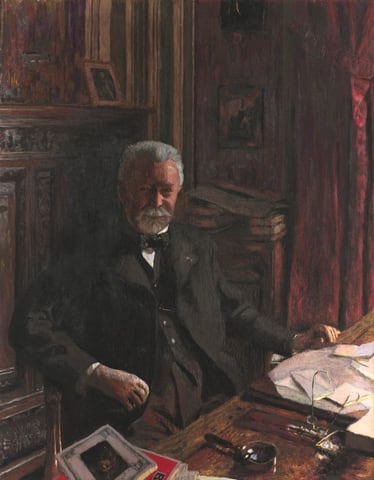
  2. André Bénac, by Édouard Vuillard, 1936
    André BénacÉdouard Vuillard, 1936Courtesy of the Cleveland Museum of Art