Floor plan

Time and placeThe 17th century

The 17th century

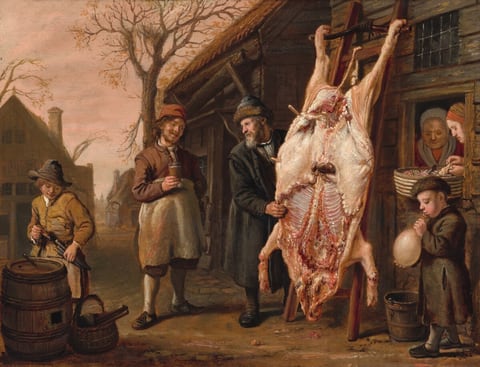
In the center of this painting, a large animal carcass is hanging upside down from a wooden frame, with several people attending to it. The carcass is light pink and has been cut open to reveal white ribs, red muscles, and purple organs. On the far left, a young boy stands next to a barrel and a basket, holding several small knives. To the right, a man in a red cap and white apron observes the carcass while holding a drink. An older man in a furred cap and dark clothing looks towards him and holds one edge of the carcass. On the other side of the animal, a young boy blows up a round object. Two women peer out from the doorway of a wooden building in the background, one holding a basket full of what looks like meat. Behind this group of people are several brown structures and a bare tree against a light pink sky.
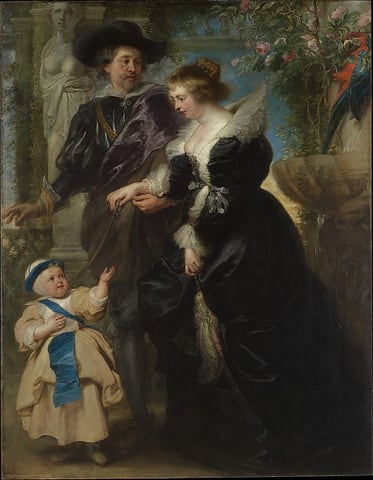
Rubens, Helena Fourment (1614–1673), and Their Son Frans (1633–1678), by Peter Paul Rubens, ca. 1635
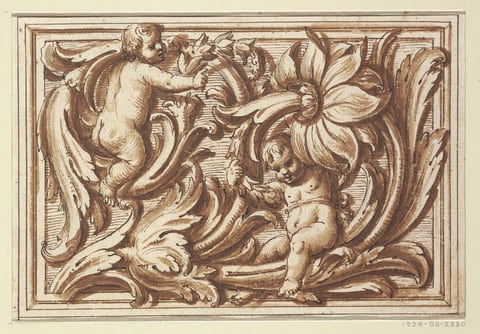
ONE OF A SET OF PROJECTS FOR A TITLE PAGE AND THE DECORATION OF A HORIZONTAL PANEL
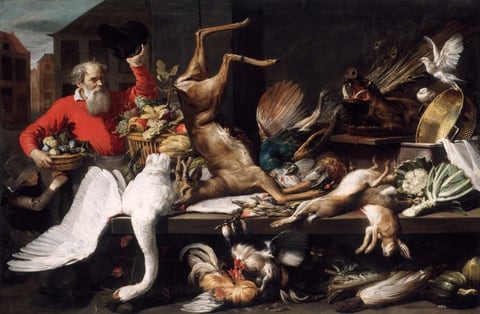
An older man at left in red raises his hat toward a central table chaotically overflowing with dead game, fruits, and vegetables. The wings of dead birds and limbs of animals are splayed out at dramatic angles; a deer at center is suspended by his back legs. Live birds and a cat animate the scene.
A work made of engraving on paper.
A work made of etching on ivory laid paper.

The works in this room are listed below.

Works in this room

Works made in the 17th century, anywhere in the world.

Section 1, north wall

  1. In the center of this painting, a large animal carcass is hanging upside down from a wooden frame, with several people attending to it. The carcass is light pink and has been cut open to reveal white ribs, red muscles, and purple organs. On the far left, a young boy stands next to a barrel and a basket, holding several small knives. To the right, a man in a red cap and white apron observes the carcass while holding a drink. An older man in a furred cap and dark clothing looks towards him and holds one edge of the carcass. On the other side of the animal, a young boy blows up a round object. Two women peer out from the doorway of a wooden building in the background, one holding a basket full of what looks like meat. Behind this group of people are several brown structures and a bare tree against a light pink sky.
    The Slaughtered HogJan Victors, 1653Courtesy National Gallery of Art, Washington
  2. Rubens, Helena Fourment (1614–1673), and Their Son Frans (1633–1678), by Peter Paul Rubens, ca. 1635
    Rubens, Helena Fourment (1614–1673), and Their Son Frans (1633–1678)Peter Paul Rubens, ca. 1635Courtesy of The Metropolitan Museum of Art
  3. ONE OF A SET OF PROJECTS FOR A TITLE PAGE AND THE DECORATION OF A HORIZONTAL PANEL
    One of a set of projects for a title page and the decoration of a horizontal panelFrancesco Bedeschini, Italian, 1675-1699Courtesy of Cooper Hewitt, Smithsonian Design Museum

Section 1, south wall

  1. An older man at left in red raises his hat toward a central table chaotically overflowing with dead game, fruits, and vegetables. The wings of dead birds and limbs of animals are splayed out at dramatic angles; a deer at center is suspended by his back legs. Live birds and a cat animate the scene.
    Still Life with Dead Game, Fruits, and Vegetables in a MarketFrans Snyders, 1614Courtesy of the Art Institute of Chicago
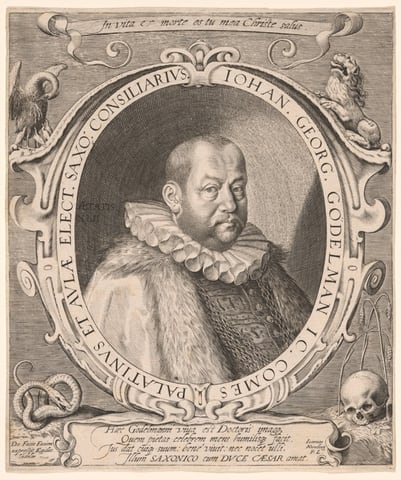
  2. A work made of engraving on paper.
    Johann Georg von Gödelmann, Law Professor, DiplomatAegidius Sadeler, II, c. 1601Courtesy of the Art Institute of Chicago
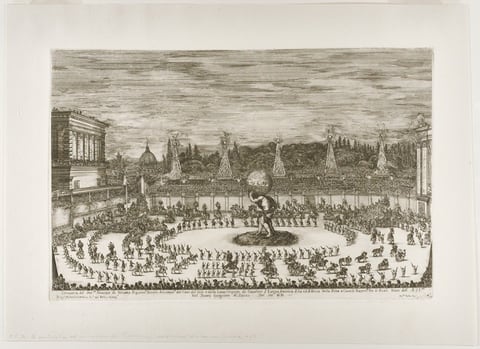
  3. A work made of etching on ivory laid paper.
    Equestrian Ballet in the Amphitheater of the Boboli GardensStefano della Bella, 1661Courtesy of the Art Institute of Chicago

Section 2, south wall
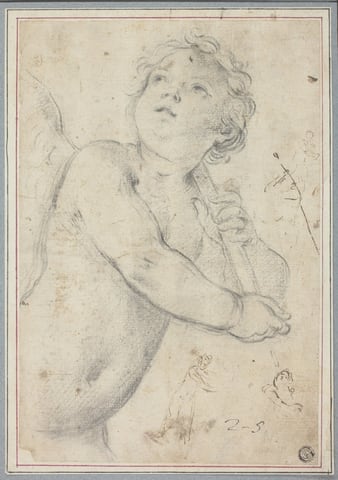
  1. A work made of black chalk with pen and brown ink on cream laid paper.
    Putto Holding StaffGuido Reni, n.d.Courtesy of the Art Institute of Chicago
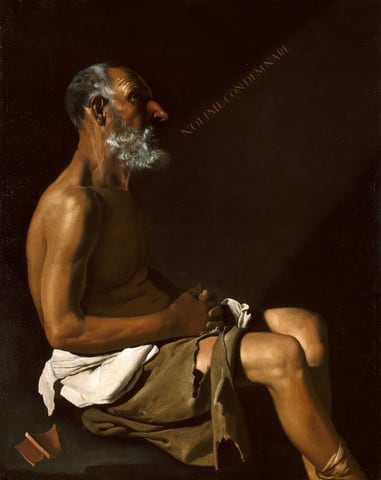
  2. A work made of oil on canvas.
    JobSpanish, c. 1618–c. 1630Courtesy of the Art Institute of Chicago
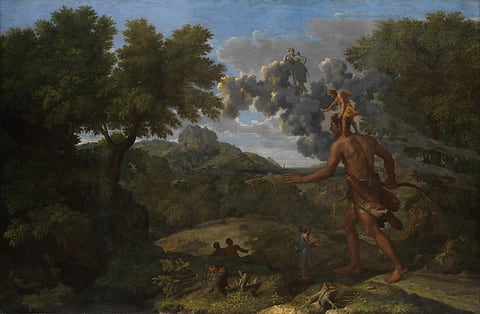
  3. Blind Orion Searching for the Rising Sun, by Nicolas Poussin, 1658
    Blind Orion Searching for the Rising SunNicolas Poussin, 1658Courtesy of The Metropolitan Museum of Art

Section 2, north wall
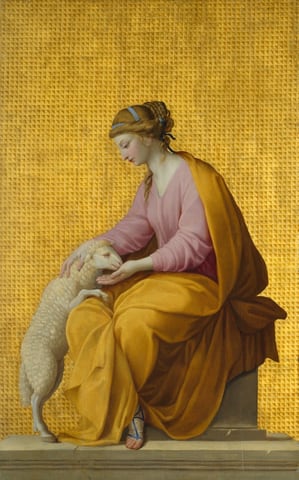
  1. A work made of oil on panel.
    MeeknessEustache Le Sueur, 1650Courtesy of the Art Institute of Chicago
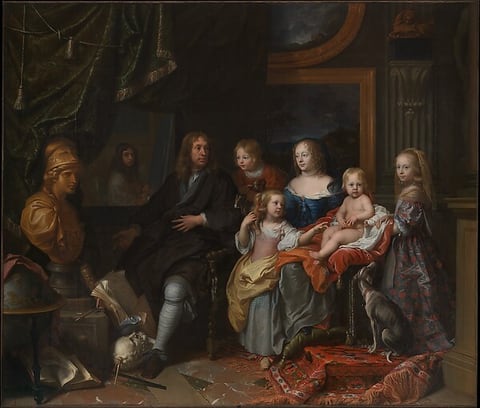
  2. The Jabach Family, by Charles Le Brun, ca. 1660
    The Jabach FamilyCharles Le Brun, ca. 1660Courtesy of The Metropolitan Museum of Art
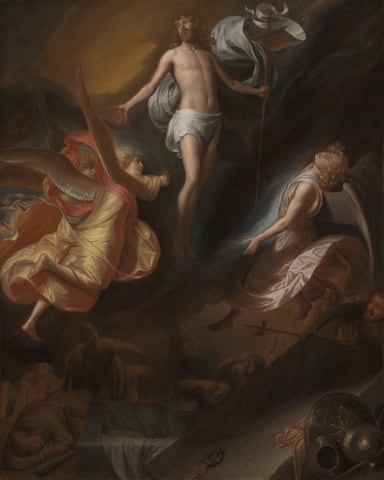
  3. A work made of oil on canvas.
    Resurrection of ChristSamuel van Hoogstraten, c. 1665Courtesy of the Art Institute of Chicago

Section 3, north wall
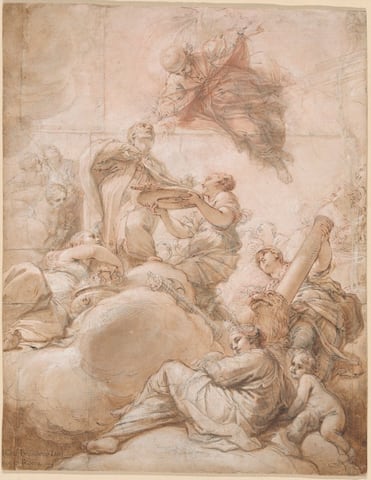
  1. A work made of pen and brown ink and brush and brown wash, over black and red chalk, heightened with white opaque watercolor, on joined sheets of laid paper, mounted to paperboard.
    Allegory of the Elevation of Cardinal Deacon Oddone Colonna to the Papal Chair as Pope Martin VBenedetto Luti, 1700Courtesy of the Art Institute of Chicago
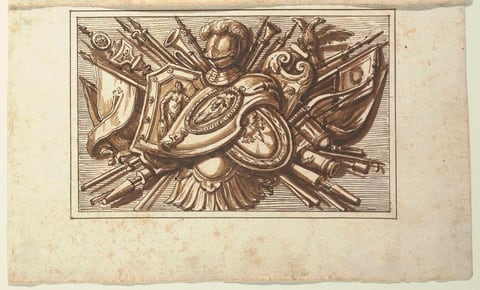
  2. ONE OF A SET OF TROPHIES OF WEAPONS OF WAR AS A DECORATION OF A HORIZONTAL PANEL
    One of a set of trophies of weapons of war as a decoration of a horizontal panelFrancesco Bedeschini, Italian, 1675-1699Courtesy of Cooper Hewitt, Smithsonian Design Museum

Section 3, south wall
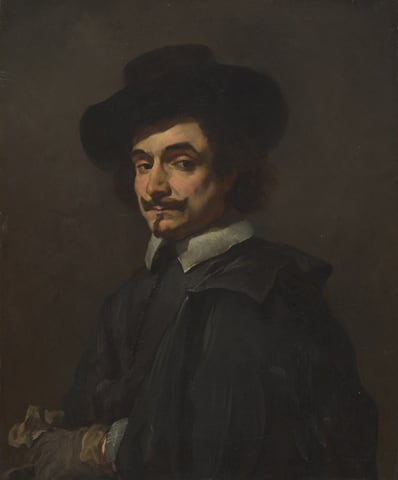
  1. A work made of oil on copper.
    Portrait of a ManJan Baptist Weenix, c. 1650Courtesy of the Art Institute of Chicago
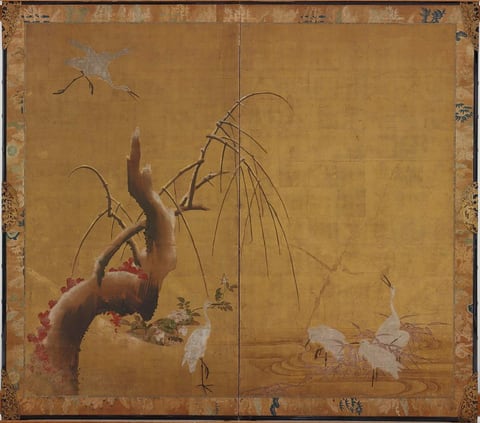
  2. Screen (two-panel)
    Herons and Old WIllowKano Sadanobu, 1615-1868Courtesy of the National Museum of Asian Art, Smithsonian Institution