17th-century Italy
Works in this room
Works made in Italy in the 17th century.
First room, north wall
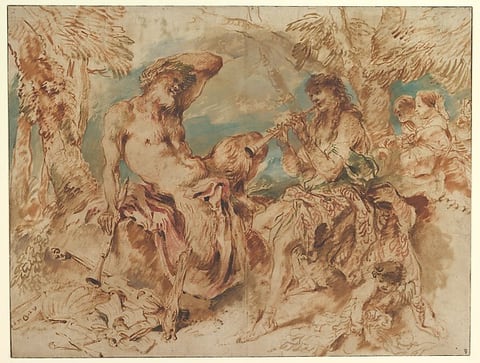
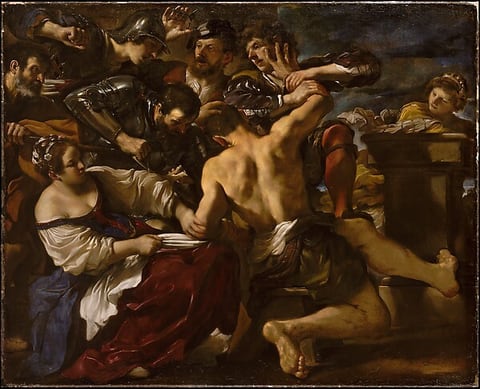
Youth Playing a Pipe for a SatyrGiovanni Benedetto Castiglione, 1645–50Courtesy of The Metropolitan Museum of Art Samson Captured by the PhilistinesGuercino (Giovanni Francesco Barbieri), 1619Courtesy of The Metropolitan Museum of Art
First room, south wall
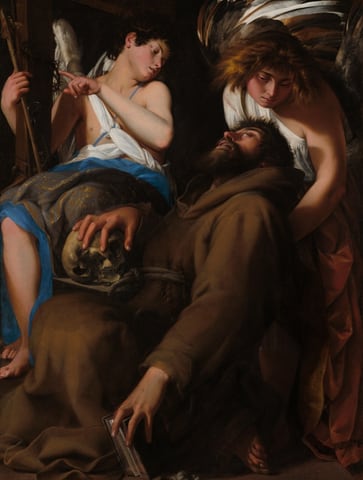
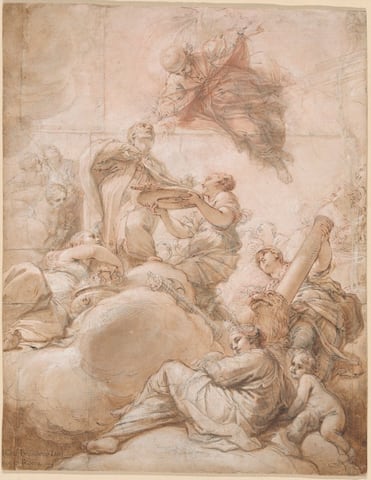
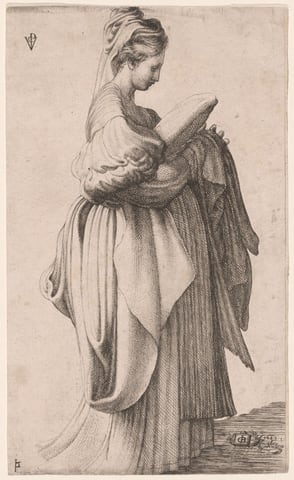
The Ecstasy of Saint FrancisGiovanni Baglione, 1601Courtesy of the Art Institute of Chicago Allegory of the Elevation of Cardinal Deacon Oddone Colonna to the Papal Chair as Pope Martin VBenedetto Luti, 1700Courtesy of the Art Institute of Chicago A Young Woman Holding a CushionMonogrammist VCP, 1643Courtesy of the Art Institute of Chicago
Second room, south wall
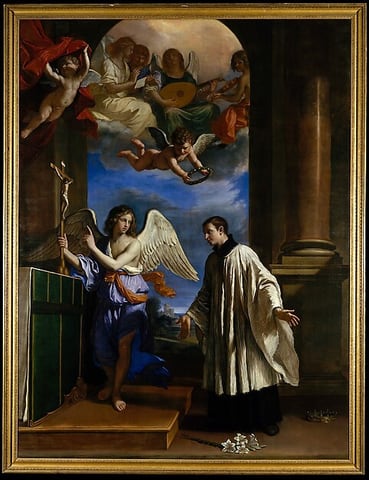
The Vocation of Saint Aloysius (Luigi) GonzagaGuercino (Giovanni Francesco Barbieri), ca. 1650Courtesy of The Metropolitan Museum of Art 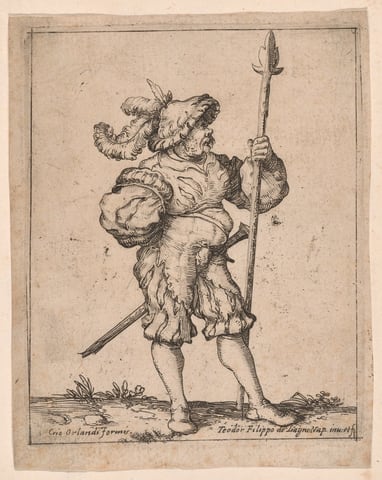
Soldier in Profile Holding a Pike, from Capricci e habiti militariFilippo Napoletano, 1610/29Courtesy of the Art Institute of Chicago
Second room, north wall
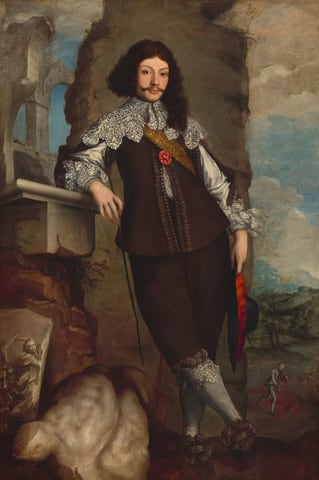
Lodovico WidmannTiberio Tinelli, probably 1637Courtesy National Gallery of Art, Washington 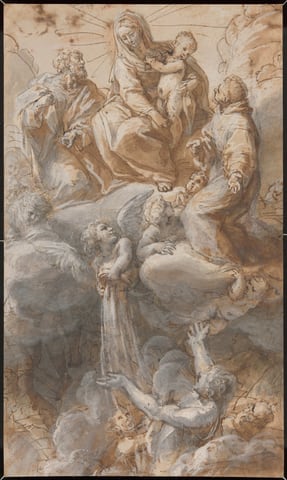
The Virgin and Saint Joseph with Saint Anthony of Padua Seated in the Heavens Interceding for the Souls in Purgatory, While an Angel Pours Fluid from a Vase onto the Crowd Below (recto and verso)Pietro Antonio di Pietri, 1690/1710Courtesy of the Art Institute of Chicago 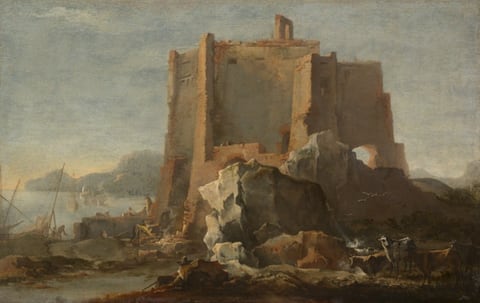
Landscape with Rock and FortressDomenico Gargiuli (Micco Spadaro), c. 1645Courtesy of the Art Institute of Chicago
Third room, north wall
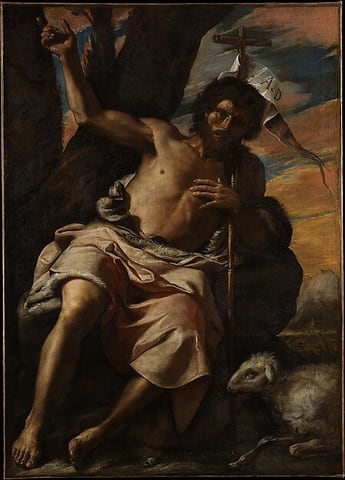
Saint John the Baptist PreachingMattia Preti (Il Cavalier Calabrese), ca. 1650Courtesy of The Metropolitan Museum of Art 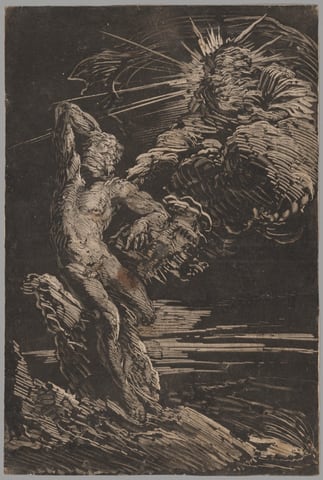
The Creation of AdamGiovanni Benedetto Castiglione, c. 1645/50Courtesy of the Art Institute of Chicago 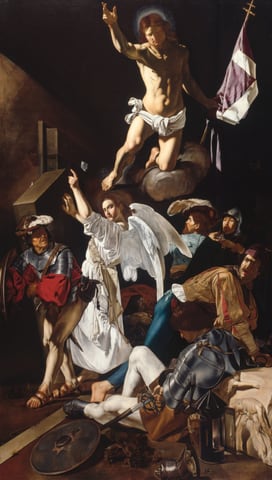
The ResurrectionCecco del Caravaggio, c. 1619-20Courtesy of the Art Institute of Chicago
Third room, south wall
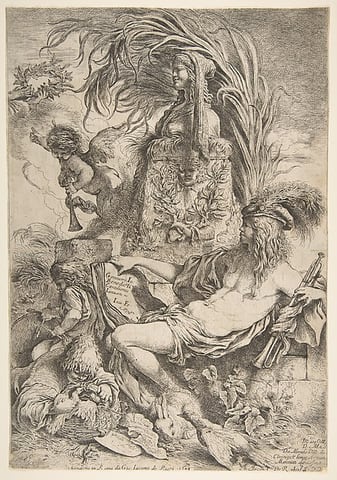
The Genius of CastiglioneGiovanni Benedetto Castiglione, ca. 1645–47 (published 1648)Courtesy of The Metropolitan Museum of Art 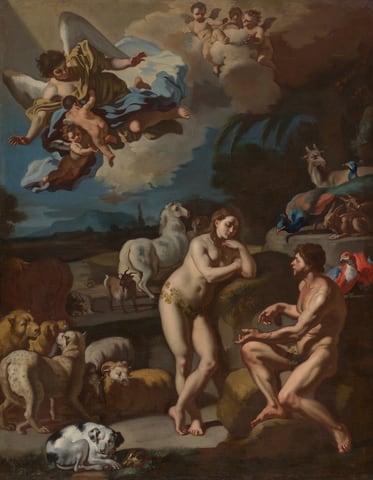
Adam and Eve in ParadiseFrancesco Solimena, c. 1700Courtesy of the Art Institute of Chicago 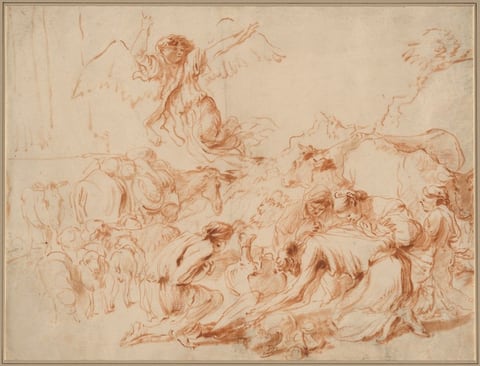
The Angel Departing from the Family of Tobit (?)Giovanni Benedetto Castiglione, c. 1655Courtesy of the Art Institute of Chicago