Floor plan

Time and place15th-century Italy

15th-century Italy

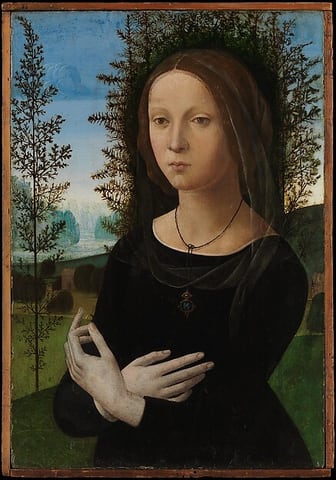
Portrait of a Young Woman, by Lorenzo di Credi (Lorenzo d'Andrea d'Oderigo), ca. 1490–1500
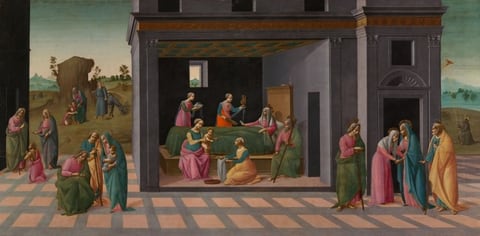
Outdoors, distinct groupings of adult men and women, some with halos, gather near a building. The front-facing wall of the building is not depicted, allowing for a view inside, where a woman sits in bed with two women nearby and two other women dress a baby. A bearded man sits near the bed.
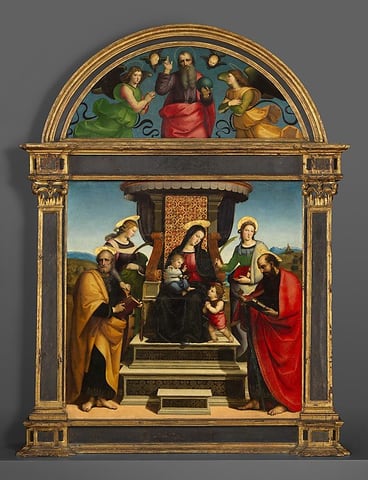
Madonna and Child Enthroned with Saints, by Raphael, ca. 1504
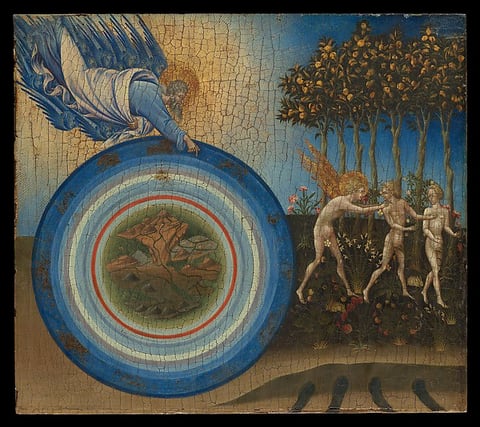
The Creation of the World and the Expulsion from Paradise, by Giovanni di Paolo, 1445
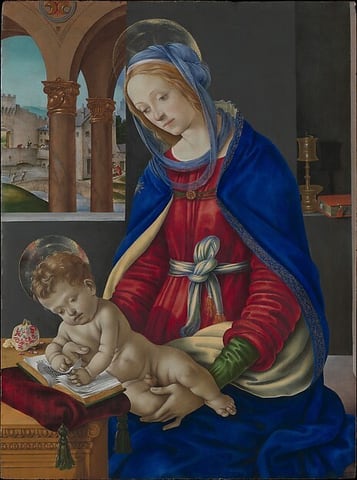
Madonna and Child, by Filippino Lippi, ca. 1483–84
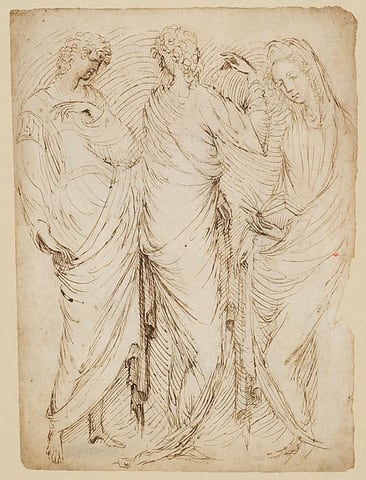
Three Standing Figures (recto); Seated Woman and a Male Hermit in Half-length (verso), by Stefano da Verona (Stefano di Giovanni d'Arbosio di Francia), 1435–38
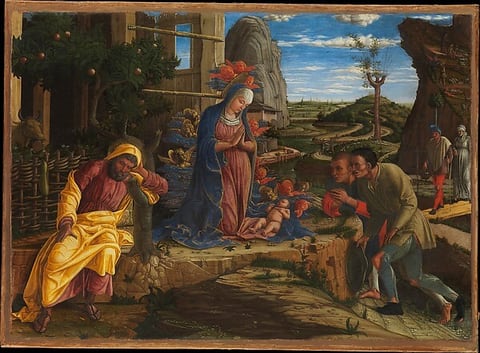
The Adoration of the Shepherds, by Andrea Mantegna, shortly after 1450

The works in this room are listed below.

Works in this room

Works made in Italy in the 15th century.

Section 1, north wall

  1. Portrait of a Young Woman, by Lorenzo di Credi (Lorenzo d'Andrea d'Oderigo), ca. 1490–1500
    Portrait of a Young WomanLorenzo di Credi (Lorenzo d'Andrea d'Oderigo), ca. 1490–1500Courtesy of The Metropolitan Museum of Art
  2. Outdoors, distinct groupings of adult men and women, some with halos, gather near a building. The front-facing wall of the building is not depicted, allowing for a view inside, where a woman sits in bed with two women nearby and two other women dress a baby. A bearded man sits near the bed.
    Scenes from the Life of Saint John the BaptistBartolomeo di Giovanni, 1490/95Courtesy of the Art Institute of Chicago
  3. Madonna and Child Enthroned with Saints, by Raphael, ca. 1504
    Madonna and Child Enthroned with SaintsRaphael, ca. 1504Courtesy of The Metropolitan Museum of Art

Section 1, south wall

  1. The Creation of the World and the Expulsion from Paradise, by Giovanni di Paolo, 1445
    The Creation of the World and the Expulsion from ParadiseGiovanni di Paolo, 1445Courtesy of The Metropolitan Museum of Art
  2. Madonna and Child, by Filippino Lippi, ca. 1483–84
    Madonna and ChildFilippino Lippi, ca. 1483–84Courtesy of The Metropolitan Museum of Art
  3. Three Standing Figures (recto); Seated Woman and a Male Hermit in Half-length (verso), by Stefano da Verona (Stefano di Giovanni d'Arbosio di Francia), 1435–38
    Three Standing Figures (recto); Seated Woman and a Male Hermit in Half-length (verso)Stefano da Verona (Stefano di Giovanni d'Arbosio di Francia), 1435–38Courtesy of The Metropolitan Museum of Art
  4. The Adoration of the Shepherds, by Andrea Mantegna, shortly after 1450
    The Adoration of the ShepherdsAndrea Mantegna, shortly after 1450Courtesy of The Metropolitan Museum of Art

Section 2, south wall
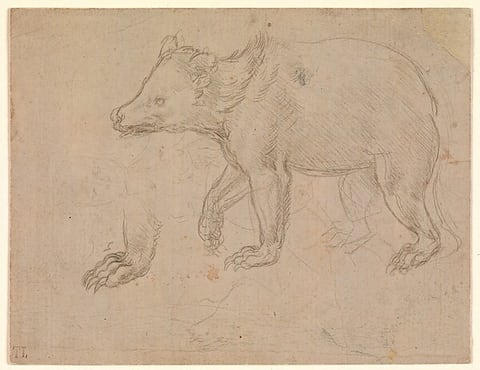
  1. A Bear Walking, by Leonardo da Vinci, ca. 1482–85
    A Bear WalkingLeonardo da Vinci, ca. 1482–85Courtesy of The Metropolitan Museum of Art
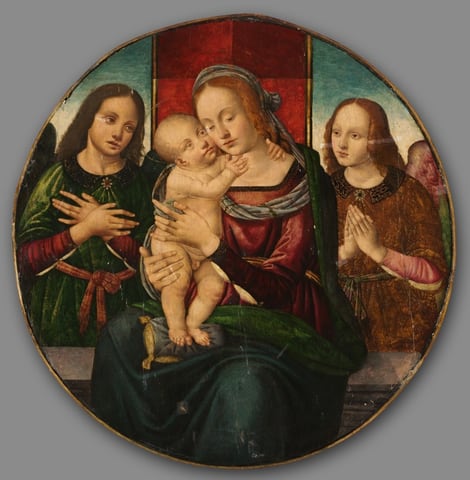
  2. Virgin and Child with Angels, by Master of the Holden Tondo, early 1500s
    Virgin and Child with AngelsMaster of the Holden Tondo, early 1500sCourtesy of the Cleveland Museum of Art
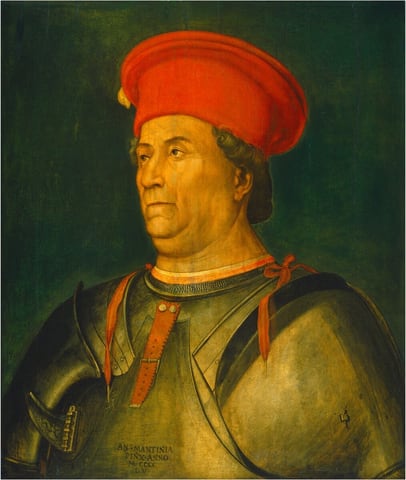
  3. This painting shows an upper-body portrait of a man in a three-quarter view, turned to the left. He has a prominent double chin, a slightly furrowed brow, thin lips, and a serious expression. He has pale yellow skin and short, dark hair, and he wears a large, red hat. He is clad in silver armor with red straps on his shoulder and chest. The background is a simple, dark green color.
    Francesco SforzaUnrecorded Italian maker, probably c. 1480/1500Courtesy National Gallery of Art, Washington
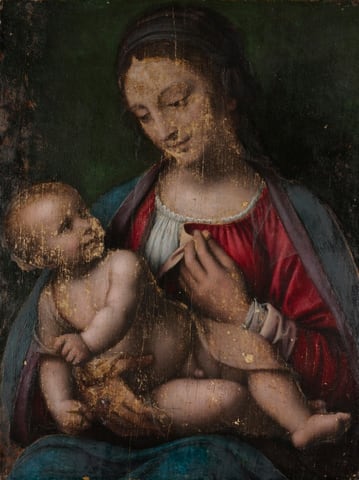
  4. Virgin and Child, by Bernardino Luini, 1500s
    Virgin and ChildBernardino Luini, 1500sCourtesy of the Cleveland Museum of Art

Section 2, north wall
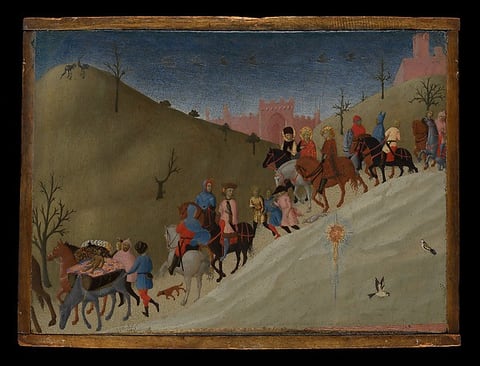
  1. The Journey of the Magi, by Sassetta, ca. 1433–35
    The Journey of the MagiSassetta, ca. 1433–35Courtesy of The Metropolitan Museum of Art
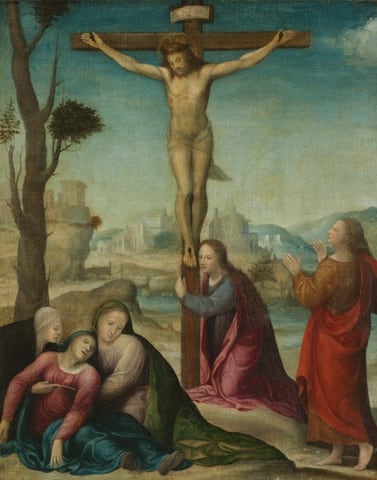
  2. The Crucifixion, by Sodoma, 1500s
    The CrucifixionSodoma, 1500sCourtesy of the Cleveland Museum of Art
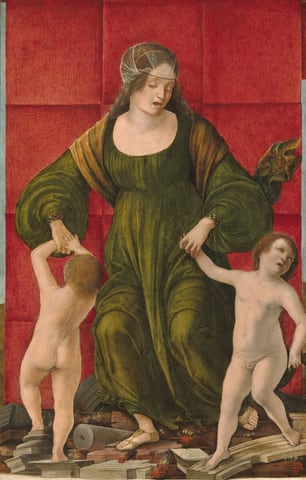
  3. A woman holds the hands of two nude children in front of a crimson-red cloth in this vertical painting. All three have pale skin and brown hair. The woman wears a forest-green dress with voluminous sleeves and a gauzy white headdress that wraps around her hair and is fastened with a band across her forehead. She stands crouching with one foot extended slightly forward in a sandal, surrounded by broken chunks of masonry and bits of burning logs. Her body faces us but she turns her head to the right. Her mouth is wide open, and her eyes cut back to our left. The woman clutches the children’s hands in both of her own. The child to our left turns away from us and reaches one hand up to touch the back of the woman’s hand. The child on the right twists away from the woman, eyes squinted up and to the right and mouth open. Behind them, fold lines create a grid across the red cloth. Slivers of grass and blue sky line each side of the composition.
    The Wife of Hasdrubal and Her ChildrenErcole de' Roberti, c. 1490/1493Courtesy National Gallery of Art, Washington

Section 3, north wall
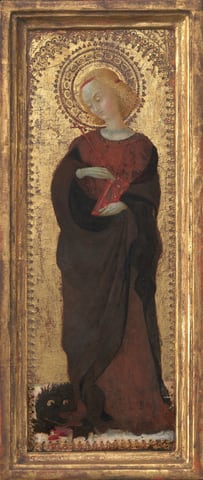
  1. This painting shows a person standing, their body turned to us, with their head looking downward to the left. The person has pale skin, round, rosy cheeks, and wavy yellow hair surrounded by a golden halo with intricate patterns. They are wearing a dark robe over a dark red dress or tunic and holding a long, thin red cross in one hand, while the other hand holds a closed red book. At their feet lies a black dog-like animal with wide yellow eyes. The scene is set against a golden textured background within a gilded border.
    Saint MargaretSassetta, c. 1435Courtesy National Gallery of Art, Washington
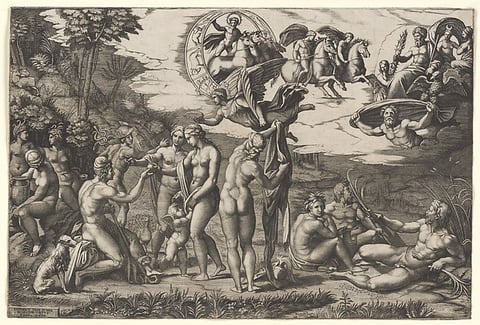
  2. The Judgment of Paris: he is sitting at left with Venus, Juno and Pallas Athena, a winged victory above. In the upper section the Sun in his chariot preceeded by Castor and Pollux on horseback, at lower right two river gods and a naiad above whom Jupiter, an eagle, Ganymede, Diana and another goddess, by Marcantonio Raimondi, ca. 1510–20
    The Judgment of Paris: he is sitting at left with Venus, Juno and Pallas Athena, a winged victory above. In the upper section the Sun in his chariot preceeded by Castor and Pollux on horseback, at lower right two river gods and a naiad above whom Jupiter, an eagle, Ganymede, Diana and another goddessMarcantonio Raimondi, ca. 1510–20Courtesy of The Metropolitan Museum of Art