Floor plan

Time and placeThe 14th century

The 14th century

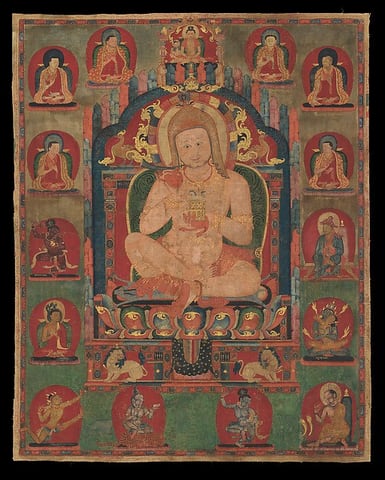
Mahasiddha Jnanatapa, ca. 1350
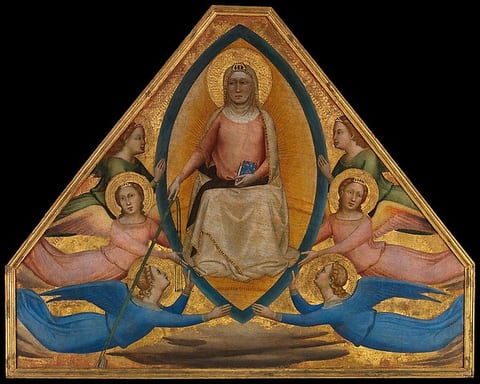
The Assumption of the Virgin, by Bernardo Daddi, 1337–38
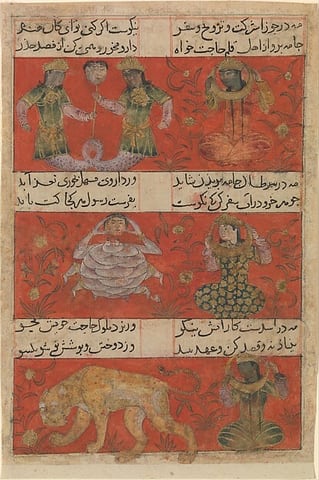
Folio from a Mu'nis al-ahrar fi daqa'iq al-ash'ar (The Free Man's Companion to the Subtleties of Poems) of Jajarmi, by Muhammad ibn Badr al-Din Jajarmi, dated 741 AH/1340–41 CE
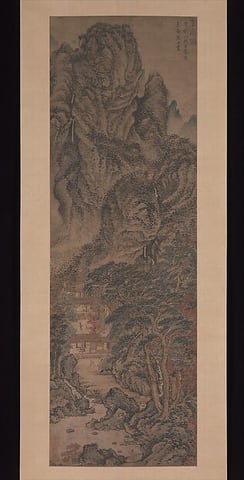
Simple Retreat, by Wang Meng, ca. 1370
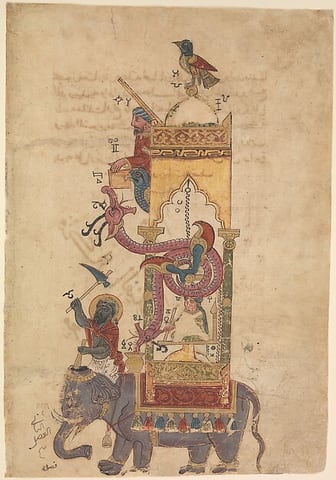
"The Elephant Clock", Folio from a Book of the Knowledge of Ingenious Mechanical Devices by al-Jazari, by Farrukh ibn `Abd al-Latif, dated 715 AH/1315 CE
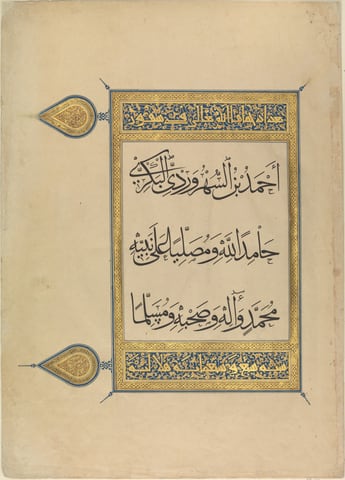
Folio from a Qur'an Manuscript, by Ahmad ibn al-Suhrawardi al-Bakri, dated 707 AH/1307–8 CE
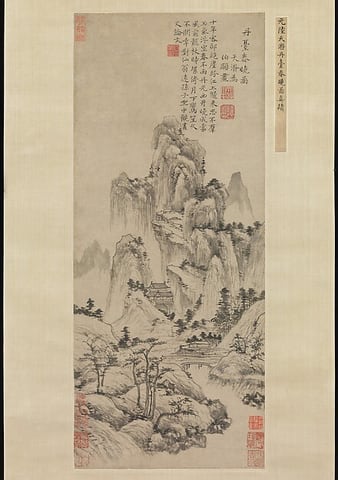
Spring Dawn over the Elixir Terrace, by Lu Guang, ca. 1369

The works in this room are listed below.

Works in this room

Works made in the 14th century, anywhere in the world.

First room, north wall

  1. Mahasiddha Jnanatapa, ca. 1350
    Mahasiddha JnanatapaUnrecorded Himalayan maker, ca. 1350Courtesy of The Metropolitan Museum of Art
  2. The Assumption of the Virgin, by Bernardo Daddi, 1337–38
    The Assumption of the VirginBernardo Daddi, 1337–38Courtesy of The Metropolitan Museum of Art
  3. Folio from a Mu'nis al-ahrar fi daqa'iq al-ash'ar (The Free Man's Companion to the Subtleties of Poems) of Jajarmi, by Muhammad ibn Badr al-Din Jajarmi, dated 741 AH/1340–41 CE
    Folio from a Mu'nis al-ahrar fi daqa'iq al-ash'ar (The Free Man's Companion to the Subtleties of Poems) of JajarmiMuhammad ibn Badr al-Din Jajarmi, dated 741 AH/1340–41 CECourtesy of The Metropolitan Museum of Art

First room, south wall

  1. Simple Retreat, by Wang Meng, ca. 1370
    Simple RetreatWang Meng, ca. 1370Courtesy of The Metropolitan Museum of Art
  2. "The Elephant Clock", Folio from a Book of the Knowledge of Ingenious Mechanical Devices by al-Jazari, by Farrukh ibn `Abd al-Latif, dated 715 AH/1315 CE
    "The Elephant Clock", Folio from a Book of the Knowledge of Ingenious Mechanical Devices by al-JazariFarrukh ibn `Abd al-Latif, dated 715 AH/1315 CECourtesy of The Metropolitan Museum of Art
  3. Folio from a Qur'an Manuscript, by Ahmad ibn al-Suhrawardi al-Bakri, dated 707 AH/1307–8 CE
    Folio from a Qur'an ManuscriptAhmad ibn al-Suhrawardi al-Bakri, dated 707 AH/1307–8 CECourtesy of The Metropolitan Museum of Art
  4. Spring Dawn over the Elixir Terrace, by Lu Guang, ca. 1369
    Spring Dawn over the Elixir TerraceLu Guang, ca. 1369Courtesy of The Metropolitan Museum of Art

Second room, south wall
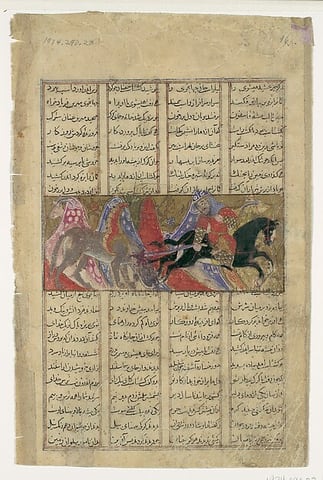
  1. "Gushtasp Slays the Rhino-Wolf", Folio from a Shahnama (Book of Kings), by Abu'l Qasim Firdausi, ca. 1330–40
    "Gushtasp Slays the Rhino-Wolf", Folio from a Shahnama (Book of Kings)Abu'l Qasim Firdausi, ca. 1330–40Courtesy of The Metropolitan Museum of Art
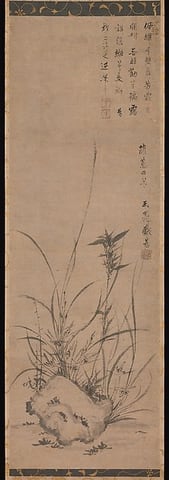
  2. Orchids and Rock, by Gyokuen Bonpō, late 14th–early 15th century
    Orchids and RockGyokuen Bonpō, late 14th–early 15th centuryCourtesy of The Metropolitan Museum of Art
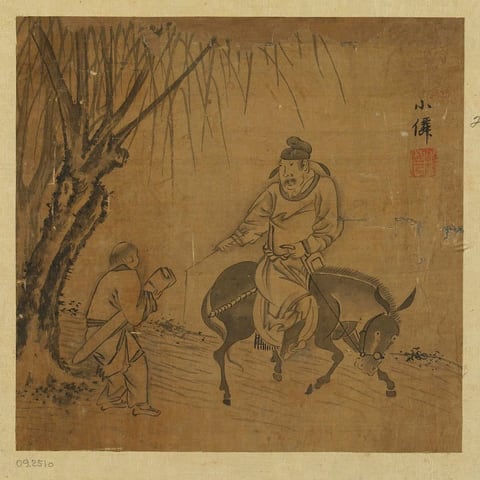
  3. Album leaf
    Mounted traveler and servant bearing a zitherWu Wei, 1368-1644Courtesy of the National Museum of Asian Art, Smithsonian Institution
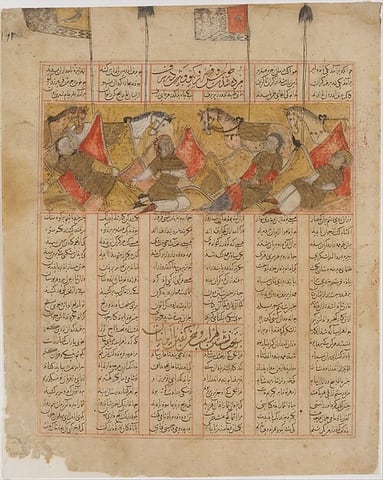
  4. "The Four Knights of Kai Khusrau in the Mountains", Folio from a Shahnama (Book of Kings), by Abu'l Qasim Firdausi, dated 741 AH/1341 CE
    "The Four Knights of Kai Khusrau in the Mountains", Folio from a Shahnama (Book of Kings)Abu'l Qasim Firdausi, dated 741 AH/1341 CECourtesy of The Metropolitan Museum of Art

Second room, north wall
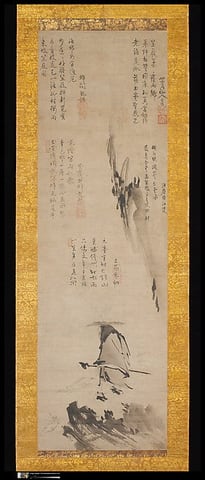
  1. Su Shi (Dongpo) in a Bamboo Hat and Clogs, by Zuigan Ryūsei, before 1460
    Su Shi (Dongpo) in a Bamboo Hat and ClogsZuigan Ryūsei, before 1460Courtesy of The Metropolitan Museum of Art
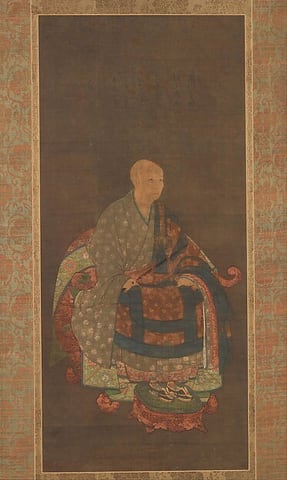
  2. Portrait of Shun'oku Myōha, ca. 1383
    Portrait of Shun'oku MyōhaUnrecorded Japanese maker, ca. 1383Courtesy of The Metropolitan Museum of Art
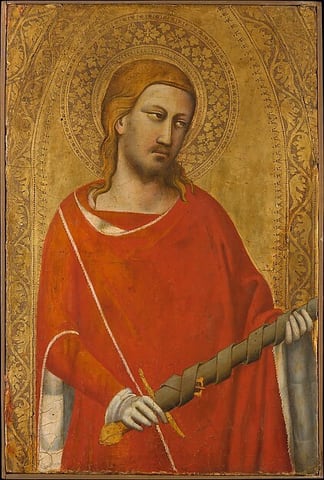
  3. Saint Julian, by Taddeo Gaddi, 1340s
    Saint JulianTaddeo Gaddi, 1340sCourtesy of The Metropolitan Museum of Art

Third room, north wall
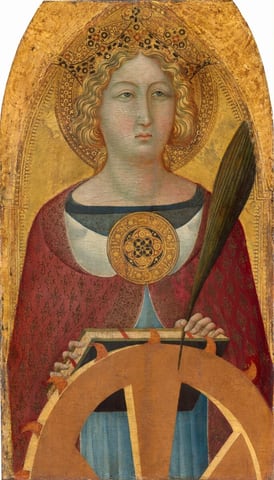
  1. Shown from the waist up, a woman wearing a garnet-red robe rests a book and a palm frond against a spiked wheel, all against a gold background in this arched, vertical painting. The woman’s light skin is tinged with pale green, and her cheeks are faint pink. Her shoulders face us, and she slightly looks up and off to our right with gray eyes under curved brows. She has a long, straight nose, and her small, full, bow-shaped lips are closed. Her wavy blond hair is parted down the middle and pulled back at the base of her head. Her red robe has a pattern of delicate diamond shapes and the underside is white, visible where it turns over around the neck. The robe is fastened with a round, gold disk the size of a DVD. Letters there read, “S.K.A.T.E.R.I.N.A.” around the perimeter of a four-lobed, red, blue, and gold geometric design at the center of the brooch. The sky-blue garment beneath her robe has a marine-blue collar. She clasps the palm frond in her left hand, to our right. The hand rests on the book, which is propped against the wheel in front of her, so the frond reaches beyond and above that shoulder, nearly to the edge of the painting. The wheel is edged with short, curving spikes like talons. The woman’s gold crown and round halo blend into the shimmering gold background, which is visibly cracked in some areas. The top of the panel curves up as if into an arch but is cut across the panel over her halo.
    Saint Catherine of AlexandriaBartolomeo Bulgarini, c. 1335/1340Courtesy National Gallery of Art, Washington
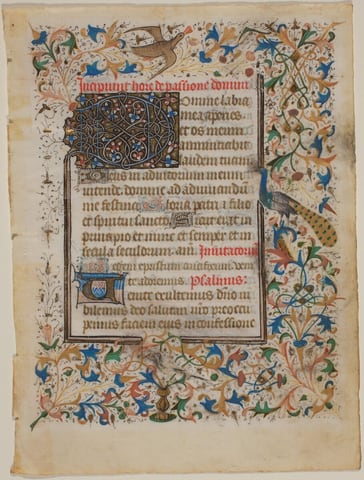
  2. This is a drawing of a decorated manuscript page. The image features an ornate design with illuminated letters and intricate floral borders. The text is in Latin, written in a Gothic script, with larger, stylized letters at the beginning of paragraphs. Floral motifs and vine patterns, painted in vibrant colors including gold, blue, and red, frame the text. Illustrations of a bird and a peacock are integrated into the decorative borders. A small heraldic shield appears just below the middle of the page, adding a heraldic element to the composition. The craftsmanship and artistry associated with illuminated manuscript traditions are showcased, inviting viewers to appreciate the detailed embellishments and the skillful blending of text and imagery.
    Manuscript Leaf from a Book of Hours (incip. Passionis)Unrecorded French maker, 1390Courtesy National Gallery of Art, Washington