Cities and Views
Works in this room
Streets, bridges, skylines and squares: the city as painters and engravers saw it, often before photography could. Views of Venice, Paris, New York and Edo sit together here, made for travellers, for civic pride and for the plain pleasure of looking at a place.
Section 1, north wall
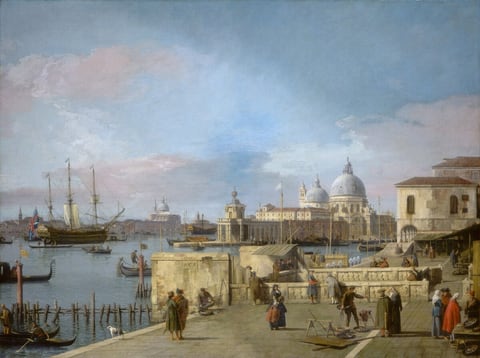
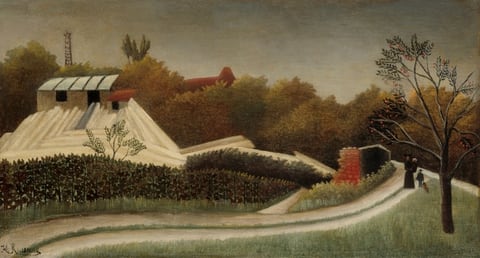
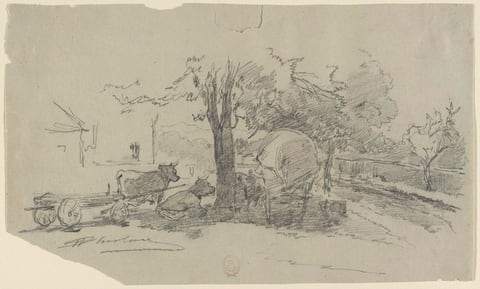
Entrance to the Grand Canal from the Molo, VeniceCanaletto, 1742/1744Courtesy National Gallery of Art, Washington Sawmill, Outskirts of ParisHenri Rousseau, c. 1893/95Courtesy of the Art Institute of Chicago A Village SquareWalter Shirlaw, 1875–80Courtesy of Cooper Hewitt, Smithsonian Design Museum
Section 1, south wall
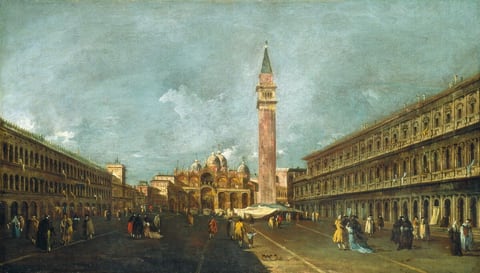
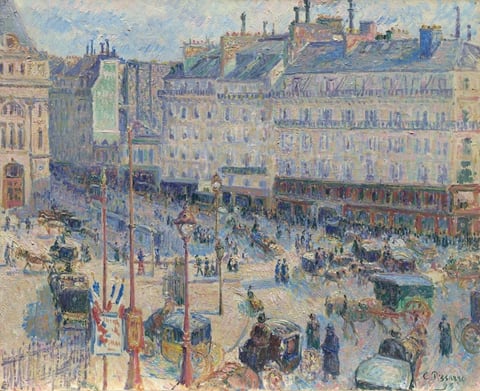
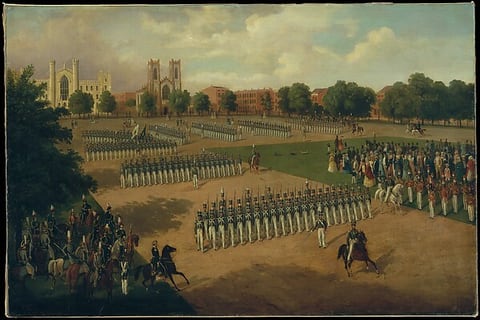
The Square of Saint Mark's, VeniceUnrecorded maker, c. 1770/1800Courtesy National Gallery of Art, Washington The Place du Havre, ParisCamille Pissarro, 1893Courtesy of the Art Institute of Chicago Seventh Regiment on Review, Washington Square, New YorkOtto Boetticher, 1851Courtesy of The Metropolitan Museum of Art
Section 2, south wall
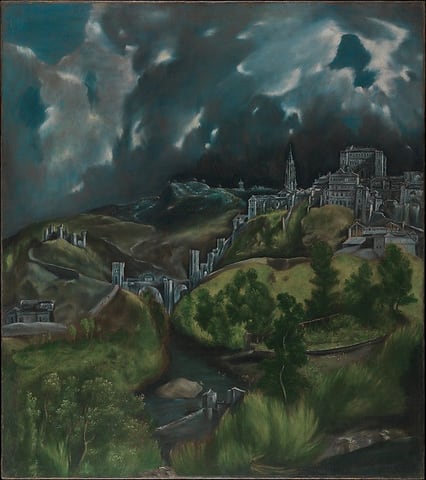
View of ToledoEl Greco, ca. 1599–1600Courtesy of The Metropolitan Museum of Art 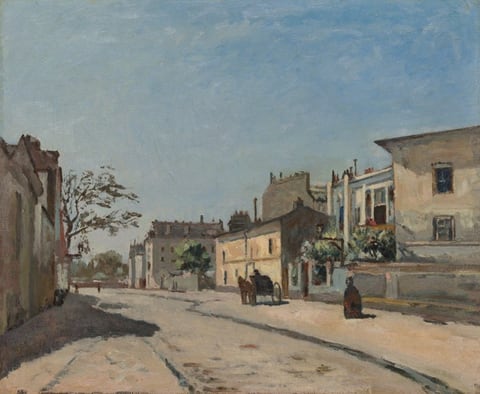
French Street SceneEdouard Béliard, 1873–77Courtesy of the Art Institute of Chicago 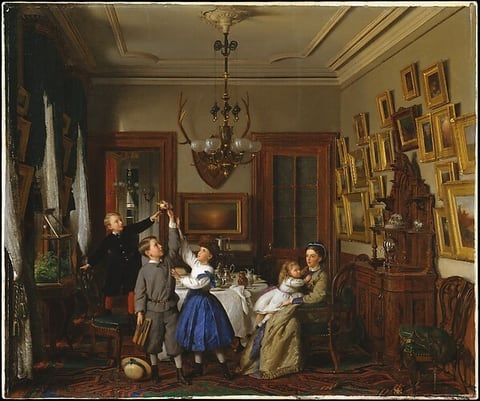
The Contest for the Bouquet: The Family of Robert Gordon in Their New York Dining-RoomSeymour Joseph Guy, 1866Courtesy of The Metropolitan Museum of Art 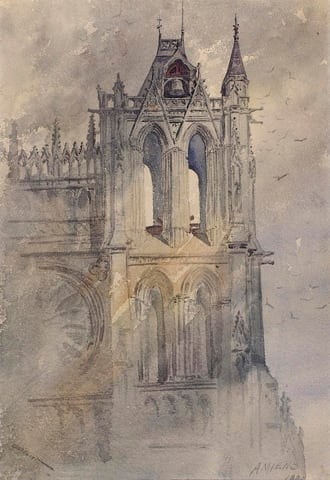
Southwest Tower, Amiens CathedralCass Gilbert, 1880Courtesy of the Smithsonian American Art Museum
Section 2, north wall
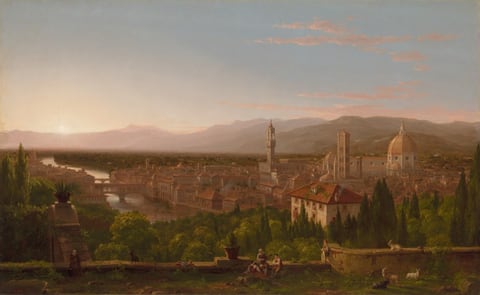
View of FlorenceThomas Cole, 1837Courtesy of the Cleveland Museum of Art 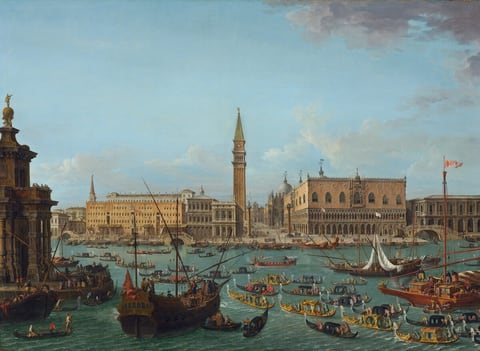
Procession of Gondolas in the Bacino di San Marco, VeniceAntonio Joli, 1742 or afterCourtesy National Gallery of Art, Washington
Section 3, north wall
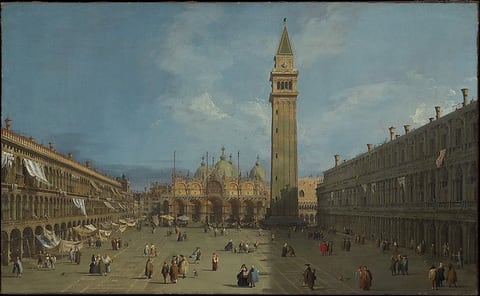
Piazza San MarcoCanaletto, late 1720sCourtesy of The Metropolitan Museum of Art 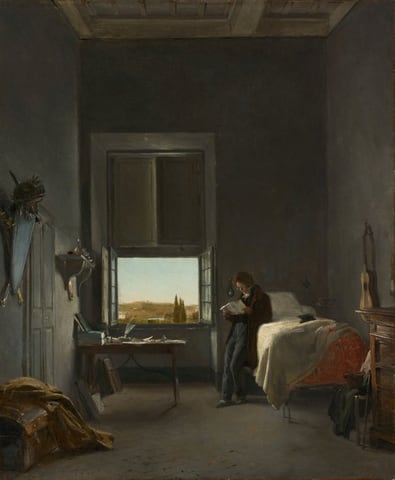
The Artist in His Room at the Villa Medici, RomeLéon Cogniet, 1817Courtesy of the Cleveland Museum of Art
Section 3, south wall
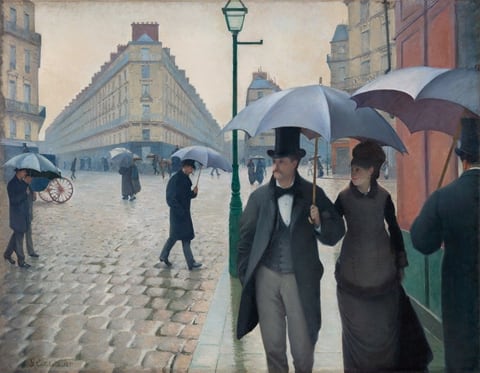
Paris Street; Rainy DayGustave Caillebotte, 1877Courtesy of the Art Institute of Chicago 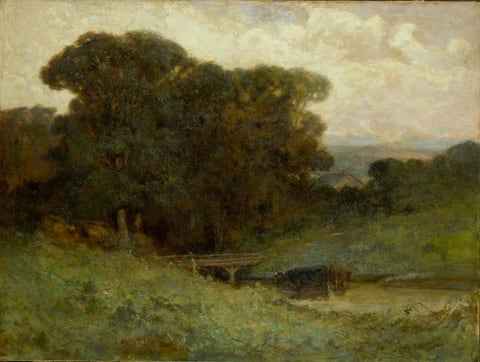
Untitled (forest scene with bridge, cows in stream in foreground)Edward Mitchell Bannister, 1897Courtesy of the Smithsonian American Art Museum