Floor plan

Artist galleriesPietro d' Asaro's contemporaries
Pietro d' Asaro's contemporaries
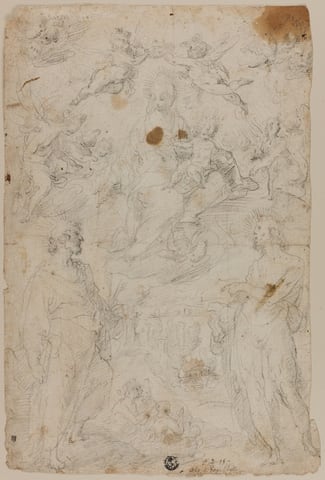
A work made of black chalk (recto), and black chalk and pen and black ink (verso), on ivory laid paper.
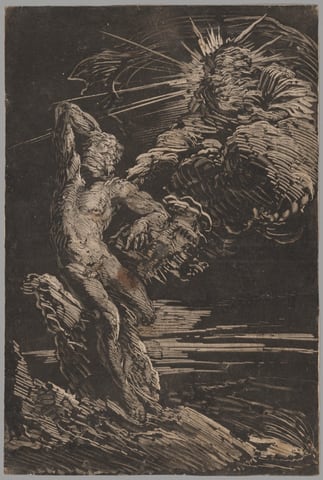
Drawing of god, radiating light, reaching down from clouds, touching male figure.
SACRIFICE OF NOAH
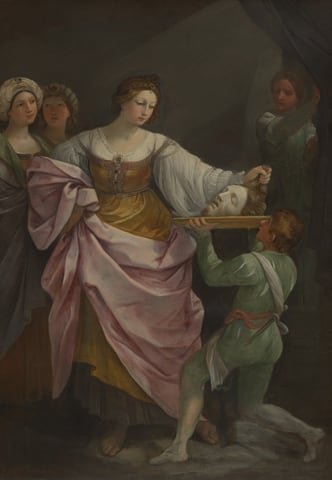
Large painting of woman, in gold and pink dress, placing severed head on platter.
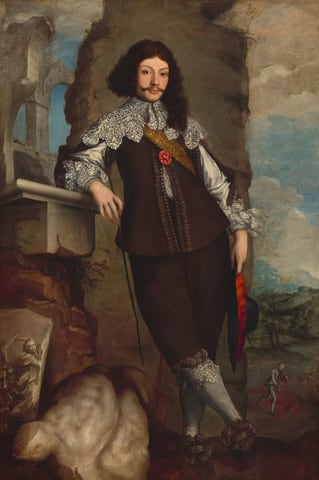
Lodovico Widmann, by Tiberio Tinelli, probably 1637

The works in this room are listed below.

Works in this room

A few works by Pietro d' Asaro, then their contemporaries: makers of the same nationality born within 25 years of them, then works from the same century and place.

With their contemporaries

  1. A work made of black chalk (recto), and black chalk and pen and black ink (verso), on ivory laid paper.
    Virgin and Child with Saints Peter and John the Baptist (recto); Saint John the Baptist (verso)Pietro d' Asaro, n.d.Courtesy of the Art Institute of Chicago
  2. Drawing of god, radiating light, reaching down from clouds, touching male figure.
    The Creation of AdamGiovanni Benedetto Castiglione, c. 1645/50Courtesy of the Art Institute of Chicago
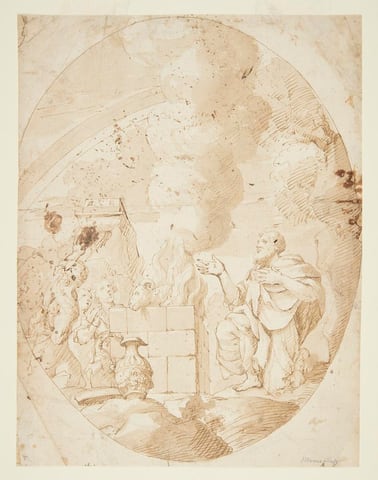
  3. SACRIFICE OF NOAH
    Sacrifice of NoahPietro Novelli, early 17th centuryCourtesy of Cooper Hewitt, Smithsonian Design Museum

Their contemporaries

  1. Large painting of woman, in gold and pink dress, placing severed head on platter.
    Salome with the Head of Saint John the BaptistGuido Reni, c. 1639–42Courtesy of the Art Institute of Chicago
  2. Lodovico Widmann, by Tiberio Tinelli, probably 1637
    Lodovico WidmannTiberio Tinelli, probably 1637Courtesy National Gallery of Art, Washington

Their contemporaries, second
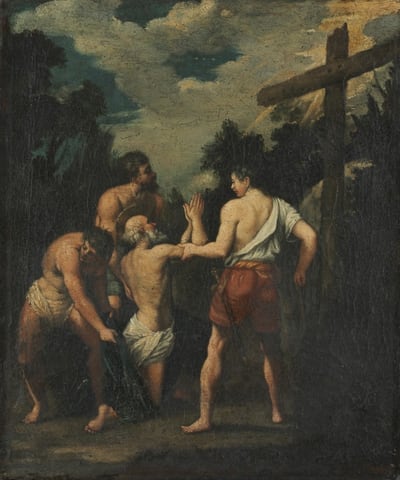
  1. Martyrdom of Saint Andrew, by Guido Reni, 1600s
    Martyrdom of Saint AndrewGuido Reni, 1600sCourtesy of the Cleveland Museum of Art
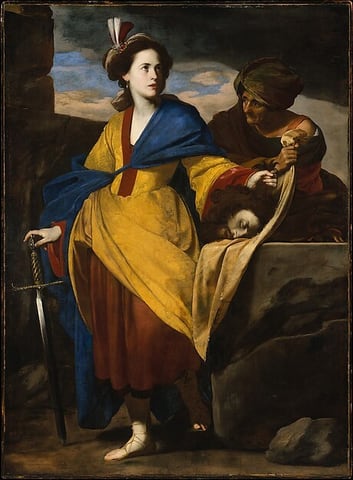
  2. Judith with the Head of Holofernes, by Massimo Stanzione, ca. 1640
    Judith with the Head of HolofernesMassimo Stanzione, ca. 1640Courtesy of The Metropolitan Museum of Art
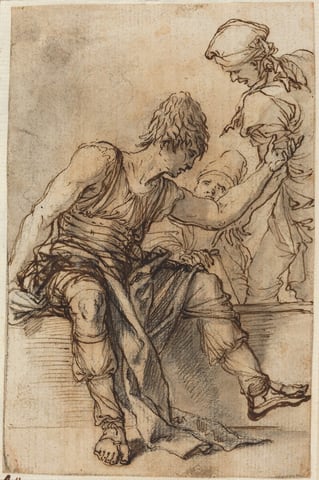
  3. The image shows a drawing of three figures. The central figure is seated, leaning slightly forward with one arm outstretched towards the standing figures. They have short, slightly messy hair, traditional clothing, and muscular limbs. The standing figures on the right are partially obscured but appear to interact with the seated figure. One of them is extending their arm towards the seated figure. The individuals wear layered clothing, with one wearing a head covering. The background is simple, emphasizing the interaction between the figures. The drawing style is classical or historical, using ink and wash for texture and depth.
    Youth Sitting on a Wall in Conversation with Two MenSalvator Rosa, c. 1656/1657Courtesy National Gallery of Art, Washington