Floor plan

Artist galleriesCornelis Schut, I's contemporaries
Cornelis Schut, I's contemporaries
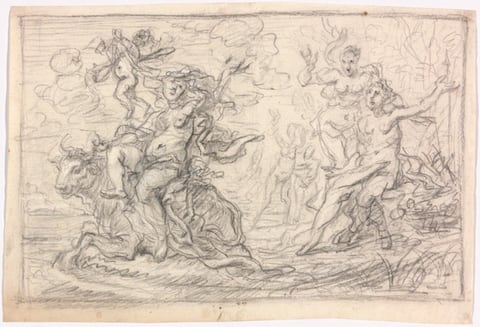
A work made of black chalk, with touches of white chalk, on ivory laid paper.
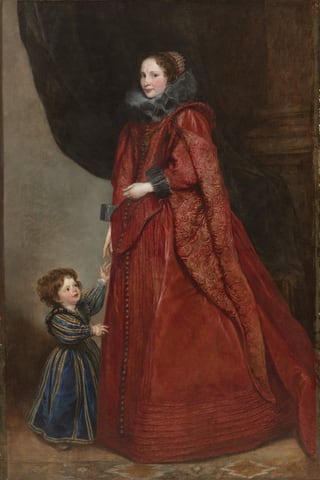
A Genoese Lady with Her Child, by Anthony van Dyck, c. 1623–25
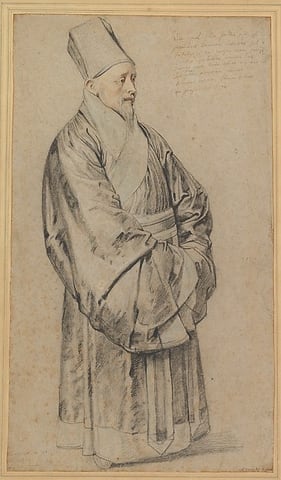
Portrait of Nicolas Trigault in Chinese Costume, by Peter Paul Rubens, 1617
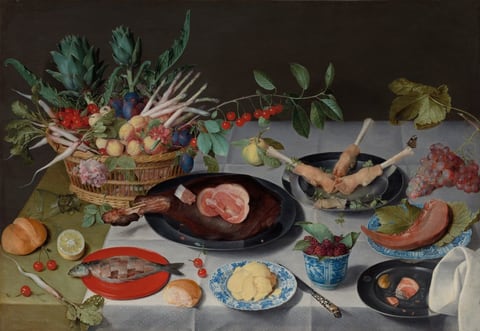
Still Life with Meat, Fish, Vegetables, and Fruit, by Jacob van Hulsdonck, c. 1615–20
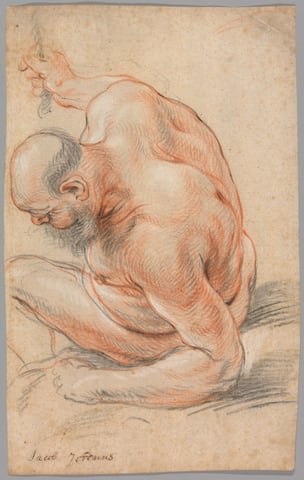
A work made of red and black chalk, with touches of white chalk, on cream laid paper.
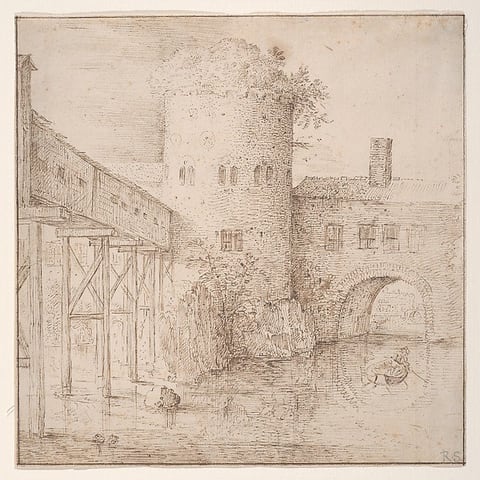
A Mill with a Fortified Bridge, a Rowing Boat in the Foreground, by Roelandt Savery, 1596–1639

The works in this room are listed below.

Works in this room

A few works by Cornelis Schut, I, then their contemporaries: makers of the same nationality born within 25 years of them, then works from the same century and place.

With their contemporaries

  1. A work made of black chalk, with touches of white chalk, on ivory laid paper.
    The Rape of EuropaCornelis Schut, I, 1635/40Courtesy of the Art Institute of Chicago
  2. A Genoese Lady with Her Child, by Anthony van Dyck, c. 1623–25
    A Genoese Lady with Her ChildAnthony van Dyck, c. 1623–25Courtesy of the Cleveland Museum of Art
  3. Portrait of Nicolas Trigault in Chinese Costume, by Peter Paul Rubens, 1617
    Portrait of Nicolas Trigault in Chinese CostumePeter Paul Rubens, 1617Courtesy of The Metropolitan Museum of Art

Their contemporaries

  1. Still Life with Meat, Fish, Vegetables, and Fruit, by Jacob van Hulsdonck, c. 1615–20
    Still Life with Meat, Fish, Vegetables, and FruitJacob van Hulsdonck, c. 1615–20Courtesy of the Cleveland Museum of Art
  2. A work made of red and black chalk, with touches of white chalk, on cream laid paper.
    Nude Old Man Seated, Leaning on His Forearm, Facing LeftJacob Jordaens, c. 1640Courtesy of the Art Institute of Chicago
  3. A Mill with a Fortified Bridge, a Rowing Boat in the Foreground, by Roelandt Savery, 1596–1639
    A Mill with a Fortified Bridge, a Rowing Boat in the ForegroundRoelandt Savery, 1596–1639Courtesy of The Metropolitan Museum of Art

Their contemporaries, second
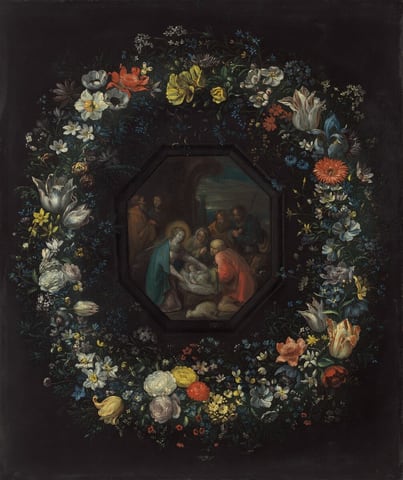
  1. A scene with seven men and women gathered around an infant is enclosed in an eight-sided, octagonal painted frame, which is surrounded by a wreath of flowers in this vertical painting. The painted black frame-within-a-frame resembles molding. The people in the scene have pale skin and wear robes in shades of teal blue, burnt orange, red, muted purple, or red. A woman reaching for the bed on which the child lies and the child have gold halos. Others crouch or bend toward the child, and one pair, to our left, turn toward each other, presumably talking. The nighttime-blue sky is streaked with nickel-gray clouds beyond a partially ruined stone arch. A lamb with all four feet tired together lies at the foot of the child’s bed. The wreath surrounding the painting-within-a-painting is dense with tulips, roses, daffodils, poppies, violets, and other flowers and greenery painted in shades of lemon and butter yellow, opal and pearl white, brick and coral red, and sky and slate blue against an inky-black background. One artist signed the painting-within-a-painting near the bottom left corner, “FF F.” The second artist who painted this signed his initials, “HDB”, on the bottom edge of the painted frame.
    Garland of Flowers with Adoration of the ShepherdsFrans Francken the Younger, c. 1625/1630Courtesy National Gallery of Art, Washington
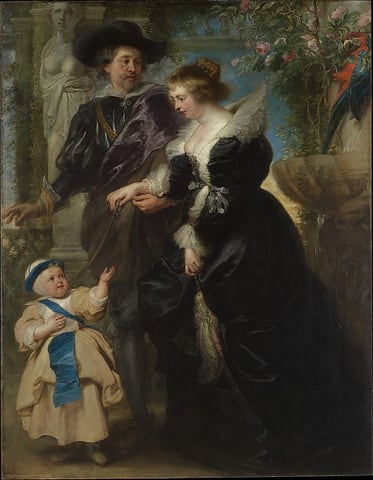
  2. Rubens, Helena Fourment (1614–1673), and Their Son Frans (1633–1678), by Peter Paul Rubens, ca. 1635
    Rubens, Helena Fourment (1614–1673), and Their Son Frans (1633–1678)Peter Paul Rubens, ca. 1635Courtesy of The Metropolitan Museum of Art