Floor plan

Artist galleriesAbraham Walkowitz's contemporaries
Abraham Walkowitz's contemporaries
Abraham Walkowitz
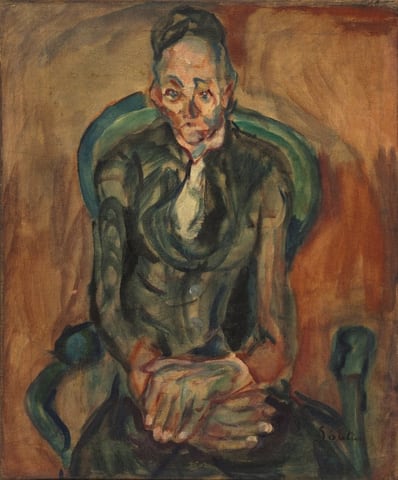
Old Woman, by Chaïm Soutine, c. 1923–24
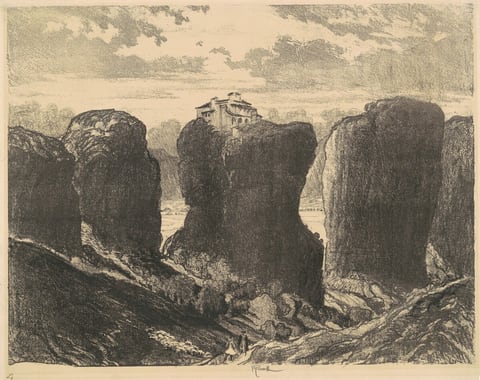
The image depicts a landscape with towering rock formations dominating the scene. The ground is rugged and textured, leading the eye towards the rock pillars in the center. A structure or building is perched atop one of these rocks. The background shows the horizon above the structure, with clouds and sky stretching out beyond. The artwork features detailed brushstrokes adding texture to the rocks. The color palette is monochromatic with varying shades of charcoal or ink, emphasizing the contrast between the rocks and the sky.
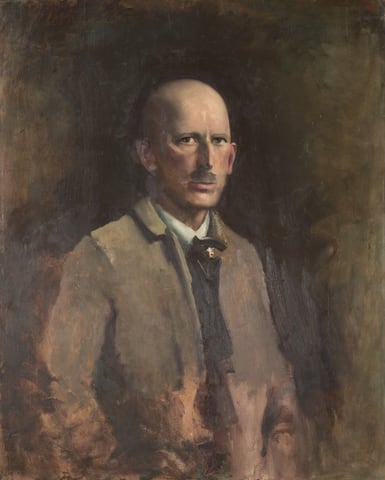
Self-Portrait, by Abbott Handerson Thayer, 1920
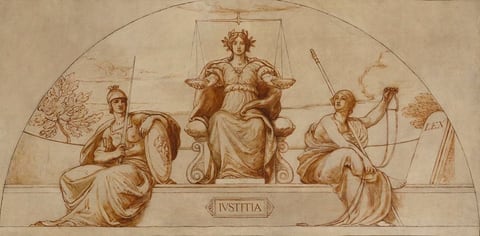
Cartoon for mural of Minnesota State Capital, "Institute of Justice", by Kenyon Cox, ca. 1904
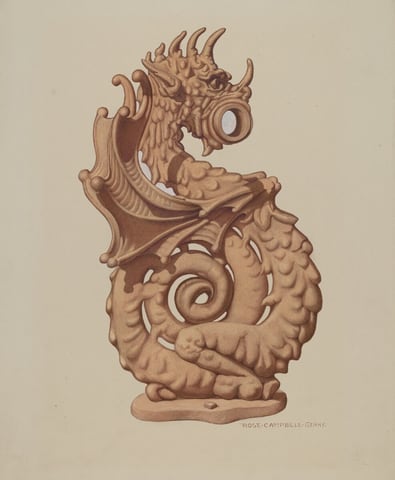
The sculpture depicts a mythical creature resembling a dragon. It has a long spiraled body and an intricate head with spiky protrusions. The sculpture is a warm brown color. The dragon has bat-like wings, an open mouth, detailed texture with scales, and is standing on a small base.

The works in this room are listed below.

Works in this room

A few works by Abraham Walkowitz, then their contemporaries: makers of the same nationality born within 25 years of them, then works from the same century and place.

With their contemporaries

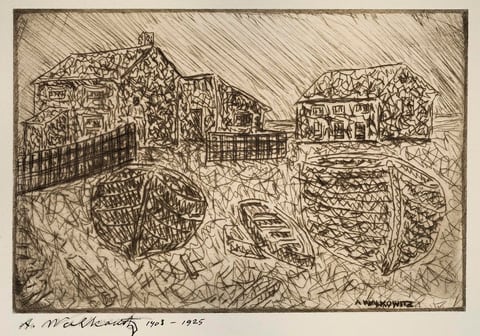
  1. Abraham Walkowitz
    Untitled (One Of Six Prints)Abraham Walkowitz, 1903-1925Courtesy of the Hirshhorn Museum and Sculpture Garden, Smithsonian Institution
  2. Old Woman, by Chaïm Soutine, c. 1923–24
    Old WomanChaïm Soutine, c. 1923–24Courtesy of the Cleveland Museum of Art
  3. The image depicts a landscape with towering rock formations dominating the scene. The ground is rugged and textured, leading the eye towards the rock pillars in the center. A structure or building is perched atop one of these rocks. The background shows the horizon above the structure, with clouds and sky stretching out beyond. The artwork features detailed brushstrokes adding texture to the rocks. The color palette is monochromatic with varying shades of charcoal or ink, emphasizing the contrast between the rocks and the sky.
    The Cliffs of the TrinityJoseph Pennell, 1913Courtesy National Gallery of Art, Washington
  4. Self-Portrait, by Abbott Handerson Thayer, 1920
    Self-PortraitAbbott Handerson Thayer, 1920Courtesy of the Cleveland Museum of Art

Their contemporaries

  1. Cartoon for mural of Minnesota State Capital, "Institute of Justice", by Kenyon Cox, ca. 1904
    Cartoon for mural of Minnesota State Capital, "Institute of Justice"Kenyon Cox, ca. 1904Courtesy of the Smithsonian American Art Museum
  2. The sculpture depicts a mythical creature resembling a dragon. It has a long spiraled body and an intricate head with spiky protrusions. The sculpture is a warm brown color. The dragon has bat-like wings, an open mouth, detailed texture with scales, and is standing on a small base.
    FenceRose Campbell-Gerke, c. 1941Courtesy National Gallery of Art, Washington

Their contemporaries, second
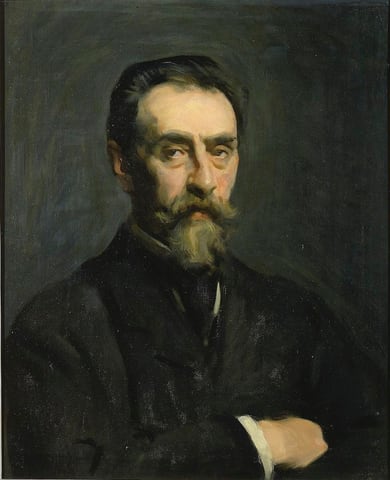
  1. Portrait of William E. Norton, by William Penhallow Henderson, 1901
    Portrait of William E. NortonWilliam Penhallow Henderson, 1901Courtesy of the Smithsonian American Art Museum
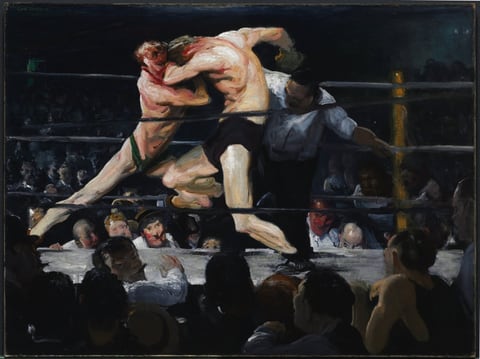
  2. Stag at Sharkey's, by George Bellows, 1909
    Stag at Sharkey'sGeorge Bellows, 1909Courtesy of the Cleveland Museum of Art