Ukiyo-e
Works in this room
Japanese woodblock prints of the floating world: actors, courtesans, landscapes and the sea.
Section 1, north wall
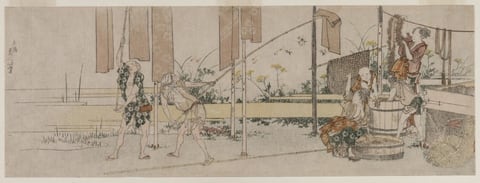
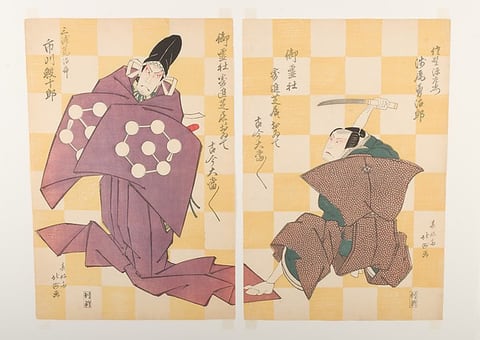
Dyers at WorkKatsushika Hokusai, c. 1800Courtesy of the Cleveland Museum of Art Kabuki Actors Asao Yūjirō as Sano Genzaemon and Ichikawa Ebijūrō I as Miura Arajirō, in the play Keisei Sano no FunabashiShunkōsai Hokushū, 1822Courtesy of The Metropolitan Museum of Art
Section 1, south wall
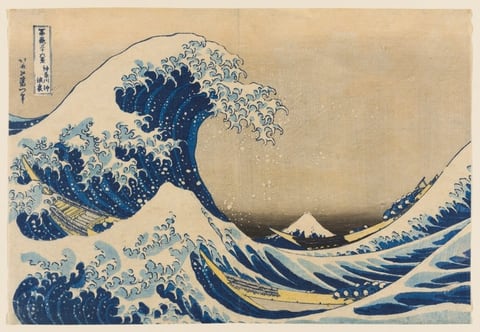
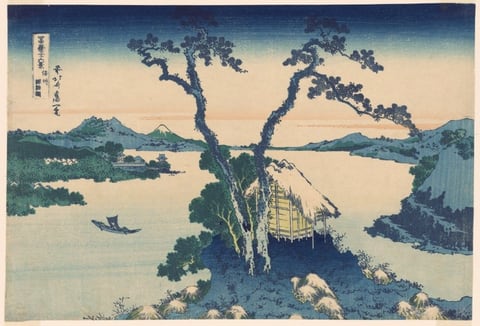
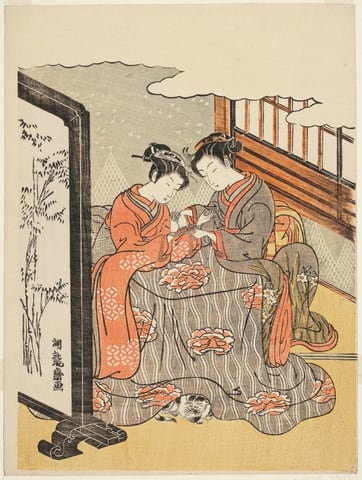
Under the Wave off Kanagawa (Kanagawa oki nami ura), also known as The Great Wave, from the series "Thirty-Six Views of Mount Fuji (Fugaku sanjurokkei)"Katsushika Hokusai, 1830/33Courtesy of the Art Institute of Chicago Lake Suwa in Shinano Province (Shinshu Suwako), from the series "Thirty-six Views of Mount Fuji (Fugaku sanjurokkei)"Katsushika Hokusai, c. 1830/33Courtesy of the Art Institute of Chicago Two Young Women Playing Cat's CradleIsoda Koryusai, c. 1769Courtesy of the Art Institute of Chicago
Section 2, south wall
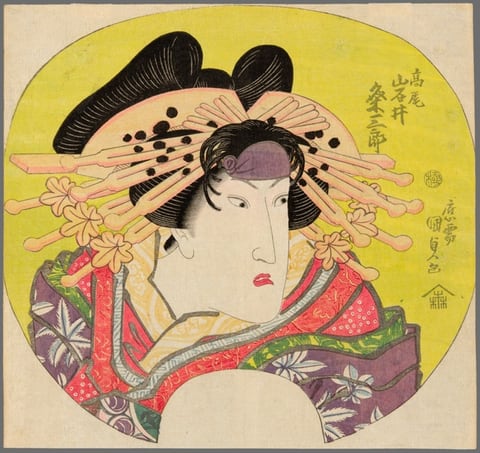
Iwai Kumesaburo II as the Courtesan Takao in Banzei Okuni KabukiUtagawa Kunisada, c. 1827Courtesy of the Art Institute of Chicago 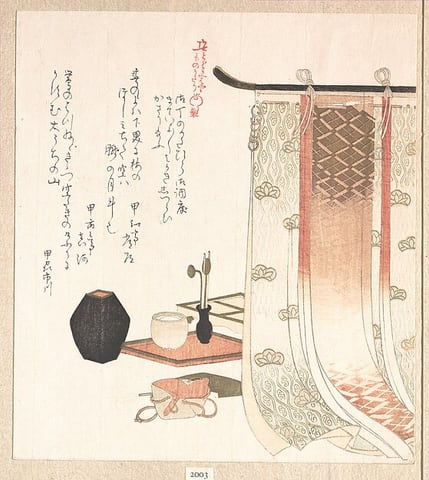
Screen and Utensils for the Incense CeremonyKubo Shunman, 19th centuryCourtesy of The Metropolitan Museum of Art 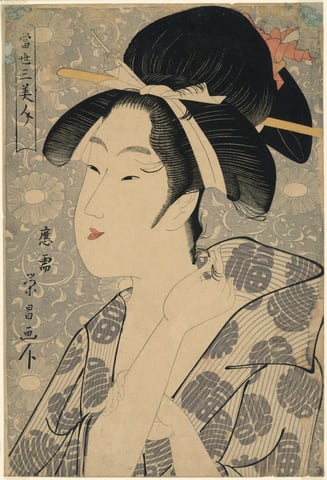
Three Beauties of Our Time (Tosei san bijin)Chokosai Eisho, n.d.Courtesy of the Art Institute of Chicago
Section 2, north wall
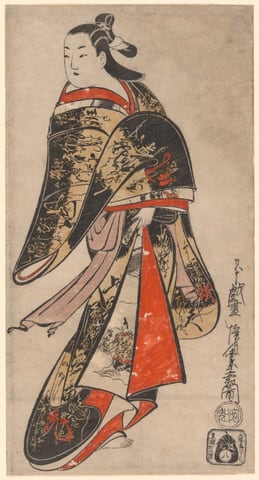
Courtesan WalkingKaigetsudo Anchi, c. 1714Courtesy of the Art Institute of Chicago 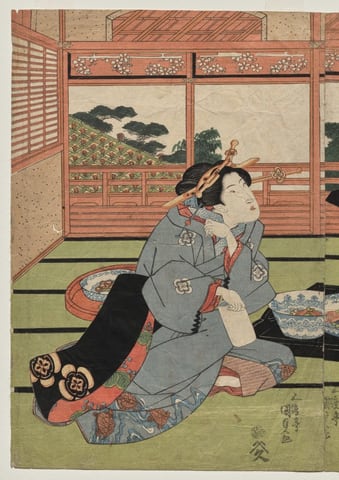
A View of the Large New Room at SakuraiUtagawa Kunisada, early or mid 1830sCourtesy of the Cleveland Museum of Art 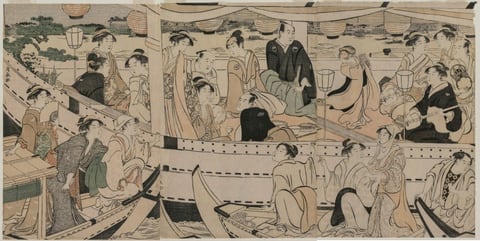
Boating Party on the Sumida RiverTorii Kiyonaga, 1789Courtesy of the Cleveland Museum of Art
Section 3, north wall
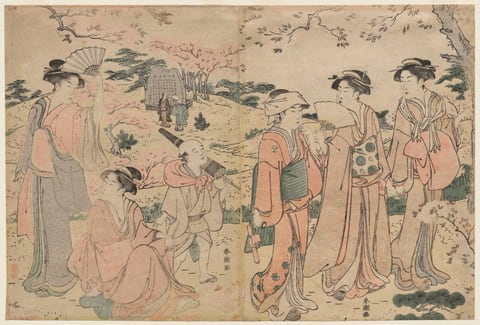
Women Viewing Cherry Blossoms at AsukayamaKatsukawa Shunchô, 1780sCourtesy of the Cleveland Museum of Art 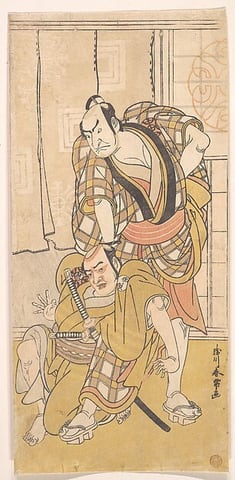
Scene from a PlayKatsukawa Shunjō, ca. 1780Courtesy of The Metropolitan Museum of Art 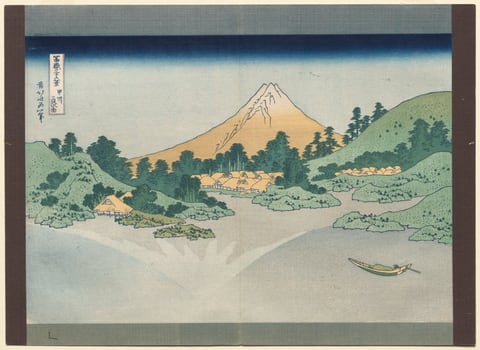
Thirty-Six Views of Mt. Fuji: The Surface of Lake Misaka in Kai ProvinceKatsushika Hokusai, early 1830sCourtesy of the Cleveland Museum of Art
Section 3, south wall
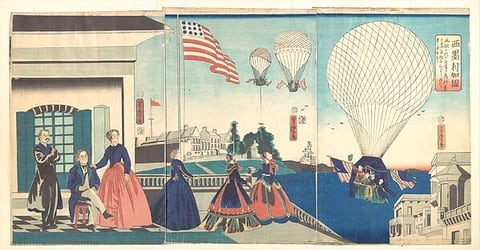
“America”: Enjoying Hot Air BalloonsUtagawa Yoshitora, 1867Courtesy of The Metropolitan Museum of Art 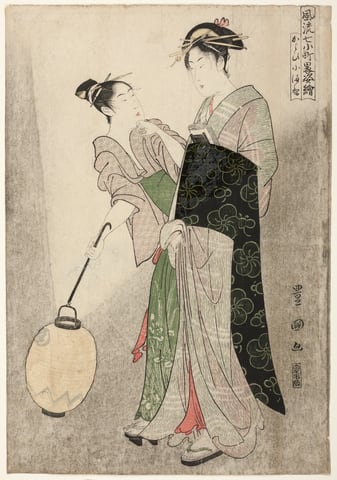
Courting Komachi (Kayoi Komachi), from the series Seven Fashionable Figures of Ono no Komachi (Furyu nana Komachi yatushi sugata-e)Utagawa Toyokuni, Edo period (1615–1868), about 1792Courtesy of the Art Institute of Chicago