Ukiyo-e
Works in this room
Japanese woodblock prints of the floating world: actors, courtesans, landscapes and the sea.
Section 1, north wall
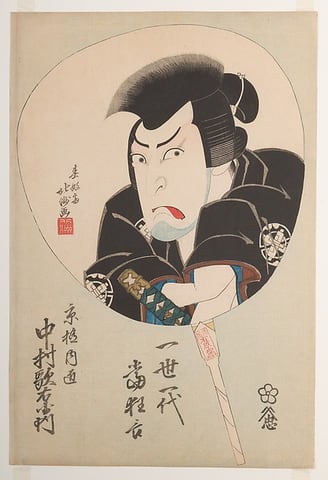
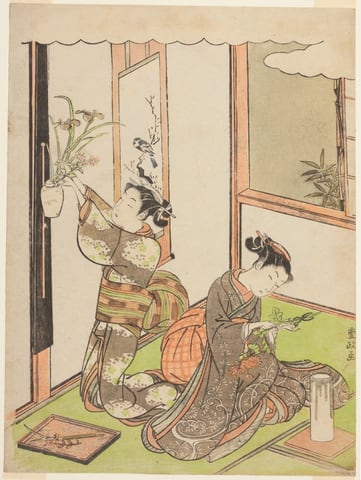
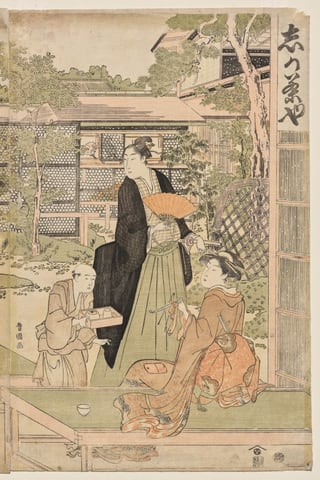
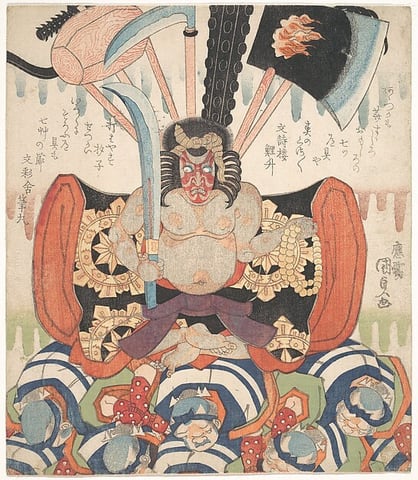
Kabuki Actor Nakamura Utaemon III as the Sword Master Kyōgoku Takumi, from the series Issei ichidai atari Kyōgen (Hits of a Lifetime of Kyōgen)Shunkōsai Hokushū, 1825Courtesy of The Metropolitan Museum of Art Flower ArrangingKitao Shigemasa, c. 1769Courtesy of the Art Institute of Chicago The Shika TeahouseUtagawa Toyokuni, early 1790sCourtesy of the Cleveland Museum of Art
Section 1, south wall
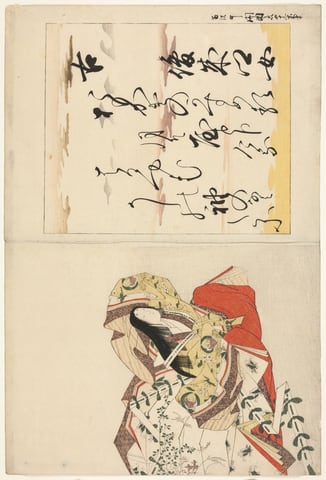
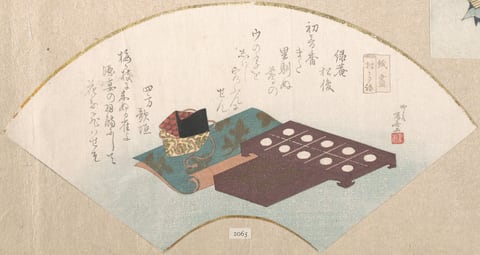
The Poetess Shunzei no Musume, from the series The Thirty-six Immortal Women Poets (Nishikizuri onna sanjurokkasen)Chôbunsai Eishi, Edo period (1615–1868), 1801Courtesy of the Art Institute of Chicago Danjūrō VII's Benkei as Fudō MyōōUtagawa Kunisada, ca. 1824Courtesy of The Metropolitan Museum of Art Outfit for the Game of IncenseRyūryūkyo Shinsai, 19th centuryCourtesy of The Metropolitan Museum of Art
Section 2, south wall
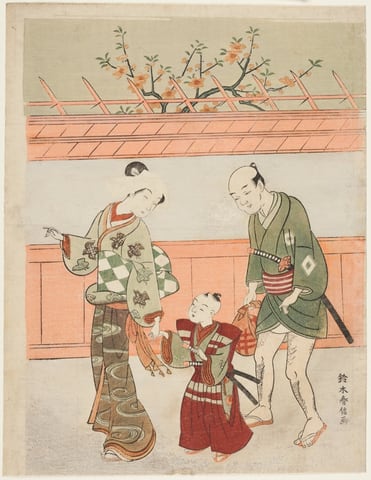
A Spring OutingSuzuki Harunobu, c. 1768Courtesy of the Art Institute of Chicago 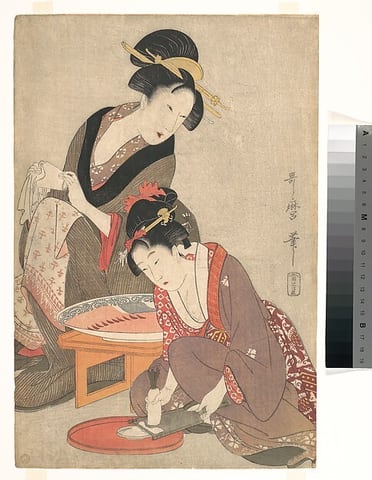
Women Grating Radish for SashimiKitagawa Utamaro, ca. 1798–99Courtesy of The Metropolitan Museum of Art 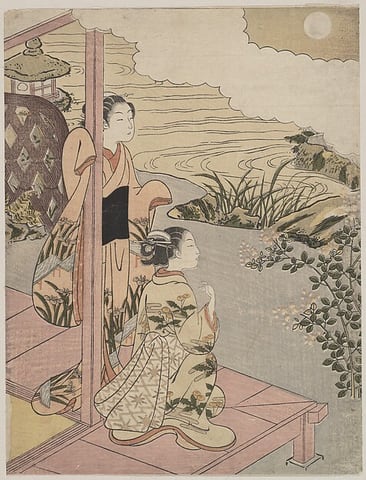
Two Girls on a Veranda beside a Stream with the MoonSuzuki HarunobuCourtesy of The Metropolitan Museum of Art
Section 2, north wall
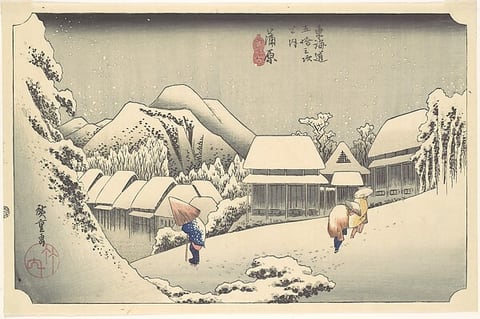
Evening Snow at Kanbara, from the series "Fifty-three Stations of the Tōkaidō"Utagawa Hiroshige, ca. 1833–34Courtesy of The Metropolitan Museum of Art 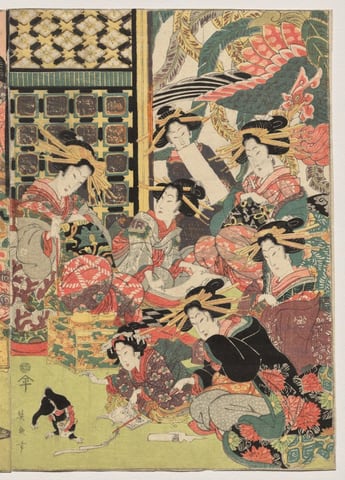
A Picture of the Viewing in the Pleasure QuartersKikukawa Eizan, 1810sCourtesy of the Cleveland Museum of Art 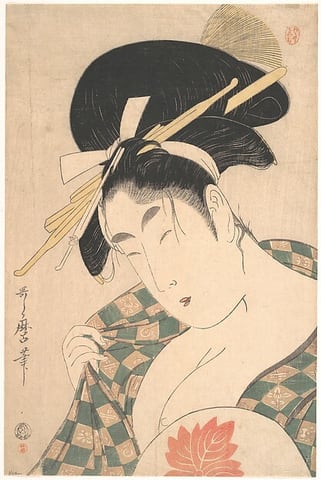
A CourtesanKitagawa UtamaroCourtesy of The Metropolitan Museum of Art
Section 3, north wall
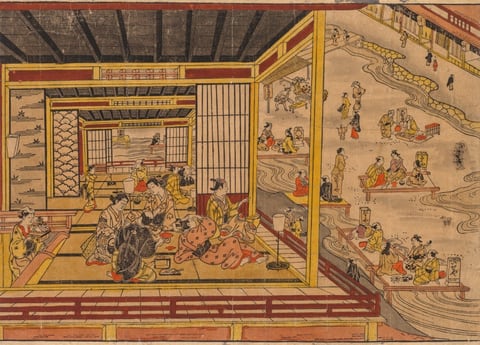
Tea House Beside the Kamo River in KyotoNishimura Shigenaga (Japanese, 1697(?)-1756), 1740sCourtesy of the Cleveland Museum of Art 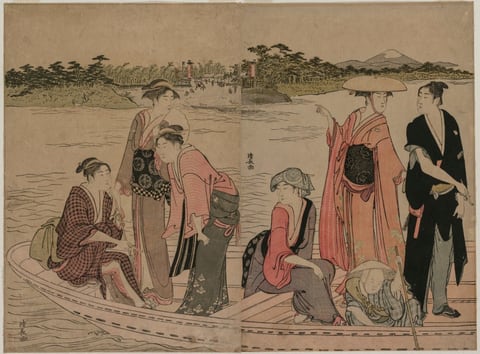
Passengers in a Ferry Boat on the Sumida RiverTorii Kiyonaga, 1784Courtesy of the Cleveland Museum of Art
Section 3, south wall
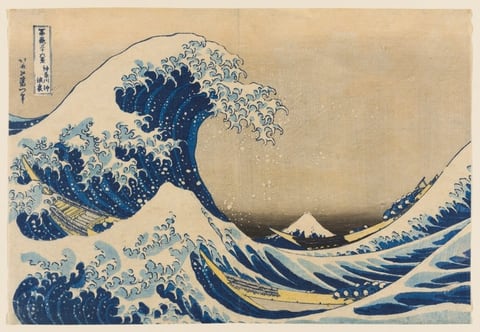
Under the Wave off Kanagawa (Kanagawa oki nami ura), also known as The Great Wave, from the series "Thirty-Six Views of Mount Fuji (Fugaku sanjurokkei)"Katsushika Hokusai, 1830/33Courtesy of the Art Institute of Chicago 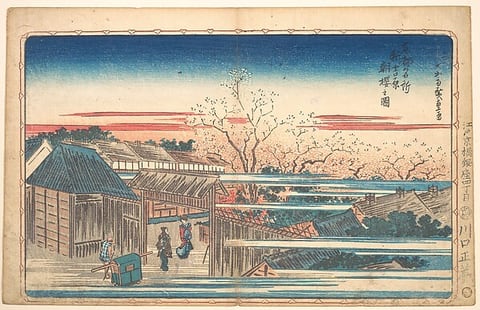
Morning Cherries at YoshiwaraUtagawa HiroshigeCourtesy of The Metropolitan Museum of Art