Ukiyo-e

Works in this room
Japanese woodblock prints of the floating world: actors, courtesans, landscapes and the sea.
Section 1, north wall
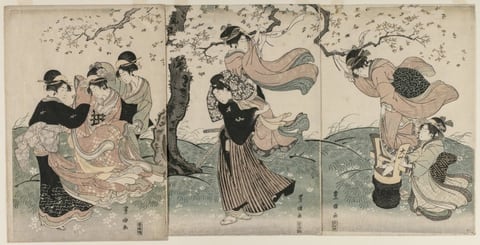
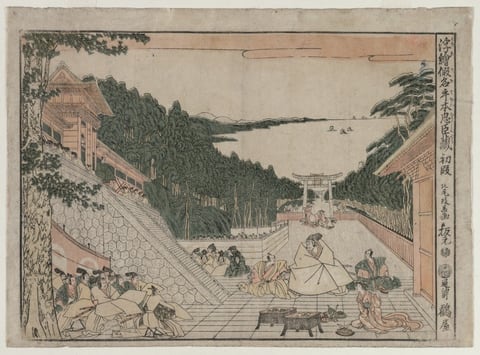
Cherry Blossoms in the WindUtagawa Toyokuni, late 1790sCourtesy of the Cleveland Museum of Art Perspective Pictures for The Treasure House of LoyaltyKitao Masayoshi, c. 1790sCourtesy of the Cleveland Museum of Art
Section 1, south wall
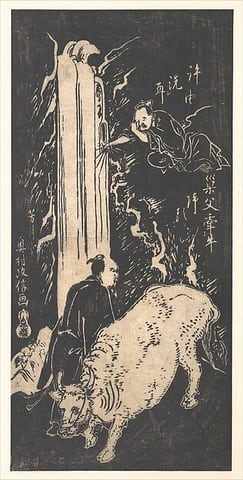
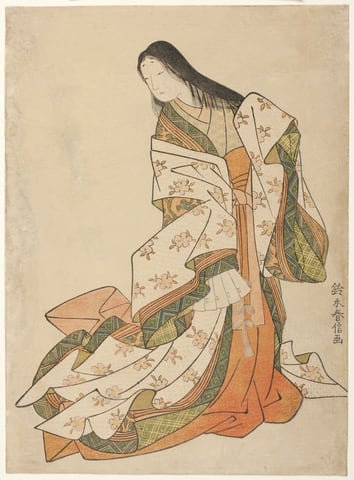
Xu You and Chao FuOkumura Masanobu, 18th centuryCourtesy of The Metropolitan Museum of Art The Poetess Ono no KomachiSuzuki Harunobu, Edo period (1615–1868), 1767/68Courtesy of the Art Institute of Chicago The Actor Segawa Tomisaburo II as the Otomos' Maid Wakakusa, Actually Prince KorehitoTōshūsai Sharaku, 1794–75Courtesy of The Metropolitan Museum of Art
Section 2, south wall
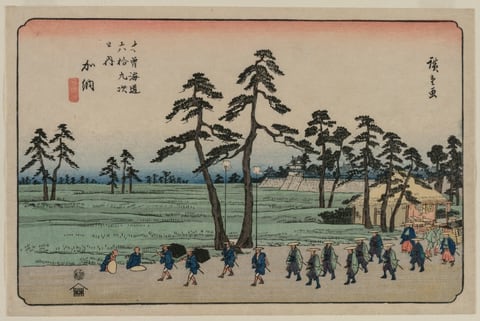
Kanō, from the series Sixty-nine Stations of the KisokaidōUtagawa Hiroshige, c. 1835–37Courtesy of the Cleveland Museum of Art 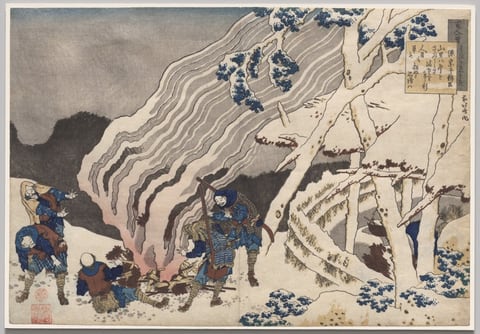
Poem by Minamoto no Muneyuki from the series One Hundred Poems by One Hundred Poets Explained by the NurseKatsushika Hokusai, 1835–36Courtesy of the Cleveland Museum of Art 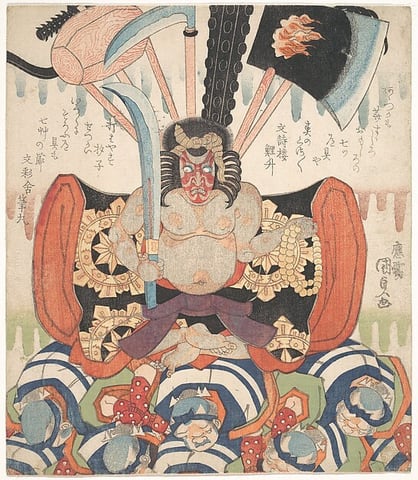
Danjūrō VII's Benkei as Fudō MyōōUtagawa Kunisada, ca. 1824Courtesy of The Metropolitan Museum of Art
Section 2, north wall
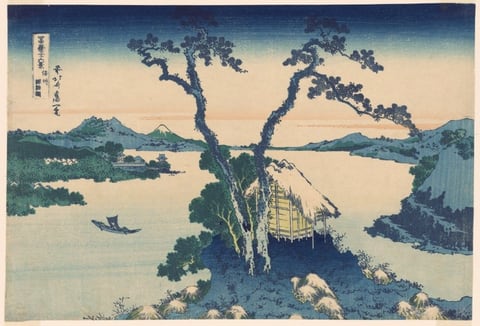
Lake Suwa in Shinano Province (Shinshu Suwako), from the series "Thirty-six Views of Mount Fuji (Fugaku sanjurokkei)"Katsushika Hokusai, c. 1830/33Courtesy of the Art Institute of Chicago 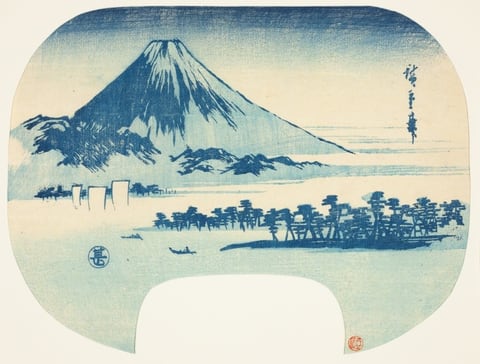
Mount Fuji Rising beyond Miho BeachUtagawa Hiroshige, c. 1838/42Courtesy of the Art Institute of Chicago 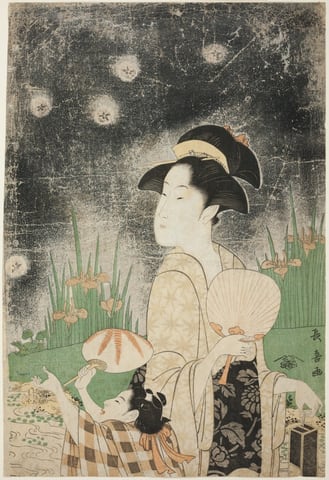
Catching FirefliesEishosai Choki, c.1790sCourtesy of the Art Institute of Chicago
Section 3, north wall
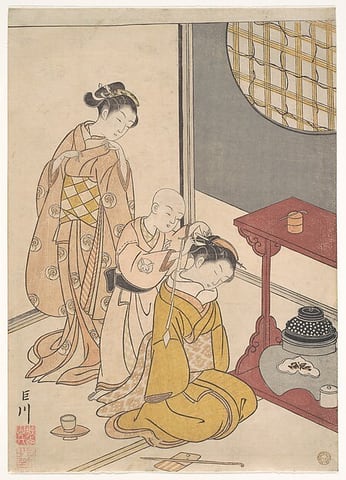
Night Rain at the Double-Shelf Stand, from the series Eight Parlor Views (Zashiki hakkei)Suzuki Harunobu, ca. 1766Courtesy of The Metropolitan Museum of Art 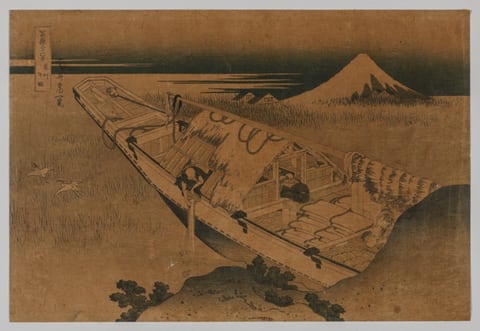
Fuji from Ushibori, Province of HitachiKatsushika Hokusai, 1760–1849Courtesy of the Cleveland Museum of Art 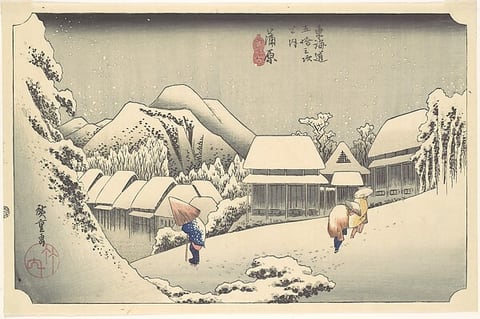
Evening Snow at Kanbara, from the series "Fifty-three Stations of the Tōkaidō"Utagawa Hiroshige, ca. 1833–34Courtesy of The Metropolitan Museum of Art
Section 3, south wall
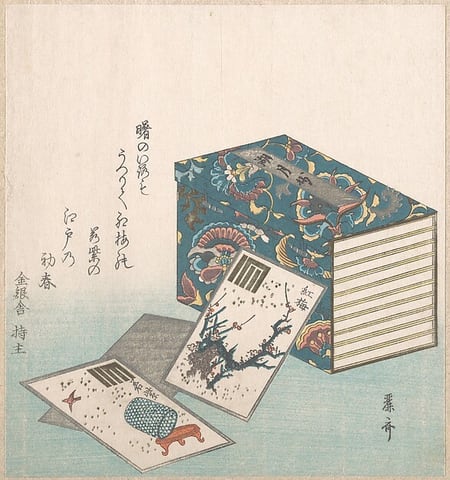
Books and CardsReisai, 18th–19th centuryCourtesy of The Metropolitan Museum of Art 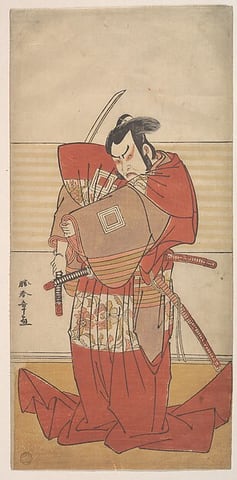
The Actor Ishikawa Danjuro V Performing a Shibaroku Act with a Drawn Sword in His HandKatsukawa Shunshō, ca. 1781Courtesy of The Metropolitan Museum of Art