Ukiyo-e
Works in this room
Japanese woodblock prints of the floating world: actors, courtesans, landscapes and the sea.
Section 1, north wall
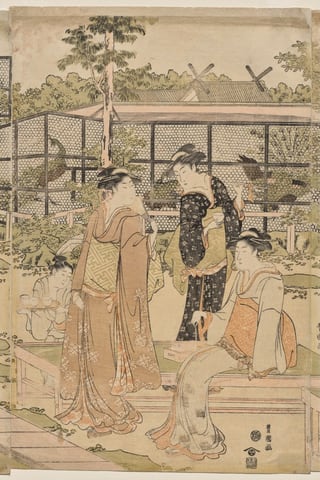
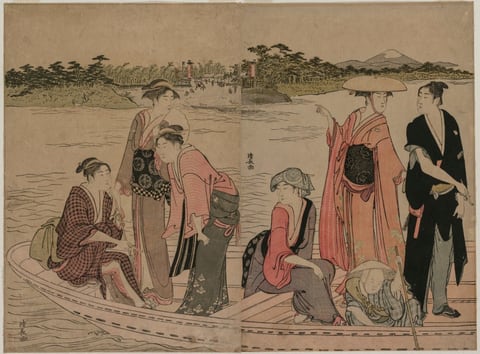
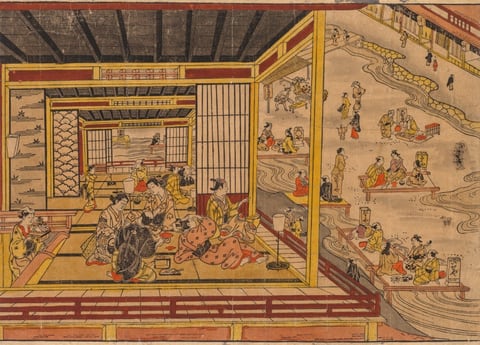
The Shika TeahouseUtagawa Toyokuni, early 1790sCourtesy of the Cleveland Museum of Art Passengers in a Ferry Boat on the Sumida RiverTorii Kiyonaga, 1784Courtesy of the Cleveland Museum of Art Tea House Beside the Kamo River in KyotoNishimura Shigenaga (Japanese, 1697(?)-1756), 1740sCourtesy of the Cleveland Museum of Art
Section 1, south wall
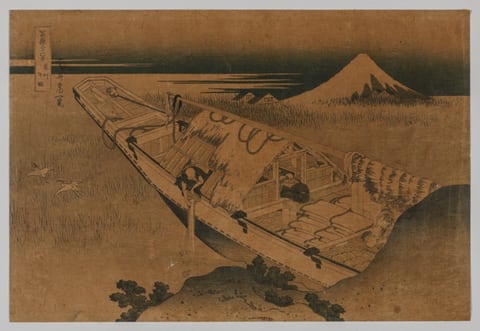
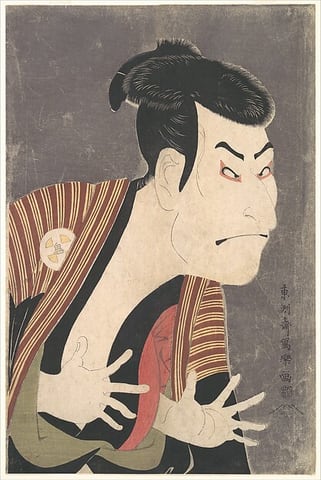
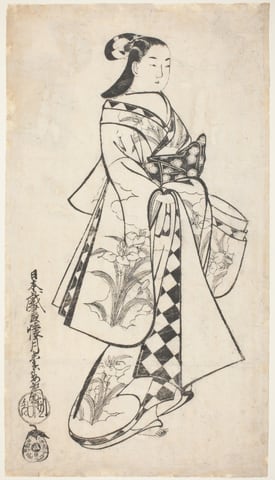
Fuji from Ushibori, Province of HitachiKatsushika Hokusai, 1760–1849Courtesy of the Cleveland Museum of Art Kabuki Actor Ōtani Oniji III as Yakko EdobeiTōshūsai Sharaku, 1794Courtesy of The Metropolitan Museum of Art Standing BeautyKaigetsudo Anchi, About 1714Courtesy of the Art Institute of Chicago
Section 2, south wall
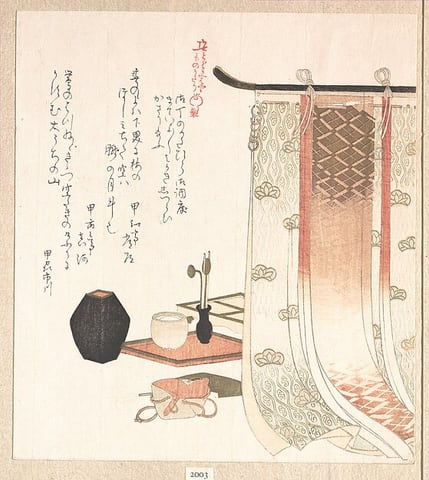
Screen and Utensils for the Incense CeremonyKubo Shunman, 19th centuryCourtesy of The Metropolitan Museum of Art 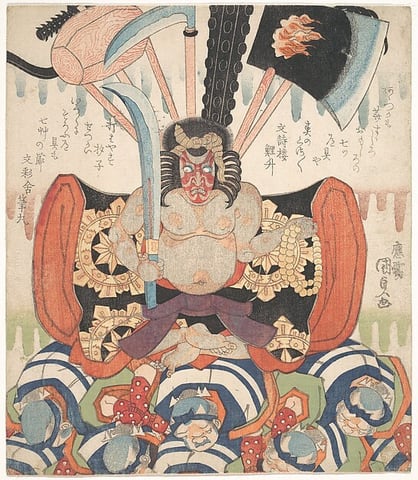
Danjūrō VII's Benkei as Fudō MyōōUtagawa Kunisada, ca. 1824Courtesy of The Metropolitan Museum of Art 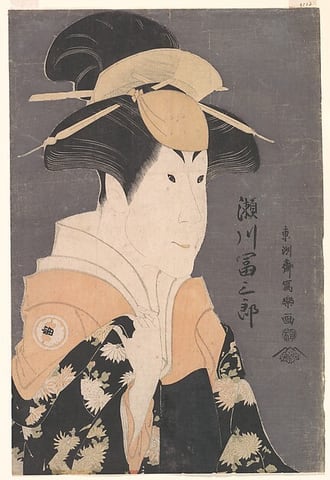
Segawa Tomisaburō II as Yadorigi in the Play "Hana Ayame Bunroku Soga"Tōshūsai Sharaku, 1794Courtesy of The Metropolitan Museum of Art
Section 2, north wall
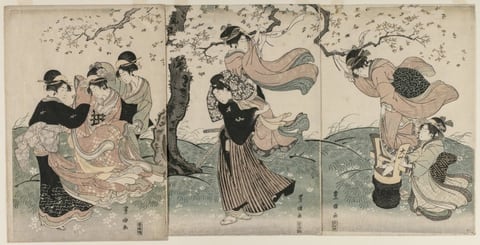
Cherry Blossoms in the WindUtagawa Toyokuni, late 1790sCourtesy of the Cleveland Museum of Art 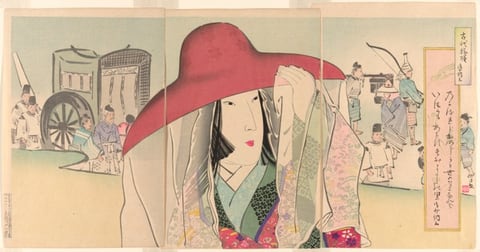
Sei Shonagon, from the series Ancient Patterns (Kodai moyo)Kobayashi Kiyochika, Meiji period (1896–1912), 1896Courtesy of the Art Institute of Chicago
Section 3, north wall
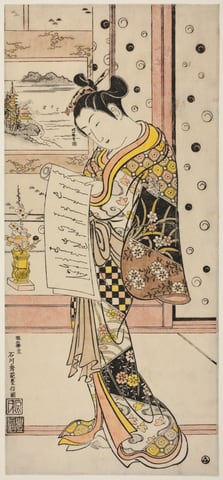
Courtesan Reading a LetterIshikawa Toyonobu, c. 1745Courtesy of the Art Institute of Chicago 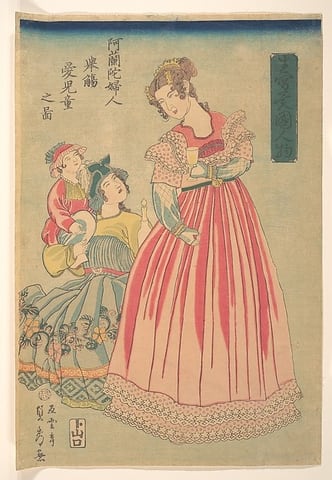
Dutch Woman and Child (Seisha ikoku jinbutsu Oranda fujin aijidō no zu)Utagawa (Gountei) Sadahide, 1860Courtesy of The Metropolitan Museum of Art 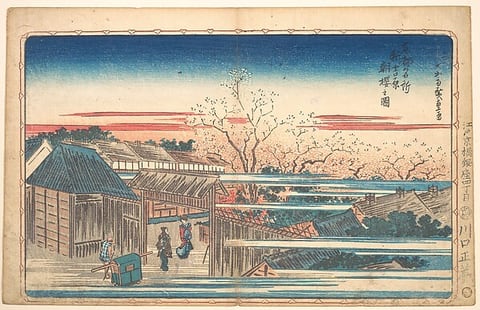
Morning Cherries at YoshiwaraUtagawa HiroshigeCourtesy of The Metropolitan Museum of Art
Section 3, south wall
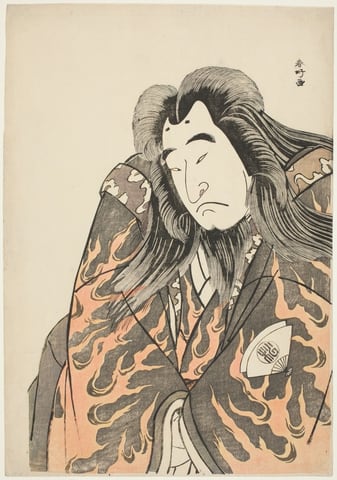
Actor Onoe Matsusuke I as Retired Emperor SutokuKatsukawa Shunkо̄, About 1780Courtesy of the Art Institute of Chicago 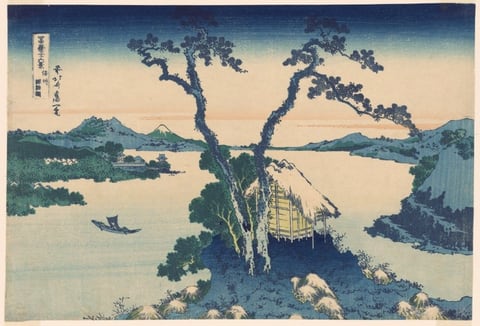
Lake Suwa in Shinano Province (Shinshu Suwako), from the series "Thirty-six Views of Mount Fuji (Fugaku sanjurokkei)"Katsushika Hokusai, c. 1830/33Courtesy of the Art Institute of Chicago