Floor plan

Style galleriesPrints of the 18th century
Prints of the 18th century
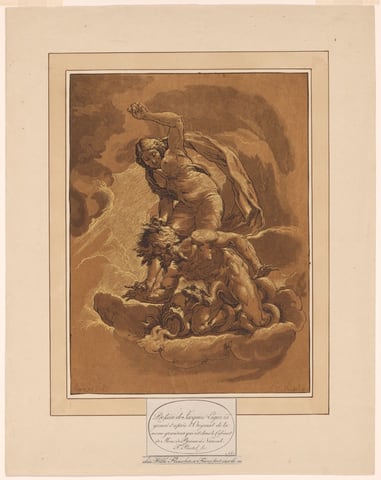
A work made of etching and aquatint, from three plates, in brown and black, with metallic gold, on ivory laid paper.
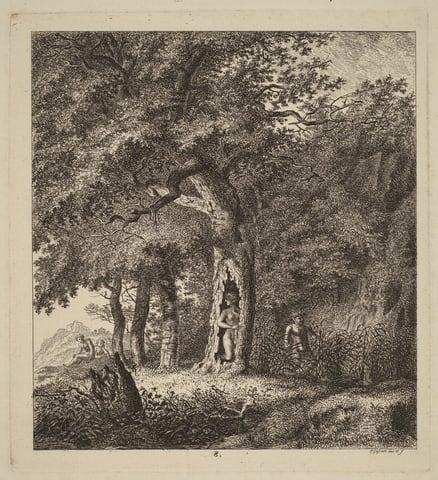
The image shows an etching of a forest scene with towering trees dominating the upper half. The horizon is not clearly visible due to dense foliage, but a line of trees and rocky outcrops in the distance provide a boundary. The fine lines and cross-hatching technique create detailed textures in the tree bark and foliage. The color palette is monochromatic, in shades of black and white emphasizing light and shadow. A large tree with a partially hollow trunk and figures scattered throughout the scene give a sense of scale and activity within the forest setting.
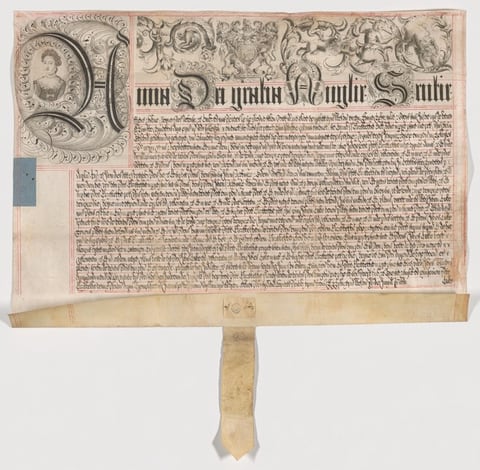
A work made of engraved letterhead, pen and ink calligraphy, and graphite ruling on parchment, folded with strap and (missing) seal.
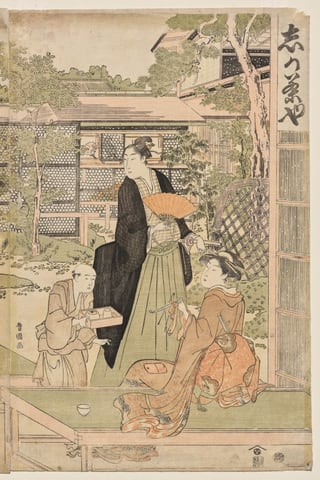
The Shika Teahouse, by Utagawa Toyokuni, early 1790s
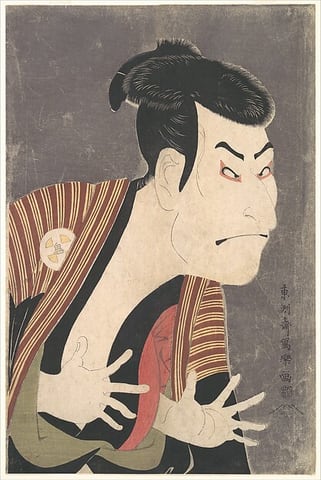
Kabuki Actor Ōtani Oniji III as Yakko Edobei, by Tōshūsai Sharaku, 1794
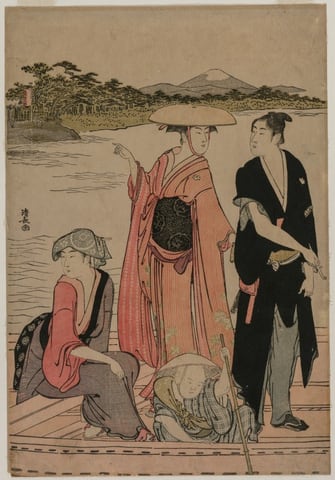
Passengers in a Ferry Boat on the Sumida River, by Torii Kiyonaga, 1784

The works in this room are listed below.

Works in this room

Prints made in the 18th century, from every museum.

Section 1, north wall

  1. A work made of etching and aquatint, from three plates, in brown and black, with metallic gold, on ivory laid paper.
    The Triumph of Truth over EnvyMaria Katharina Prestel, 1781Courtesy of the Art Institute of Chicago
  2. The image shows an etching of a forest scene with towering trees dominating the upper half. The horizon is not clearly visible due to dense foliage, but a line of trees and rocky outcrops in the distance provide a boundary. The fine lines and cross-hatching technique create detailed textures in the tree bark and foliage. The color palette is monochromatic, in shades of black and white emphasizing light and shadow. A large tree with a partially hollow trunk and figures scattered throughout the scene give a sense of scale and activity within the forest setting.
    Wooded Landscape with a Nymph and a SatyrSalomon Gessner, 1764Courtesy National Gallery of Art, Washington
  3. A work made of engraved letterhead, pen and ink calligraphy, and graphite ruling on parchment, folded with strap and (missing) seal.
    Recovery Document (Land Title Grant)Unrecorded British maker, 1702/14 (Queen Anne period)Courtesy of the Art Institute of Chicago

Section 1, south wall

  1. The Shika Teahouse, by Utagawa Toyokuni, early 1790s
    The Shika TeahouseUtagawa Toyokuni, early 1790sCourtesy of the Cleveland Museum of Art
  2. Kabuki Actor Ōtani Oniji III as Yakko Edobei, by Tōshūsai Sharaku, 1794
    Kabuki Actor Ōtani Oniji III as Yakko EdobeiTōshūsai Sharaku, 1794Courtesy of The Metropolitan Museum of Art
  3. Passengers in a Ferry Boat on the Sumida River, by Torii Kiyonaga, 1784
    Passengers in a Ferry Boat on the Sumida RiverTorii Kiyonaga, 1784Courtesy of the Cleveland Museum of Art

Section 2, south wall
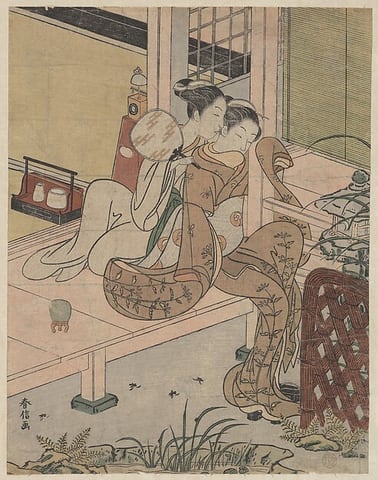
  1. The Gossips, by Suzuki Harunobu, ca. 1767
    The GossipsSuzuki Harunobu, ca. 1767Courtesy of The Metropolitan Museum of Art
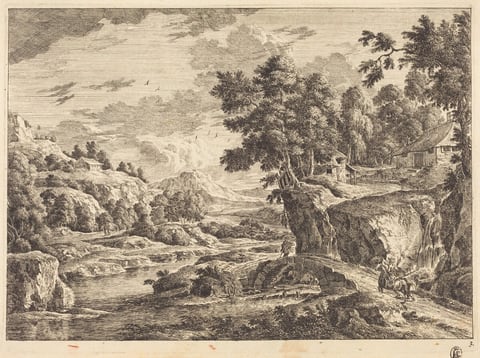
  2. The image shows a landscape scene with an elevated perspective. The horizon is placed low, emphasizing the sky with swirling clouds and scattered birds. A river winds through a valley with a stone bridge. A rocky outcrop with trees and a small building are on the right. In the distance, hills lead to mountains. The style uses intricate cross-hatching for texture and depth. The color palette is monochrome with varying shades of sepia.
    Landscape with a Bridge and Three Farm BuildingsGeorg EisenmannCourtesy National Gallery of Art, Washington
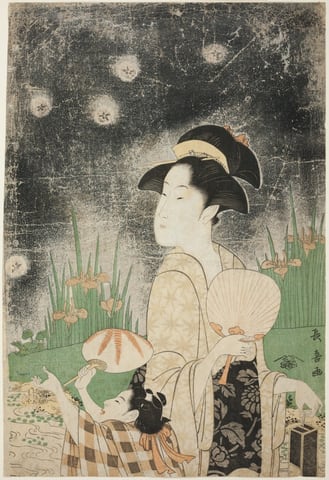
  3. A work made of color woodblock print; ōban.
    Catching FirefliesEishosai Choki, c.1790sCourtesy of the Art Institute of Chicago

Section 2, north wall
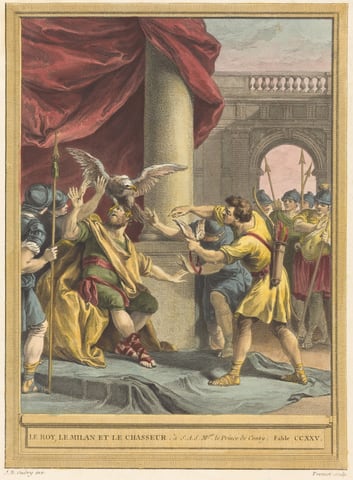
  1. This is a painting of a king, a hawk, and a hunter in a classical architectural setting with columns and arches. In the image, a figure in royal clothing is seated beneath draped red fabric, facing a man in hunting attire holding a bird. A hawk perches on the royal figure's head, wings spread, while the hunter reaches toward the hawk. Surrounding them are other figures in armor, holding spears and shields. The style is reminiscent of classic European paintings with themes of mythology or allegory.
    Le roi, le milan, et le chasseur (The King, the Kite, and the Hunter)Benoît-Louis Prévost, published 1759Courtesy National Gallery of Art, Washington
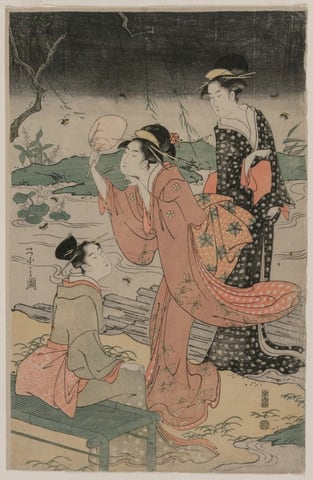
  2. Women Beside a Stream Chasing Fireflies, by Chôbunsai Eishi, c. 1796–97
    Women Beside a Stream Chasing FirefliesChôbunsai Eishi, c. 1796–97Courtesy of the Cleveland Museum of Art
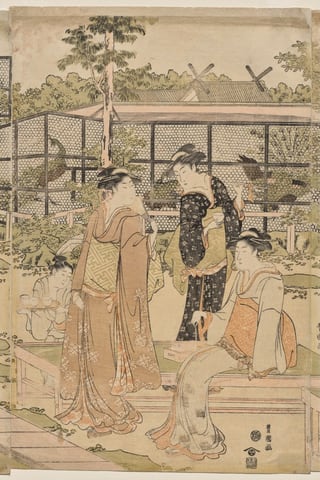
  3. The Shika Teahouse, by Utagawa Toyokuni, early 1790s
    The Shika TeahouseUtagawa Toyokuni, early 1790sCourtesy of the Cleveland Museum of Art

Section 3, north wall

  1. The Actor Segawa Tomisaburo II as the Otomos' Maid Wakakusa, Actually Prince Korehito, by Tōshūsai Sharaku, 1794–75
    The Actor Segawa Tomisaburo II as the Otomos' Maid Wakakusa, Actually Prince KorehitoTōshūsai Sharaku, 1794–75Courtesy of The Metropolitan Museum of Art
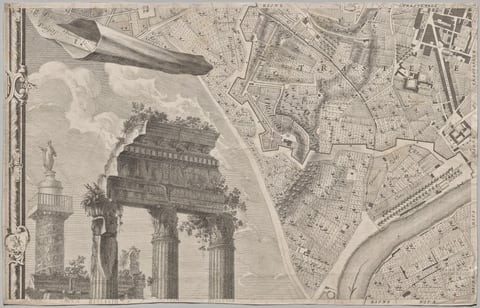
  2. Nuova pianta di Roma data in luce da Giambattista Nolli l’anno MDCCXLVII, known as La Pianta Grande di Roma, by Giovanni Battista Nolli, 1748
    Nuova pianta di Roma data in luce da Giambattista Nolli l’anno MDCCXLVII, known as La Pianta Grande di RomaGiovanni Battista Nolli, 1748Courtesy of the Cleveland Museum of Art

Section 3, south wall
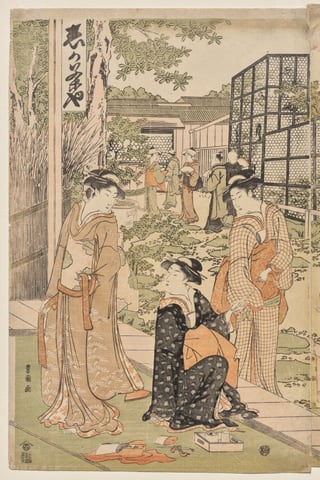
  1. The Shika Teahouse, by Utagawa Toyokuni, early 1790s
    The Shika TeahouseUtagawa Toyokuni, early 1790sCourtesy of the Cleveland Museum of Art
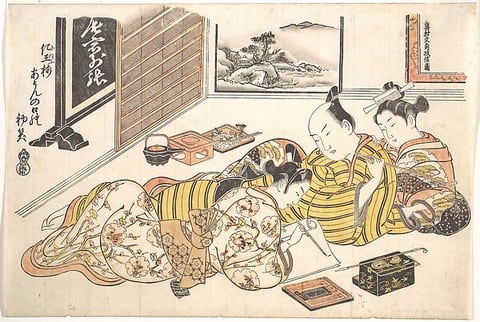
  2. Plate from the Erotic Book Mounds of Dyed Colors: A Pattern Book for the Boudoir (Someiro no yama neya no hinagata), First Month, by Okumura Masanobu, ca. 1736–44
    Plate from the Erotic Book Mounds of Dyed Colors: A Pattern Book for the Boudoir (Someiro no yama neya no hinagata), First MonthOkumura Masanobu, ca. 1736–44Courtesy of The Metropolitan Museum of Art